In a global economy where German engineering is synonymous with high-end automotive manufacturing and industrial machinery, a new and highly specific form of precision has emerged from an unlikely setting: the breakfast table. Since February 2024, a German enthusiast known only as Jan, or "Germanbreadcutter" across social media platforms, has transformed the mundane act of slicing a loaf of bread into a high-stakes digital performance. Utilizing industrial-grade measuring tools and professional-grade cutlery, Jan has amassed a following exceeding 100,000 subscribers on Instagram, TikTok, and YouTube. His content, which focuses exclusively on the pursuit of an "objectively perfect" slice of bread, highlights a growing cultural fascination with precision, traditional craftsmanship, and the intersection of data science with daily life.
The Technical Methodology of Precision Slicing
Jan’s process is defined by a rigorous adherence to measurement and a rejection of the margin of error typically accepted in culinary practices. Each daily video follows a standardized protocol. He begins by selecting a loaf—often a traditional German variety—and placing it on a dedicated cutting board. After a brief greeting to his audience, he utilizes either a Piklohas or a Hoshanho bread knife to perform the cut. These tools are significant; Piklohas is a German brand known for its high-carbon stainless steel, while Hoshanho represents the Japanese tradition of precision blade-smithing.
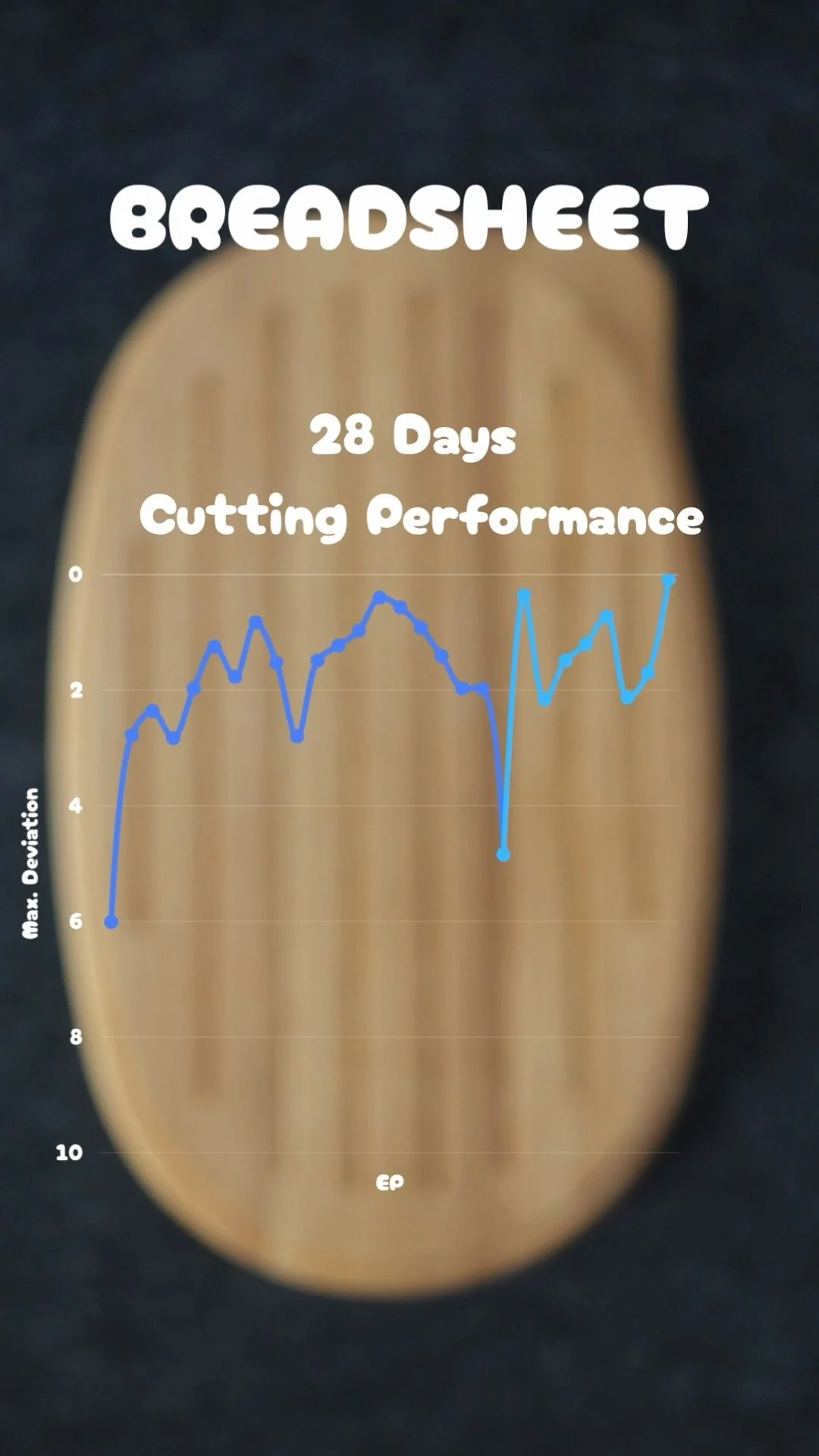
The core of the "sport," as Jan and his followers refer to it, lies in the post-cut analysis. Rather than judging the slice by aesthetic appeal alone, Jan employs a Kynup digital caliper—a tool more commonly found in machine shops or engineering labs than in kitchens. By measuring the thickness of the slice at multiple points around its perimeter, he calculates the deviation between the thickest and thinnest sections. This data is then meticulously recorded in a "breadsheet," a continuously updated digital ledger that tracks his performance over time. The ultimate goal is a deviation of zero millimeters, an achievement that would represent a mathematically perfect parallel cut.
Chronology of a Viral Sensation
The genesis of the Germanbreadcutter phenomenon dates back to early 2024. Jan, who maintains a professional career outside of the food industry and requested anonymity to protect his workplace identity, was inspired by a social interaction. During a breakfast with a friend, a particularly well-cut slice of bread was presented for admiration. This moment served as the catalyst for Jan’s obsession. He realized that while bread is a staple of the German diet, the skill required to slice it with mechanical accuracy was rarely quantified.
By February, Jan had launched his social media presence. The growth was exponential, driven by the "oddly satisfying" nature of the content and the dry, methodical humor inherent in applying extreme engineering standards to a sourdough loaf. By the late spring of 2024, his videos were regularly garnering millions of views.

A pivotal moment in the channel’s history occurred on June 27, 2024. In what has been dubbed "Episode 136," Jan achieved what he calls the "Golden Slice." Using a Frankenlaib—a traditional round German sourdough—he produced a slice with a maximum thickness deviation of just 0.08 millimeters. For context, a human hair typically ranges from 0.05 to 0.10 millimeters in thickness. The achievement triggered a wave of engagement from the community, with many fans comparing the feat to world-record athletic performances.
The Cultural Context of German Bread Heritage
To understand why this phenomenon has resonated so deeply, one must consider the cultural weight of bread in Germany. German bread culture, or Brotkultur, was officially recognized by UNESCO as an Intangible Cultural Heritage in 2014. With over 3,000 registered varieties of bread produced across the country, the loaf is more than a food item; it is a national icon of diversity and craftsmanship.
Jan’s preference for the Frankenlaib is representative of this heritage. The Frankenlaib is a rustic, round sourdough known for its thick, resilient crust and soft interior. This contrast in textures provides the ultimate challenge for a precision cutter. A soft crust offers little resistance, while the varied density of a traditional sourdough requires constant micro-adjustments of the knife’s angle and pressure.
Jan has noted that his least favorite loaves to cut are modern, square, block-shaped whole-grain breads. Despite their geometric simplicity, he argues that they lack the "soul" of traditionally shaped loaves and offer a "shortcut" to accuracy that he finds less impressive. This stance reinforces the narrative that his work is a tribute to traditional baking as much as it is a pursuit of mathematical perfection.
Data Analysis and the "Breadsheet"
The use of the "breadsheet" elevates Jan’s hobby from a visual novelty to a data-driven project. This practice mirrors the broader "Quantified Self" movement, where individuals track every aspect of their lives—from sleep cycles to caloric intake—to find patterns and optimize performance. In Jan’s case, the data provides a transparent look at the difficulty of the task.
The metrics reveal a "learning curve" similar to that of professional sports. Earlier entries in the breadsheet show higher deviations and more frequent "off days." As the months progressed, the average deviation dropped, suggesting that Jan has developed a high degree of muscle memory and tactile sensitivity.

The data also highlights the "Achilles’ heel" of bread cutting: the end-piece. As a loaf is consumed, it becomes smaller and more difficult to stabilize. Jan has documented his struggles with these sections, noting that the lack of surface area for a firm grip often leads to increased deviation. His willingness to document these failures has fostered a sense of "accountability" that his audience finds inspiring, turning a simple kitchen error into a lesson in tenacity.
Community Dynamics and the "Digital Stadium"
The audience for Germanbreadcutter functions less like traditional social media followers and more like a dedicated sports fan base. The comments sections of his videos are filled with technical analysis, words of encouragement, and hyperbolic praise. When Jan performs poorly, fans offer "post-game" advice, suggesting he reflect on his mistakes before returning the next day.
This community engagement is a key driver of the channel’s success. By dividing his progress into "seasons"—each corresponding to a single loaf of bread—Jan has created a narrative structure that keeps viewers invested. A single loaf may last a week or more, and fans track the progression from the wide center slices to the challenging end-pieces with the same intensity as a tournament bracket.
The reactions to the "Golden Slice" illustrate the emotional stakes involved. One follower claimed the video provided "precious final moments" of peace while in a hospital, while others declared that "no machine can beat him." This personification of the struggle—man versus the entropy of a loaf of bread—taps into a deep-seated human desire for order and excellence in a chaotic world.
Broader Implications and the Trend of Extreme Mundanity
The rise of the Germanbreadcutter is part of a larger digital trend toward "Extreme Mundanity." In an era of high-octane, algorithmically driven content, there is a growing market for videos that focus on slow, deliberate, and highly specific tasks. This includes everything from professional rug cleaning and power washing to the restoration of rusted tools.
Jan’s work also touches on the "Human vs. Automation" debate. While industrial bread slicers can produce uniform slices at scale, they lack the adaptability and "spirit" of a manual cut. Jan’s quest is a reminder that human skill, when honed to an extreme degree, can rival mechanical precision. This resonates with a public increasingly concerned about the displacement of human craftsmanship by artificial intelligence and robotics.

Sustainability and Ethical Consumption
Despite the focus on technical perfection, Jan has remained adamant about the practical utility of his hobby. A recurring concern among viewers is the potential for food waste in the pursuit of the perfect slice. Jan has addressed this directly, stating that every slice he cuts is consumed. Whether eaten plain, with butter, jam, or cheese, no part of the "experiment" is discarded.
This commitment to sustainability adds a layer of ethical responsibility to the channel. It ensures that the project remains grounded in the reality of food as sustenance, preventing it from becoming a wasteful spectacle. Jan’s insistence on using local bakeries also supports the traditional German baking industry, encouraging his global audience to appreciate the quality of artisanal bread.
Future Outlook for the "Bread-Cutting Sport"
As Jan continues his journey, the potential for expansion is significant. While he currently lacks formal promotional deals, his influence on the market for precision kitchen tools is undeniable. By providing links to his specific calipers and knives, he has created a niche market for "precision breakfast" equipment.
Furthermore, Jan has expressed a desire to inspire others to take up the "bread-cutting sport." If this trend continues, we may see the emergence of a new category of hobbyist—one that values the calibration of a digital tool as much as the flavor of the sourdough. For now, Jan remains the undisputed leader of this micro-movement, proving that with a steady hand, a sharp blade, and a digital caliper, even the most basic daily task can be elevated to an art form.
The story of the Germanbreadcutter is a testament to the indomitable human spirit’s search for perfection. In the small gap between 0.08 millimeters and zero, Jan finds a space for dedication, community, and a very precise kind of joy. As he moves into future "seasons" with new and unique loaves, the world will be watching—one millimeter at a time.