


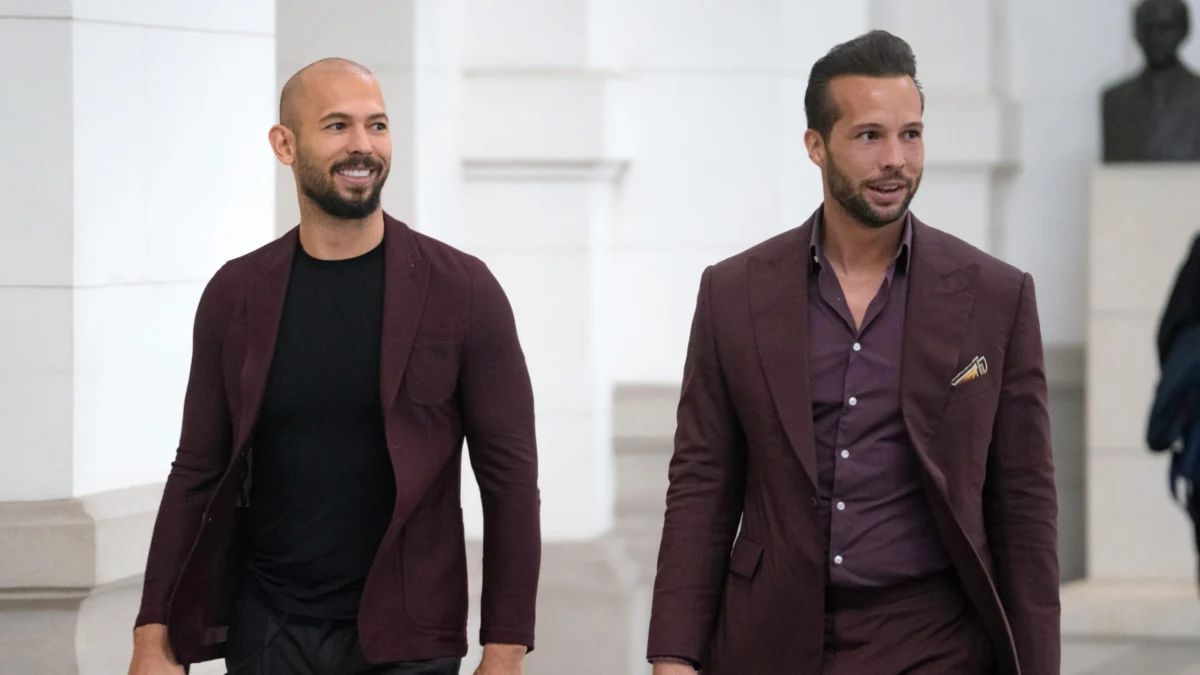
Andrew Tate, the controversial social media personality, and his brother, Tristan Tate, were apprehended by U.S. Marshals on Saturday in Miami, Florida, following an extradition warrant issued by British authorities. The arrest stems from severe allegations of rape and sex trafficking, adding another complex layer to the brothers’ ongoing legal entanglements across multiple international jurisdictions. The U.S. Marshals Service confirmed the custody, acting on a sealed warrant, as the brothers face the prospect of being returned to the United Kingdom to answer to a litany of charges.
Details of the Arrest and Extradition Request
The apprehension occurred swiftly, with U.S. Marshals Service spokesperson Brady McCarron confirming to the Associated Press that the Tate brothers were taken into custody based on the aforementioned sealed warrant. While specific details of the charges were not immediately disclosed by U.S. officials, the Crown Prosecution Service (CPS) in the UK issued a statement on Saturday, clarifying the nature and scope of their pursuit. The CPS revealed that prosecutors had decided to bring further charges against the Tates, specifically "in relation to four additional victims." This expands the existing legal framework against them, indicating a deepening investigation and a broadening scope of alleged offenses.
The CPS statement explicitly declared their intention to seek the brothers’ extradition in relation to the original 21 charges they already face in the UK, as well as these newly decided charges. This underscores the gravity of the situation and the commitment of British legal authorities to bring the Tates to trial. The process of international extradition, particularly between the United States and the United Kingdom, is governed by a comprehensive treaty that facilitates the transfer of individuals accused of serious crimes. This process typically involves a U.S. court hearing to determine if there is sufficient probable cause and if the alleged offenses fall under the extradition treaty’s provisions. The Tates will likely have the opportunity to contest their extradition in U.S. courts, potentially leading to a protracted legal battle before any transfer to the UK can occur.
A Chronology of Controversies and Legal Battles
The arrest in Miami is the latest development in a long and often tumultuous public and legal history for the Tate brothers, particularly Andrew, who has cultivated a significant and controversial online presence.
2016: The Big Brother Incident and Early Controversies
Andrew Tate first gained broader public recognition in 2016 with an appearance on the UK version of the reality television show Big Brother. However, his stint was short-lived, lasting only six days. He was removed from the house after a video surfaced online appearing to show him attacking a woman. Tate denied the allegations, claiming the video depicted consensual role-play. This incident marked an early public glimpse into the confrontational and often polarizing persona he would later amplify online.
Rise of a Controversial Online Empire
Following his Big Brother removal, Andrew Tate pivoted aggressively to building an online empire, primarily through social media platforms. His content, often disseminated across YouTube, TikTok, Instagram, Facebook, and Twitter, centered around what critics widely describe as extreme misogyny, hyper-masculinity, and controversial advice on wealth, relationships, and power. He branded himself as "Top G," cultivating a vast following, particularly among young men, by promoting a lifestyle of luxury, dominance, and often, disdain for women. His videos and commentary frequently generated millions of views, making him one of the most talked-about and divisive figures on the internet.
His rise was not without significant backlash. Advocacy groups, educators, and parents expressed deep concerns about the harmful impact of his content, accusing him of promoting misogynistic views, toxic masculinity, and potentially radicalizing young male audiences. Major social media platforms responded by banning him from their services multiple times. Meta (Facebook, Instagram) permanently banned him in August 2022, citing violations of policies on dangerous organizations and individuals. TikTok also banned his accounts, stating he violated policies on hate speech and misogyny. YouTube followed suit. However, following Elon Musk’s acquisition of Twitter, Tate’s account was reinstated on the platform in late 2022, reigniting debates about free speech versus content moderation.
December 2022: Romanian Arrest and Indictment
The most significant legal challenge prior to the Miami arrest began in December 2022 when Andrew and Tristan Tate were arrested in Romania. They were accused of participating in an organized crime group involved in human trafficking, rape, and forming an organized crime group to sexually exploit women. Romanian prosecutors alleged that the brothers, along with two Romanian women, lured victims under false pretenses of a relationship, then forced them into producing pornographic content for online platforms, exploiting them financially.
Following their initial arrest, the brothers were held in pre-trial detention for several months, a period that garnered significant international media attention. They were subsequently moved to house arrest in March 2023 and later placed under judicial control, a less restrictive form of pre-trial supervision, in August 2023. In June 2023, Romanian prosecutors formally indicted the Tate brothers and two associates on charges of human trafficking, rape, and forming an organized crime group. They vehemently denied all allegations, asserting their innocence and claiming to be victims of a politically motivated smear campaign. The Romanian legal proceedings are ongoing, with the trial progressing through its preliminary stages.
The UK Charges and the Extradition Trigger
Parallel to the Romanian case, British authorities had been building their own case against the Tate brothers. Reports indicate that they were charged with 21 crimes in the U.K., with formal legal proceedings anticipated to extend into May 2025. These charges include serious offenses such as rape, actual bodily harm, and human trafficking. According to the BBC, Andrew Tate faces 10 specific charges connected to three alleged victims, encompassing rape, actual bodily harm, human trafficking, and controlling prostitution for gain. Tristan Tate faces 11 charges connected to one alleged victim, including rape, actual bodily harm, and human trafficking. These UK charges, coupled with the new allegations concerning four additional victims, formed the basis for the extradition warrant executed in Miami.
The timing of the UK extradition request, while the brothers are still facing charges and ongoing legal proceedings in Romania, adds a layer of legal complexity. International legal frameworks typically address such multi-jurisdictional claims, often prioritizing one jurisdiction or coordinating efforts to ensure justice is served without undue delay or double jeopardy. It remains to be seen how the UK’s extradition request will interact with the ongoing Romanian trial, and which country will ultimately take precedence in prosecuting the brothers first, should extradition be granted.
Broader Impact and Implications
The arrest of the Tate brothers in Miami sends a strong signal about the global reach of justice and accountability, particularly for high-profile figures whose influence extends across digital borders.
Accountability for Online Influence:
Andrew Tate’s persona has been a lightning rod for discussions about the responsibility of social media platforms and the impact of online content on real-world behavior. His arrest and the serious nature of the charges underscore the growing recognition that online rhetoric, particularly that which promotes harmful ideologies or exploitation, can have tangible legal consequences. This case contributes to a broader global effort to hold influencers and online personalities accountable for their actions, even when those actions originate or are propagated through digital means. Victim advocacy groups have consistently called for greater scrutiny of individuals who use their platforms to spread misogyny and potentially incite violence or exploitation. The legal pursuit of the Tates is likely to be welcomed by these groups as a step towards justice for alleged victims and a deterrent for others.
Complexity of International Law:
The multi-jurisdictional nature of the Tate brothers’ legal battles—involving Romania, the UK, and now the US in the extradition process—highlights the intricate challenges of international law enforcement in an increasingly interconnected world. Extradition treaties are vital tools in ensuring that individuals cannot evade justice by simply crossing borders. However, the process itself can be lengthy and fraught with legal challenges, as defendants often employ all available legal avenues to fight their transfer. The sequence of legal proceedings—whether the UK or Romania will proceed first—will be a critical aspect of the upcoming legal deliberations.
Public Reaction and Media Scrutiny:
The Tate brothers’ legal troubles have consistently attracted immense public and media attention, fueled by Andrew Tate’s notoriety and the sensational nature of the allegations. Their arrest in Miami is expected to intensify this scrutiny, with every development in the extradition process and subsequent trials being closely watched. This high-profile case serves as a touchstone for ongoing debates about misogyny, online extremism, freedom of speech, and the protection of vulnerable individuals in the digital age.
The Path Forward
For Andrew and Tristan Tate, the immediate future involves navigating the U.S. legal system to address the extradition request. Their legal team is expected to mount a robust defense, likely challenging the validity of the warrant or arguing against their transfer to the UK. Should the extradition be granted, they would then face the complex and severe charges laid out by the Crown Prosecution Service, potentially leading to a high-profile trial in Britain. Meanwhile, the Romanian case, with its separate set of serious allegations, continues to unfold, adding a layer of uncertainty regarding the ultimate trajectory of their legal fates. The coming months will undoubtedly bring further legal maneuvering and intense public interest as this multifaceted international legal saga continues to develop.