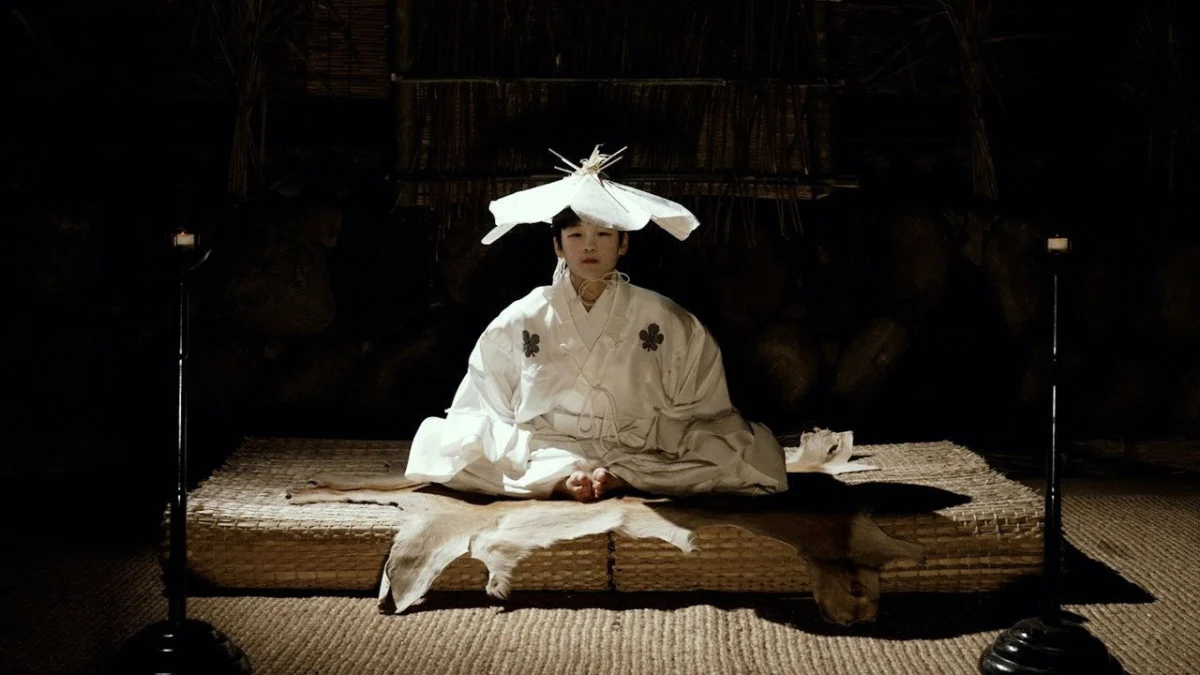
The documentary "Guardians of the Harvest" offers a profound and introspective exploration of a Japanese community’s enduring connection to nature, the delicate art of preserving ancestral traditions, and the vital process of reinvention in the face of modernization. This quiet yet compelling film delves into the heart of Suwa, a region renowned for its ancient Shinto shrine, Suwa Taisha, and its breathtaking natural setting on the shores of Lake Suwa. While the Onbashira festival, a spectacular event held every six years, is the region’s most famous ritual, director Riko Hiro ventures beyond the well-trodden path to illuminate the lesser-known, intricate rituals and deeply held beliefs that form the bedrock of local religious observances.
The Sacred Landscape of Suwa
Suwa Taisha, one of Japan’s most venerable Shinto shrines, stands as a testament to the region’s spiritual heritage. Its location, harmoniously integrated with the natural environment surrounding Lake Suwa, underscores a long-standing symbiosis between the community and its surroundings. This connection is not merely aesthetic; it is deeply woven into the fabric of local identity and spiritual practice. The documentary patiently unfolds, allowing the rhythms of ceremonies, the grandeur of the landscapes, and the quiet cadence of everyday life to speak for themselves. Through the gentle narration of Mamiko Noto and Marihiko Nara, viewers are guided through the complex practices dedicated to the Mishaguji, the ancient deities revered in the Suwa region. These deities are intrinsically linked to the land, its fertility, and the sustenance it provides, making the concept of a "harvest" a central theme not just for crops, but for spiritual and communal well-being.
Reconnecting with a Fragmented Heritage
A particularly poignant aspect of "Guardians of the Harvest" is its examination of a community’s concerted effort to reclaim and reweave a heritage that has, over time, become fragmented. The film clearly illustrates how the fervent push for rapid modernization during the Meiji era (1868-1912) often viewed traditional practices as impediments to national progress. This top-down approach, coupled with the natural ebb and flow of cultural transmission, led to the gradual fading of many deeply rooted customs.
Today, the residents of Suwa are actively engaged in a meticulous process of reconstructing their former ritual life. This endeavor is significantly aided by the collaboration of scholars and cultural historians, who provide invaluable guidance and knowledge. The documentary highlights instances where the core elements of a ritual might be remembered – such as the lyrics of an ancient prayer – but the precise method of recitation has been lost to time. This necessitates a degree of interpretation and creative reconstruction. The film wisely acknowledges that a pristine restoration of the past is an impossibility. Instead, it celebrates the emergent understanding that this process of reinterpretation is not a deficit but an opportunity. The younger generation, depicted in scenes of men and boys diligently rehearsing and learning their roles for upcoming festivals, is presented as vital to this ongoing evolution, empowered to contribute their own interpretations and energy to these age-old traditions. This generational transfer of knowledge, imbued with a fresh perspective, is key to ensuring the continuity and relevance of their cultural heritage.
The Sacred Deer and the Cycle of Life
The connection between the community and the natural world is further emphasized through the symbolic importance of the sacred deer. The film’s original title, "The Country of Deer," hints at their central role. Historically, until the Meiji era, a ritualistic offering of 75 deer heads was made annually at the Maemiya shrine. This practice, intended as a propitiation for a bountiful harvest, has been adapted and continues to this day, albeit with taxidermied heads. This enduring custom illustrates the community’s deep-seated respect for the natural world and its willingness to find contemporary forms for ancient rites.
The documentary ventures into the nuanced history of hunting in the Suwa region. It reveals that in ancient times, even within a predominantly vegetarian Japanese society, the Suwa community received special dispensation to hunt. This practice was not a casual affair but a highly ritualized activity imbued with profound spiritual significance. The film includes depictions of two such hunting rituals. While the visual representation on screen is subtle, the underlying themes of reverence and respect for the animal are conveyed with care. Director Hiro’s approach is commendable for presenting these practices in a humane light, demonstrating the deep respect that underpins them, even today, with hunters continuing to make offerings to the temple. This careful portrayal paints a picture of a time when villagers lived in close synergy with their environment, yet the film avoids romanticizing this past as a lost utopia. Rather, it posits that the relationship between tradition and modernity is one of dynamic adaptation, where contemporary residents find innovative ways to engage with customs inherited from their ancestors.
Reinventing Rituals: A Winter Festival Reimagined
Perhaps the most affecting scenes in "Guardians of the Harvest" are those that capture grown men and boys – highlighting that while tradition is being actively revived, the inclusion of women in these specific rituals appears to be an evolving aspect – attempting to recreate a winter festival that had faded from memory some 600 years prior. Their performances involve theatrical sketches based on ancient legends and fables, featuring the gods, the deer, and the harvest. These moments, filled with laughter and the endearing earnestness of the participants, serve as a powerful reminder of the shared roots between religious ritual and artistic performance. The film reveals that the deities themselves are believed to favor the performing arts, a notion that adds a layer of whimsical depth to these reenactments. Under Hiro’s sensitive direction, these scenes beautifully illustrate how communal identity is continuously regenerated through active participation, the art of storytelling, and the simple joy of play.
The Rhythms of Labor and Nature
Beyond the grander rituals, "Guardians of the Harvest" also emphasizes how manual labor and daily activities serve as vital conduits connecting people to their past and to the natural world. Hiro’s camera meticulously captures these connections. A particularly striking sequence shows a man diligently learning to cultivate rice using traditional, time-honored methods. He is assisted by an elderly woman whose body bears the permanent imprint of a lifetime spent engaged in the arduous work of harvesting. This juxtaposition starkly illustrates the precariousness of the past and the inherent hardships involved in sustaining such traditions.
Conversely, the film employs breathtaking macrophotography to depict the germination and growth of rice seeds in accelerated time-lapse sequences. This perspective shifts from the human endeavor to the natural world’s own majestic timeline, showcasing the silent, persistent power of nature. This viewpoint – perhaps even that of the gods themselves – is further amplified through sweeping drone shots of Lake Suwa and its surrounding vistas. These aerial perspectives artfully contextualize the human settlements and activities within the tranquil, expansive landscape, underscoring the profound integration of human life with the natural environment.
A Cyclical Narrative of Continuity
More so than any single festival or the symbolic deer, "Guardians of the Harvest" is deeply invested in the year-round observance of the 75 Shinto rituals that punctuate life in the Suwa region. The documentary opens with the arrival of spring and concludes with its return, adopting a cyclical structure that mirrors the agricultural calendar and the primordial worldview of the community. This deliberate pacing imbues the film with a quiet rhythm, reflecting the deep connection between the people and the seasons that govern their lives. By the time the credits roll, viewers are left with a profound appreciation for the circle of life within an agricultural community, a sensibility that, though challenged by modernization, remains resilient and deeply ingrained.
Transmission as Survival
In conclusion, the people of Suwa are not merely passively preserving a forgotten past; they are actively engaged in its recovery and are consciously shaping its future. Faced with incomplete ancestral memories, festivals that have fallen into disuse, and fragmented ritualistic practices, their efforts represent a dynamic process of cultural regeneration. "Guardians of the Harvest" reaches its most compelling point when it transcends a simple discussion of tradition and delves into the crucial concept of transmission. It expertly explores how cultures not only endure but thrive precisely because they possess the capacity to learn, to reconnect with their foundational roots, and to courageously reinvent themselves for the generations to come. The film serves as a powerful testament to the enduring human spirit’s ability to adapt, remember, and forge a continuous path forward.