

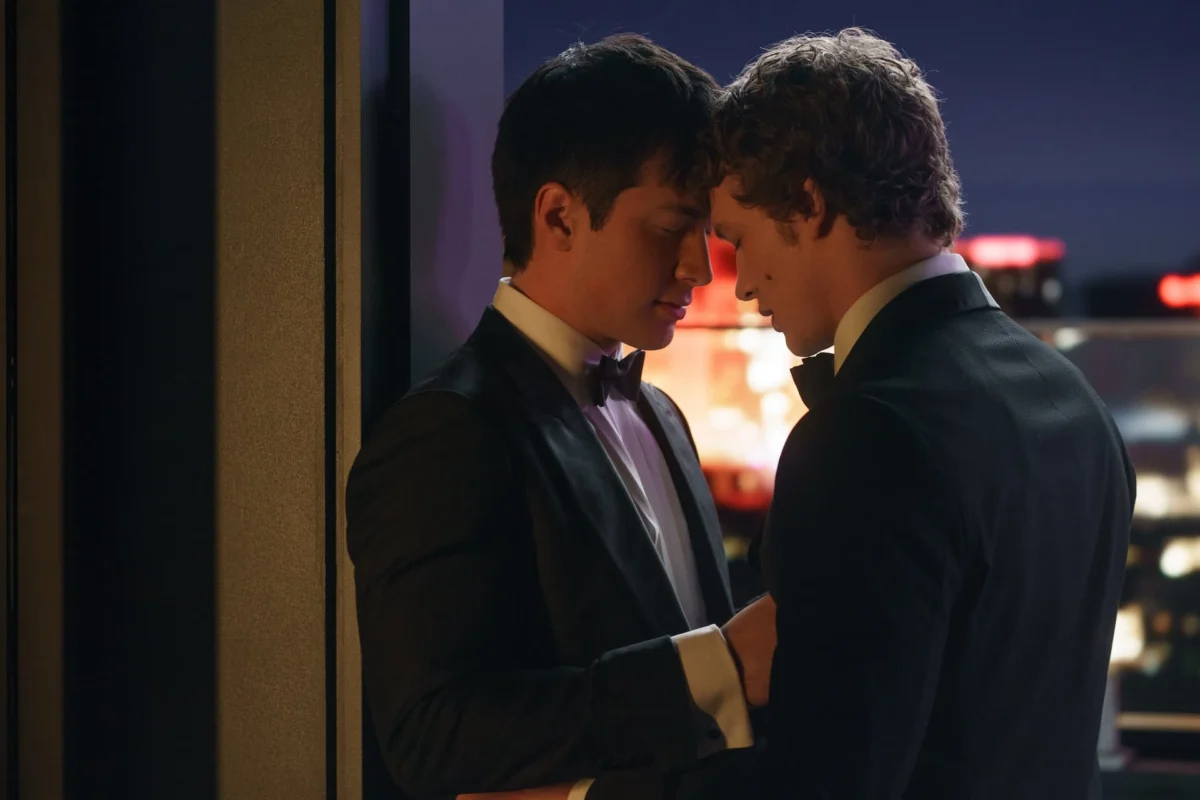
The holiday season of 2023 marked a significant turning point in the domestic consumption of queer media, exemplified by a simple gift from 23-year-old Margaret Hecox to her grandmother. Hecox introduced her relative to "Heated Rivalry," a breakout Canadian television series on HBO Max that chronicles the secret, decades-long romance between two professional hockey players. This interaction was not an isolated incident of familial bonding but rather a micro-representation of a massive demographic shift. The series, and the broader genre of male-to-male (M/M) romance, has moved from the fringes of internet subcultures into the center of the American mainstream, driven primarily by a dedicated and expanding fan base of straight women.
The emergence of "Heated Rivalry" as a cultural touchstone highlights a phenomenon that experts and industry analysts have tracked for years, though rarely at this scale. Long categorized in East Asian markets as "yaoi" or "boy love" (BL), the genre has historically focused on romantic and often erotic relationships between men, produced specifically for a female audience. While these stories have existed for decades in manga, light novels, and independent publishing, the current surge in high-budget Western adaptations is signaling a new era for LGBTQ+ media, one where the "female gaze" is the primary engine of commercial success.
The Digital Surge and the Fujoshi Identity
The scale of this interest is reflected in digital metrics that suggest a significant cultural awakening. On TikTok, the hashtag "fujoshi"—a Japanese term used to describe female fans of M/M romance—has appeared on more than 900,000 videos. This digital footprint is mirrored in search engine behavior. According to Google Trends, searches for terms related to the yaoi fandom and M/M romance reached unprecedented heights in the United States toward the end of 2023. This surge aligns with the release and subsequent viral success of "Heated Rivalry" and other similar titles.
Shampaigne Graves, a consumer consultant and host of a podcast focusing on female spending habits, notes that this is less a new development and more a public emergence of a long-standing private interest. Graves suggests that women are effectively "coming out of the closet" regarding their investment in this genre. The anonymity of the internet previously provided a safe haven for these fans, but the high production values of modern streaming services have validated the content, making it socially acceptable for women of all ages—from college students to grandmothers—to share their affinity for these stories openly.
Analyzing the Demographics of Streaming Success
The data provided by streaming platforms and media monitoring firms like Nielsen confirms the female-dominated nature of this viewership. HBO reported that approximately two-thirds of the audience for "Heated Rivalry" identified as women. This trend is consistent across various platforms and formats. For instance, Amazon MGM Studios’ 2023 film "Red, White & Royal Blue," a political romantic comedy centered on the son of the U.S. President and a British prince, saw a female viewership of 61%. Amazon executives noted that the film was a significant driver of new Prime Video subscriptions, becoming one of the platform’s most-watched romantic comedies of all time.
The trend extends into the realm of prestige cinema and coming-of-age dramas. Sony Pictures’ "Call Me By Your Name," starring Timothée Chalamet, remains a juggernaut in this space. According to Nielsen data from the first quarter of 2026, nearly 70% of the film’s viewers were women. On the social film platform Letterboxd, the movie ranks 46 places higher on the "most fans" list for female-identifying users than it does for male-identifying users. Similarly, Lionsgate reported that "The Perks of Being a Wallflower," which features a prominent subplot involving a clandestine romance between a high school athlete and another male student, has maintained a 60% female audience share since early 2023.
The Literary Foundation and the ‘Yearning’ Factor
While television and film provide the visual spectacle, the publishing industry serves as the bedrock for this movement. Rachel Reid, the author of the "Heated Rivalry" book series, has seen her catalog dominate platforms like Fable and Scribd’s Everand service. Kim Allee, the marketing director for Fable, indicates that M/M romance has effectively unseated "romantasy"—a hybrid of romance and fantasy—as the most popular subgenre among their users.
The appeal for women readers often boils down to a specific emotional resonance frequently described by the buzzword "yearning." Fans and critics argue that these stories allow women to explore deep emotional intimacy and romantic tension without the baggage of traditional gender roles or the "male gaze" that often permeates heterosexual romance. Gianna Saad, a 30-year-old reader and fan of authors like Scarlett Drake and TJ Klune, explains that the genre showcases a level of emotional depth and vulnerability that many women find lacking in other media. By removing the female protagonist from the equation, female readers can project themselves into a space of pure emotional exploration, focusing on the universal aspects of love and romance that transcend gender.
A Chronology of the Genre’s Mainstream Ascent
The path to the current "Heated Rivalry" craze can be traced through several key milestones over the past fifteen years:
- 2011: The publication of Madeline Miller’s "The Song of Achilles" reimagines Greek mythology through a queer lens, becoming a perennial bestseller and a staple of "BookTok" years later.
- 2017: The release of "Call Me By Your Name" brings queer male romance to the forefront of the Academy Awards conversation, proving the genre’s commercial and critical viability.
- 2019: Casey McQuiston’s "Red, White & Royal Blue" becomes a New York Times bestseller, demonstrating the massive appetite for "comfort" M/M romance.
- 2022-2023: The debut of "Heartstopper" on Netflix and "Heated Rivalry" on HBO Max creates a dual-track success, appealing to both younger Gen Z audiences and older millennial/Gen X women.
- 2024: Major retailers like Target and Walmart begin prominently featuring M/M romance titles in their book sections, often placing them alongside mainstream bestsellers.
Industry Implications and the ‘Twilight’ Comparison
The fervor surrounding these titles has led industry veterans to compare the current moment to the "Twilight" or "Fifty Shades of Grey" phenomena. Jennifer Bokal, president-elect of the Romance Writers of America, noted that at the 2024 BookCon convention, merchandise for "Heated Rivalry" was as ubiquitous as any major mainstream franchise.
For Hollywood, the takeaway is clear: authenticity and original storytelling are paramount. Tom Nunan, a former network executive and lecturer at the UCLA School of Theater, Film and Television, suggests that "Heated Rivalry" has provided a playbook for producers. By focusing on niche environments—such as professional sports—and populating them with authentic, high-stakes emotional narratives, studios can capture a majority-female audience that is historically the most loyal and lucrative demographic in scripted entertainment.
However, the trend is not universal. Some queer-centric content continues to draw a more balanced or male-skewing audience. Netflix’s "Heartstopper" and the Disney/20th Century Fox film "Love, Simon" both reported a slight majority of male viewers in the first quarter of 2026. This suggests a fragmentation within the genre: while some stories are being embraced as "universal" coming-of-age tales, others are being specifically marketed to and consumed by the female-driven "romance" fandom.
The Paradox of Representation
Despite the commercial success of specific titles, the broader landscape for LGBTQ+ representation remains complex and, in some ways, precarious. A 2024 report by GLAAD revealed a startling contradiction: while M/M romance is peaking in the cultural zeitgeist, overall LGBTQ+ inclusion in scripted media is declining. The share of inclusive films from top distributors dropped by 14% between 2023 and 2024. Furthermore, the number of LGBTQ+ characters on television plummeted by 23% in the 2024-2025 season compared to three years prior.
Katherine Sender, a professor at Cornell University who researches LGBTQ+ media, warns against over-optimism. She notes that while the success of "Heated Rivalry" is encouraging, it may represent a "palatable" version of queerness that appeals to a specific demographic without necessarily advancing the industry-wide inclusion of more diverse or intersectional LGBTQ+ stories. There is a risk that Hollywood may prioritize "gay romance for women" over other forms of queer storytelling, potentially narrowing the scope of representation even as it appears to expand.
Future Outlook
As of mid-2024, the momentum shows no signs of slowing. Second installments for both the "Red, White & Royal Blue" film and the "Heated Rivalry" series are currently in development. Publishers are aggressively acquiring M/M titles, and authors who once operated in the indie space are receiving major traditional publishing deals.
The rise of this genre reflects a broader shift in how audiences consume media. In an era of algorithmic curation, the power of word-of-mouth among female-centric fan bases has proven to be a more effective marketing tool than traditional advertising. Whether it is a granddaughter sharing a show with her grandmother or a viral TikTok review, the personal connection to these stories is what drives their longevity. As the industry continues to navigate a shifting landscape, the "Heated Rivalry" effect serves as a potent reminder that the female audience remains a primary architect of cultural trends, capable of turning a niche subgenre into a global entertainment powerhouse.