



The landscape of the interactive entertainment industry continues to shift as developers balance the maintenance of live-service titles with the introduction of next-generation hardware and the cultural expansion of gaming media. During the first week of July, several key developments have emerged, ranging from significant mechanical overhauls in the first-person shooter (FPS) genre to the evolving user experience (UX) of high-end handheld consoles. As Battlefield 6 concludes its third season and prepares for a naval-themed expansion, and as titles like Cyberpunk 2077 continue to benefit from cross-media synergy, the industry is witnessing a unique period where legacy refinement meets future-facing technology.
Battlefield 6 and the Technical Pursuit of Tactical Gunplay
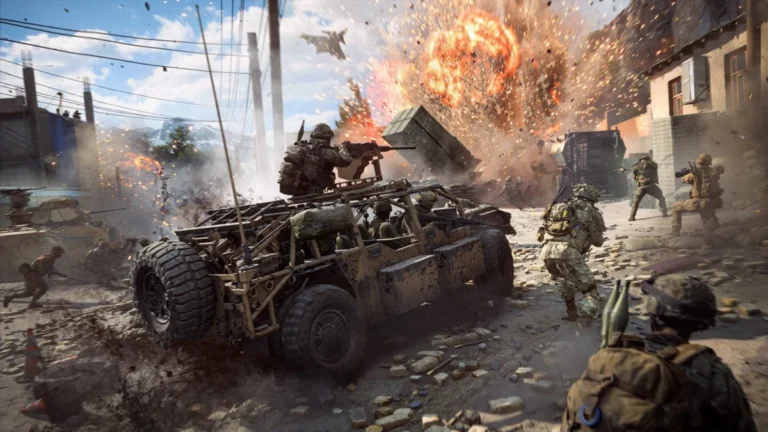
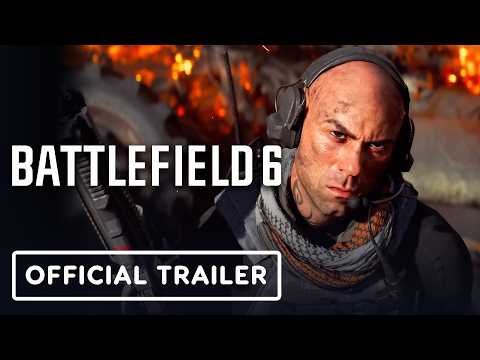
Battlefield Studios has released the final update for Battlefield 6 Season 3, a patch that focuses less on content volume and more on the fundamental "feel" of combat. This update serves as a technical bridge to Season 4, which is confirmed to introduce long-awaited naval combat mechanics. The primary objective of the latest patch was a comprehensive "gunplay update," designed to address community feedback regarding weapon lethality and engagement distances.
According to technical data released alongside the patch, the developers adjusted several core variables, including recoil patterns, damage drop-off curves, and bullet velocity. The stated goal was to replicate the "tactical friction" found in Battlefield 4, a title often cited by the community as the franchise’s high-water mark for mechanical balance. By increasing the difficulty of landing shots at extreme ranges, the studio intended to force players into more deliberate, mid-to-close-range encounters.
Initial analysis of the live environment suggests a mixed impact. While the "Time to Kill" (TTK) remains largely unchanged in close-quarters combat, the effectiveness of Submachine Guns (SMGs) at distances exceeding 100 meters has been significantly curtailed. This creates a stricter "archetype" system where weapon classes are confined to their intended roles. However, veteran players have noted that the incentive to control burst fire—a hallmark of earlier Battlefield titles—has not yet fully replaced the "spray and pray" meta, as many users have simply adjusted their sensitivity settings to compensate for the new recoil variables.

The Handheld Revolution: Switch 2 and the Steam Machine Ecosystem
The handheld gaming market is currently defined by a dual-track evolution: the refinement of proprietary ecosystems and the flexibility of open hardware. The recent rollout of the Switch 2 has brought the importance of User Interface (UI) design to the forefront. Reports from the field indicate that the Switch 2 UI has successfully addressed the "friction" issues present in its predecessor, particularly regarding library management and mass-downloading of software.
For many users, the transition to new hardware is often marred by the tedious process of re-establishing a digital library. The Switch 2’s streamlined "frictionless" downloading system allows for the simultaneous queuing of large-scale titles, such as the Final Fantasy and Persona anthologies, without significant impact on system performance. However, a critical point of failure remains the lack of universal cloud save integration for all users. Those not subscribed to premium online services face the permanent loss of hundreds of hours of progress in the event of hardware theft or failure—a recurring issue in the mobile gaming era.
In tandem with the Switch 2, the Steam Machine continues to carve out a niche as a high-performance alternative. While originally intended to push the boundaries of graphical fidelity, the device is increasingly being utilized for "pick-up-and-play" sessions. Titles like Sektori demonstrate the hardware’s capability to handle complex, buff-stacking mechanics and high-intensity visual effects without the thermal throttling often seen in less robust handhelds. This suggests that the future of the handheld market may lie not just in "triple-A" portability, but in providing a stable platform for high-skill, iterative gameplay.
The Chronology of Industry Resilience and Redemption
To understand the current state of these titles, one must look at the timeline of their development and the external factors that influenced their trajectory.
- Late 2020 – Early 2021: The launch of Cyberpunk 2077 and the early iterations of the current Battlefield engine. Both faced significant technical hurdles and negative consumer sentiment.
- 2022 – 2023: The "Redemption Arc" begins. CD Projekt Red releases the Edgerunners anime, which triggers a massive resurgence in player numbers. Simultaneously, Battlefield Studios pivots away from experimental "Specialist" systems toward a return to class-based gameplay.
- Early 2024: The announcement of the Game Music Festival in London, signaling a shift toward gaming as a holistic cultural experience rather than just a software product.
- July 4th Week: The convergence of Season 3 Battlefield updates, the release of the Cyberpunk Edgerunners Season 2 trailer, and the stabilization of the Switch 2 software library.
The resurgence of Cyberpunk 2077 is particularly noteworthy. Now in its fourth major iteration since launch, the game has transitioned from a cautionary tale of over-ambition to a benchmark for post-launch support. The introduction of "Iconic Weapons" and the Phantom Liberty expansion has redefined the game’s progression system. Players are now utilizing community-driven resources to navigate the dense urban environment of Night City, treating the game as a "back-catalogue" staple rather than a transient launch title.
Cultural Synergy: The Role of Music and Community Events
The impact of gaming extends beyond the screen, as evidenced by the recent Game Music Festival held at the Royal Festival Hall in London. The event featured orchestral performances of scores from Persona 3, 4, and 5, as well as Hades and Hades 2. The sold-out status of these performances highlights the growing importance of "audio-identity" in franchise longevity.
For developers like Supergiant Games (Hades) and Atlus (Persona), music is not merely background noise but a core pillar of the player experience. The Hades 2 performance, in particular, underscored the "learnt skill" inherent in roguelikes. Players who have spent dozens of hours mastering the game’s mechanics find a sense of community in these live settings, reinforcing their emotional investment in the IP. This cultural "stickiness" is what allows franchises to maintain relevance even during long gaps between major releases.
Broader Implications and Future Outlook
The current trends in the gaming industry point toward three major implications for the near future:
1. The Death of the "Jack-of-all-Trades" Weapon Meta
As seen in Battlefield 6, developers are moving toward stricter "role-based" combat. By nerfing the long-range capabilities of SMGs and high-mobility weapons, studios are attempting to restore the rock-paper-scissors balance of traditional tactical shooters. This shift may alienate some casual players who prefer versatile loadouts, but it is expected to increase the longevity of competitive play.
2. Handheld Performance Disparity
The technical gap between high-end handhelds and portable consoles is widening. While the Switch 2 offers a superior UI, it often struggles with resolution, with some titles like Persona 5 Royal reportedly running at 540p in handheld mode. In contrast, the Steam Machine and other PC-based handhelds are prioritizing raw power. This creates a bifurcated market: one side focusing on "vibes" and ecosystem accessibility, and the other on technical parity with home consoles.

3. The "Edgerunners" Model of Marketing
The success of Cyberpunk 2077 has proven that transmedia storytelling is the most effective way to revitalize a struggling IP. With a second season of Edgerunners on the horizon, CD Projekt Red has created a self-sustaining loop of interest. Other studios are likely to follow suit, seeking out animation or film partnerships to drive engagement for their aging live-service titles.
Official Responses and Strategic Directions
While official statements from Battlefield Studios remain focused on the technical aspects of Season 4’s naval combat, internal sources suggest a renewed commitment to "legacy features." The studio’s response to the gunplay update has been one of cautious optimism, noting that while the data shows a more "healthy" distribution of engagement distances, there is still work to be done on weapon-specific "weight" and feedback.
In the JRPG sector, Atlus has signaled a "Persona Overload" for the coming years. With a Persona 4 remake and Persona 6 rumored for 2027, the studio is betting on the fact that players are willing to commit hundreds of hours to these "gargantuan" experiences. However, the challenge for players remains the "backlog" problem—the sheer length of these titles makes them difficult to revisit after a hiatus, leading to a "commit or quit" mentality among the fan base.
As the week of July 4th concludes, the gaming industry stands at a crossroads. The refinement of existing hits like Cyberpunk 2077 and Battlefield 6 demonstrates a dedication to long-term quality, while the hardware innovations of the Switch 2 and Steam Machine suggest that the way we consume these experiences is fundamentally changing. Whether through a tactical rifle scope in a digital warzone or through the strings of an orchestra in London, the connection between the player and the medium is becoming increasingly multi-faceted.