


The Walt Disney Company announced its fiscal second-quarter earnings on Wednesday, delivering a financial performance that surpassed Wall Street’s expectations. Driven by a robust showing in its streaming and theme park divisions, the media giant reported a 7% increase in overall revenue, reaching $25.17 billion for the period ending March 28. Following the release of the report, Disney shares saw a significant uptick, gaining approximately 7% in after-hours trading as investors reacted positively to the company’s revised guidance and strategic outlook.
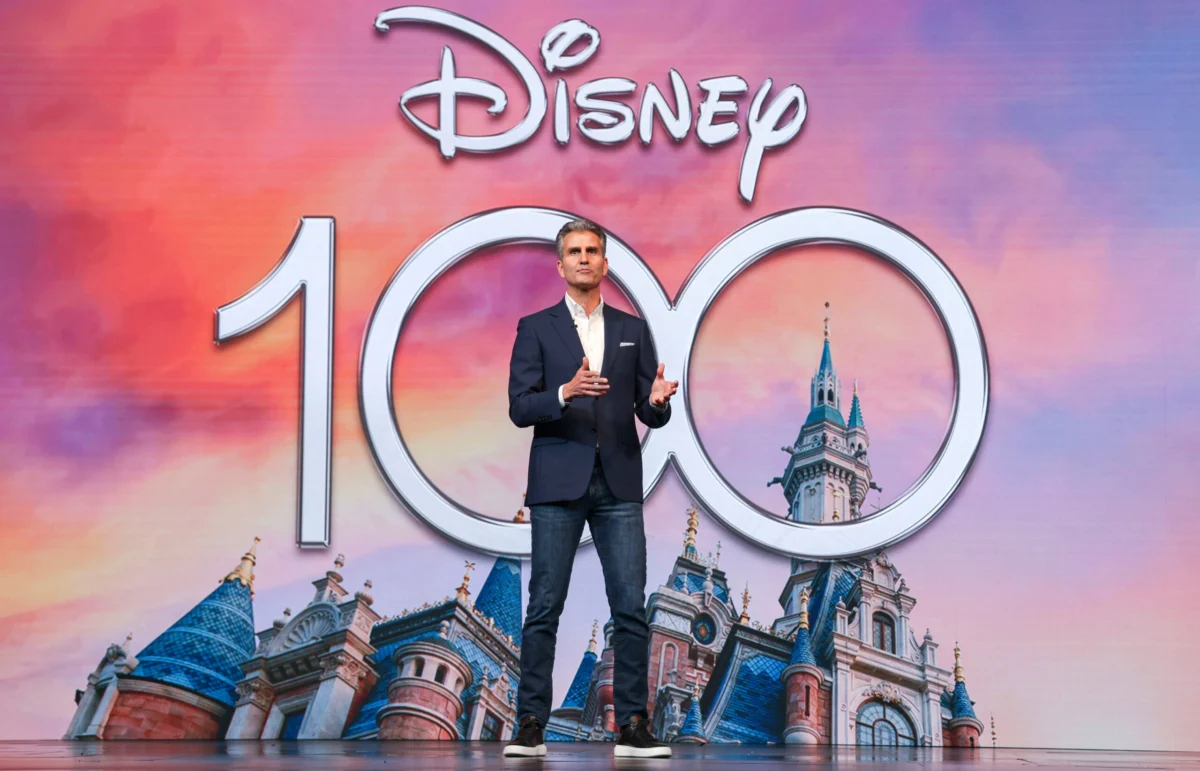
The quarterly results arrive at a pivotal moment for the company, marking the first earnings report under the leadership of Josh D’Amaro, who transitioned into the CEO role in March. D’Amaro, who succeeded long-time chief executive Bob Iger, inherited a conglomerate navigating a complex transition from traditional linear television to a digital-first entertainment model. While the company faces ongoing macroeconomic headwinds and geopolitical instability, the latest figures suggest that Disney’s core "Experiences" and "Entertainment" segments remain resilient.
Financial Performance and Segment Breakdown
Disney’s net income for the second quarter stood at $2.47 billion, or $1.27 per share. This represents a decrease from the $3.4 billion, or $1.81 per share, reported during the same period the previous year. However, when adjusting for one-time items—including the strategic acquisition of the NFL Network and other media assets by ESPN—the company reported adjusted earnings per share (EPS) of $1.57. This figure comfortably beat consensus estimates provided by LSEG.
The company’s "Experiences" segment, a critical engine for cash flow that encompasses global theme parks, resorts, and the Disney Cruise Line, reported revenue of nearly $9.5 billion. This marks a 7% year-over-year increase. Despite the revenue growth, the segment showed signs of a shifting consumer landscape. While global guest attendance rose by 2%, domestic visitation at U.S.-based parks saw a 1% decline compared to the previous year. Disney officials attributed this domestic softening to a continued trend of lower international visitation at U.S. parks, a phenomenon that has persisted over the last several quarters.
In the "Entertainment" segment, which includes traditional cable networks, streaming services, and theatrical film releases, revenue climbed 10% to $11.72 billion. This growth was bolstered by a 4% revenue contribution from the finalized Fubo deal and a 14% surge in subscription and affiliate fees, which reached $7.8 billion. The rise in subscription revenue was largely driven by recent price increases across Disney’s streaming portfolio, including Disney+. Advertising revenue also trended upward, increasing by 5%, which the company linked to higher ad impressions on its streaming platforms.
The D’Amaro Strategy: Intellectual Property and Technological Integration
During his first earnings call as CEO, Josh D’Amaro emphasized a strategy centered on the aggressive monetization of intellectual property (IP) and the integration of advanced storytelling technology. D’Amaro noted that the company’s future growth would be dictated by how effectively it leverages its vast library of characters and franchises across both digital and physical platforms.
"It’s a competitive streaming marketplace out there right now," D’Amaro told investors. "Despite that, we saw an increase in engagement in the quarter, and then when we look ahead, our key drivers for engagement growth include content and product enhancements."
The CEO’s vision includes a heavier reliance on blockbuster theatrical releases to fuel downstream interest in streaming and theme park attractions. The quarter’s revenue was notably aided by the box-office success of "Avatar: Fire and Ash" and "Zootopia 2," both of which underscored the enduring appeal of Disney’s core franchises. D’Amaro’s tenure begins following a period of internal restructuring, including a round of layoffs in April 2026 aimed at streamlining operations and reducing costs.
Sports and the Evolving Relationship with the NFL
Disney’s sports segment, dominated by ESPN, reported a 2% revenue increase to $4.61 billion. The growth was attributed to higher subscription fees and the impact of the NFL media assets deal. However, the segment also faced rising operational costs due to escalating contract rates for sports rights.
A significant point of discussion during the earnings call was the future of Disney’s relationship with the National Football League (NFL). The league has recently signaled an intent to renegotiate its media rights deals earlier than the original 2029-30 opt-out period. Reports suggest the NFL is seeking to eliminate opt-out clauses in exchange for higher annual revenue.
Disney CFO Hugh Johnston addressed these developments, stating that while formal early renewal conversations have not yet begun, the company remains open to dialogue. "We haven’t engaged yet with the league on early renewal conversations, but we’re not dogmatic about the process," Johnston said. "We expect to be in business with the league for years to come, and we’ll of course evaluate this deal as we would any deal with discipline and a focus on driving value for Disney shareholders."
The launch of the ESPN direct-to-consumer (DTC) streaming app in August has already begun to pay dividends. Disney reported that revenue from digital subscribers is now more than offsetting the revenue lost from the continued decline of the traditional cable "bundle."
Macroeconomic Headwinds and Consumer Resilience
Despite the positive financial data, Disney leadership remains cautious regarding the broader economic environment. The report highlighted concerns over surging oil prices, exacerbated by geopolitical tensions including U.S.-Israel attacks on Iran in late February. Higher fuel costs typically correlate with increased travel expenses, which can impact theme park attendance.
However, CFO Hugh Johnston maintained that, for now, the Disney consumer remains "strong." Johnston noted that while the company is mindful of macro uncertainty, they have yet to see significant evidence of fuel prices dampening demand. "Bookings for the second half of the year are quite strong," Johnston told CNBC. He further clarified that the company has "levers in place" to adjust operations should a further rise in fuel prices lead to a shift in consumer behavior.
This resilience is reflected in the company’s updated guidance. Disney is projecting full-year adjusted earnings growth of approximately 12% for fiscal 2026, with continued double-digit growth expected in fiscal 2027. To further bolster shareholder confidence, the company increased its share repurchase target to at least $8 billion for the fiscal year, up from a previous target of $7 billion.
Chronology of Recent Events Leading to the Q2 Report
To understand the context of the second-quarter results, it is necessary to look at the timeline of events that have shaped Disney’s trajectory over the past several months:
- August 2025: Disney launches the ESPN direct-to-consumer app, marking a major step in its transition away from linear television dependence.
- September 2025: Disney implements significant price hikes for Disney+ and Hulu, aimed at reaching streaming profitability.
- January 2026: The acquisition of NFL Media assets is finalized, integrating the NFL Network into the ESPN ecosystem.
- February 2026: Geopolitical tensions in the Middle East cause a global surge in oil prices, raising concerns about the "Experiences" segment’s travel-related revenue.
- March 2026: Josh D’Amaro officially takes over as CEO, succeeding Bob Iger. The company announces a strategic pivot toward IP-heavy investment.
- April 2026: Disney conducts a round of layoffs across several divisions to optimize the cost structure ahead of the Q2 earnings release.
- May 2026: Disney reports $25.17 billion in Q2 revenue and raises its share buyback guidance to $8 billion.
Analysis of Implications and Future Outlook
The second-quarter report suggests that Disney is successfully navigating the "trough" of its digital transformation. By stopping the granular reporting of linear TV revenue and subscriber numbers last quarter, the company signaled to the market that it no longer views those metrics as the primary indicators of its health. Instead, the focus has shifted to "Total Segment Operating Income," which is projected to reach $5.3 billion in the third quarter.
The decline in domestic park attendance, while small at 1%, serves as a warning sign that the post-pandemic "revenge travel" surge may be cooling. However, the increase in per-guest spending indicates that Disney is successfully extracting more value from its existing visitors through premium offerings, Genie+ services, and high-margin food and beverage sales.
For the entertainment unit, the reliance on massive tentpole films like "Avatar" remains a double-edged sword. While these films drive revenue, the high cost of production and marketing places immense pressure on each release to perform at record-breaking levels. D’Amaro’s focus on "technological enhancements" suggests that Disney may look to augment these films with augmented reality (AR) or more immersive in-park experiences to extend the lifecycle of each piece of IP.
Politically, the company continues to navigate a complex landscape. The report mentioned mounting pressure regarding late-night host Jimmy Kimmel, reflecting the ongoing scrutiny Disney faces as a major cultural arbiter. How D’Amaro manages these external pressures while maintaining the company’s brand neutrality will be a key theme of his first year in office.
In conclusion, Disney’s fiscal second quarter demonstrates a company that is successfully leveraging its diverse portfolio to offset weaknesses in traditional media. With a clear focus on streaming profitability, sports rights discipline, and the continued expansion of its theme park footprint, the D’Amaro era has begun with a strong financial foundation. Investors will now look to the second half of the year to see if the company can maintain this momentum in the face of persistent global economic uncertainty.