

The release of the HBO documentary Bang My Box: The Robin Byrd Story marks a significant retrospective on the career of Robin Byrd, a figure whose influence on New York City’s media landscape and the broader conversation regarding sex positivity spanned more than two decades. Directed by Jyllian Gunther and Stephanie Schwam, the film examines the life and legacy of the former adult film star turned public access television host, positioning her as a pivotal character in the history of free speech and social advocacy. From 1977 to 1998, The Robin Byrd Show was a staple of Manhattan’s Channel 35, providing a platform for adult entertainers, exotic dancers, and marginalized voices within the LGBTQ community. The documentary, which premiered on HBO Max, seeks to move beyond the surface-level provocations of Byrd’s program to analyze her role as a cultural icon who navigated the complexities of censorship, the HIV/AIDS epidemic, and the transition from analog to digital media.
The Genesis of a Public Access Icon
Robin Byrd, now 71, emerged as a local celebrity during a transformative period for New York City. Her eponymous show began airing in 1977, a time when public access television was in its infancy. Under the regulations of the Federal Communications Commission (FCC) and local franchise agreements, cable providers were required to set aside channels for public use, allowing citizens to produce and broadcast their own content with minimal oversight. This democratic approach to broadcasting allowed Byrd to create a program that was unapologetically raw and low-budget.
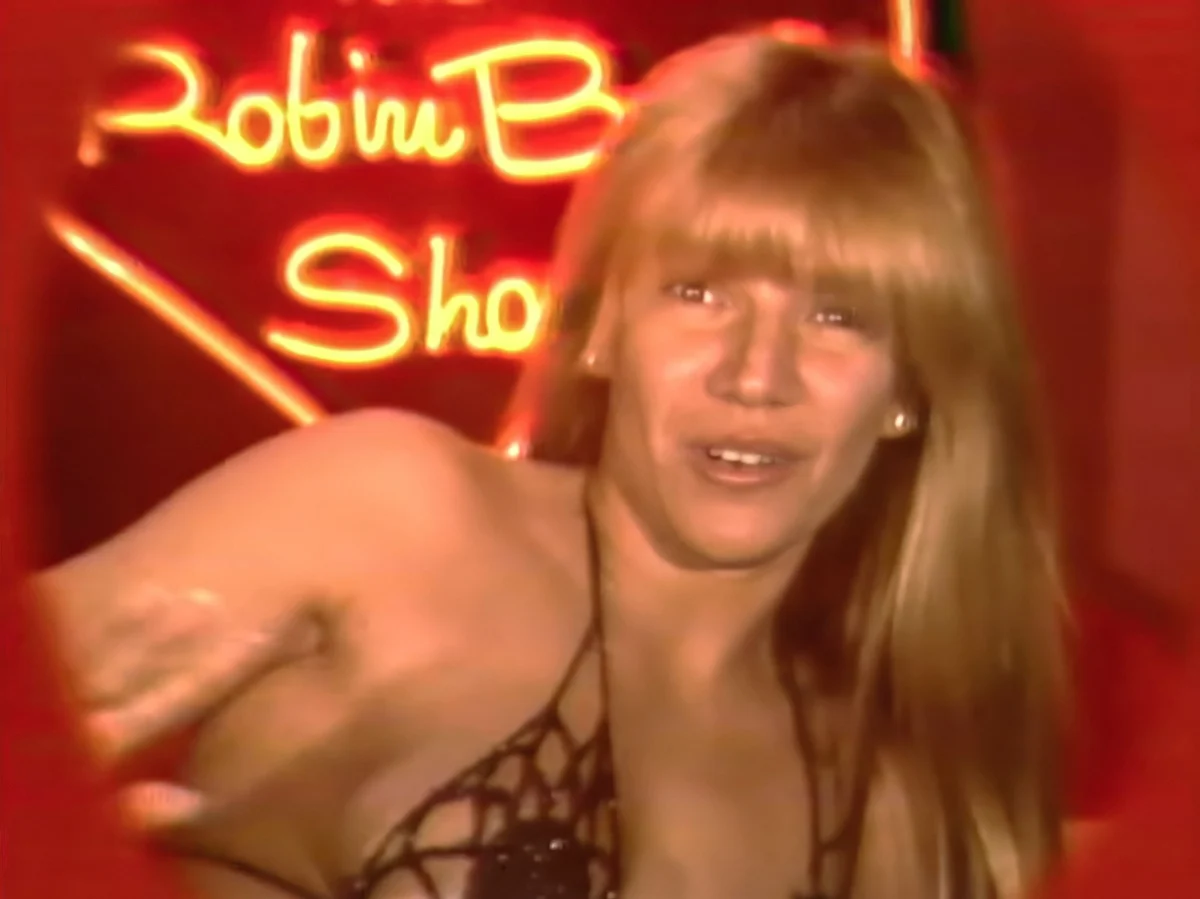
The Robin Byrd Show was characterized by its distinctive aesthetic: a garish, heart-shaped set, rockabilly music—specifically the song "Baby, Let Me Bang Your Box" by The Toppers—and Byrd’s own persona. Often appearing in a black mesh bikini, Byrd interviewed guests from the adult entertainment industry, ranging from pornographic film stars to strippers. The format typically concluded with a performance by the guest, followed by Byrd dancing to her theme song. Despite the adult nature of the content, the show maintained a sense of community. Byrd often compensated her guests with tapes of their appearances rather than monetary payment, a practice she colloquially referred to as "tit for tat."
Chronology of Cultural and Social Advocacy
Throughout the 1980s and 1990s, Byrd’s platform evolved into more than a showcase for adult entertainment. As the HIV/AIDS crisis began to devastate New York City, particularly the creative and LGBTQ communities, Byrd used her airtime to promote public health. Her catchphrase, "don’t forget to wear your rubbers," became a recognizable mantra for safe sex at a time when mainstream media was often hesitant to address the epidemic directly.
Byrd’s show also served as an early venue for transgender representation. In an era when trans individuals were largely invisible or mocked in popular media, Byrd featured trans women on her program, often challenging the prejudices of her other guests and the viewing public. The documentary highlights an instance where Byrd had to mediate a conflict between a trans guest and a gay male actor, illustrating the internal frictions within the LGBTQ community and Byrd’s role as an early, if unconventional, mediator of identity politics.
By the mid-1990s, Byrd’s cultural footprint had expanded beyond Manhattan. In a notable moment of mainstream recognition, she was parodied on Saturday Night Live by cast member Cheri Oteri. This homage signaled Byrd’s status as a quintessential New York figure, recognized even by those who did not regularly view her late-night broadcasts.
Legal Battles and the Fight Against Censorship
One of the most significant chapters in Byrd’s career was her legal challenge against Time Warner Cable. In the 1990s, as political pressure mounted to regulate "indecent" content on cable television, Time Warner attempted to scramble the signal of public access shows like Byrd’s. The cable provider sought to implement a system where viewers would have to submit a written request to receive the channel, effectively creating a barrier to access.
Byrd filed a landmark lawsuit to prevent this scrambling, arguing that it violated the First Amendment and the principles of public access television. This legal battle occurred against the backdrop of the Cable Television Consumer Protection and Competition Act of 1992 and the subsequent Telecommunications Act of 1996. These federal laws sought to give cable operators more control over "patently offensive" programming. However, Byrd’s efforts, alongside other free-speech advocates, underscored the importance of public access as a "public square" for electronic media. Her victory in preventing the immediate censorship of her program remains a cited moment in the history of cable regulation and viewer privacy.
The Transition from Analog to Digital Media
The conclusion of The Robin Byrd Show’s original run in 1998 coincided with the rise of the internet, a technological shift that fundamentally altered the adult entertainment industry. In the documentary, Byrd reflects on the "harshness" of the digital era compared to the "artsy" nature of analog production. She notes that the transition to digital video—which she likens to the difference between a warm incandescent bulb and a cold LED—stripped the industry of its mystique and stardom.
Byrd’s decision to retire from active production was partly influenced by the unwieldy nature of the burgeoning internet. While her show thrived in the specific cultural context of New York City—a city she describes as "born, bred, and raised" to accept diverse lifestyles—the global reach of the internet presented new challenges. Byrd expressed concern that the nuances of her show would be lost on rural or religiously conservative audiences who lacked the local context of Manhattan’s public access scene. Furthermore, she resisted the transition to web-based platforms due to burgeoning age-verification requirements and the loss of anonymity for viewers, which she viewed as an infringement on the privacy of the home.
Supporting Data and Industry Implications
The impact of Robin Byrd can be measured through both viewership longevity and the subsequent evolution of adult media. At its peak, The Robin Byrd Show reached hundreds of thousands of households in the New York metropolitan area. Public access television, while often dismissed as "amateur," served as a precursor to modern content creation platforms like YouTube, OnlyFans, and Twitch. Byrd’s ability to build a personal brand and a direct relationship with her audience—supported by secondary revenue streams like her own phone-sex lines—foreshadowed the "creator economy" of the 21st century.
Data from the adult industry suggests that the shift to digital platforms led to a decentralization of talent. As Byrd observed, the "stars" of the analog era were replaced by a more fragmented landscape of performers. Additionally, the legal precedents set during her tenure continue to be relevant. Today, states such as Texas and Florida have implemented age-verification laws for adult websites, triggering new rounds of litigation regarding the First Amendment and digital privacy—echoing the same concerns Byrd raised during her 1990s lawsuit against Time Warner.
Analysis of Broader Impact and Documentary Reception
The HBO documentary Bang My Box serves as a "love letter" to a specific era of New York history. Critics and cultural historians note that Byrd represented a version of the city that has largely been erased by gentrification and the corporatization of media. Michael Musto, a prominent chronicler of New York nightlife, suggests in the film that Byrd’s retirement marked the end of an era where local celebrities could command significant influence without national syndication.
The film’s final scene, featuring a 71-year-old Byrd walking naked on a beach, is presented as a definitive statement on body positivity and authenticity. Byrd’s refusal to hide her aging body is framed as a continuation of her lifelong advocacy for self-respect and freedom of expression. By participating in the documentary, Byrd aimed to ensure her story was told by those who understood the specific "Byrd-watcher" subculture she fostered.
Conclusion: The Enduring Influence of Robin Byrd
Robin Byrd’s career reflects the complexities of American media over the last half-century. She navigated the transition from the experimental freedom of 1970s public access to the highly regulated and scrutinized digital landscape of today. While she remains a polarizing figure to some, her contributions to the discourse on safe sex, LGBTQ rights, and the First Amendment are documented facts of her professional life.
As Bang My Box: The Robin Byrd Story streams to a national audience, it invites a re-evaluation of Byrd not merely as a purveyor of "smut," but as a resilient entrepreneur and advocate. Her legacy is intertwined with the history of New York City itself—a city that, for twenty-one years, tuned in after 10 pm to hear a woman in a mesh bikini remind them to "lie back, get comfortable," and, above all, protect themselves and each other. The documentary ensures that her role in the fight for free speech and social acceptance is recorded as a significant chapter in the American cultural narrative.