


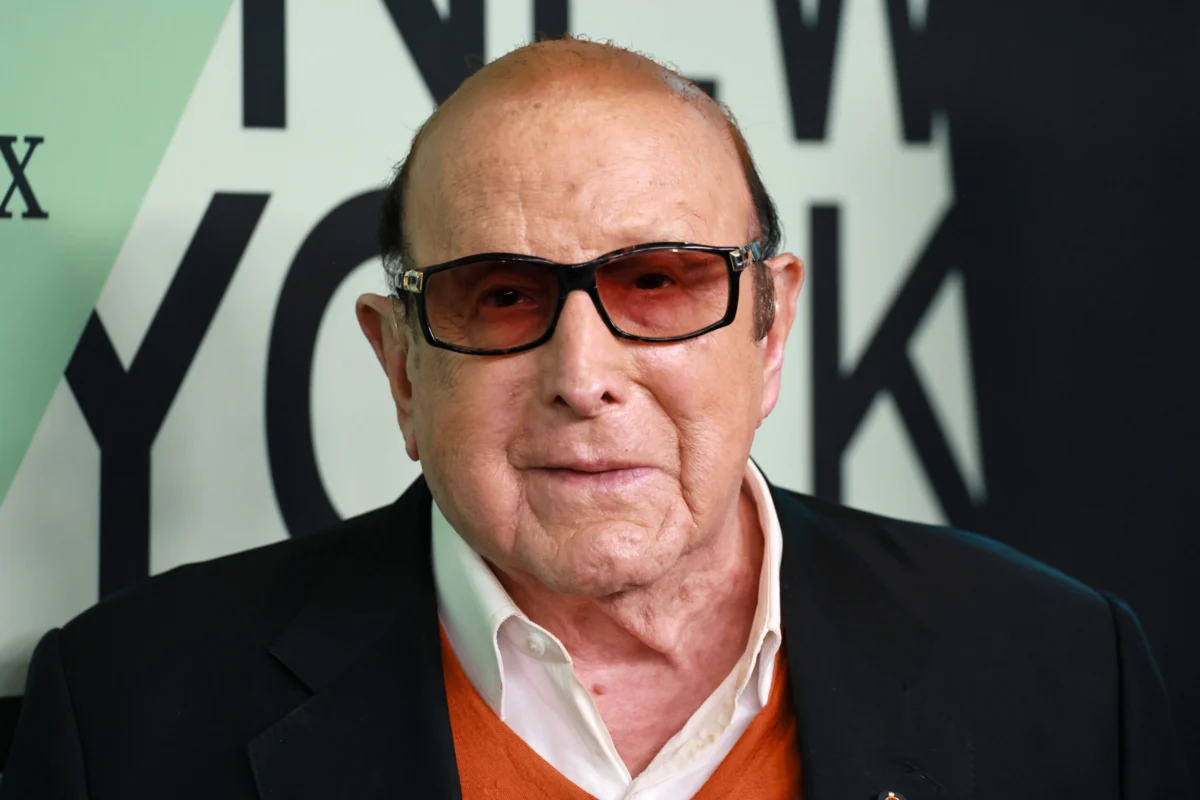
The solemn gathering, held at the historic Central Synagogue in Midtown Manhattan, commemorated a life dedicated to sound, talent, and groundbreaking innovation. Davis, who passed away peacefully at the age of 94 a week prior, was remembered through emotional tributes, poignant performances, and heartfelt eulogies that painted a vivid portrait of a man universally acknowledged as a music obsessive and an unparalleled champion of artistic integrity. His funeral was not merely a memorial; it was a testament to a towering figure whose influence permeated every facet of popular music for over half a century, leaving an indelible mark on countless careers and the very fabric of the global entertainment landscape.
A Legacy Honored: The Service at Central Synagogue
The atmosphere inside the Central Synagogue was one of profound respect and collective mourning, yet also a celebration of an extraordinary life. The service commenced with a moving clarinet solo performed by Grammy-winning saxophonist Kenny G, setting a reverent tone for the proceedings. His melodic offering underscored Davis’s deep appreciation for instrumental artistry, a characteristic that defined his diverse tastes and signings throughout his illustrious career.
Midway through the service, Academy Award-winning artist Jennifer Hudson delivered two powerful vocal performances that resonated deeply with attendees. She rendered a soul-stirring rendition of Leonard Cohen’s iconic "Hallelujah," a song that has transcended its origins to become a universal anthem of hope and resilience. Following this, Hudson paid tribute to one of Davis’s most celebrated discoveries, Whitney Houston, with a breathtaking performance of "I Will Always Love You." Houston, whose career Davis meticulously guided to unparalleled heights, was often cited as his greatest artistic partnership, and Hudson’s rendition served as a poignant reminder of that profound connection. The emotional weight of her performance was palpable, drawing tears from many in the congregation who remembered Davis’s unwavering belief in Houston’s singular talent.
The musical interludes were interspersed with a series of eulogies delivered by some of the biggest names in music, artists whose careers were inextricably linked to Davis’s mentorship and strategic genius. These included Dionne Warwick, Bruce Springsteen, Barry Manilow, Alicia Keys, and Davis’s two sons, Fred and Doug Davis, alongside other industry stalwarts. Each speaker offered a unique perspective on Davis, collectively illustrating his multifaceted impact as a discoverer, a negotiator, a mentor, and a friend.
Architect of Sound: Clive Davis’s Illustrious Career
Clive Davis’s journey to becoming one of music’s most revered moguls was unconventional. Born in Brooklyn, New York, in 1932, Davis initially pursued a career in law, graduating from Harvard Law School in 1956. He began his professional life as a lawyer, eventually joining Columbia Records’ legal department in 1960. His sharp intellect and keen business acumen quickly propelled him through the ranks, leading to his appointment as president of Columbia Records in 1967. This marked a pivotal moment, as Davis, despite his lack of traditional music industry background, possessed an uncanny ability to identify raw talent and forecast musical trends.
During his tenure at Columbia, Davis transformed the label from a predominantly adult contemporary and classical powerhouse into a formidable force in rock and pop. He signed an astonishing array of artists who would go on to define generations, including Janis Joplin, Santana, Laura Nyro, Blood, Sweat & Tears, Chicago, and Earth, Wind & Fire. His foresight extended to artists like Bruce Springsteen, whom he famously signed after an acoustic audition in his office in 1972, and Billy Joel, both of whom would become pillars of the Columbia roster. This period established Davis as the "man with the golden ears," a moniker that would follow him throughout his career.
In 1974, following a controversial departure from Columbia, Davis embarked on a new chapter, founding Arista Records under the backing of Columbia Pictures. Arista quickly became a powerhouse, home to artists like Barry Manilow, whom Davis helped transform into a superstar, and later, Aretha Franklin, whose career he revitalized. However, it was his signing of a young Whitney Houston in 1983 that would become one of his most defining achievements. Davis meticulously guided Houston’s career, shaping her sound and image, and helping her become one of the best-selling artists of all time. Under his leadership, Arista boasted a diverse roster, from the Grateful Dead to Alan Jackson, showcasing his incredible breadth of taste.
After selling Arista to BMG in the 1990s and serving as its CEO, Davis once again demonstrated his entrepreneurial spirit and unyielding passion for music. At an age when many contemplate retirement, the then 67-year-old launched J Records in 2000. This new venture saw him discover and nurture a new generation of talent, most notably Alicia Keys, Jennifer Hudson, and Mario. J Records quickly achieved significant success, further cementing Davis’s reputation as an industry titan who consistently stayed ahead of the curve. His legendary pre-Grammy parties, which began in 1976, also became an iconic annual event, a nexus where music’s past, present, and future converged, symbolizing his enduring influence and ability to bring diverse talents together.
Tributes from the Icons: Voices of Gratitude
The eulogies delivered by Davis’s artists were particularly moving, each a deeply personal account of his profound impact.
Dionne Warwick’s Poignant Remembrance: As the first speaker after Rabbi Angela Buchdahl, Dionne Warwick shared a deeply personal recollection of Davis’s influence on her career. She revealed that at a point when she was between record deals and contemplating leaving the music industry altogether, Davis pursued her relentlessly. "You may be willing to give the business up, but the business isn’t willing to give you up," she remembered him saying, a testament to his belief in her enduring talent. Warwick, who had been a prominent artist for decades, found new life in her career under Davis’s guidance. She also shared a touching anecdote about "Somewhere Over the Rainbow," a song Davis had wished he produced, and she honored his memory by singing a portion of it. In a creative tribute, Warwick crafted an acronym for his first name: "Clive" stood for "Completely loyal, incredibly valuable and everlasting." Her closing words, "He was always asking, where’s my Dionne? Well I’m here today, Clive, for you. I’ll always be here for you," underscored the deep bond they shared.
Barry Manilow’s Heartfelt Anecdote: Barry Manilow, one of Davis’s earliest and most successful signings at Arista, opened his eulogy with a poignant remark: "A few months ago, surgeons removed a piece of my lung. Last week, I lost a piece of my heart." His words immediately conveyed the depth of his grief. Manilow recounted their famously contentious yet incredibly productive dynamic, characterized by frequent arguments over song choices. He recalled Davis imploring him to cover "Brandy," a song Manilow initially felt was not a fit for his style. After recording a version they both deemed "terrible," Manilow presented softer takes, to which Davis simply replied, "just do that." This pivotal moment led to the creation of "Mandy," Manilow’s first No. 1 hit and a career-defining song. "He would show me a song; I would turn it down; we would argue; I would rearrange it; I would record it," Manilow summarized their nearly 50-year collaboration. He spoke of Davis’s unwavering belief in him from the very beginning, a conviction that never wavered. Even in his final weeks, Davis was still pushing Manilow on album concepts, calling him "twice, three times a day." Manilow concluded with a touch of humor and profound sadness: "I’m going to miss him. Who am I going to argue with? Oh, Clive, I wish we could do it all again. Thanks for everything, my friend."
Alicia Keys: The Man Who Believed First: Following Jennifer Hudson’s performance, Alicia Keys took the stage, visibly moved to tears. After a moment to compose herself, she read a letter addressed "to the man who believed first." Keys, whom Davis signed to J Records as a burgeoning talent, articulated his unique ability to see beyond the surface. "You saw the music that was still sleeping inside me, waiting for someone with the wisdom and the courage to call it forward," she stated. Her tribute highlighted Davis’s role as a guardian of artistic integrity in an industry often driven by commercial interests. "In a world that so often reduces art to commerce and genius to product, you held the line. You reminded me again and again that what we were doing was about truth and legacy and about the human heart reaching out to another human heart and saying you’re not alone." Her words underscored Davis’s profound understanding of the artist’s soul and his commitment to fostering genuine expression.
Bruce Springsteen: The Golden Moment: Bruce Springsteen, a monumental figure Davis signed to Columbia Records in 1972, delivered the final eulogy, beginning with a characteristic dry wit that drew laughter from the crowd. He jokingly called Davis "the most humble man in the music business," before quickly correcting himself: "Not really. Clive Davis was big and bombastic and brave and full of ideas. He was born to run everything." Springsteen then recounted the fateful day in 1972 when he walked into Davis’s New York office, guitar in hand, and played a few songs. Davis’s immediate response – "Welcome to Columbia Records" – was, as Springsteen described it, the "golden moment" of his career. "It’s the moment, the one where, if you’re talented, if you’re lucky enough, it comes but once in your life," Springsteen explained. "If the right man is listening to you from across that big desk. For me, now and forever, Clive Davis was that right man." His tribute encapsulated the dream of countless aspiring musicians – to be truly heard and recognized by a visionary like Clive Davis.
Family Reflections: A Personal Glimpse
Beyond his professional achievements, Davis was also remembered as a devoted family man, albeit one whose career often demanded immense time and travel. His sons offered a more intimate perspective on the man behind the music mogul.
Fred Davis, the elder son, spoke of his earliest memories of his father’s ascent, recalling sitting on the yellow carpeting of his father’s CBS Records office as a child, being asked to read the lyrics to "Blinded by the Light." He chronicled his father’s resilience and determination, from his firing from Columbia and his immediate resolve to start Arista, to the "tenacity of a 67-year-old man who refused to go down, refused to retire" when he founded J Records decades later. Despite these incredible professional feats, Fred emphasized, "But most importantly, from my perspective, his love of being a dad. He was the best. And notwithstanding any of the incredible accomplishments, that is what I will remember him for the most."
Doug Davis, 12 years younger than Fred, acknowledged that his father’s demanding schedule meant he wasn’t always present for typical childhood activities, often out late at concerts, artist showcases, and traveling the world. However, he described growing closer to his father in adulthood, working with him in the industry, and helping him plan the legendary pre-Grammy parties. Doug shared that Clive Davis spent his final days surrounded by family, feeling loved and sharing laughter. He humorously contrasted his father’s presence: "He was not the kind of dad who would throw a ball with you in the backyard, but he was the kind of dad who made sure to take a 13-year-old to see Frank Sinatra, Jerry Lewis, and Sammy Davis Jr. at the Greek Theater. He was not the kind of dad to wake up early to drive you to school, but he was the kind of dad who kept me up really late on a school night to make sure I was at that legendary Whitney Houston showcase at Sweetwater’s." These anecdotes painted a picture of a father who expressed his love through shared experiences within his world of music and entertainment.
Industry Voices and Absent Friends
The impact of Clive Davis extended beyond his direct signings, touching the entire music industry. Sony Music Group CEO Rob Stringer, whose company now encompasses the labels Davis spearheaded, spoke of the record company as Davis’s "second home." Stringer affirmed that Davis’s legacy would never be forgotten, stating, "I can tell everybody here today quite easily that he will never be forgotten at Sony Music, because so much of the bedrock of incredible music in our company bears his hallmark. Whilst we may not be changing the company’s name to Clive Davis Music, which he might quite’ve liked, we’ll honor his name as the great music man he was." His words underscored the institutional recognition of Davis’s profound and lasting contributions.
Among the many who wished they could attend, Paul Simon, currently on tour, sent a heartfelt note read by Doug Davis. Simon expressed regret for not having spent more time with Davis, cherishing their "conversation that was always interesting, ranging from music to family to politics and back to music." He revealed that Davis, along with a few others, was supposed to attend his upcoming July concert at Forest Hills Stadium. Simon concluded with a touching dedication: "I’ll be singing for everyone, but in my heart, I’ll be dedicating the night to the man in the empty seat, dead center in the 10th row." This tribute from a peer and legend further highlighted the personal and professional respect Davis commanded across the industry.
The Final Farewell: A Musical Send-off
As the formal speeches concluded, Clive Davis’s family solemnly guided his casket out of the synagogue, preparing for a private burial. In a final, fitting tribute to a man whose life was inextricably linked to music, a string quartet played two iconic songs as he made his way down the aisle and out the doors. The strains of Whitney Houston’s exuberant "I Wanna Dance With Somebody (Who Loves Me)" filled the air, a joyful yet poignant reminder of his greatest discovery and the immense happiness her music brought to millions. This was followed by Bruce Springsteen’s anthem, "Born To Run," a powerful and symbolic choice for a man who seemed destined to run, build, and innovate throughout his extraordinary life. The musical send-off served as a beautiful encapsulation of his enduring legacy, a final melody echoing the profound impact he had on the world of sound.
The Enduring Legacy of Clive Davis
Clive Davis’s passing leaves an irreplaceable void in the music industry, but his legacy is monumental and enduring. He was more than a record executive; he was a visionary who understood the symbiotic relationship between art and commerce, a rare individual who could balance creative intuition with shrewd business strategy. His ability to identify and nurture raw talent, often against conventional wisdom, led to the discovery and global success of countless artists across diverse genres, from rock and pop to R&B and country.
Davis’s approach to artist development became a blueprint for the industry. He was known for his hands-on involvement, meticulously guiding artists through song selection, production, and marketing, always with an unwavering belief in their potential. He fostered an environment where artists felt supported and understood, allowing them to reach their fullest creative expression while navigating the complexities of the music business. His tenure at Columbia, Arista, and J Records marked eras of unparalleled success and innovation, constantly pushing boundaries and setting new standards.
The tributes at his funeral were not just eulogies for a man, but affirmations of a profound and lasting influence. From the raw, unpolished talent of Bruce Springsteen to the soaring vocals of Whitney Houston and the innovative artistry of Alicia Keys, Davis saw and cultivated genius. He was a mentor, a catalyst, and a true believer in the power of music to connect, uplift, and transform lives. His impact extends far beyond the charts and awards; it resides in the countless songs that continue to resonate with audiences worldwide, each a testament to the "man with the golden ears" who helped bring them to life. The music world will forever remember Clive Davis as an architect of sound, a champion of artists, and a true titan whose vision shaped the soundtrack of our lives.