


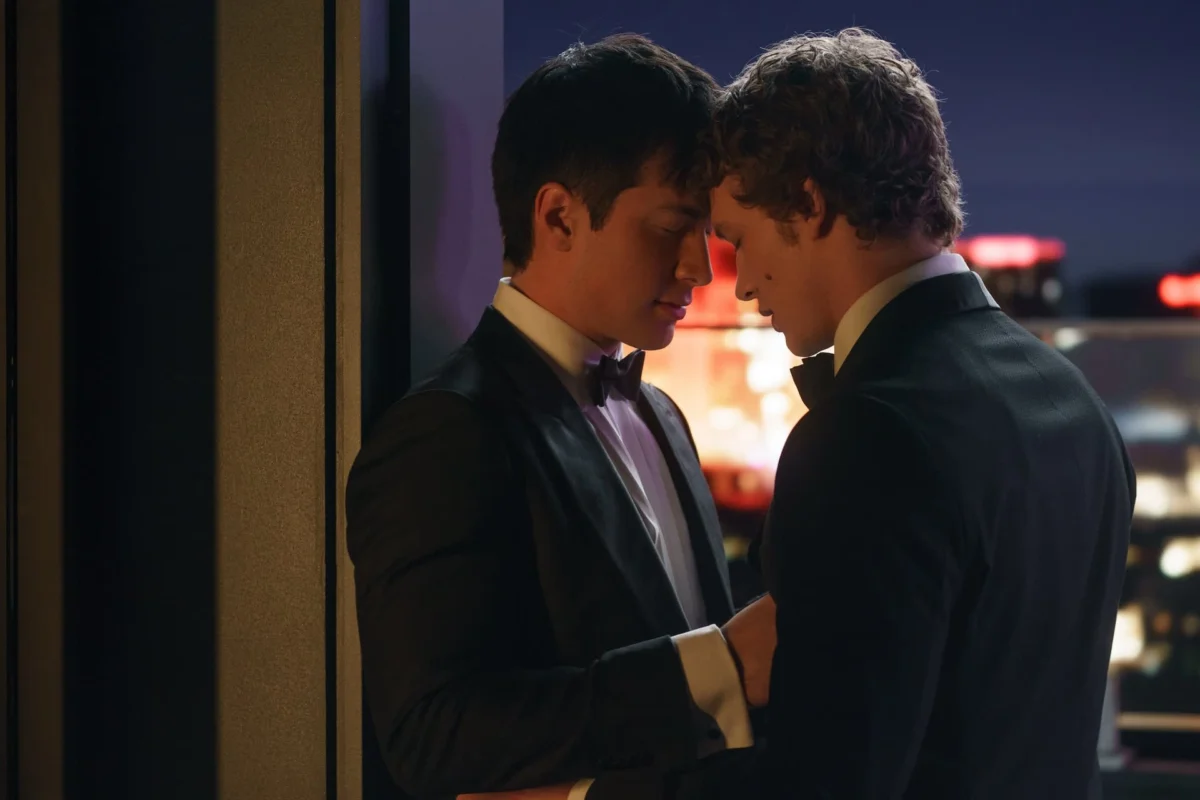
When the holiday season arrived last year, Margaret Hecox, a 23-year-old viewer, found an unconventional way to connect with her grandmother through contemporary media. She introduced her to "Heated Rivalry," a breakout television series on HBO Max that chronicles a clandestine, high-stakes love story between two professional male hockey players. The experience was not isolated; Hecox reported that her grandmother, along with various friends and family members, became deeply invested in the narrative. This cross-generational engagement highlights a significant shift in the media landscape, where content centered on male-to-male romance is no longer confined to niche markets but is instead commanding the attention of a broad, predominantly female demographic in the United States.
The phenomenon surrounding "Heated Rivalry" represents the latest evolution of a genre that has existed for decades under various names, including "yaoi" or "boy love" (BL). While these stories originated and flourished in Asian markets—particularly Japan, Thailand, and South Korea—their integration into the American mainstream has accelerated. Industry experts and consumer data suggest that the success of "Heated Rivalry" has served as a catalyst, pushing LGBTQ+ narratives into the center of domestic pop culture conversations, specifically among straight women who now constitute a majority of the viewership for these programs.
A Cultural Shift: From Subculture to Mainstream Dominance
The rise of male-to-male romance in the West is evidenced by the massive digital footprint of its fan base. On TikTok, the hashtag "fujoshi"—a Japanese term traditionally used to describe female fans of BL content—has appeared on more than 900,000 videos. This surge in visibility is mirrored in search engine data. Google searches for terms related to the yaoi fandom reached unprecedented levels in late 2023 and early 2024, signaling a transition from private consumption to public discourse.
Shampaigne Graves, a consumer consultant and podcast host specializing in female audience trends, characterizes this movement as a "coming out" of sorts for a demographic that has long been invested in the genre. Graves notes that the interest is not a new development but rather a newfound comfort among women in sharing and discussing their preferences openly. This transparency is reshaping how streaming platforms and production studios approach content acquisition and marketing.
HBO Max, the domestic carrier for the "Heated Rivalry" series, reported that approximately two-thirds of the show’s total viewership is female. This demographic reality became a focal point during the series’ press tour, where the creative team and lead actors, Hudson Williams and Connor Storrie, were frequently asked to analyze why a story about two men in the hyper-masculine world of professional hockey resonated so strongly with women. Social media creators, such as Emily Sarre, have noted that the success of "Heated Rivalry" has created a "vocal demand" for similar content, signaling to Hollywood that there is a lucrative and underserved market for these specific narratives.
Quantitative Analysis of Audience Demographics
The demand for male-to-male romance extends far beyond a single television series. Data from various platforms confirms that women are the primary drivers of success for several high-profile LGBTQ+ titles. For instance, the film "Call Me By Your Name," distributed by Sony Pictures, ranks significantly higher in popularity among female users on the movie review platform Letterboxd than among male users. Specifically, it holds the ninth position on the list of films with the most "fans" who identify with she/her pronouns—46 spots higher than its ranking on the equivalent list for men.
Nielsen data further reinforces these findings. During the first quarter of 2026, nearly 70% of the audience for "Call Me By Your Name" was female. Similarly, the 2023 Amazon MGM Studios film "Red, White & Royal Blue," a romantic comedy centered on the son of the U.S. President and a British Prince, saw a 61% female viewership. Lionsgate also reported that women accounted for 60% of the viewership for "The Perks of Being a Wallflower," a coming-of-age story featuring a same-sex romance involving a high school athlete.
These statistics suggest a pattern: while these stories feature male protagonists, their emotional architecture and narrative tropes are highly appealing to women. This has led some industry insiders to compare the current fervor for the genre to the massive commercial success of franchises like "Twilight" or "Fifty Shades of Grey."
The Literary Foundation and the "Yearning" Factor
The transition of male-to-male romance into the mainstream is also deeply rooted in the publishing industry. Author Rachel Reid, who penned the "Heated Rivalry" book series upon which the TV show is based, has seen her titles dominate digital platforms. On Fable, a book discussion platform owned by Scribd, Reid’s work has become a gateway for readers to explore other titles in the subgenre, such as Madeline Miller’s "The Song of Achilles," a 2011 reimagining of Greek mythology.
Kim Allee, marketing director at Fable, suggests that the current trend is more than a fleeting interest. "This feels like something much more significant," Allee stated, noting that male-to-male love stories have recently unseated "romantasy"—a hybrid of romance and fantasy—as the most popular romance subgenre on the platform. Jennifer Bokal, president-elect of the Romance Writers of America (RWA), observed that merchandise related to "Heated Rivalry" was ubiquitous at the BookCon convention, further cementing its status as a cultural juggernaut.
Psychologically, the appeal for women often lies in the emotional depth and the concept of "yearning." Gianna Saad, a 30-year-old fan of the genre, explains that these books often showcase a level of romance and vulnerability that readers feel they deserve in their own lives, regardless of gender. The removal of the female protagonist allows some readers to project themselves onto the emotional journey of the characters without the baggage of traditional gender roles or societal expectations often found in heterosexual romance.
Industry Implications and the Search for Authenticity
The commercial success of these titles has not gone unnoticed by major studios. Amazon reported that "Red, White & Royal Blue" was a primary driver for new Prime Video subscriptions and remains one of the platform’s most-watched romantic comedies. Consequently, sequels for both "Red, White & Royal Blue" and "Heated Rivalry" are currently in development.
Tom Nunan, a producer and lecturer at the UCLA School of Theater, Film and Television, believes that Hollywood will continue to replicate the "Heated Rivalry" playbook, particularly within the sports drama genre. However, Nunan emphasizes that the broader lesson for the industry is the value of authenticity. He argues that while the industry has always sought to capture the female audience—who typically make up the majority of scripted entertainment viewers—the success of these shows proves that diverse and genuine storytelling is the most effective way to achieve that goal.
"When shows like ‘Heated Rivalry’ take off, it reminds us what a rich part of life this is to explore," Nunan said. He added that the goal for future productions should be to populate shows as accurately and authentically as possible, as "everybody wins" when diverse stories are told with care.
The Representation Paradox
Despite the individual success of high-profile titles, advocacy groups warn that the broader picture of LGBTQ+ representation remains fragile. GLAAD, a non-profit organization dedicated to LGBTQ+ media monitoring, reported a concerning trend in its recent annual studies. The share of LGBTQ-inclusive scripted films from major distributors dropped by approximately 14% between 2023 and 2024. Furthermore, the number of LGBTQ+ characters on television saw a 23% decline in the 2024-2025 season compared to three years prior.
Katherine Sender, a professor at Cornell University who researches LGBTQ+ media, suggests a cautious approach to the current "Heated Rivalry" hype. While the popularity of the show is encouraging, it does not necessarily equate to a permanent or comprehensive increase in representation across the industry. There is a risk that studios may focus on a very specific type of "palatable" or "marketable" queer story—often involving conventional, attractive male leads—while neglecting the wider spectrum of the LGBTQ+ community.
Expanding the Fandom: A Multi-Demographic Appeal
While the data highlights a majority-female audience, the genre’s reach is not limited to heterosexual women. Some titles, such as "Heartstopper" on Netflix and "Love, Simon" from 20th Century Fox (Disney), have shown a more balanced demographic split, occasionally skewing slightly toward male viewers.
Furthermore, the genre continues to find resonance within the LGBTQ+ community itself. During a New Year’s Eve broadcast, musician Brandi Carlile expressed her own deep investment in "Heated Rivalry," indicating that the show’s themes of secrecy, passion, and professional stakes have a universal appeal that transcends specific identity markers.
As "Heated Rivalry" and its contemporaries continue to break records and influence production cycles, the media landscape is witnessing a fundamental change. The "boy love" genre, once a hidden corner of the internet and international bookstores, has become a cornerstone of modern entertainment, proving that stories of love and "yearning," regardless of the gender of the protagonists, possess the power to unite diverse audiences and command the heights of the global cultural economy.