The sixth annual Prismatic Ground festival, held in New York City from April 29 through May 3, 2024, reaffirmed its position as a primary venue for contemporary avant-garde cinema. Founded and programmed by Inney Prakash, the festival has evolved from its inception into a vital platform for global voices that challenge the traditional boundaries of the moving image. This year’s iteration continued to eschew conventional festival structures, opting instead for a curated experience divided into four distinct "waves." Prakash’s approach, which he describes as akin to "conducting a piece of music or slaloming down a mountain," prioritizes the viewer’s ability to identify thematic threads and aesthetic connections independently. In a period marked by rapid shifts in media consumption and political instability, Prismatic Ground serves as a generative space for exploring the democratizing potential of experimental film.
Opening Feature and the Aesthetics of Intimacy
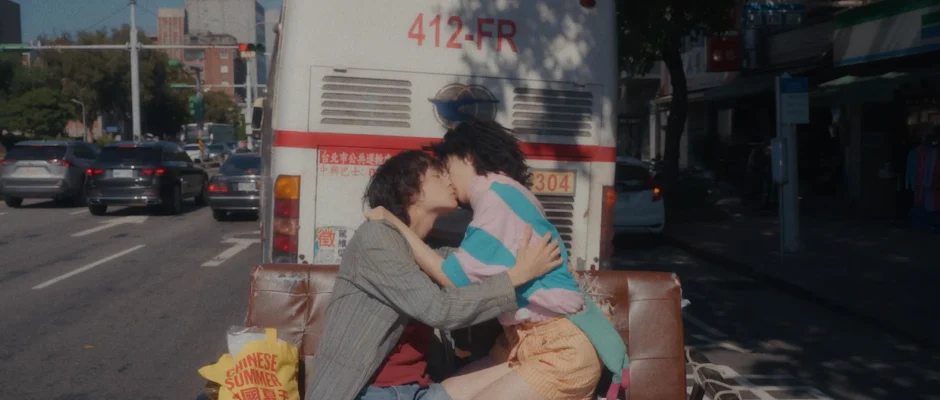
The festival commenced with the feature-length debut of Hong Kong filmmaker Wong Ka Ki, titled I Heard That They Are Not Going to See Each Other Anymore. Wong, who has previously garnered attention for short-form works such as A Shrimp’s Daily Rehearsal, utilizes this feature to expand upon her interest in metatextual storytelling. The film follows two distinct pairs of lovers: Tao, a filmmaker engaged in a volatile relationship with her boyfriend Shin, and Mehli, a Turkish vendor whose persistent melancholy leads him to a connection with a woman named Ping.
Wong’s production methodology is rooted in improvisation, a choice that lends the film a fluid, often unpredictable momentum. By blending the hallmarks of neorealism with the structural sensibilities of the essay film and the physical humor of silent comedy, Wong creates a meditation on how intimacy and pain are transfigured through the lens of a camera. While some critics noted that the film’s frequent digressions—such as the exploration of Mehli’s exilic identity within the cosmopolitan landscape of Taipei—occasionally felt like stylistic affectations rather than core thematic developments, the work was largely praised for its creative confidence. The inclusion of A Shrimp’s Daily Rehearsal in the same festival program allowed attendees to trace the evolution of Wong’s stylistic preoccupations from short-form experimentation to feature-length narrative.
Feminist Historiography and Central Asian Cinema
Another significant debut featured in the program was Isabelle Kalandar’s Another Birth. Set in a remote village in Tajikistan, the film offers a departure from the more abstract entries of the festival, adhering to a more conventional narrative structure while maintaining high thematic ambition. The story follows Parastu, a young girl who believes her grandfather is dying of a broken heart caused by the absence of his son. Her journey to save him eventually transforms into a search for her own father, the man who abandoned her mother—a character portrayed by Kalandar herself.
Another Birth is the second installment in a planned trilogy and is notable for its integration of the poetry of Forough Farrokhzad and the mythic figure of Pari. These elements serve to construct a feminist historiography, positioning women and girls as the primary navigators of emotional violence inflicted by absent men. Kalandar avoids the pitfalls of "miserablism" by grounding the film in a specific "earthy poeticism," utilizing the Tajik landscape to mirror the internal states of her characters. The film’s magical realist elements culminate in an ambiguous denouement that challenges the viewer to reconcile the harsh realities of the characters’ lives with the mythic structures that sustain them.
Historical Context and the Counter-Hegemonic Gaze
The repertory selections at Prismatic Ground often serve as historical time capsules, offering insights into alternative cinematic futures that were once envisioned but perhaps not fully realized. This year, the festival highlighted a trilogy of shorts by Iraqi-Lebanese-American filmmaker Parine Jaddo. Produced between the aftermath of the First Gulf War and the onset of the Second, these films—Thirst (1995), Surviving (1998), and Astray (produced in 2002)—examine the construction of the female image through a lens that resists the traditional "Orientalist gaze."
- Thirst (1995): This film contrasts the sensationalism of Mohammed Mrabet’s "The Big Mirror" with the mundane, everyday realities of life in post-war Lebanon.
- Surviving (1998): Shifting the setting to the United States, this installment explores subjectivity through a pseudo-documentary about a young woman whose cousin is fetishized by American men.
- Astray (2002): Screening for the first time at Prismatic Ground, this final piece focuses on the claustrophobic experience of a woman navigating issues of belonging in the wake of the September 11 attacks.
The trilogy concludes with a poignant statement of artistic intent from Jaddo: "I may get lost in this world, but I refuse to lose myself there." This sentiment resonated throughout the festival, echoing the broader mission of providing a space for artists to maintain their agency within a globalized and often hostile media landscape.

Digital Media and the Circulation of Violence
The festival also addressed the ethical and psychological implications of digital media through Kevin B. Lee’s Afterlives. Utilizing the "desktop documentary" format—a genre Lee has pioneered—the film explores the circulation of violent imagery in the digital age. The narrative focuses on the destruction of cultural artifacts by ISIS and the subsequent responses from scholars and archivists.
Lee’s work avoids a simple binary between creation and destruction, instead interrogating the broader cycles of sectarian violence and the potential for digital exploitation. The film is formally complex, often displaying multiple onscreen images that force the viewer to confront the weight of the media they consume. In one notable scene, a specialist reviewing ISIS execution videos is seen with a poster of Werner Herzog in the background, suggesting a connection to Herzog’s own clinical yet deeply personal approach to documentary filmmaking. Afterlives serves as a humane response to the atomization of society caused by the very digital tools intended to connect it.
The Intersection of Economics, Colonialism, and Cinema
The final waves of the festival included Isiah Medina’s Gangsterism, a film that explores the mechanics of filmmaking itself. The work consists of fragmented conversations between Canadian-Filipino filmmaker Mark Bacolcol and his crew, touching on topics ranging from economic theory to the legacy of colonialism and the role of contemporary criticism.
Medina is known for a "mathematically-inflected" editing style characterized by rapid cuts that can be both exhilarating and overwhelming. This aesthetic approach mirrors the modern "information overload," reflecting the difficulty of processing the vast amount of data available in the digital era. While the film draws comparisons to the works of Jean-Luc Godard (specifically La Chinoise) and Hollis Frampton, it maintains a distinct identity through its fierce conviction in the continued relevance of cinema. The film ends with a title card reading "Intermission," a gesture that suggests a necessary pause for reflection on how to salvage the medium—and perhaps society—from the decline of "dying empires."
Chronology and Programming Structure
Prismatic Ground’s unique organizational structure is central to its identity. Rather than categorizing films by genre or length, the festival is organized into "waves," each intended to evoke a specific mood or intellectual inquiry.
- Wave 1: Emergence. Focused on debut features and the establishment of new voices, including Wong Ka Ki’s opening night film.
- Wave 2: Poetic Realism and Folklore. Centered on works like Another Birth, which utilize traditional storytelling motifs to explore modern social issues.
- Wave 3: Historical Reckoning. Featured the repertory works of Parine Jaddo, providing historical context to contemporary geopolitical tensions.
- Wave 4: Digital Frontiers and Structuralism. Concluded with the works of Kevin B. Lee and Isiah Medina, pushing the boundaries of film form and digital theory.
Industry Impact and Broader Implications
The success of Prismatic Ground’s sixth edition highlights a growing appetite for "slow cinema" and experimental formats that contrast with the high-speed, algorithm-driven content of mainstream streaming platforms. By providing a venue for films that are "unapologetically distinct," the festival supports a diverse ecosystem of filmmakers who operate outside the traditional studio system.
Data from recent years suggests that independent and experimental film festivals are increasingly becoming the primary sites for "repertory discovery"—the process of finding and screening lost or overlooked works from marginalized filmmakers. The premiere of Jaddo’s Astray more than two decades after its production is a testament to this trend. Furthermore, the festival’s focus on global perspectives—from Tajikistan to Hong Kong to the Iraqi diaspora—underscores the necessity of a counter-hegemonic approach to curation.
As the moving image continues to be a primary site for political and social discourse, festivals like Prismatic Ground provide a critical service. They do not merely show films; they create a "grounding" environment where the act of viewing becomes a form of resistance against the homogenization of culture. The 2024 edition demonstrated that even in a tumultuous moment for the industry, the avant-garde remains a vital, generative force capable of offering both a "trial by fire" and a glimmer of redemption for the future of the medium.