


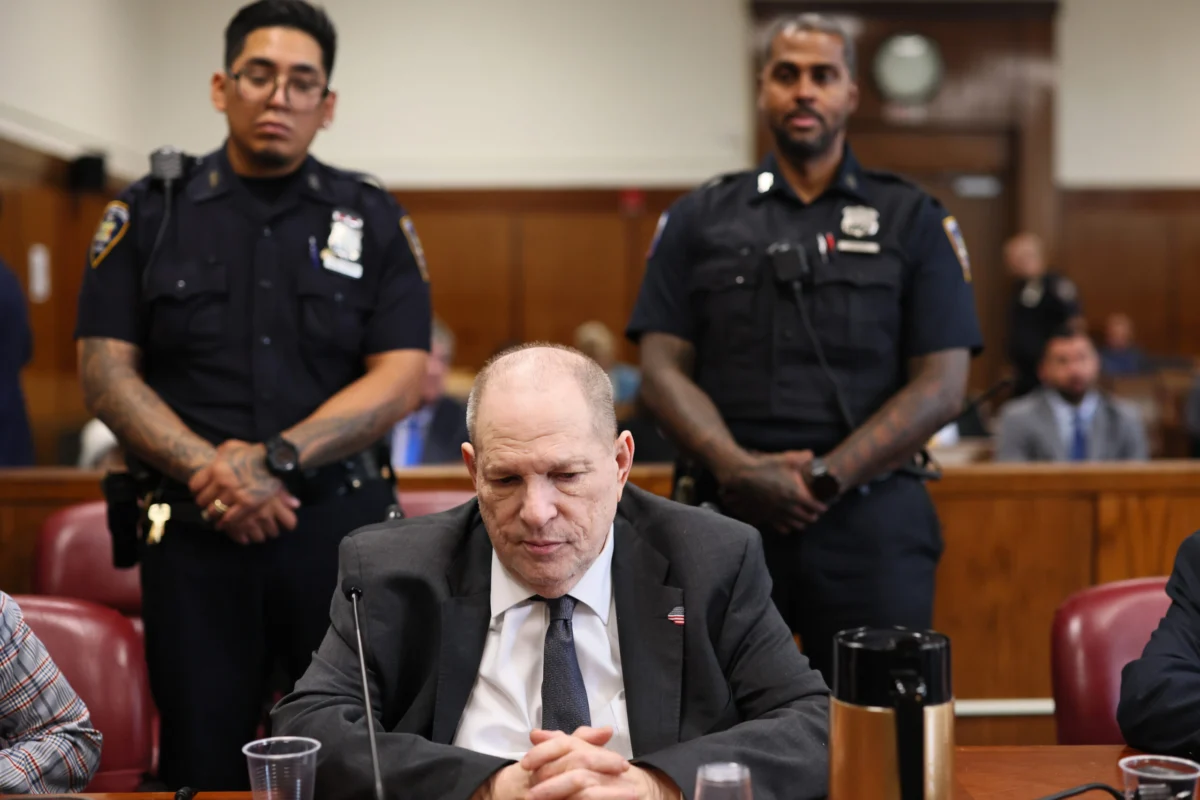
A California state appeals court has upheld the rape conviction of former Hollywood mogul Harvey Weinstein but simultaneously ordered him to be resentenced, marking a pivotal and complex development in the ongoing legal saga that ignited the #MeToo movement. The decision by a three-judge panel of California’s 2nd District Court of Appeal on Friday, June 7, affirmed the core findings of the Los Angeles jury that found Weinstein guilty of sexual assault in 2022, yet acknowledged the significant legal ramifications stemming from the recent overturning of his landmark New York conviction.
Weinstein is currently serving a 16-year sentence in California, a term that had been influenced by his prior guilty verdict in New York. The appellate court’s ruling to revisit the sentence directly addresses the legal principle that subsequent convictions often take into account a defendant’s existing criminal record. With the New York conviction now invalidated, the California court determined that the basis for the higher end of Weinstein’s original sentencing range no longer stands. "The sentence is vacated and the matter is remanded for resentencing," the docket noted, underscoring the specific scope of the change. "In all other respects, the judgment is affirmed," it concluded, firmly upholding the integrity of the California trial’s guilty verdict.
A spokesperson for Harvey Weinstein promptly issued a statement, indicating that the former film producer intends to appeal this latest decision to the California Supreme Court. His legal team remains steadfast, asserting that "significant legal issues deserve further consideration." While acknowledging the court’s affirmation of the convictions, the statement emphasized, "it also recognized that Mr. Weinstein is entitled to a new sentencing hearing," highlighting a partial victory in their appellate efforts.
New York Developments Mirror Fragmented Legal Outcomes
The California appellate ruling arrived on the same day that a New York state court judge officially dismissed a third-degree rape charge against Weinstein. This dismissal followed Manhattan prosecutors’ declaration that they would not pursue a fourth trial against him for the charge involving Jessica Mann, one of the primary accusers in the initial New York trial. This decision by New York prosecutors was a pragmatic one, coming after two previous juries in New York had deadlocked on the charge related to whether Weinstein raped Mann in a hotel room in 2013. Mann, who had courageously testified twice before, ultimately elected not to proceed with testifying in a potential fourth trial, citing the immense emotional and personal toll.
Weinstein now awaits resentencing in New York solely for a conviction on a single count of criminal sexual act against former Project Runway assistant Miriam Haley. Prosecutors have stated their intention to seek a 20-year prison term for this remaining conviction. The broader context of these recent developments paints a picture of a legal landscape deeply divided by state-specific evidentiary rules and appellate interpretations, leading to markedly different outcomes for Weinstein in different jurisdictions.
The Overturned New York Conviction: A Critical Precedent
The genesis of the California resentencing order lies in the groundbreaking decision by New York’s highest court in April 2024, which overturned Weinstein’s 2020 rape conviction. The New York Court of Appeals found that the trial judge overseeing the case "erroneously admitted testimony of uncharged, alleged prior sexual acts" and deemed this an "abuse of judicial discretion." This ruling sent shockwaves through the legal community and victim advocacy circles, reigniting debates about the balance between a defendant’s right to a fair trial and the ability of prosecutors to present a comprehensive picture of a defendant’s predatory behavior.
Central to the New York court’s decision was the application of the state’s "Molineux rule," which generally restricts the introduction of evidence of prior uncharged bad acts unless it is relevant to establish specific elements of the crime, such as motive, intent, absence of mistake, common plan or scheme, or identity. The appellate court determined that the testimony of women whose allegations were not part of the charges for which Weinstein was being tried did not meet these strict criteria, effectively prejudicing the jury against him. This technical legal distinction, while crucial to appellate review, was perceived by many as a setback for victims seeking justice through the legal system.
Divergent Legal Standards: California vs. New York
The stark contrast in the legal outcomes for Weinstein in New York and California largely hinges on fundamental differences in their respective evidentiary laws, particularly concerning "propensity evidence." Unlike New York, courts in California are explicitly allowed to introduce evidence that demonstrates a defendant’s propensity to commit sex crimes, even when these allegations have not resulted in formal charges. This "propensity evidence" statute (California Evidence Code Section 1108) was enacted to address the unique challenges in prosecuting sexual assault cases, recognizing that perpetrators often engage in patterns of behavior. It allows juries to consider whether a defendant has a history of similar conduct, which can inform their judgment on the current charges.
In New York, as highlighted by the Molineux rule, such evidence is far more restricted. It can only be introduced when it is deemed necessary to provide historical context on a defendant’s motive, intent, or a common scheme to carry out the alleged crimes. The purpose is not to show that the defendant is generally a bad person or likely to commit such acts, but rather to prove a specific element of the charged crime. This philosophical difference in legal approaches explains why the California appellate court affirmed the convictions despite the New York reversal. The evidence considered "erroneously admitted" in New York was, by California statute, permissible and central to the prosecution’s case in Los Angeles. This divergence underscores the patchwork nature of justice across state lines and the varying legal tools available to prosecutors in sex crime trials.
A Chronology of Legal Battles and the #MeToo Aftermath
Harvey Weinstein’s legal troubles began to unfold publicly in October 2017 with bombshell investigative reports from The New York Times and The New Yorker, detailing decades of alleged sexual harassment, assault, and abuse. These reports, which involved dozens of women coming forward, served as a catalyst for the global #MeToo movement, empowering countless individuals to share their own experiences of sexual misconduct and challenge systemic power imbalances.
- October 2017: Initial investigative reports published, leading to Weinstein’s firing from The Weinstein Company.
- May 2018: Weinstein arrested in New York on charges of rape and sexual assault.
- February 2020: A New York jury finds Weinstein guilty of a criminal sexual act in the first degree (Miriam Haley) and rape in the third degree (Jessica Mann). He is acquitted of the most serious charges of predatory sexual assault.
- March 2020: Weinstein sentenced in New York to 23 years in state prison.
- July 2021: Weinstein extradited to California to face additional sexual assault charges.
- October 2022: The California trial commences in Los Angeles, involving allegations from multiple women, referred to as Jane Does.
- December 2022: A California jury convicts Weinstein of rape, oral copulation, and sexual penetration by a foreign object involving Jane Doe 1 (identified as European actress Evgeniya Chernyshova). He is acquitted on charges involving Jane Doe 2 and a mistrial is declared on charges involving Jane Does 3 and 4.
- February 2023: Weinstein sentenced in California to 16 years in state prison, with the judge explicitly citing his New York conviction as a factor in the higher sentence.
- April 2024: The New York Court of Appeals overturns Weinstein’s 2020 conviction, citing the improper admission of "uncharged prior sexual acts" testimony.
- June 2024: The California 2nd District Court of Appeal upholds Weinstein’s Los Angeles conviction but orders resentencing; New York prosecutors drop the third-degree rape charge against him, signaling an end to further prosecution of Jessica Mann’s case in New York.
This tumultuous timeline underscores the protracted and emotionally draining nature of such high-profile legal battles, not just for the defendant, but crucially for the survivors who have bravely come forward.
Reactions and Expert Analysis: A Mixed Bag for Accountability
The latest rulings have elicited a range of reactions, reflecting the ongoing struggle for accountability in cases of sexual assault. For many survivors and victim advocacy groups, the upholding of the California conviction is a significant victory, reinforcing the findings of the jury and validating the testimonies of the accusers. It suggests that even with legal technicalities, the core allegations of sexual violence against Weinstein were deemed credible and proven under California law. However, the resentencing order, and particularly the dismissal of the New York charge, introduce elements of frustration and concern.
Jessica Mann’s statement, delivered through her attorney, encapsulated the profound disillusionment some victims feel when legal procedures appear to shield perpetrators. "It is clear, when a convicted rapist is awarded privileges to continue to shield a jury from past settlements, nondisclosure agreements, prior convictions, or other abuse, there is no true justice for a victim of sexual assault when that rapist is a predator," she stated, drawing attention to the systemic barriers and the emotional toll exacted by repeated legal proceedings. Her words resonate with a broader sentiment among advocates who argue that the justice system, despite reforms, still struggles to adequately address the unique dynamics of sexual abuse.
Legal experts have weighed in, highlighting the nuanced implications. "This is a testament to the differing legal frameworks across states," noted one prominent legal scholar. "While the New York appellate court focused on strict procedural adherence regarding evidence, California’s laws, particularly concerning propensity evidence, are designed to allow a broader view of a defendant’s pattern of conduct in sex crime cases. This doesn’t mean one system is inherently ‘better,’ but it explains the divergent outcomes." Another expert added, "The resentencing in California is a procedural necessity given the New York reversal. It doesn’t undermine the conviction itself, but it does mean Weinstein’s total time incarcerated will be reassessed, potentially reducing the overall length."
The continued legal maneuvering by Weinstein’s defense team, particularly the stated intent to appeal to the California Supreme Court, suggests that the battle for legal finality is far from over. Their strategy appears to be one of persistent challenge, seeking any avenue to chip away at the convictions and reduce his time behind bars.
What Lies Ahead: Continued Scrutiny and the Pursuit of Justice
The immediate future for Harvey Weinstein involves several critical junctures. First, his legal team will prepare their appeal to the California Supreme Court, a process that could take many months or even years. Should the state’s highest court decline to hear the case or uphold the appeals court’s decision, Weinstein will face resentencing in Los Angeles. The new sentence will likely be determined based on the California convictions alone, without the aggravating factor of the now-overturned New York verdict. While it might reduce his overall sentence, he will almost certainly remain incarcerated.
Concurrently, Weinstein awaits resentencing in New York for the single count of criminal sexual act against Miriam Haley. Prosecutors in New York have indicated they will push for a 20-year prison term, a significant sentence on its own. The ultimate length of his incarceration will be a sum of these two separate judicial processes, assuming no further successful appeals.
Beyond Weinstein’s personal fate, these rulings will continue to be scrutinized for their broader implications for the #MeToo movement and the prosecution of sexual assault cases. They underscore the immense legal complexities, the emotional burden on survivors, and the persistent challenges in achieving what many consider full justice. The fragmented outcomes across different states serve as a powerful reminder that while the courage of survivors has fundamentally shifted societal conversations, the legal pathway to accountability remains intricate and fraught with obstacles. The pursuit of justice for victims of sexual violence continues to evolve, shaped by each new legal precedent and the unwavering determination of those who seek to hold perpetrators accountable.