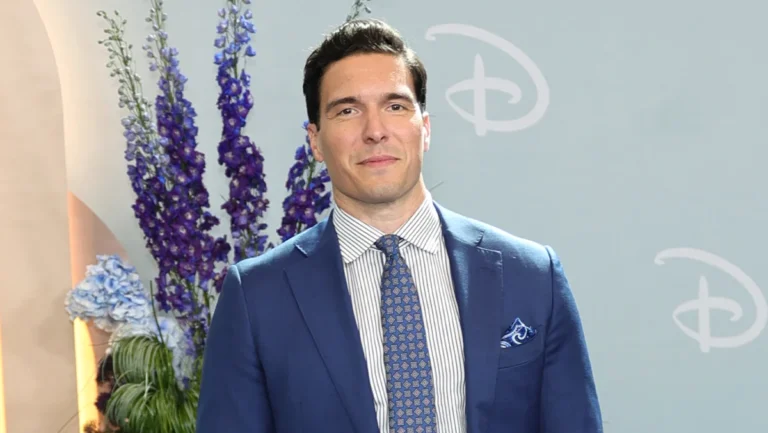



Lonnie G. Bunch III, the esteemed Secretary of the Smithsonian Institution, frequently encounters the criticism that his museums, pivotal custodians of American heritage, tend to dwell excessively on the nation’s more painful or challenging historical facets. This sentiment, echoed by various political administrations, including a notable presidential administration, often suggests a preference for narratives that highlight more uplifting or hopeful aspects of the American story. However, Bunch, a prominent historian and cultural leader, steadfastly maintains that these two perspectives—the challenging and the hopeful—are not mutually exclusive but intrinsically linked in understanding the complete tapestry of a nation. As he posits in "The American Experiment," a new Netflix docuseries that resonates deeply with his philosophy, "How do you understand a nation if you don’t look at all the challenges a nation has faced? A great nation doesn’t run from its past, doesn’t hide from its past, but looks at it, learns from it and has been made better by that past." This perspective forms the intellectual bedrock for the new six-hour, five-part documentary, which endeavors to present a thorough and unvarnished examination of the United States’ foundational era.
Exploring the Genesis of a Nation Through "The American Experiment"
The docuseries, helmed by director Brian Knappenberger, known for his incisive work such as "The Internet’s Own Boy: The Story of Aaron Schwarz," embarks on an ambitious journey to revisit the nation’s origins with a critical yet dignified lens. Its primary objective is to facilitate a clearer understanding of the present and to inform a more discerning vision for the future by deeply engaging with the past. While the series’ success in achieving the latter aim remains a point of nuanced discussion, its effectiveness in meticulously portraying the country’s founding and the complex individuals who shaped it is undeniably persuasive. Produced by Tom Hanks’ Playtone, "The American Experiment" premiered on Wednesday, June 24, on Netflix, offering viewers a comprehensive and often contemplative look at the pivotal years leading up to the Declaration of Independence in 1776 through the conclusion of George Washington’s presidency in 1797.
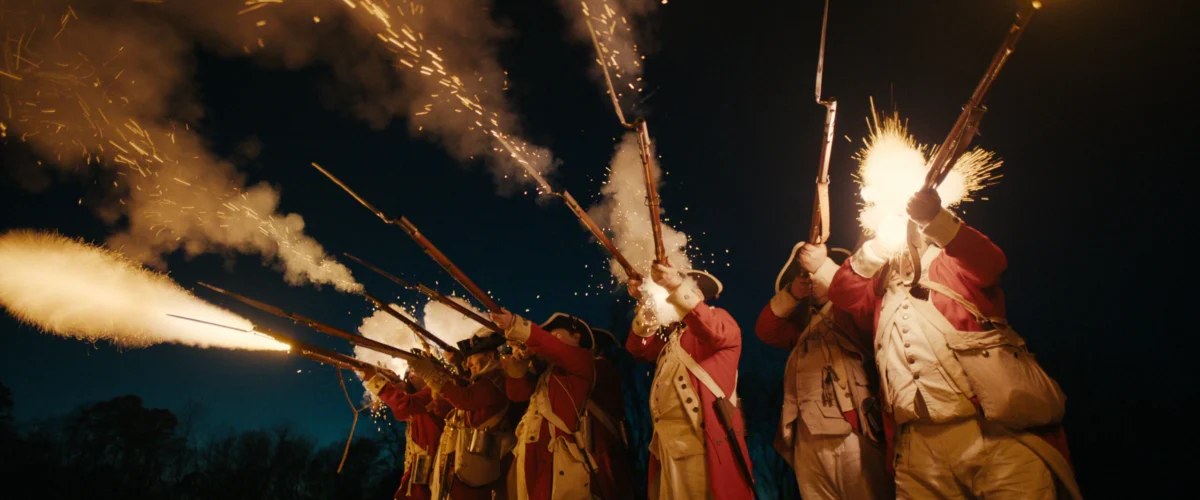
The series is characterized by an overarching tone of insistent dignity, a quality that is likely to appeal to history enthusiasts and educators seeking robust teaching resources. It employs a polished aesthetic reminiscent of a meticulously curated museum exhibit, featuring clear graphical elements, classic serif fonts, and elegantly framed historical images that guide the narrative seamlessly from one critical chapter to the next. The production eschews superficial digital recreations, opting instead for lavishly produced re-enactments that rival the quality seen in prestige historical dramas. Adding further gravitas to the historical narrative, Martin Sheen, celebrated for his portrayal of a fictional president in "The West Wing," lends his distinctive voice to readings of George Washington’s personal correspondence, imbuing the words of the nation’s first president with profound authority. The involvement of such prominent figures, including producer Tom Hanks, underscores the series’ commitment to educational enrichment over purely entertainment-driven spectacle.
The Smithsonian’s Stance and the Broader Historical Discourse
Secretary Bunch’s remarks, featured prominently in the series, are not isolated observations but reflect a long-standing philosophical approach within the Smithsonian, particularly championed by Bunch himself during his tenure as the founding director of the National Museum of African American History and Culture (NMAAHC). The NMAAHC, opened in 2016, quickly became a landmark institution for its unflinching portrayal of slavery, segregation, and the ongoing struggles for civil rights, while simultaneously celebrating the resilience, contributions, and cultural richness of African Americans. This approach deliberately integrates the "painful" with the "hopeful," arguing that a full understanding of the American narrative is impossible without confronting both.
The critique that museums focus "too much on what is painful or ugly" is not new in American public discourse. Throughout history, debates have flared over how to present controversial or difficult aspects of the nation’s past, from the Enola Gay exhibition at the National Air and Space Museum in the 1990s, which sparked controversy over its portrayal of the atomic bombings, to more recent discussions about monuments and historical figures linked to slavery or oppression. These debates often reflect deeper societal tensions about national identity, collective memory, and the role of history education in shaping future generations. Bunch’s assertion that "a great nation doesn’t run from its past" serves as a direct challenge to any attempts to sanitize or selectively curate history, advocating instead for a comprehensive and honest engagement that can ultimately strengthen the nation’s character. "The American Experiment" aligns perfectly with this philosophy, attempting to foster a deeper, rather than merely reoriented, understanding of history.
Chronology and Contingency: Deconstructing the "American Experiment"
The series meticulously charts the evolution of the nascent American republic, beginning with the ideological ferment preceding the Declaration of Independence in 1776. It explores the myriad grievances that fueled the revolutionary spirit, from taxation without representation to perceived infringements on colonial liberties. Key moments such as the Boston Tea Party are presented with granular detail, including a historian’s explanation of the surprisingly low price of the tea, which makes the colonists’ decision to dump it into the harbor appear as a deliberate, radical act of defiance rather than an impulsive outburst. This contextualization highlights the element of choice and contingency, underscoring that rebellion was far from a foregone conclusion.
The docuseries then navigates the tumultuous years of the Revolutionary War, portraying the incredible odds faced by the Continental Army and the critical leadership of George Washington. It vividly illustrates how close the experiment came to failure at multiple junctures. For instance, the series recounts Washington’s initial dismissal of Black soldiers from the Continental Army, a decision that proved strategically shortsighted as the British subsequently recruited these same individuals, offering them freedom in exchange for service. This historical detail serves as a potent reminder of how human fallibility and prejudice could have drastically altered the course of the war, emphasizing that the outcome was not divinely ordained but a precarious balance of leadership, strategy, and sheer fortune.
Following the war, the narrative delves into the complex and often contentious process of establishing a viable government under the Articles of Confederation, and subsequently, the crafting of the United States Constitution. The series excels in humanizing the figures involved in these momentous events. While George Washington’s personal and political growth from a somewhat braggadocious young officer to a sagacious elder statesman forms a central subplot, other key figures are brought to life through rich biographical details. The anecdote about Gouverneur Morris, the Pennsylvanian credited with penning the Constitution’s Preamble, being a womanizer whose peg leg was rumored to be the result of a botched escape from a lover’s bedroom window, while perhaps not directly relevant to constitutional law, renders him a more relatable and understandable figure. These humanizing touches transform historical icons into imperfect individuals grappling with immense challenges in a sweltering room, trying their best to forge a new nation.
Acknowledging Failures: Slavery and the Three-Fifths Compromise
Crucially, "The American Experiment" does not shy away from the inherent contradictions and profound moral failures embedded in the nation’s founding. It addresses slavery as the "1,000-pound elephant in the room," a central paradox in a nation ostensibly founded on principles of liberty and equality. The docuseries offers a detailed explanation of the three-fifths compromise, a deeply contentious provision embedded within Article 1, Section 2, Clause 3 of the Constitution. This compromise stipulated that enslaved persons would be counted as three-fifths of a person for the purposes of determining a state’s total population, which in turn impacted its representation in the House of Representatives and its share of direct taxes.
As Jelani Cobb, Dean of the Columbia Journalism School, powerfully articulates in the series, this compromise allowed states to "use the bodies of enslaved people to subsidize the political authority of the people who are enslaving them." This arrangement granted Southern states disproportionate political power, enabling them to protect and expand the institution of slavery for decades. The series meticulously lays out the hideous implications of this compromise, demonstrating how it was a pragmatic, yet morally bankrupt, solution that enshrined racial inequality into the very foundation of the American legal and political system, with devastating long-term consequences for generations of Black Americans and for the nation’s soul.
Bridging the Past and Present: A Delicate Balance
Despite its strength in meticulously dissecting historical events, the docuseries faces a notable critique regarding its ability to draw explicit connections between the past and the present. While it expertly grapples with historical injustices like the three-fifths compromise, it largely declines to explicitly link these foundational failures to contemporary issues such as the Black Lives Matter protests, which appear only in sporadic montages of recent history. This reticence to forge direct analytical bridges between historical grievances and modern social movements might leave some viewers feeling that the series, while informative, falls short of its potential to fully illuminate the ongoing impact of historical legacies.
In later chapters, "The American Experiment" identifies hyper-partisanship as another significant challenge that the Founding Fathers failed to anticipate, and one that continues to plague the nation. In an attempt to offer a corrective or a model for overcoming this division, the series features a diverse, stridently bipartisan cast of modern politicians. The relevance of some of these figures is readily apparent. Hillary Clinton, for example, ushers in a segment on the shortcomings of the Electoral College, a system whose complexities and controversial outcomes she has experienced firsthand. Similarly, Mike Pence, a central figure during the January 6th Capitol attack, speaks to the critical importance of peaceful transfers of power, a theme deeply resonant with recent political events.
However, the inclusion of such figures, while aiming for balance, has elicited mixed reactions. Depending on one’s political leanings, the effect can range from inspiring to irritating, or even infuriating. Listening to Senator Ted Cruz praise George Washington for not being "power-hungry" might induce eye-rolling among those who perceive Cruz’s own political actions as supportive of a modern president widely criticized for exhibiting such traits. Similarly, Hillary Clinton’s advocacy for "principled compromise" might grate on those who feel her party’s willingness to compromise has sometimes come at a significant political cost. These moments underscore the inherent difficulty of using contemporary political figures to comment on historical principles without triggering immediate partisan responses, highlighting how deeply entrenched political divisions are in the modern American landscape.
The Enduring Experiment: Anxiety, Uncertainty, and the Path Forward
One of the most profound takeaways from "The American Experiment" is the comforting, yet sobering, reminder that the pervasive anxiety and uncertainty currently plaguing the country are not novel phenomena. As one political analyst within the series points out, every generation of Americans, stretching back to the very first, has harbored concerns about whether their era might be the last for the great American democratic experiment. This historical continuity of existential doubt serves to contextualize present-day fears, demonstrating that the nation has always navigated precarious terrain.
However, this reminder also carries a tacit warning: the experiment, which could have failed at any point in its history, still retains that inherent fragility. The series masterfully builds this sense of contingency, from the near-collapse of the Continental Army to the bitter debates that nearly fractured the Constitutional Convention. The implication is clear: the continued success of the American experiment is not guaranteed but requires constant vigilance, engagement, and adaptation.
The docuseries concludes not with a triumphant flourish of patriotism, but with a contemplative sigh. Delaware Senator Lisa Blunt Rochester delivers a powerful, yet ultimately reflective, statement: "I’m not gonna lean back. I’m not gonna quit. I’m not gonna stop. Democracy is worth it." The camera, however, continues to roll. She draws a breath, begins to speak again, then stops, her gaze drifting into the distance, as if contemplating an uncertain future. This raw, unscripted moment, "The American Experiment" suggests, encapsulates the quintessential American experience: an ongoing struggle, a perpetual negotiation, and an enduring commitment to an imperfect, yet vital, democratic ideal, even when the path forward remains unclear. This powerful ending reinforces the series’ central thesis: the American experiment is not a static achievement but a dynamic, ever-evolving process that demands continuous effort and belief. It is a nuanced portrayal, offering both a comprehensive historical account and a quiet call to ongoing civic engagement in the face of persistent challenges.