The martial arts universe of Mortal Kombat, a franchise synonymous with visceral combat and fantastical lore, returns to the silver screen with "Mortal Kombat II," a direct continuation that seeks to rectify the perceived shortcomings of its predecessor and deliver a more faithful, and ultimately more satisfying, cinematic experience. Directed by Simon McQuoid, who helmed the 2021 reboot, and penned by Jeremy Slater, the film plunges deeper into the interdimensional conflict that threatens Earthrealm, this time with a more focused narrative and an elevated commitment to the franchise’s signature blend of action and supernatural spectacle.
The Looming Threat and the Call to Arms
"Mortal Kombat II" picks up in the immediate aftermath of the first film’s events, a narrative arc that, in retrospect, served more as an extended prologue than a complete story. The 2021 installment concluded with Earth’s chosen warriors beginning to awaken their dormant "mortal kombat" abilities, setting the stage for the titular tournament that never actually materialized. This new chapter, however, plunges directly into the heart of the conflict. The tyrannical emperor Shao Kahn, a figure of immense power and a central antagonist in the "Mortal Kombat" lore for decades, escalates his campaign to conquer Earthrealm. His relentless advance poses an existential threat, compelling Earth’s champions, now more aware of their destiny and powers, to prepare for an inevitable confrontation.
The core of the story revolves around the desperate efforts of Earth’s defenders to rally their forces and secure victory in the tournament that Shao Kahn intends to use as his ultimate conquest. Central to this struggle is Cole Young, portrayed by Lewis Tan, who has embraced his role as a lineage protector and a key player in this interdimensional chess match. Having witnessed the devastating power of Outworld firsthand, Young and his allies understand the dire consequences of failure: the complete subjugation of Earth and the enslavement of its inhabitants.
A Stellar Ensemble Faces the Ultimate Challenge
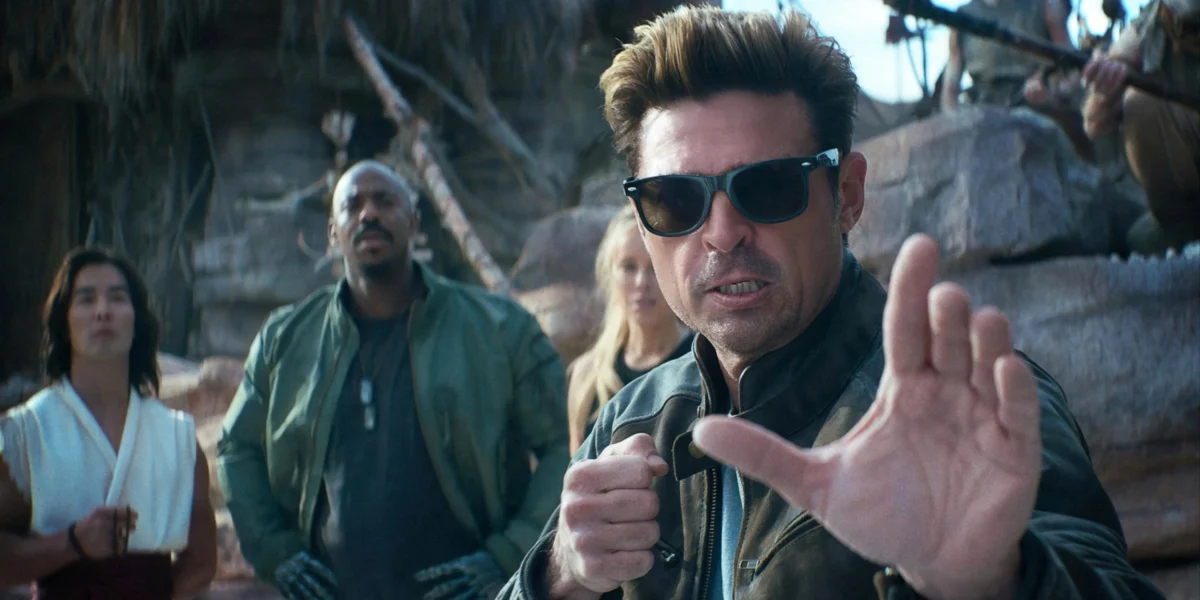
The film boasts a formidable cast, bringing to life a pantheon of iconic "Mortal Kombat" characters. Karl Urban steps into the spotlight as Johnny Cage, a charismatic but jaded Hollywood action star from the 1990s whose star has long since faded. His inclusion is pivotal, as his cynical outlook and self-serving nature are challenged by the gravity of the situation. Cage’s journey from washed-up celebrity to reluctant hero is a narrative thread designed to inject both humor and a relatable human element into the escalating conflict.
Adeline Rudolph portrays Princess Kitana, Shao Kahn’s adopted daughter and a character whose tragic backstory and conflicted loyalties provide a significant emotional anchor. Kidnapped from her enslaved homeworld, Kitana harbors a growing sympathy for Earth’s warriors, creating a complex internal struggle that mirrors the external war.
The returning cast members from the 2021 film reprise their roles, including Ludi Lin as the Shaolin monk Liu Kang, Mehcad Brooks as the formidable Jax Briggs, Tati Gabrielle as the enigmatic Jade, and Tadanobu Asano as the thunder god Raiden. Chin Han returns as the sorcerer Shang Tsung, a key player in Shao Kahn’s machinations, and Hiroyuki Sanada as the spectral warrior Scorpion, alongside Joe Taslim as his formidable rival Bi-Han, also known as Sub-Zero. Damon Herriman joins the fray as Quan Chi, a powerful sorcerer who often aligns with Shao Kahn. Jessica McNamee and Josh Lawson return as Sonya Blade and Kano respectively, with Kano’s abrasive humor and questionable allegiances continuing to provide a volatile element.
The Evolution of the "Mortal Kombat" Cinematic Experience
"Mortal Kombat II" appears to learn from the critical reception of its predecessor. While the 2021 film was praised for its visual effects and commitment to the franchise’s violent aesthetic, it was often criticized for a muddled narrative and underdeveloped characters. The new installment aims to rectify these issues by prioritizing a clearer storytelling path and allowing more breathing room for character development, particularly for the newly introduced Johnny Cage.
Director Simon McQuoid, returning to the helm, seems to have refined his approach to action choreography. The review indicates a more impactful execution of fight sequences, with a greater emphasis on tactility and weight within the frame. While vestiges of CGI are present, the film reportedly makes a conscious effort to integrate practical effects and real performers into the action, lending a tangible quality to the fantastical battles. The description of creature design, such as the toothy beast encountered by Johnny Cage, and the imposing physical presence of Shao Kahn, suggests a commitment to making the otherworldly threats feel grounded and formidable.
A Deeper Dive into the Lore and Character Arcs
The narrative structure of "Mortal Kombat II" appears to be more directly aligned with the tournament’s premise. The stakes are demonstrably higher, with the fate of Earth hanging in the balance. The film explores the personal journeys of its characters as they confront not only external adversaries but also their own internal doubts and limitations.
The introduction of Johnny Cage, for instance, serves a dual purpose: providing comedic relief through his Hollywood persona and acting as an audience surrogate to reintroduce plot points and the overarching conflict. His character arc is designed to explore the transformation from a self-absorbed celebrity to someone who understands the meaning of sacrifice and heroism.
The film also delves into the tragic backstories of characters like Kitana, offering Rudolph a foundation to build a more compelling performance. The review highlights a moment of emotional resonance between Liu Kang and Kung Lao, whose resurrection as an antagonistic force creates a deeply personal and impactful confrontation. This focus on emotional stakes, even within the context of extreme violence, is presented as a significant improvement over the previous film.
The Legacy of "Mortal Kombat" and its Cinematic Future
The "Mortal Kombat" franchise, originating from a 1992 arcade game, has a rich history of pushing boundaries in terms of violence and character design. Its transition to film has been a long and often challenging one, with earlier adaptations receiving mixed reviews. The 2021 film represented a significant attempt to reboot the cinematic universe for a modern audience, and "Mortal Kombat II" appears to be building upon that foundation with a clearer vision.
The success of "Mortal Kombat II" could have significant implications for the future of the franchise on screen. A strong reception would likely pave the way for further installments, allowing for the exploration of even more characters and storylines from the expansive "Mortal Kombat" universe. The film’s ability to balance fan service with accessible storytelling for newcomers will be crucial to its broader appeal.
Analysis of Implications
The success of "Mortal Kombat II" hinges on its ability to deliver on the promise of its source material while refining the cinematic execution. The review suggests that the film has made substantial strides in this regard, offering a more engaging and satisfying experience for fans. The improved action choreography, coupled with a more focused narrative and the compelling addition of Karl Urban’s Johnny Cage, positions "Mortal Kombat II" as a significant step forward for the franchise’s cinematic endeavors.
The film’s commitment to integrating practical effects and grounded character moments alongside its supernatural elements could set a new standard for future fantasy action films. The review points to a greater "tactility within the frame," suggesting a conscious effort to make the fantastical feel more real and impactful. This approach, if successful, could resonate with a wider audience beyond the core fanbase.
However, the review also notes persistent challenges, including the reliance on CGI for certain elements and the inherent difficulty in developing every character within the broad scope of the story. The "frustrating sequel bait" at the finale indicates that the filmmakers may still be grappling with how to provide definitive resolutions while leaving room for future stories.
Despite these caveats, the overall sentiment is one of cautious optimism and a clear indication of progress. "Mortal Kombat II" appears to be a film that has listened to feedback, learned from past mistakes, and is striving to deliver a more potent and entertaining adaptation of a beloved franchise. The presence of a trailer suggests an active promotional campaign, aiming to generate buzz and anticipation among the dedicated fanbase and potentially attract new viewers drawn by the promise of an improved cinematic spectacle. The running time of 116 minutes suggests a tightly paced narrative, allowing sufficient time for action sequences and character moments without overstaying its welcome. The team behind "Mortal Kombat II," including director Simon McQuoid and writer Jeremy Slater, have clearly aimed to deliver a more complete and impactful vision for the future of "Mortal Kombat" on film.