

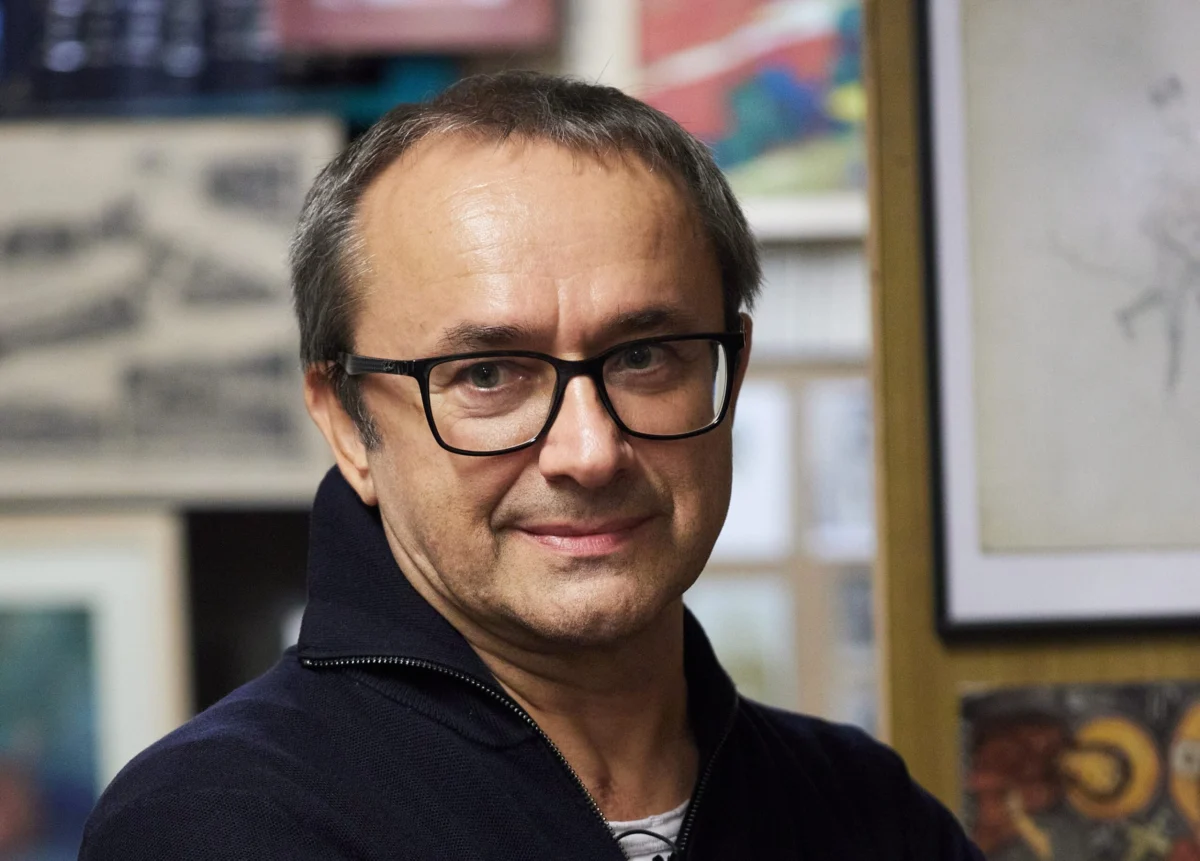
After a nine-year hiatus marked by a harrowing, near-fatal battle with COVID-19 and profound shifts in the global political landscape, acclaimed Russian filmmaker Andrey Zvyagintsev is set to make his highly anticipated return to the Cannes Film Festival with his new feature, Minotaur. The film, an adaptation of Claude Chabrol’s 1969 erotic thriller The Unfaithful Wife, not only marks Zvyagintsev’s personal triumph over adversity but also his unwavering commitment to delivering brutally realist portraits of contemporary Russian society, even as the challenges of doing so have escalated dramatically. His presence at Cannes, a festival that has consistently recognized his singular talent, underscores the enduring power of his voice in international cinema.
A Master of Contemporary Russian Cinema
Before his prolonged absence, Andrey Zvyagintsev had firmly established himself as one of the most significant directorial voices of his generation. His 2003 debut, The Return, a stark and enigmatic drama exploring themes of abandonment and paternal authority through the journey of two brothers and their estranged father, immediately garnered international acclaim, winning the Golden Lion at the Venice Film Festival. This impressive start laid the groundwork for a remarkable run in the 2010s that solidified his reputation.
His subsequent films – 2011’s Elena, 2014’s Leviathan, and 2017’s Loveless – formed a powerful trifecta, each receiving significant accolades at the Cannes Film Festival. Elena, a chilling moral drama dissecting class divides and familial duty in modern Moscow, earned the Special Jury Prize in the Un Certain Regard section. Leviathan, a biblical allegory set against the backdrop of a corrupt provincial Russian town, secured the Best Screenplay award at Cannes and was later nominated for the Best Foreign Language Film Oscar, drawing international attention for its unflinching critique of state and church power. Loveless, a haunting exploration of marital breakdown and societal apathy amidst a missing child investigation, won the Jury Prize at Cannes and also received an Oscar nomination for Best Foreign Language Film.
Across these works, Zvyagintsev demonstrated a distinctive cinematic language: grand, often desolate landscapes juxtaposed with intimate human dramas, meticulously composed cinematography, and a pervasive sense of existential dread. His films are celebrated for their uncompromising, brutally realist lens through which he examines the moral decay, social injustices, and spiritual emptiness often lurking beneath the surface of contemporary Russian life. He masterfully tells intimate stories on an epic scale, using personal narratives to reflect broader societal ills, making his films both deeply personal and universally resonant.
A Nine-Year Hiatus: Stalled Projects and a Battle for Life
The momentum of Zvyagintsev’s prolific output came to an abrupt halt after Loveless. The nine-year gap until Minotaur was not due to a lack of creative ambition but a confluence of formidable obstacles, both professional and deeply personal. Prior to the pandemic, he had been actively developing a project titled The Opposite of Jupiter. This ambitious film, initiated around 2018 or 2019, struggled to secure the necessary funding, facing significant budgetary challenges that ultimately prevented its realization despite attempts to "reanimate" it in 2020-2021. The complex economics of international film production often pose hurdles even for established auteurs, and The Opposite of Jupiter became an unfortunate casualty of these realities.
However, the most profound and life-altering reason for the delay was a severe, prolonged battle with COVID-19. Zvyagintsev was struck down by the virus, enduring a horrific ordeal that consumed 18 months of his life. The infection led to severe lung damage, rendering him immobile for a full year. He vividly recounts the experience, describing himself as having been "dead," spending 40 days in an induced coma—a period he characterizes as "not the best pleasure one can have and enjoy." This near-death experience profoundly impacted him, both physically and psychologically.
His recovery, which he describes as nothing short of miraculous, began with intensive rehabilitation in Germany. Gradually, he regained his mobility, moving from a wheelchair to walking. By August 2022, he had relocated to Paris, where he completed his healing process. Emerging from this profound personal abyss, Zvyagintsev found himself in a world drastically altered, not only by the lingering effects of the global pandemic but also by a grimly escalating geopolitical crisis: his native Russia had initiated a full-scale invasion of Ukraine.
A World Transformed: Geopolitical Shifts and Artistic Imperatives
Zvyagintsev’s return to health coincided with a seismic shift in international relations, particularly concerning his homeland. The Russia-Ukraine war, which began in February 2022, ushered in a new era of geopolitical tension and significantly impacted the creative landscape for Russian artists, especially those known for critical portrayals of their society. Zvyagintsev, whose filmography is characterized by its frank and often critical engagement with Russian life and culture, found himself navigating a radically different environment.
The war and its subsequent mobilization efforts within Russia created an atmosphere where artistic expression, particularly anything perceived as critical of the state, became fraught with new risks. For a filmmaker like Zvyagintsev, who has consistently challenged official narratives and explored the darker facets of Russian society, the ability to work freely within Russia became untenable. The escalation of censorship, the pressure on independent voices, and the practical difficulties of production under international sanctions made filming in Russia "simply, absolutely impossible," as he explicitly stated. This new reality directly informed his creative choices and the setting of his next project.

"Minotaur": A Timely Adaptation Infused with Modern Urgency
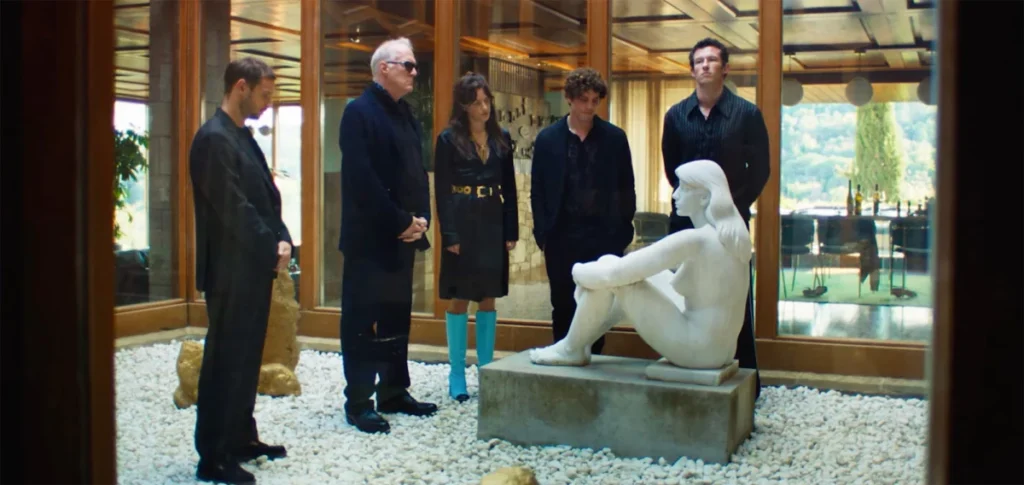
In this transformed world, Zvyagintsev found renewed inspiration for Minotaur, an adaptation of Claude Chabrol’s The Unfaithful Wife (original French La Femme infidèle). The director’s fascination with Chabrol’s 1969 psychological thriller predates the war; he had, in fact, attempted to acquire the rights for adaptation as early as 2018. However, his initial efforts were unsuccessful, a turn of events he now views with gratitude. "I am very happy that we did not succeed back then in 2018. Otherwise the story would have been different," he reflects. The delay allowed him to infuse his long-standing artistic interest with the profound, dark new chapter in his country’s history.
Chabrol’s The Unfaithful Wife is a quintessential French New Wave film, celebrated for its cool, precise, and psychologically intense exploration of bourgeois ennui, infidelity, and murder. It follows Hélène, a woman who embarks on an affair, and her husband Charles, who, upon discovering her infidelity, confronts and kills her lover. The film is notable for its detached observation, meticulous pacing, and subtle unraveling of human emotions and motivations within a seemingly placid domestic setting. For Zvyagintsev, one particular scene, devoid of dialogue yet rich in cinematic storytelling, resonated deeply: "When you watch the film, you will see what I mean. I was completely mesmerized by that setup. This is exactly what cinegenesis is all about. If you have a 20 minute scene with all the details, all the essence, all the understanding, but not a single word said — this is really great filmmaking. This is the dream of every director." This emphasis on visual narrative and the power of unspoken emotion aligns perfectly with Zvyagintsev’s own cinematic philosophy.
Crucially, Zvyagintsev’s Minotaur shifts the setting from late 1960s France to contemporary Russia, specifically beginning in September 2022. This period marks "the most tragic, the hardest, page in the history of the country," referring to the nationwide mobilization declared in Russia to support the war effort in Ukraine. By anchoring the narrative in this specific, fraught historical moment, Zvyagintsev transforms a classic tale of domestic transgression into a potent commentary on a society under immense pressure. The film’s new title, Minotaur, is also evocative. The Minotaur of Greek mythology, a monstrous creature trapped in a labyrinth, often symbolizes hidden dangers, psychological torment, or complex, inescapable situations. This shift from "The Unfaithful Wife" to "Minotaur" suggests a broader, more labyrinthine exploration of societal traps and moral dilemmas, characteristic of Zvyagintsev’s oeuvre. He intends for the film to speak directly to the grim realities unfolding in Russia, asserting that it would be "simply, absolutely impossible" for him to create "fairy tales about superheroes" while ignoring "what is happening behind your window." This deliberate choice to confront the present head-on underscores his commitment to socio-political realism.
The Creative Process Amidst Adversity: Filming in Latvia
Given the impossibility of filming in Russia, Zvyagintsev and his team sought alternative locations. The production of Minotaur ultimately took place in Latvia, a Baltic nation with historical ties to the former Soviet Union. This choice was both practical and symbolic. Latvia offered a suitable stand-in for certain Russian urban and suburban environments, with Zvyagintsev noting, "Some of them, you couldn’t really distinguish between some godforsaken district of Moscow… or the suburbs." Furthermore, Latvia boasts a significant Russian-speaking population—approximately 40%—which facilitated communication and collaboration with a diverse, international creative team.
The production team itself was a testament to the global nature of contemporary filmmaking, comprising talent from various corners of the world: Los Angeles, Spain, Vancouver, Cyprus, and London. This diaspora of creative professionals, many of whom are likely Russian or Russian-speaking individuals working outside of Russia due to the current political climate, reflects a broader trend of artists in exile. Despite the new location and partners, Zvyagintsev affirmed that "Not much was different," emphasizing the consistency of his core filming team and their ability to adapt to new circumstances. The experience in Latvia allowed him to maintain his artistic integrity and continue telling stories rooted in Russian culture, even from a distance.
Reflections on Art, Urgency, and a New Path Forward
Zvyagintsev’s harrowing journey through illness profoundly altered his perspective on life and art. While he refrains from consciously dissecting whether the experience "enriched" or "impoverished" him as an artist, he acknowledges a powerful, singular impulse that emerged from his brush with mortality: a profound sense of urgency. "The main idea, or rather impulse and feeling, that I got from this experience was that one has to live in a fast lane," he states. The lesson learned from being in "the frontier land" between life and death was clear: "you can’t really leave something for tomorrow. All the important decisions, all the projects, have to be realized ASAP. I’m not going to wait for procrastinating producers. I’m going to do it fast."
This newfound determination to seize the moment is not just a personal resolution but also a guiding principle for his artistic future. It signifies a readiness to bypass potential obstacles and push forward with projects that resonate with the present, rather than waiting for ideal conditions that may never materialize. This ethos is evident in his decision to proceed with Minotaur at a time of immense global uncertainty and personal recovery, demonstrating his unwavering commitment to filmmaking as a vital form of expression and social commentary.
Cannes Debut and Broader Implications
The premiere of Minotaur on May 19 at the Cannes Film Festival is more than just the unveiling of a new film; it is a powerful statement of resilience, artistic integrity, and the enduring relevance of a singular cinematic voice. For Zvyagintsev, returning to Cannes, a festival that has consistently championed his work, offers a crucial platform for a film that dares to engage with the complexities of contemporary Russia from an independent, critical perspective.
His return also carries broader implications for international cinema and for the community of Russian artists navigating challenging geopolitical realities. In a time when many independent Russian cultural voices are silenced or forced into exile, Zvyagintsev’s continued ability to produce and present his work on a global stage provides a beacon of hope. Minotaur is poised to not only be a compelling psychological thriller but also a significant cultural document, offering an intimate yet epic reflection on the human condition amidst unprecedented societal upheaval. As Zvyagintsev steps back into the limelight, his story serves as a testament to the indomitable spirit of an artist who has truly been "resurrected" to continue his vital work.