
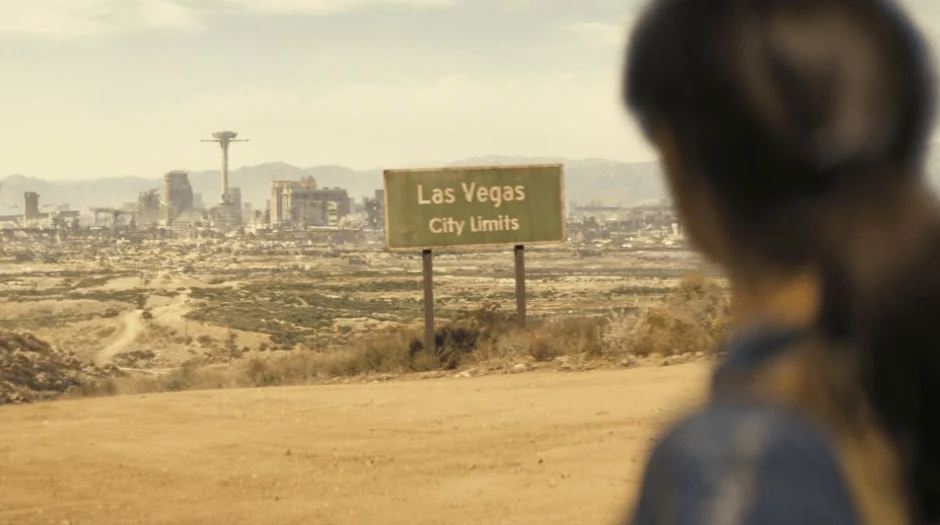
As Fallout Season 2 plunges viewers back into the desolate yet captivating Mojave wasteland and the iconic, neon-drenched cityscape of New Vegas, the series significantly amplifies the visual grandeur established in its inaugural season. This continuation of the narrative follows the intertwined journeys of Lucy, the optimistic Vault Dweller; The Ghoul, a hardened survivor with a morally ambiguous past; and their diverse band of companions as they navigate an ever-escalating post-apocalyptic landscape fraught with peril and unexpected encounters. The critically acclaimed adaptation, now available with both its seasons on Prime Video, further cements its place in the pantheon of successful video game adaptations by introducing expansive new environments, formidable new creatures, and pushing the boundaries of its visual effects artistry.
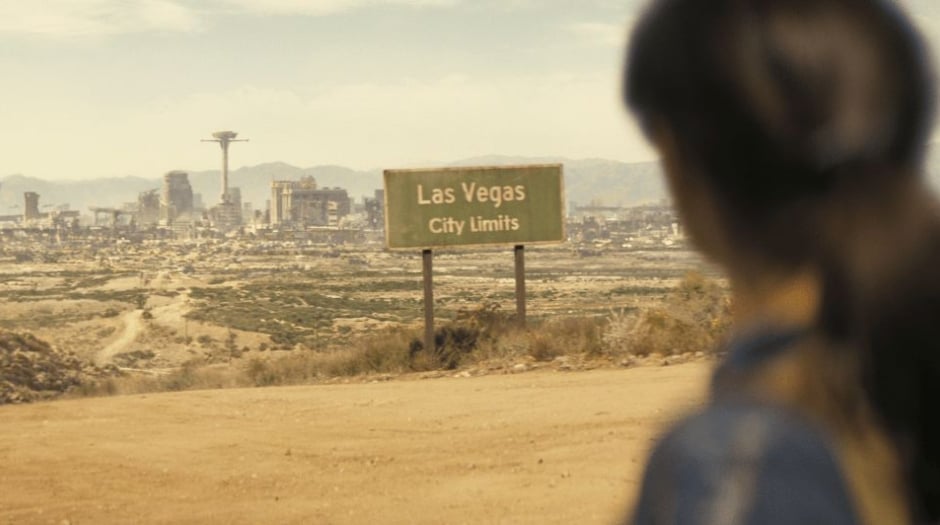
The ensemble cast, featuring compelling performances from Ella Purnell as Lucy, Aaron Moten as Maximus, Walton Goggins as The Ghoul, Kyle MacLachlan as Overseer Hank MacLean, Moisés Arias as The Moldy Monk, and Frances Turner as the formidable Barb, anchors the ambitious narrative. Produced by a formidable alliance of Kilter Films, Amazon MGM Studios, Bethesda Game Studios, and Bethesda Softworks, the show meticulously builds upon the rich lore of the beloved Fallout video game franchise.
Navigating New Challenges: Season 2’s VFX Landscape

For Jay Worth, the production’s VFX Supervisor, Fallout Season 2 presented a distinct set of creative and logistical hurdles compared to its predecessor. While Season 1 was largely dedicated to establishing a new, uncharted territory within the Fallout universe and defining the franchise’s evolving canon, Season 2 strategically focused on bringing one of the series’ most revered and iconic locations to life: New Vegas. This shift in focus necessitated a different approach to visual storytelling and technical execution.
"We had a little less actually than Season 1," Worth disclosed, referencing the visual effects shots. "Like 150 less shots, 3,200 or so for Season 2. We had a lot less time though. Season 1 kind of expanded and this one was far more, ‘All right, well, you got 12 weeks for the finale. Good luck.’" Despite a reduction in the sheer number of VFX shots, approximately 150 fewer than the first season’s total, the complexity and intensity of the work escalated considerably. The season’s demands included extensive digital environment work to render the sprawling Mojave wasteland and the intricate details of New Vegas, enhanced and more nuanced Ghoul effects, sophisticated de-aging sequences for key characters, the introduction of terrifying new creatures, and a significant undertaking of over 150 Deathclaw shots, masterfully executed by the renowned Industrial Light & Magic (ILM).

Worth elaborated on the collaborative process that ensured the project’s success despite the compressed timeline. "It was never problematic because editorial, we worked really well with our editorial teams and they were able to turn things over. We had more cool shots this year. We had 800 versus 500 the first season, brand new creatures and bigger, a lot more biting off with the creatures. Having the Deathclaw in four episodes was a lot, over 150 shots that the team at ILM did." This testament to efficient workflow and strong inter-departmental communication highlights a crucial element in the production of large-scale visual effects-driven series.
The visual effects tapestry of Fallout Season 2 spans a vast spectrum, from the eerie, irradiated landscapes and meticulously designed vault interiors to the retro-futuristic sci-fi hardware, grotesque monster roaches, imposing mech warriors, unsettling ghouls, venomous radscorpions, and the apex predator of the wasteland, the Deathclaw. The monumental task of resurrecting New Vegas and its surrounding Mojave desert required a departure from the foundational world-building efforts of Season 1. The production was compelled to strike a delicate balance between honoring the fidelity of a beloved game location and navigating the practical constraints of filming predominantly within California.

Recreating New Vegas: A Balancing Act of Fidelity and Feasibility
"Season 1 was really about developing the world," Worth explained, drawing a clear distinction between the two seasons. "We had a lot of freedom from Bethesda and everyone to create something from nothing. We were using the world of Fallout in a way that gave us a lot of freedom and a lot of pressure to develop this part of the new canon. This season was different in that we were leaning more into a specific location and all the areas of New Vegas. It created a different set of challenges for me and Howard Cummings, our production designer, figuring out how we could make the world feel as big as season one while only staying here in California."

The production’s commitment to visual authenticity, while constrained by geographical limitations, led to innovative solutions. An abandoned shopping mall was ingeniously repurposed to embody multiple key New Vegas locales, including the bustling Freeside and the opulent Strip. Melody Ranch provided additional atmospheric environments for Freeside, further enriching the visual tapestry. Sequences involving the clandestine Area 51 were filmed across the dramatic terrains of Dumont Dunes, a disused prison, and a hangar facility in Ontario, California, demonstrating the team’s resourcefulness in finding suitable backdrops. Furthermore, established assets from Season 1, such as the iconic Vertibirds and the imposing Brotherhood of Steel dirigible, were skillfully reintroduced and expanded upon, contributing to a cohesive and familiar visual language.
Worth attributed a significant portion of the show’s visual consistency and success to his enduring and collaborative partnership with Production Designer Howard Cummings. "It really comes down to partnership and trust," he emphasized. "The fact that Howard and I have worked so well and so long together, knowing where he was going to pick up and where I was going to pick up, and that trust going back and forth is really how you’re able to do big shows like this and have it feel cohesive." This deep-seated trust and understanding between key creative leads were instrumental in maintaining a unified artistic vision throughout the demanding production.

Equally crucial to the season’s visual cohesion was the established aesthetic language cultivated during the first season. This foundational visual identity served as a guiding principle, allowing the team to approach new challenges with a clearer sense of direction.
The Deathclaw: A Fearsome Icon Brought to Life

The Deathclaw emerged as one of Season 2’s most scrutinized and technically demanding visual effects creations. Its significance within the Fallout game lore, coupled with its substantial screen time in the new season, placed immense pressure on the visual effects team to deliver a creature that was both terrifyingly authentic and convincingly integrated into the live-action environment. Industrial Light & Magic (ILM) was entrusted with the monumental task of rendering over 150 Deathclaw shots. Complementing this digital artistry, Legacy Effects meticulously crafted a practical puppet, a tangible asset that played a vital role during the production phases.
"We partnered with the team at ILM," Worth stated. "When I read that we were doing the Deathclaw, they were the first ones that came to mind for me. We did the design phase with the team at Legacy, the house that built our puppet prop. We started with the head model and wanted to build something practical for us to be able to film for camera, for actors, for everything." This "practical-first" methodology proved invaluable, providing actors, stunt performers, and the VFX team with a physical reference point to interact with, thereby enhancing the realism of the final digital creations.

The integration of practical and digital effects was evident in several key sequences. "When Walton in the flashback comes face to face with the Deathclaw, we were able to use the puppet in the darkness with all the practicality and ILM took the shoulders and added it out," Worth explained. "For a handful of shots at the beginning of when the Deathclaw first is introduced, it’s the practical puppet, which kind of leans into our love of the combination of the practical and the visual effects." The tangible presence of the puppet offered crucial advantages during filming. "The puppet was invaluable for blocking, for light occlusion, for lighting reference, for interactions with the stunt team, for all of those things," he noted. "We worked with our methodology of filming all those pieces with the puppet and then taking it out and shooting clean plates. Having that real object there was really valuable to us." This meticulous approach ensured that the digital Deathclaw would seamlessly inhabit the on-screen world.
Preserving Performance Through Technological Innovation

Once ILM and the production team established the Deathclaw’s weight, movement dynamics, and overall physicality, the process of realizing other creature effects began to coalesce more smoothly. "Once we kind of nailed that first hero shot and the physicality and how we were going to embody that creature, all the rest of the shots started to come together more and more quickly," Worth observed. "Getting that weight right, figuring out the runs, how aggressive are they, it was all that fun stuff when you work with creatures."
The ultimate measure of success for Worth lay in the creature’s ability to resonate with fans of the game while feeling vibrantly alive within the narrative. "It was such a joy to work with their creature team and bring the Deathclaw to life in a way that honored and respected the game," Worth expressed. "It was scary enough, it was fun, and it still felt like Fallout."

While the Deathclaw represented a significant creature-centric challenge, some of the season’s most intricate visual effects work involved less conspicuous, yet equally critical, transformations. The de-aging of Kyle MacLachlan’s character, Overseer Hank MacLean, required a delicate touch. Worth collaborated with Mike Seymour’s team at Enigma2, alongside Hao Li and artists at Pinscreen, to craft a younger iteration of the character, meticulously preserving MacLachlan’s original performance.
"They [Enigma2 and Pinscreen] had done the single shots for us in Season 1. We used some AI models, but then it was really about getting in there and doing the old-fashioned comp work, because you don’t have the flexibility of figuring it out by hitting a button. They really did an amazing job to keep his performance," Worth stated. He further emphasized the seamless integration of the de-aging technology. "He did all of them. We were able to keep his performance throughout the entire season. It was always him. It was always his physicality, his facial expressions, keeping and capturing all of those and never losing those even if we’re having to de-age on top of it. That’s always the art, figuring out how to keep that performance and not have it feel like a mask." This dedication to preserving the actor’s genuine performance is a hallmark of sophisticated visual effects work.

The Ghoul, Radscorpions, and the Art of Seamless Integration
The visual effects work on The Ghoul also saw a substantial increase in scope, with Futureworks handling approximately 800 shots in Season 2, a notable jump from the roughly 500 shots in Season 1. "The team at Futureworks just did an amazing job," Worth remarked. "We played a little bit with our model, but really it was about finding the texture and the depth in there. We ended up going with more of a two-and-a-half-D approach for a lot of it for speed and lighting flexibility." This adaptive approach allowed for both creative expression and efficient production.

However, Worth’s personal favorite creature work of the season was the Radscorpion, which employed a similar hybrid approach, blending practical puppetry with digital animation. "The Radscorpion was my special favorite," Worth revealed. "We did the same methodology where we had small puppets and big puppets. All the small puppets we put on sticks and had them pulling through so you feel this physical thing, and then it’s cut immediately with four CG ones and back and forth. To have the actors wrestling with these things on their faces was so much fun." This immersive technique brought a visceral reality to the creature interactions.
Ultimately, for Worth, the true success of the visual effects lies in their ability to serve the narrative and enhance the emotional core of the story. "I think it’s that mixture of tone and heart and character," Worth posited. "The writers and the actors and everyone from the top down have been able to create this show that has this richness of characters. The world we’re in feels very tangible and very real. It’s really that combination of heart, stakes, humor and the actors."

He concluded by articulating the fundamental appeal of the Fallout series, both in its game and television iterations. "Like the game, it’s sci-fi, but it’s a more straightforward story," Worth summarized. "It’s a buddy road show that is really gratifying. It’s the story of a fish out of water, of redemption, of searching, of what it’s going to take, of relationships along the way. That’s the heart of what it is." This focus on universal themes of connection, survival, and personal growth is what continues to draw audiences into the richly realized world of Fallout.