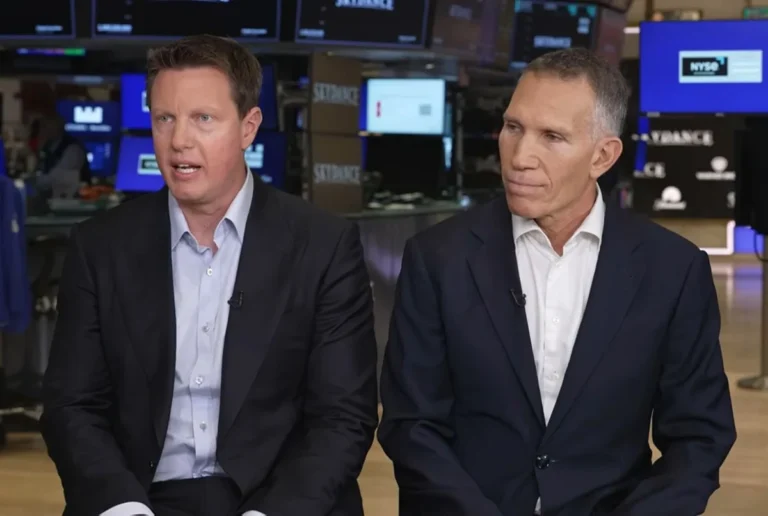
Warner Bros. Discovery (WBD) announced on Tuesday that Paramount Skydance has significantly increased its takeover bid to $31 per share in an all-cash proposal, intensifying the high-stakes battle for one of Hollywood’s most storied media empires. The revised offer, up from a previous bid of $30 per share, represents a direct challenge to WBD’s existing agreement to sell its studio and streaming operations to Netflix. In a formal statement, the WBD Board of Directors noted that the new Paramount Skydance (PSKY) proposal could "reasonably be expected" to lead to a "Company Superior Proposal," a designation that would allow the legacy media giant to pivot away from its current deal with Netflix.
The escalation comes during a critical seven-day waiver period granted by Netflix, which allowed WBD leadership to reengage in negotiations with Paramount Skydance. While the WBD board continues to officially recommend the Netflix transaction for the time being, the sheer scale of the new Paramount offer—which seeks to acquire the entirety of the company rather than just select assets—has shifted the gravity of the merger discussions. The $31 per share cash offer not only provides a premium over the Netflix bid but also includes robust financial protections designed to mitigate the risks associated with a complex regulatory approval process.
Financial Architecture of the Paramount Skydance Bid
The revised proposal from Paramount Skydance is a comprehensive effort to win over WBD shareholders through both valuation and security. At $31 per share, the offer values WBD’s equity significantly higher than the $27.75 per share valuation established in the December agreement with Netflix. Beyond the per-share price, the PSKY bid includes a massive $7 billion breakup fee payable to WBD if the merger fails to secure necessary regulatory clearances. This figure is intended to reassure investors of Paramount’s commitment to navigating the antitrust landscape in Washington and Brussels.
Furthermore, Paramount Skydance has moved to eliminate the friction of WBD’s existing contractual obligations. If WBD chooses to abandon its deal with Netflix, it would owe the streaming giant a $2.8 billion breakup fee. Under the terms of the new proposal, Paramount Skydance has committed to covering this entire cost. Additionally, the offer includes a "ticking fee"—a mechanism that would increase the final payout to WBD shareholders if the closing of the deal is delayed by prolonged regulatory reviews. This suite of financial incentives is designed to make the PSKY offer more attractive than the Netflix deal, which currently focuses only on the company’s studio and streaming units, leaving behind the debt-laden linear cable networks.
A Comparative Timeline of the WBD Takeover Battle
The current bidding war is the culmination of months of corporate maneuvering and strategic shifts within the media landscape. The timeline of events highlights how quickly the valuation of WBD’s assets has evolved as the industry moves toward further consolidation.

- December 2025: Netflix and Warner Bros. Discovery reach a definitive agreement. Netflix agrees to acquire WBD’s studio and streaming assets (including the Warner Bros. movie studio and the Max streaming service) for $27.75 per share. The deal values those specific assets at approximately $72 billion, with a total enterprise value of $82.7 billion.
- Late December 2025: Paramount Skydance launches a hostile tender offer, bypassing the WBD board to appeal directly to shareholders with a $30 per share bid for the entire company, including its linear cable assets.
- February 17, 2026: Under pressure from shareholders to explore the higher valuation of the PSKY bid, WBD secures a seven-day waiver from Netflix to enter formal talks with Paramount Skydance.
- February 24, 2026: WBD confirms receipt of the revised $31 per share cash offer from Paramount Skydance. The board begins a formal review to determine if the bid constitutes a "Superior Proposal" under the terms of the Netflix merger agreement.
Strategic Assets and Market Consolidation
The primary difference between the two competing offers lies in the scope of the acquisition. The Netflix deal is a surgical strike aimed at acquiring WBD’s content production engine and its direct-to-consumer infrastructure. By contrast, the Paramount Skydance bid is a "whole-company" solution. A merger between Paramount and WBD would create a media titan of unprecedented scale, combining two of the "Big Five" Hollywood studios: Warner Bros. Pictures and Paramount Pictures.
The integration would also bring together a massive portfolio of intellectual property. A combined entity would house the DC Universe, Harry Potter, and Game of Thrones alongside Paramount’s Mission: Impossible, Star Trek, and Yellowstone franchises. On the streaming front, the merger would likely see the consolidation of HBO Max and Paramount+, creating a library that could more effectively compete with the scale of Disney+ and Netflix.
Perhaps most significantly, the Paramount Skydance deal would unite CNN and CBS News. This aspect of the merger is expected to draw the most intense scrutiny from regulators and public interest groups, as it would place two of the largest news organizations in the United States under a single corporate umbrella. The linear portfolio would also include a dominant share of cable television, featuring brands such as TNT, TBS, HGTV, MTV, Nickelodeon, and Comedy Central.
Regulatory Hurdles and Antitrust Concerns
Despite the financial allure of the $31 per share offer, both potential deals face significant regulatory headwinds. The U.S. Department of Justice (DOJ) and the Federal Trade Commission (FTC) have signaled a more aggressive stance toward media consolidation in recent years, citing concerns over reduced competition in content production and the potential for higher prices for consumers.
A Netflix-WBD deal would represent a massive horizontal integration in the streaming space, potentially giving Netflix a dominant position in the "arms race" for premium content. Critics argue this could lead to fewer choices for creators and higher subscription fees for viewers. Conversely, a Paramount-WBD merger would be a massive consolidation of the traditional Hollywood studio system. The reduction of major studios from five to four—or effectively three in terms of theatrical distribution power—would likely trigger "monopsony" concerns, where a single buyer has too much power over the labor market for actors, directors, and writers.
The $7 billion breakup fee offered by Paramount Skydance is a direct response to these concerns. It serves as a financial "insurance policy" for WBD shareholders, ensuring that even if the deal is blocked by the government, the company would receive a substantial cash infusion to help manage its existing debt load, which has remained a primary concern for investors since the 2022 merger of Discovery and WarnerMedia.

The Path Forward: The Four-Day Matching Period
The next steps in this corporate saga are governed by the "matching rights" clause in the Netflix merger agreement. If the WBD Board of Directors officially determines that the $31 per share Paramount Skydance offer is a "Company Superior Proposal," Netflix will be formally notified. At that point, Netflix will have four business days to amend its own bid to match or exceed the financial and strategic terms of the Paramount offer.
Industry analysts are divided on whether Netflix will engage in a bidding war. While Netflix has historically avoided large-scale acquisitions, preferring to build its own content, the opportunity to acquire the Warner Bros. library and production facilities is seen as a generational opportunity to cement its dominance. However, Netflix’s current deal only covers the "crown jewels" of the company, avoiding the declining linear television business that Paramount Skydance is willing to absorb.
Should Netflix decline to match the $31 offer, WBD would be free to terminate its agreement with the streamer, pay the $2.8 billion termination fee (funded by Paramount), and enter into a definitive merger agreement with Paramount Skydance.
Implications for the Media Industry
The outcome of this battle will likely define the next era of the entertainment industry. If Paramount Skydance succeeds, it will signal a return to the "Big Media" era, where massive conglomerates attempt to leverage scale across theatrical, cable, and streaming platforms to survive. If Netflix prevails, it will accelerate the hollowing out of legacy media, as streamers "cherry-pick" the most valuable assets from traditional companies, leaving the aging cable networks to navigate a precarious future.
For WBD shareholders, the current situation represents a significant win, as the competition has driven the valuation of their holdings up by more than 11% since the initial Netflix deal was announced. For the broader industry, however, the consolidation remains a source of anxiety. Employees at CNN, CBS, Warner Bros., and Paramount are facing the prospect of massive "synergy" cuts—a standard feature of such large-scale mergers—as the combined entity seeks to streamline operations and service the debt required to fund the acquisition.
As the WBD board continues its review, the market remains on high alert. The decision made in the coming days will not only determine the owner of some of the world’s most famous media brands but will also set the stage for the next round of consolidation in an industry that is increasingly defined by the survival of the largest players. For now, the board advises shareholders to take no action, as the legal and financial teams dissect a $31 per share proposal that has fundamentally altered the trajectory of the media landscape.