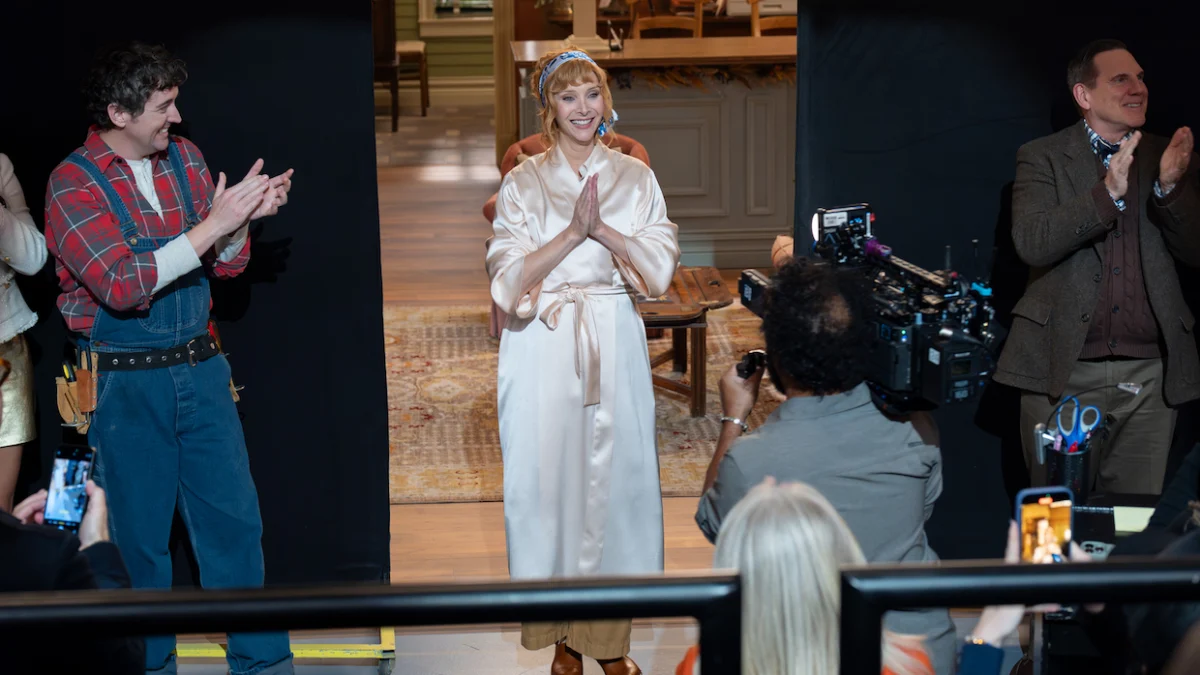
The return of HBO’s seminal comedy series The Comeback for its third and final season has sparked a renewed dialogue regarding the precarious state of the American television industry, coinciding with the concluding chapter of the multi-Emmy-winning series Hacks. Created by Michael Patrick King and Lisa Kudrow, The Comeback has historically functioned as a barometer for the medium’s periodic existential crises. In 2026, the series has re-emerged to tackle the integration of generative artificial intelligence in scripted content, a theme that mirrors the narrative arc of Hacks Season 5, where protagonist Deborah Vance faces the encroachment of tech-driven creative models. As both shows prepare for their final bows, they provide a dual-pronged critique of a Hollywood landscape defined by corporate consolidation, the aftermath of labor disputes, and the erosion of human-centric storytelling.
The Evolution of Valerie Cherish: A Twenty-Year Industry Chronology
The Comeback has maintained a unique release pattern that mirrors major shifts in television history. When the series debuted in 2005, it served as a scathing indictment of the burgeoning reality television genre. At that time, the industry was grappling with the rise of unscripted programming, which threatened to displace traditional sitcoms with lower production costs and high-drama, tabloid-style narratives. Lisa Kudrow’s portrayal of Valerie Cherish, a former sitcom star navigating a humiliating return via a reality lens, became a cult classic for its "cringe-inducing" accuracy regarding the medium’s desperation for ratings.
By the time HBO revived the series in 2014 for its second season, the landscape had shifted toward the "streaming wars" and the proliferation of "prestige TV." During this era, reality television had gained a degree of legitimacy, but the market was becoming oversaturated with high-budget dramas that often prioritized aesthetic over substance. The second season followed Valerie as she secured a role in an HBO prestige drama about her own life, highlighting the meta-narrative of an industry obsessed with self-reflection and brand legacy.
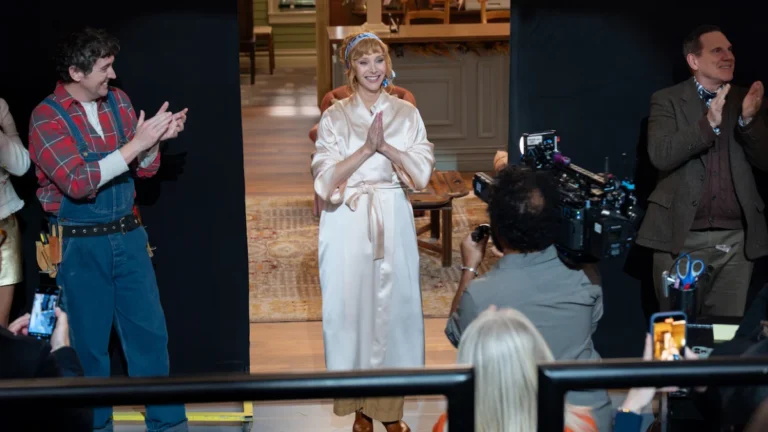
The third season, arriving twelve years after the second and twenty-one years after the first, finds the industry in a state of "post-peak" contraction. Following the global pandemic and the historic dual strikes of 2023, Hollywood has entered a period of extreme austerity. Production volumes have plummeted, and major studios have increasingly turned toward artificial intelligence to mitigate costs. It is within this bleak environment that Valerie Cherish attempts her final "comeback," booking a lead role in a multi-camera sitcom titled How’s That?!—the first production of its kind to be scripted entirely by an AI engine named Allassist.
The AI Conflict: Allassist vs. QuikScribbl
The thematic core of both The Comeback and Hacks this season centers on the replacement of human writers with large language models (LLMs). In The Comeback, Valerie Cherish is cast as an executive producer and lead actress on NuNet, a streaming platform funded by Big Tech. The AI system, Allassist, is presented not as a revolutionary tool, but as a "pathetic joke" that produces stale, derivative material.
Industry data suggests that the use of AI in script doctoring and joke generation has become a point of contention for guilds. In the narrative of The Comeback, this tension is personified when veteran director James Burrows, playing himself, critiques the AI-generated pilot. Burrows notes that the "surprise" essential to comedy cannot be replicated by an algorithm, stating that humor requires the collaborative friction of writers "beating themselves up" to find a better joke.
Parallel to this, Hacks Season 5 introduces a similar antagonist in the form of a venture capitalist promoting "QuikScribbl," a platform designed to license the likeness and creative history of legendary comedians like Deborah Vance. The conflict arises when the technology is used not just for archival purposes, but to generate new material, effectively bypassing the creative input of Deborah’s long-term collaborator, Ava Daniels. The show utilizes this plotline to address the "narrative of inevitability" often pushed by tech firms, suggesting that the automation of creativity is an unavoidable evolution rather than a choice made by corporate entities to increase profit margins.
Format Shifts and Narrative Stakes
A significant departure in the third season of The Comeback is the abandonment of the "found footage" or mockumentary format that defined its first two runs. Critics and industry analysts suggest this move allows for a more "propulsive" and direct viewing experience, focusing on Valerie’s agency rather than her being the passive subject of a camera crew’s gaze. In this final iteration, Valerie is forced to transition from a figure of ridicule to a defender of the craft. Her dilemma is multifaceted: she must protect her own career while acknowledging that the machine-generated scripts threaten the livelihoods of the very writers who have historically been her antagonists.
In Hacks, the stakes are equally high as Deborah Vance navigates a "non-compete" clause in her network contract. This plot point reflects real-world legal battles in the entertainment industry regarding talent freedom and corporate censorship. Following the fictionalized cancellation of late-night staples—a move that mirrors recent real-world shifts in the late-night landscape—Deborah finds herself silenced for a calendar year, forced to find alternative venues like Madison Square Garden to maintain her relevance.
Supporting Data: The Economic Reality of 2026 Television
The portrayal of "NuNet" in The Comeback and the corporate restructuring in Hacks are supported by current industry trends. According to market analysis:
- Production Contraction: Domestic television production has seen a 20% decline since 2022 as streamers pivot from subscriber growth to profitability.
- AI Integration: A 2025 survey of industry executives indicated that 40% of studios are exploring AI for "pre-production and basic script formatting," though creative guilds continue to fight for "human-in-the-loop" mandates.
- Ageism and Gender Gaps: Despite the success of Smart and Kudrow, actresses over the age of 50 still receive significantly less screen time in leading roles compared to their male counterparts, making the longevity of Valerie Cherish and Deborah Vance a statistical anomaly.
Official Responses and Creative Statements
While HBO and Max have not issued a combined statement, the creative teams behind both shows have been vocal about the importance of protecting the "human element" in comedy. Michael Patrick King has noted in previous interviews that Valerie Cherish is a survivor of every "bad idea" Hollywood has ever had. Similarly, the creators of Hacks—Lucia Aniello, Paul W. Downs, and Jen Statsky—have emphasized that the show is fundamentally about the labor of comedy and the specific, non-transferable bond between a mentor and a mentee.
The inclusion of legendary figures like James Burrows in The Comeback serves as a formal endorsement of these sentiments. By having Burrows play himself, the show grounds its satire in the reality of television history, reminding audiences that the multi-cam sitcom format, while often dismissed as "hokey," was built on a foundation of human timing and audience connection that AI currently fails to replicate.
Broader Impact and Emmy Implications
The simultaneous conclusion of these two series sets the stage for a significant showdown at the upcoming Primetime Emmy Awards. Hacks has historically been a dominant force, securing 12 wins to date, including Best Comedy Series and multiple Lead Actress wins for Jean Smart. The Comeback, conversely, has remained a "critic’s darling" with a smaller trophy count, though Lisa Kudrow has consistently earned nominations for her portrayal of Valerie.
Industry insiders suggest that the "showbiz satire" subgenre is currently at its peak popularity among Academy voters, following the recent sweep by The Studio. A potential tie or split between Smart and Kudrow in the Lead Actress category is being discussed by awards strategists as a "poetic conclusion" to two careers that have navigated the transition from the broadcast era to the digital age.
Ultimately, the final seasons of The Comeback and Hacks serve as more than just entertainment; they are historical markers of an industry at a crossroads. By centering their finales on the threat of AI and the resilience of the female icon, both shows argue that while technology can mimic the structure of a joke, it cannot replicate the desperation, the ego, or the genuine human triumph that makes television a vital medium. As Valerie Cherish takes her final bow on the soundstage of a tech-funded sitcom, the message remains clear: the "comeback" is not just about a single actress, but about the survival of the artistic soul in a corporate-driven future.