


Following its high-profile debut at the Cannes Film Festival, Dominga Sotomayor’s latest feature, La Perra, has emerged as a significant milestone in the evolution of contemporary Chilean cinema. The film, an adaptation of Pilar Quintana’s acclaimed 2017 novel, marks a departure for Sotomayor, whose previous works have been deeply rooted in personal and autobiographical memory. By shifting her focus to an island off the southern coast of Chile, Sotomayor explores the intricate, often fraught relationship between human identity, animal instincts, and the physical landscapes that shape them. The production represents a complex intersection of international collaboration, featuring a score by Clint Mansell and cinematography by Simone D’Arcangelo, further solidifying Sotomayor’s status as a leading voice in global auteur cinema.
The Narrative Core and Thematic Shifts
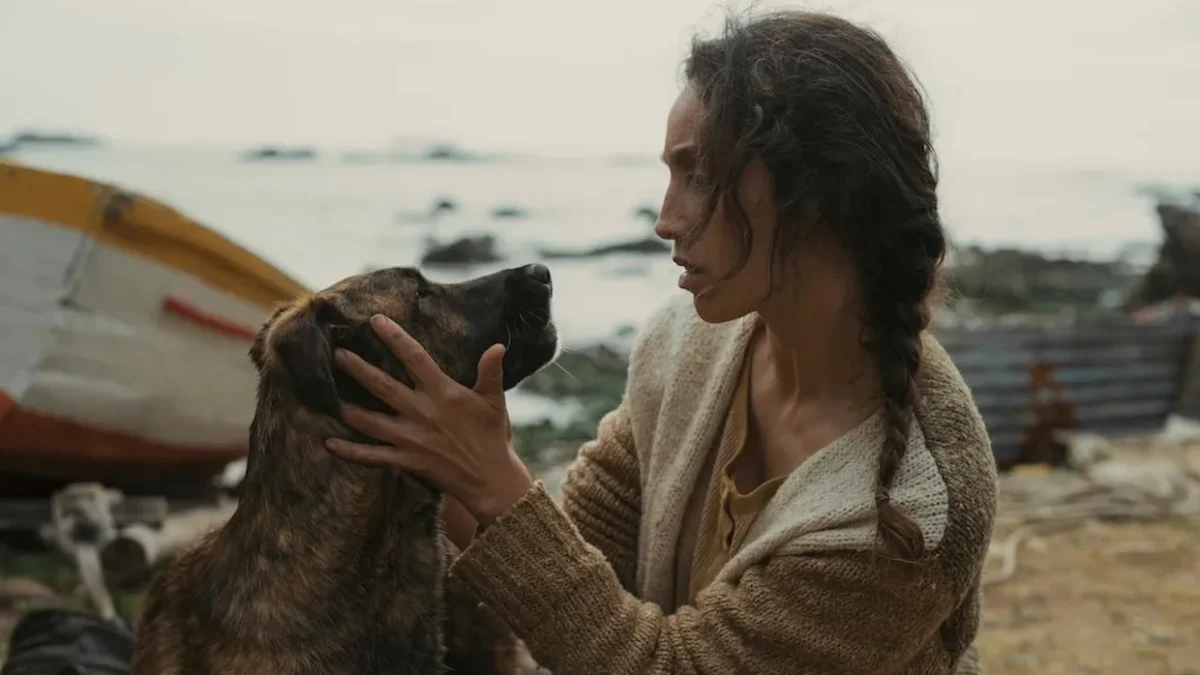
La Perra centers on Silvia, portrayed by Manuela Oyarzún, a woman in her 40s living a solitary existence as a seaweed harvester on a windswept, isolated island. Her life is disrupted when she adopts a stray puppy named Yuri—after the Mexican pop icon whose 1980s hits serve as a rhythmic backdrop to the film’s atmosphere. While the premise suggests a conventional story of companionship, Sotomayor deliberately subverts these expectations. The film avoids treating the dog as a sentimental tool for character growth; instead, it investigates the "concept of domestication" and the inherent impossibility of truly owning another living being.
For Sotomayor, this project represents a pivot from the "private realms" of her earlier films. Her debut, Thursday till Sunday (2012), was a claustrophobic road movie set inside a family car, while her breakout hit, Too Late to Die Young (2018), examined a bohemian commune at the end of the Pinochet era. Both were heavily influenced by her own childhood. In contrast, La Perra required an exercise in empathy toward a character and a location entirely foreign to her. Sotomayor has described this transition as a "beautiful contradiction," noting that moving away from her own history allowed her to find themes that were even more personal and raw.
A Chronology of Development and Production
The journey of La Perra from page to screen began with Sotomayor’s encounter with Pilar Quintana’s novel. Although the original book is set in the humid jungles of Colombia, Sotomayor felt she could not authentically represent a landscape she did not know intimately. With the support of producer Rodrigo Teixeira of RT Features—a powerhouse behind films like Call Me by Your Name and The Lighthouse—Sotomayor was granted the creative freedom to transplant the story to the rugged, cold environment of southern Chile.
The production timeline for La Perra was unusually condensed for Sotomayor, who typically spends several years developing a single project. In a rare feat for an independent director, she completed two distinct features within the same year: the Netflix-produced Swim to Me, shot in January, and La Perra, filmed in October. Sotomayor has highlighted the stark differences between these two experiences. While Swim to Me was a commission that required a more straightforward narrative to satisfy a broad streaming audience, La Perra was conceived as a "free" film designed for the cinematic space. This freedom allowed her to experiment with "dispersed cinema"—a style characterized by meandering structures and formal radicalism.
Visual Language and the Construction of Geography
A defining characteristic of Sotomayor’s work is her use of confined spaces to "shrink the world" and observe it more closely. In La Perra, the island of Santa Maria serves as this framework. However, the geography presented in the film is largely a cinematic construction. Sotomayor and cinematographer Simone D’Arcangelo created an "imaginary territory" by blending locations from Santa Maria with other coastal regions. This allowed the production to invent details, such as a stylized seaweed industry involving tractors ferrying mounds of algae, which provided a more visually arresting aesthetic than the plastic-heavy reality of the actual industry.
The visual palette of the film was heavily influenced by the director’s family heritage. Sotomayor’s grandmother, Carmen Couve, and her uncle, Adolfo Couve, were noted painters whose work often featured dramatic, 19th-century-style landscapes with barren islands and heavy, bulbous clouds. D’Arcangelo utilized these references to create a psychological atmosphere that juxtaposed the vastness of the landscape with the intimate, often disturbing tension between Silvia and Yuri.
Technical Innovation and the Animal Perspective
One of the most technically challenging aspects of the film was the decision to treat the dog, Yuri, as a protagonist with its own independent perspective. Rather than following Silvia’s reaction to the animal, the camera frequently abandons the human lead to track the dog’s movements across the beach and through the brush. This choice reinforces the theme that the animal is not a surrogate for Silvia’s emotional voids but a separate entity pursuing its own identity and freedom.

Directing the animal performers required a non-conventional approach. Sotomayor insisted on using mutts rather than pedigree dogs to maintain a sense of realism. The production cast two different dogs—a puppy and a one-year-old adult—both of which were rescues found in shelters and on highways near Santiago. Because the adult dog was untrained and possessed "wild energy," the filming process had to remain fluid, with the crew often having to pause for hours when the animal would run off for miles. This unpredictability became part of the film’s language, forcing the actors and the cinematography to react to the environment in real-time.
Temporal Ambiguity and Cinematic Influences
La Perra utilizes a unique approach to time, existing in what Sotomayor calls a "temporal limbo." The film mixes modern elements like smartphones and contemporary vehicles with vintage television sets and props from previous decades. This atemporality is further emphasized by the director’s first use of a flashback sequence. Unlike traditional narrative flashbacks that use distinct color palettes or obvious markers to signal a jump in time, Sotomayor’s flashbacks are integrated seamlessly into the present. This creates a "diffused" feeling, where the past is not a tool for explanation but a standalone unit of memory.
In developing this style, Sotomayor drew on a wide array of cinematic touchstones. She pointed to Michael Roemer’s Vengeance is Mine (1984) for its rigid yet meandering structure, and Michelangelo Antonioni’s L’avventura (1960) for its exploration of landscape and absence. Additionally, the "open" cinematic language of Australian films such as Walkabout (1971) and Storm Boy (1976) informed her decision to let go of strict logical sequences in favor of a more reactive, liberating filmmaking process.
Industry Context and Supporting Data
The premiere of La Perra at Cannes comes at a time of significant growth for the Chilean film industry. According to data from CinemaChile, the country’s international promotion agency, Chilean audiovisual exports have seen a steady increase over the last decade, with the sector contributing approximately 0.4% to the national GDP. Sotomayor has been at the forefront of this movement; her 2018 win for Best Direction at the Locarno Film Festival made her the first woman to receive the award, signaling a shift in the global recognition of Latin American female directors.
The source material itself carries substantial literary weight. Pilar Quintana’s La Perra was a finalist for the National Book Award for Translated Literature in the United States and won the Biblioteca de Narrativa Colombiana Prize. By adapting such a high-profile work, Sotomayor bridges the gap between regional literature and international cinema, a trend that has proven successful for other Latin American filmmakers like Alfonso Cuarón and Lucrecia Martel.
Implications for Contemporary Cinema
The release of La Perra suggests a burgeoning interest in "slow cinema" that prioritizes atmosphere and psychological depth over traditional plot mechanics. Sotomayor’s refusal to use animals as trite metaphors or to provide clear-cut narrative resolutions challenges the audience to "luxuriate in enigmas." This approach aligns with a broader movement in world cinema that seeks to decenter the human perspective and explore the "permeable border between the human and the non-human."
Furthermore, the film’s production model—balancing a high-concept independent project with a major streaming commission—provides a blueprint for modern auteurs navigating the shifting landscape of film distribution. Sotomayor’s ability to maintain her creative voice while working within different production structures suggests that the future of international cinema may lie in the ability to pivot between "diffused" artistic explorations and more structured commercial ventures.
As La Perra begins its journey through the international festival circuit and toward theatrical release, it stands as a testament to the power of landscape as a narrative force. By capturing the windswept isolation of a fictionalized Chile, Dominga Sotomayor has created a work that is both a rigorous character study and a profound meditation on the limits of human connection. The film’s success at Cannes reinforces the idea that the most specific, local stories often possess the most universal resonance, provided they are told with the "freedom and lightness" that Sotomayor has embraced in this latest chapter of her career.