

Mexico’s pioneering stop-motion animated feature film, I Am Frankelda, makes its global debut on Netflix on June 12th, ushering in a new era for the country’s animation industry. This visually stunning and thematically rich prequel to the acclaimed series Frankelda’s Book of Spooks is the brainchild of brothers Arturo and Roy Ambriz, founders of the Mexico City-based studio Cinema Fantasma. The film represents a significant milestone, not only as Mexico’s first stop-motion feature but also as a testament to the brothers’ unwavering vision to craft "beautiful nightmares" that resonate with audiences worldwide.
The genesis of I Am Frankelda is rooted in a philosophical inspiration that guided the Ambriz brothers throughout its development. Roy Ambriz explained their core concept, drawing a parallel to Plato’s theory of Forms. "He believed that there is this world of ideas that are perfect and sublime, and the ideas actually choose us as authors in order to be materialized in the real world," Roy stated. "That thought really helped us form the film. And we love it because it feels like the truth." This philosophical underpinning suggests a belief that the characters and narrative of I Am Frankelda were not merely invented but discovered, chosen to manifest through the artists’ dedication. Arturo added a more personal touch, observing, "Somewhere, I’m sure, Frankelda lives. And a series wasn’t enough for her." This sentiment underscores the deep connection the creators feel to their characters and the compelling narrative that demanded a larger canvas. Their shared ambition, as Roy articulated, was to "help that idea materialize and make the world a little brighter at the same time."

A Tale of a Gifted Writer and a Nightmare Kingdom
Set in 19th-century Mexico, I Am Frankelda introduces Francisca, a young writer whose dark and imaginative tales are consistently overlooked and dismissed by her contemporaries. Her world takes an extraordinary turn when Prince Herneval, from the enigmatic "nightmare land" of Topus Terrenus, extends a singular offer: to become the kingdom’s new "nightmare-teller." This role is crucial for the prosperity and well-being of Topus Terrenus and its inhabitants. Driven by an ambition to see her stories recognized and perhaps a yearning for a world that embraces her unique vision, Francisca accepts. She adopts the persona of Frankelda, and Prince Herneval transports her subconscious to his fantastical realm.
As Frankelda and Herneval’s bond deepens, their connection evolves into a complex force, serving as both a source of strength and a potential vulnerability. This burgeoning relationship unfolds against the backdrop of a looming threat: the former nightmare writer, Procustes, who harbors ambitions to usurp control of Topus Terrenus. To thwart Procustes and secure her own destiny, Frankelda must confront a love that transcends conventional understanding and reclaim her power as a storyteller before darker forces can extinguish her creative spirit. The narrative arc promises a journey of self-discovery, the power of imagination, and the intricate balance between love and ambition.
The Cinematic and Artistic Influences
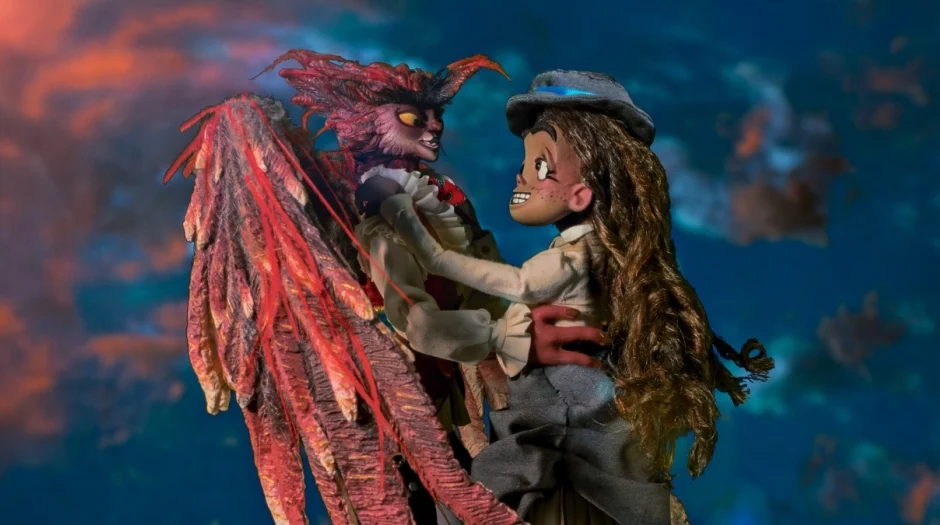
The visual aesthetic of I Am Frankelda is a meticulously crafted tapestry, drawing inspiration from a diverse range of artistic movements and cultural elements. The Ambriz brothers consciously sought to create a world of "beautiful nightmares," eschewing traditional dark and grim tropes for a more vibrant and elegant portrayal. Roy elaborated on the creation of the unique inhabitants of Topus Terrenus. "We decided that we could create our own race, our own species of monsters," he explained. "We wanted the prince to be handsome and sweet but also mysterious. We took a lot of inspiration from [surrealist painters] Leonora Carrington and Remedios Varo, but also from the Mexican owls called ‘Tecolotes.’ We started mixing those different elements until we found the exact design that we wanted.”

This fusion resulted in Prince Herneval, a striking figure with bright eyes and vibrant red feathers, adorned in resplendent silk and glittering jewels. His appearance is designed to reflect the opulent and fantastical environment of Topus Terrenus, characterized by its crystal palace and lush floral landscapes. The production design, spearheaded by Ana Coronilla and Bruce Zick, further amplifies this vision. Zick, a seasoned illustrator and concept artist with a background in major animation studios, played a pivotal role in defining the world’s aesthetic and architectural style. "There are no caves or things like that," Roy noted, emphasizing the departure from conventional monstrous lairs. "It’s more like they were these Renaissance monsters with big palaces and gardens, with their own art forms and languages."
The film’s commitment to a "bright" nightmare is further exemplified by its use of naturalistic lighting and vibrant color palettes. "And in order to have a space feel beautiful, you need sunlight," stated Arturo. "It is not enough to just put in torches and have everything take place at night. Roy and I love spooky elegance, so we wanted to make watching this film feel like you were sitting on a bench, reading a book with a cup of tea.” This approach creates an atmosphere that is both enchanting and comforting, inviting viewers into a world that is more whimsical than terrifying. The imagery of fluffy cloud beaches and pink sunsets contributes to this serene yet imaginative ambiance.
The regal figures of Herneval’s parents add another layer of symbolic depth and artistic homage. Their wardrobe is directly inspired by the opulent, gold-infused paintings of Gustav Klimt. Roy elaborated on their significance: "The king represents fiction and the queen represents the truth. And we think that reality is the result of the marriage of fiction and truth. Fiction and truth give you reality. The castle, the palace, and the thrones are constructed on this concept.” This allegorical representation of fiction and truth as complementary forces underpinning reality adds a profound philosophical dimension to the film’s narrative.

A Collaborative Triumph and Industry Recognition
I Am Frankelda is a testament to the collaborative spirit of the Mexican film industry, brought to life by a talented ensemble of artists and technicians. The film features the vocal talents of Mireya Mendoza, Arturo Mercado Jr., and Luis Leonardo Suarez. The production was overseen by Academy Award-winning filmmaker Guillermo del Toro, who served as a crucial creative advisor. Del Toro’s involvement provided invaluable guidance and prestige to the project, aligning with his known passion for dark fantasy and unique visual storytelling. The Ambriz brothers not only directed and wrote the film but also served as producers, overseeing its intricate development.
Key creative roles were filled by a distinguished team: Production Design by Ana Coronilla and Bruce Zick; Animation Direction by Beto Petiches; Directors of Photography Irene Melis and Fernanda G. Manzur; and an original score by Kevin Smithers. The meticulous animation process, involving hundreds of feathers and approximately 60 different mouth replacements for the characters, highlights the extraordinary craftsmanship required for stop-motion animation. The dedication to such detailed work underscores the Ambriz brothers’ commitment to realizing their artistic vision.
The film’s musical nature is a significant aspect of its appeal. Arturo confirmed that "the entire cast sings their hearts out in this film." The enthusiastic reception it has already garnered in Mexico, including multiple standing ovations during theatrical screenings, suggests a strong emotional connection with audiences. "We went to a lot of screenings of the film in theaters in Mexico, and at many of those screenings, the film received a standing ovation, even in the middle of the film, which is very strange. We’re really glad the audience has enjoyed it," Arturo shared. This preemptive positive feedback from Mexican audiences indicates a broad appeal that bodes well for its international Netflix release.

A Milestone for Mexican Stop-Motion Animation
The creation of I Am Frankelda represents a significant advancement for stop-motion animation in Mexico. The Ambriz brothers acknowledge that venturing into this field was a considerable risk. Their previous work, Frankelda’s Book of Spooks, was the first stop-motion animated musical TV series to emerge from Mexico. This pioneering effort paved the way for the feature film. "The brothers have said their film is ‘made for all the creative people out there who feel that they are not listened to,’" the original report stated. This sentiment reflects their journey and their aspiration to champion underrepresented voices in the creative sphere.
The success of Frankelda’s Book of Spooks in Mexico was a powerful validation. "When the series premiered, it was so strange to have this very dark series resonate so strongly with audiences, to find merch in the streets of Mexico, and to receive pictures of Frankelda and see themed quinceañeras and tattoos," Roy recounted. These tangible signs of audience engagement – from street merchandise to personal celebrations incorporating the characters – demonstrated the profound impact their work had on popular culture. "Those experiences have been crazy, and they put into perspective what has been achieved," he added.
The brothers’ motivation stems from a deep-seated belief in the impact of their art. "That’s the only reason we keep doing what we are doing," Roy stated, emphasizing the profound satisfaction derived from audience connection. He further articulated this sentiment: "We understand that what we do matters. It closes the circle when you hear back from fans that they are immersed, thinking all day about these characters, doing their own stuff, creating their own fan fiction. That gives us all the fuel that we need in order to keep doing films." This feedback loop, where audience engagement fuels further creative endeavors, is crucial for the sustainability and growth of niche animation forms.

The global release of I Am Frankelda on Netflix is poised to introduce Mexican stop-motion artistry to an international audience, potentially inspiring a new generation of filmmakers and animators. It signifies a crucial step in diversifying the global animation landscape and showcasing the unique storytelling traditions and artistic talent emerging from Mexico. The film’s success could pave the way for further investment and opportunities in the Mexican animation sector, solidifying its position on the world stage. The dedication, philosophical depth, and artistic innovation evident in I Am Frankelda promise a cinematic experience that is both visually captivating and emotionally resonant, a true milestone for Mexican cinema.