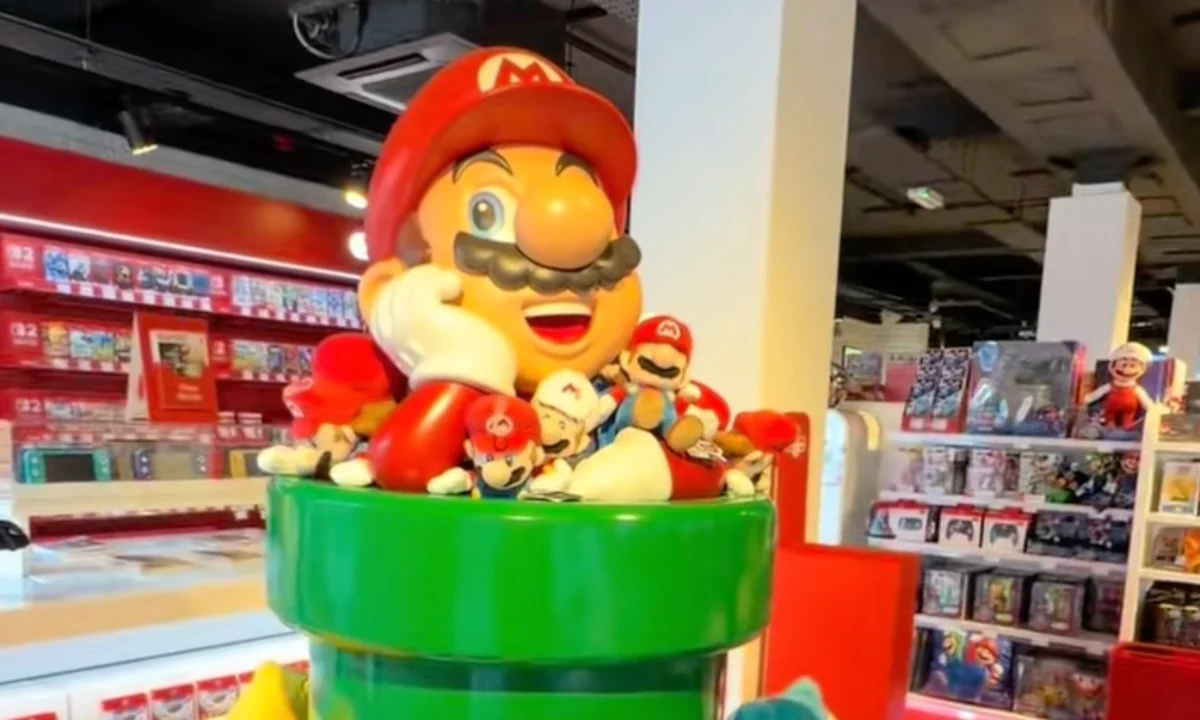
In a strategic move to bolster its physical retail presence in the United Kingdom, Nintendo has officially opened the Nintendo Experience Zone, a dedicated pop-up store located within the Argos flagship branch on Tottenham Court Road, London. This collaborative venture between the Japanese gaming giant and the prominent British retailer represents a significant expansion of Nintendo’s consumer outreach, offering a curated environment where enthusiasts can engage with the brand’s diverse portfolio of intellectual properties. The installation features a comprehensive selection of hardware, software, and lifestyle products, marking a departure from standard retail shelving toward a more experiential and immersive brand environment.
The pop-up, which emerged with minimal prior fanfare, was first brought to public attention through social media platforms, specifically via a viral report by digital creator BadxGurlCosplay on TikTok. Industry analysts and news outlets, including VGC, quickly confirmed the development, noting that the space is designed to serve as a high-traffic hub for fans during the mid-year retail season. The store is reportedly fully stocked with the latest Nintendo Switch family of systems, including the OLED model and the Lite variant, alongside a vast library of first-party and third-party titles.
Strategic Location and Store Composition
The choice of Tottenham Court Road for this initiative is highly calculated. Historically known as London’s premier district for electronics and computing, the area continues to attract a high volume of tech-savvy consumers and international tourists. By embedding the Nintendo Experience Zone within an Argos location, Nintendo leverages the established footfall of one of the UK’s most recognizable retail chains, which is owned by the Sainsbury’s Group.
The inventory within the Experience Zone extends far beyond standard gaming hardware. According to on-site reports, the store houses an extensive range of licensed merchandise, some of which is noted to be exclusive to the Argos partnership. This includes a variety of plush toys, figurines, and collectibles featuring characters from Nintendo’s most iconic franchises. The product range is categorized by intellectual property, ensuring that fans of specific series can easily navigate the offerings. Key franchises represented include:
- Super Mario: A central pillar of the display, featuring classic toys, board games, and the latest software releases.
- The Legend of Zelda: Merchandise ranging from high-end collectibles to apparel, capitalizing on the continued success of recent entries like Tears of the Kingdom.
- Pokémon: A massive array of peripherals, accessories, and plushies, reflecting the brand’s immense cross-generational appeal.
- Niche and Fan-Favorite IPs: Dedicated sections for Metroid, Animal Crossing, Kirby, Splatoon, and Pikmin, providing visibility for titles that may have smaller retail footprints in general merchandise stores.
Beyond traditional gaming items, the pop-up emphasizes "lifestyle" products, including stationery, homeware, and children’s toys. This diversification suggests a strategy aimed at capturing the "kidult" market—adult consumers who purchase toys and collectibles for themselves—as well as families looking for comprehensive gift options.
Chronology of Development and Logistics
The realization of the Nintendo Experience Zone was the result of an intensive seven-month planning phase. Peter Wray, a gaming buyer for Argos, detailed the complexity of the project via professional networking site LinkedIn. Wray noted that the partnership aimed to bring together "hundreds of lines" from various gaming and licensing partners into a singular, cohesive retail space.
The logistics of the launch were characterized by a high degree of collaboration. Wray expressed gratitude toward partners who went as far as hand-delivering stock to ensure the store was ready for its quiet opening. This hands-on approach highlights the importance both Nintendo and Argos have placed on the success of this specific location. While an exact closing date for the pop-up has not been officially publicized, industry reports suggest that the Experience Zone will remain operational for the next few months, likely covering the peak summer period and potentially extending toward the autumn retail window.
Contextualizing Nintendo’s Retail Evolution
The London pop-up arrives at a pivotal moment for Nintendo’s global retail strategy. For years, the company has maintained a flagship presence in New York City (Nintendo NY) and has recently expanded its official "Nintendo TOKYO," "Nintendo OSAKA," and "Nintendo KYOTO" stores in Japan. A second US flagship is also planned for San Francisco. However, in the UK, Nintendo has historically relied on "store-within-a-store" concepts and partnerships with existing retailers like GAME or Hamleys rather than opening standalone flagship boutiques.
The Tottenham Court Road project serves as a sophisticated evolution of this model. By creating a branded "zone" rather than just a dedicated aisle, Nintendo can control the aesthetic and experiential aspects of the consumer journey without the overhead of a standalone property in London’s expensive West End.
This retail push also coincides with broader shifts in the gaming industry regarding physical media and consumer habits. The physical retail space remains a vital touchpoint for Nintendo, a company that has traditionally seen higher physical-to-digital sales ratios compared to its competitors, Sony and Microsoft. The tangible nature of Nintendo’s products—from the tactile feel of the Switch console to the collectibility of Amiibo figures—benefits significantly from a physical environment where consumers can interact with the brand.
Integration with Future Pricing Strategies
The launch of the pop-up follows a significant announcement regarding Nintendo’s future pricing models. The company recently confirmed a shift in its approach to first-party software sales, specifically concerning the upcoming successor to the Nintendo Switch. In a move that sparked considerable discussion among the gaming community, Nintendo revealed that digital versions of its future games will likely be priced lower than their physical counterparts.
Nintendo clarified that the cost of physical games is not necessarily increasing, but rather that the digital versions will have a Manufacturer’s Suggested Retail Price (MSRP) that is lower to reflect the absence of manufacturing and distribution costs associated with physical cartridges and packaging. This policy is expected to apply to games published exclusively for the "Nintendo Switch 2."
In this context, the Nintendo Experience Zone at Argos takes on a new dimension. By emphasizing the "premium" nature of physical goods—exclusive merchandise, high-quality plushies, and physical game cases—Nintendo is reinforcing the value proposition of physical ownership. For collectors and enthusiasts who visit the Tottenham Court Road store, the physical object is more than just data; it is a collectible item. This strategy allows Nintendo to maintain a premium tier for physical products while offering a more competitive entry point for digital-only consumers.
Broader Impact and Market Implications
The opening of the Nintendo Experience Zone is a clear indicator of the brand’s resilience and its ability to innovate within the retail sector. As many traditional retailers struggle with the shift to e-commerce, Nintendo’s focus on "experience-led retail" provides a template for how brands can remain relevant on the high street.
For Argos, the partnership is equally beneficial. It positions the retailer as a destination for exclusive gaming culture rather than just a catalog-based pickup point. In a competitive market where specialized gaming retailers have seen a decline, the inclusion of a high-profile, well-stocked Nintendo zone could drive significant foot traffic to the Tottenham Court Road branch, benefiting other departments within the store.
Furthermore, the pop-up serves as a localized marketing engine. In the absence of large-scale consumer trade shows like E3, physical installations like the Experience Zone allow Nintendo to maintain a direct line of communication with its audience. It provides a space for community engagement and acts as a physical billboard for the brand in one of the world’s most influential cities.
As the gaming industry looks toward the next generation of hardware, Nintendo’s investment in physical retail spaces suggests a long-term commitment to the hybrid model of digital convenience and physical brand prestige. The Nintendo Experience Zone is more than a temporary shop; it is a testament to the enduring power of Nintendo’s characters and the company’s ability to create physical spaces that resonate with a global fanbase. For the next few months, London’s gaming community has a dedicated home to explore the past, present, and future of one of the industry’s most storied companies.