



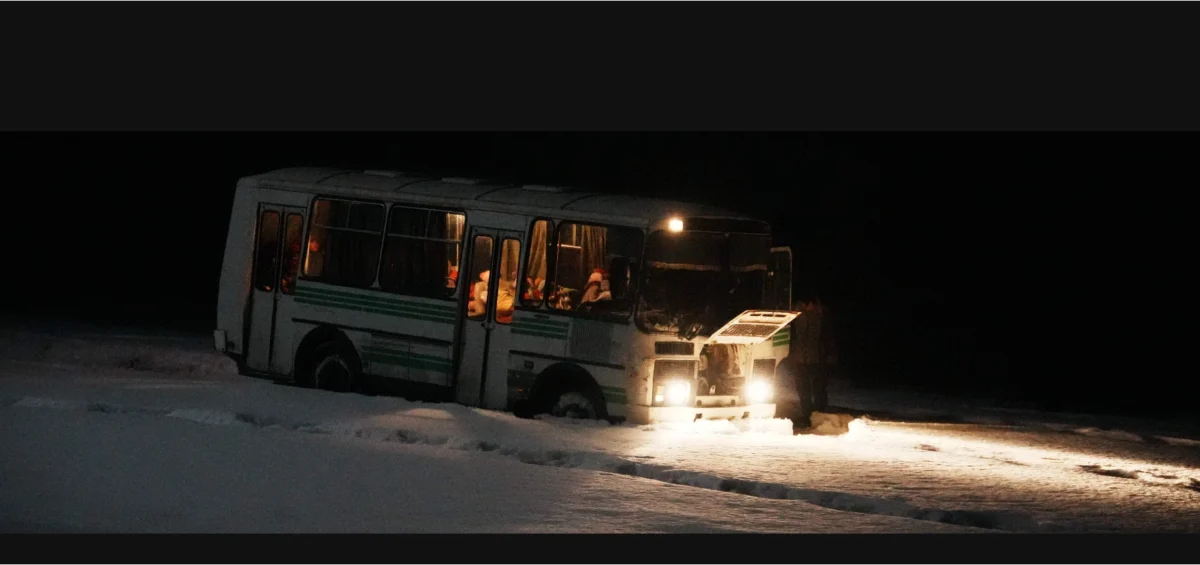
The snow-laden peaks of Kyrgyzstan’s mountain ranges serve as a stark and breathtaking backdrop for "Witch," locally known as "Jez Kempir," a new horror film from directors Shamilbek Bekbolsun Uulu and Ilgiz Kuvatbek. While drawing inspiration from the "Weapons" genre, this production offers a distinctively Kyrgyz narrative, weaving a tale of terror that delves deeply into social anxieties, psychological manipulation, and the enduring consequences of fear and prejudice within a secluded community. The film, which recently premiered at the Bishkek International Film Festival, positions itself not merely as a supernatural thriller, but as a potent allegory for the darker undercurrents of human behavior.
The Vanishing and the Whispers of the Mythical
The narrative ignites with a chilling event: a school bus, en route through a treacherous, snow-choked mountain pass, inexplicably vanishes. The ensuing search yields no trace of the children or the vehicle, plunging the nearby village into a state of desperate panic. The only surviving accounts come from Ese, the teacher, and her husband, Temir, the bus driver. Their fragmented testimonies point to a terrifying, almost unbelievable explanation: Temir claims to have been possessed by the mythical witch, "Jez Kempir," a figure rooted in Kyrgyz folklore, leading him and, subsequently, the abducted children into a descent into madness.
This local legend, however, soon finds a tangible target. On the fringes of the village resides RuhSana, an elderly healer of Iranian descent. As an outsider, her inability to fully grasp the local dialect, her reclusive nature, and her adherence to traditions unfamiliar to the villagers have long fostered suspicion. Despite this, many in times of illness or distress have sought her out for her reputed healing abilities. This precarious existence as both an outcast and a reluctant resource makes her an immediate focal point for the villagers’ burgeoning fear and their desperate need for an explanation, and more importantly, a scapegoat.
The Unraveling of Truth and the Rise of Mass Psychology
As the initial lie takes root, its repercussions are swift and devastating. The village’s sole law enforcement officer, Bakyt, finds himself in an untenable position. He is tasked with placating a community consumed by grief and demanding answers, while simultaneously grappling with the implausible claims of possession and supernatural intervention. The search for the missing children quickly morphs into a hunt for someone to blame, an all-too-familiar pattern in societies under duress.
Directors Bekbolsun Uulu and Kuvatbek skillfully employ the horror genre as a vehicle to explore profound societal commentary. The film’s initial thrust into xenophobia and racism is particularly potent when depicted within the confines of a small, isolated community where unfamiliarity breeds distrust. However, "Jez Kempir" transcends these initial themes. The true horror, the film suggests, lies in the psychology of the masses – the terrifying power of collective fear, rumor, and the uncritical acceptance of narrative. This emergent theme is presented with a sharp, incisive realism that underscores the fragility of order and the inability of even established authorities to quell the tide of mass hysteria.
Layers of Guilt and the Echoes of "Rashomon"
Beyond the immediate crisis of the missing children, "Jez Kempir" peels back layers of interconnected societal ills. The film bravely confronts the consequences of lying and cowardice, the corrosive nature of guilt, the suffocating grip of patriarchal structures, and the pervasive issue of alcoholism. While these themes are interwoven into the narrative, the portrayal of alcoholism, in particular, can at times feel somewhat superimposed, bordering on didacticism, a point where the film’s otherwise nuanced approach occasionally falters.
A significant strength of "Jez Kempir" lies in its narrative structure. The story unfolds through a series of testimonies, each revealing further twists and deepening the ambiguity surrounding the events. This deliberate fragmentation, reminiscent of Akira Kurosawa’s "Rashomon" effect, allows the audience to piece together the truth gradually, mirroring the characters’ own struggle for understanding. This technique masterfully sustains a sense of agonizing suspense and maintains a crucial ambiguity regarding the true nature of the events – are they supernatural, or the product of deeply human failings?
The film’s pacing and editing are key to its success in this regard, maintaining a compelling rhythm that keeps the viewer engaged. Complementing this is the impressive cinematography by Kerim Kasymaliev. His lens captures the stark beauty of the Kyrgyz landscape, transforming it into a character in itself – a place of both serene magnificence and ominous peril. The violent and unsettling scenes are particularly enhanced by Kasymaliev’s visual artistry, working in tandem with the imaginative vision of the writers and directors.
Performances that Resonate and Lingering Questions
The cast delivers performances that anchor the film’s thematic weight. Nazira Mambetova, as RuhSana, offers a standout performance, navigating a complex portrayal that oscillates convincingly between madness, resilience, and victimhood. Her slightly theatrical approach to the role serves the character’s enigmatic nature exceptionally well. Eldiyar Dzharashev, as Temir, effectively conveys the character’s transformation and the psychological toll of the events. Sharshenkul Amanova, in her role as the teacher Ese, imbues her character with a quiet strength and a sense of kindness that persists even in the most harrowing circumstances.
While "Jez Kempir" exhibits moments where its narrative can feel somewhat overwrought, particularly when veering into the overly dramatic or preachy, its overall impact is undeniable. The film operates in the realm of elevated horror, successfully blending profound thematic resonance with genuine entertainment value. Over its 90-minute runtime, "Jez Kempir" leaves a lasting impression, prompting reflection on the societal pressures, the ease with which fear can be weaponized, and the enduring power of myth in shaping reality, even in the face of undeniable human truths. The film’s exploration of how a community, driven by fear and the need for concrete answers, can readily construct and demonize an outsider, speaks volumes about the perennial struggle for empathy and understanding in an often-divided world. The echoes of the Jez Kempir myth serve as a potent metaphor for the internalized "monsters" that can emerge when reason gives way to panic.