


The Walt Disney Company has formally challenged the Federal Communications Commission (FCC) following an unprecedented order to undergo an early review of broadcast licenses for eight of its primary television stations. In a series of legal filings submitted on Thursday, Disney characterized the agency’s demand as an “unlawful, arbitrary, and unconstitutional” maneuver, signaling a significant escalation in the tensions between the entertainment giant and federal regulators. The conflict centers on Disney’s Diversity, Equity, and Inclusion (DEI) initiatives, which the FCC claims may violate long-standing anti-discrimination statutes.
The dispute reached a critical juncture this week as Disney complied with the filing deadline for the renewal of its broadcast licenses, though it did so "under protest." The eight stations in question, which include major network affiliates such as WABC-TV in New York and KABC-TV in Los Angeles, were originally scheduled for license expiration between 2028 and 2031. By pulling these deadlines forward by several years, the FCC has bypassed standard administrative timelines, a move Disney argues is a targeted act of regulatory overreach.
The FCC’s Investigative Stance and DEI Concerns
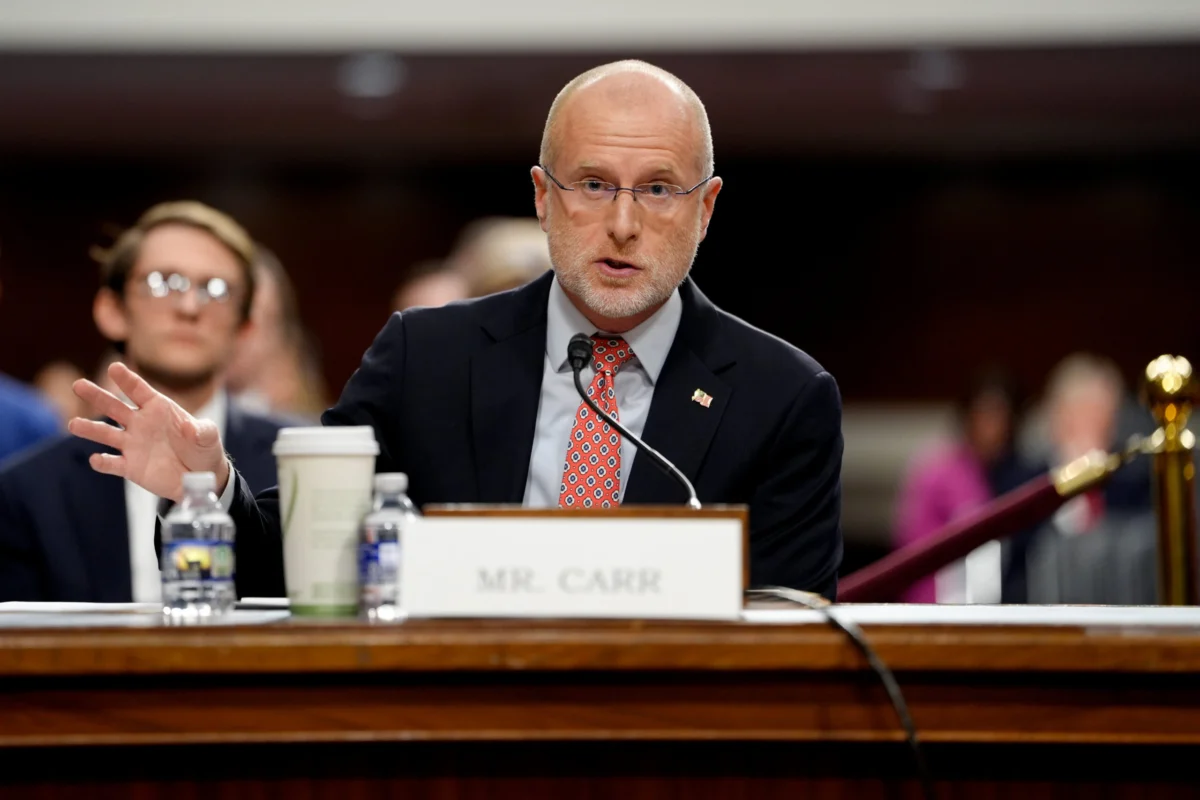
The impetus for the early license review stems from an investigation launched by the FCC in March 2025. Under the leadership of Commissioner Brendan Carr, who was recently elevated to the chair, the agency has been scrutinizing the DEI practices of major media conglomerates. The FCC’s primary inquiry focuses on whether Disney’s internal hiring and content-production policies constitute "invidious forms of discrimination" that would violate the Communications Act of 1934.
In a Friday appearance on CNBC’s "Squawk on the Street," Chair Brendan Carr defended the agency’s aggressive timeline. Carr asserted that the decision to accelerate the license renewal process was a direct response to Disney’s alleged lack of cooperation with the ongoing investigation. "We have been signaling for a long time that we want Disney to take seriously our investigation," Carr stated. He further noted that the agency found Disney’s prior responses to be "disingenuous," "incomplete," and "nonresponsive to a number of questions."
According to the FCC, the agency has a statutory obligation to ensure that broadcast licensees—who are granted the privilege of using public airwaves—operate in the public interest and adhere to federal non-discrimination rules. Carr emphasized that the focus remains strictly on the legality of Disney’s DEI practices rather than any protected speech under the First Amendment, despite Disney’s claims to the contrary.
Disney’s Legal and Constitutional Counterargument
Disney’s filings on Thursday were blunt in their assessment of the FCC’s actions. The company argued that the order for early renewal lacks a legitimate regulatory purpose and serves as an instrument of harassment. Lawyers for Disney noted that the FCC has not invoked its authority to call for an early license renewal in more than 50 years, suggesting that the current move is an aberration from established administrative norms.
“The order is inconsistent with a legitimate exercise of investigative authority and is plainly incompatible with the First Amendment,” Disney stated in its filing. The company maintains that its DEI efforts are lawful and designed to foster a representative workplace, rather than to discriminate against any specific group. Furthermore, Disney argued that the FCC already possesses the necessary information to conduct its investigation through standard inquiries and that the forced license renewal is a punitive measure intended to create a platform for public opposition.
The company’s defense hinges on the argument that the FCC is using its licensing power to chill corporate policy and speech. By opening the license renewal cycle early, the FCC effectively triggers a public comment period, allowing outside groups and political activists to file “petitions to deny.” This process could potentially tie Disney up in years of litigation and administrative hearings, threatening the stability of its broadcast segment.
Timeline of the Dispute
The escalation of this regulatory battle has followed a rapid and highly publicized timeline:
- March 2025: The FCC officially opens an investigation into Disney and several other media entities to determine if DEI mandates violate the Communications Act’s prohibition on unlawful discrimination.
- December 2025: During a Senate Commerce Committee oversight hearing, Commissioner Brendan Carr signals that the agency is prepared to take more drastic measures if corporations do not provide more transparency regarding their internal hiring quotas and DEI benchmarks.
- April 2026: The FCC issues an order requiring Disney to file for early license renewals for eight ABC-owned stations, citing concerns that further investigation is needed to determine the company’s fitness as a licensee.
- Late April 2026: Political tension rises as the FCC’s move coincides with public criticism of ABC by high-ranking political figures following controversial segments on Jimmy Kimmel Live!
- May 2026: Disney files the renewal applications “under protest,” accompanied by a scathing legal objection.
Political Context and the Jimmy Kimmel Controversy
While the FCC maintains that its actions are strictly related to DEI investigations, critics of the current administration have pointed to a possible political motive. The order for early review was issued shortly after President Donald Trump publicly criticized ABC and its parent company, Disney, following a monologue by late-night host Jimmy Kimmel. Kimmel’s commentary, which was sharply critical of the administration, led to calls from the executive branch for regulators to “look into” the network’s conduct.
This timing has drawn scrutiny not only from Disney but also from within the FCC itself. Commissioner Anna Gomez, a member of the commission, expressed concerns on social media that the scrutiny appeared to be politically motivated. The intersection of broadcast licensing—a power that can effectively shut down a television station—and political rhetoric has raised alarms among First Amendment advocates who fear that the FCC is being used as a tool for political retribution.
Chair Carr has denied these allegations, stating that Disney’s "PR machine" is attempting to deflect from the core issue of discriminatory hiring practices. However, the optics of the situation remain a focal point for legal analysts who suggest that any eventual license revocation would face a rigorous and skeptical review in the federal court system.
The Economic and Industrial Stakes
The eight stations at the center of this dispute are vital components of Disney’s linear television portfolio. These stations—located in New York, Los Angeles, Chicago, Philadelphia, San Francisco, Houston, Raleigh-Durham, and Fresno—serve as the backbone for ABC’s local news and advertising revenue. In an era where traditional broadcast television faces stiff competition from streaming services, the loss of these licenses would be catastrophic for Disney’s bottom line.
Industry analysts estimate that the ABC-owned station group contributes hundreds of millions of dollars in annual EBITDA (Earnings Before Interest, Taxes, Depreciation, and Amortization). Beyond the direct financial impact, a revocation of licenses would disrupt the national distribution of ABC News and sports programming, including high-value assets like Monday Night Football and the NBA Finals.
Furthermore, the FCC’s approach sets a precedent for the entire media industry. If the agency successfully uses DEI investigations as a basis for license challenges, other major broadcasters such as NBCUniversal (Comcast), Paramount Global, and Fox Corporation could find themselves under similar scrutiny. This has created an atmosphere of uncertainty across the telecommunications sector, with corporate boards now forced to weigh the legal risks of their internal social initiatives against the threat of regulatory intervention.
Public Participation and Next Steps
With the renewal applications now filed, the FCC is expected to issue a public notice as early as Friday. This will initiate a formal "cycle" in which members of the public, advocacy groups, and political organizations can submit petitions to deny the renewals. This process is often used by community groups to ensure stations are meeting local programming needs, but in this high-profile case, it is expected to become a battleground for the broader "culture war."
Once petitions are filed, Disney will have the opportunity to submit oppositions, followed by a period for replies. The FCC will then review the entire record to determine if "substantial and material questions of fact" exist regarding Disney’s qualifications to remain a licensee. If the FCC finds such questions, it could designate the matter for a hearing before an Administrative Law Judge, a process that could take years to resolve.
When asked by CNBC about the likelihood of the FCC actually pulling ABC’s licenses, Carr remained non-committal, stating only that the agency would “follow the facts and the law wherever they go.”
Broader Implications for Administrative Law
The Disney-FCC clash is poised to become a landmark case in administrative law, potentially reaching the Supreme Court. At issue is the scope of an agency’s power to interpret broad mandates like "the public interest" to regulate internal corporate policies. Following the Supreme Court’s recent trend of limiting the "Chevron deference"—the principle that courts should defer to an agency’s interpretation of ambiguous statutes—the FCC may face an uphill battle in justifying its expanded oversight of DEI as a licensing requirement.
Legal experts suggest that Disney’s "under protest" filing is the first step in a long-term strategy to challenge the FCC’s authority in the D.C. Circuit Court of Appeals. If Disney can prove that the FCC’s actions were "arbitrary and capricious" or motivated by a desire to punish protected speech, the company could secure an injunction to halt the early renewal process entirely.
For now, the media industry remains on high alert. The outcome of this standoff will not only determine the future of ABC’s broadcast licenses but will also define the boundaries of federal regulatory power over the private sector’s social and cultural policies for years to come.