The cinematic landscape is increasingly acknowledging the rich tapestry of human experience, with a notable surge in stories centering on neurodivergent and disabled individuals, particularly children. These narratives, once relegated to the fringes, are now finding broader audiences, echoing the sentiments of films like "Wonder" and "Out of My Mind," which champion the desire for acceptance and equitable treatment. "Rain Reign," adapted from Ann M. Martin’s poignant novel, gracefully joins this evolving category of family films. It delves into the life of a neurodivergent protagonist navigating a world that often struggles to accommodate her unique perspective. While certain coming-of-age tropes may feel familiar, the film’s unvarnished honesty and emotional depth provide a compelling anchor, preventing it from becoming merely a predictable tale.
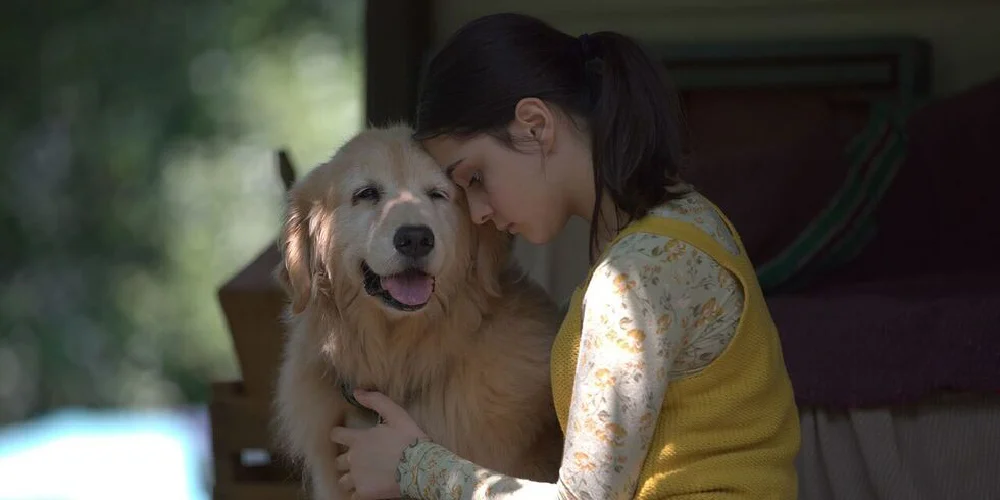
At the heart of "Rain Reign" is twelve-year-old Rose Howard, portrayed with remarkable authenticity by newcomer Felice Kakaletris. Rose’s world is meticulously structured by routines, rules, and an innate need for order. Deviations from these established patterns, whether in the rhythm of a schedule, the adherence to traffic laws, or even grammatical conventions, present significant challenges for her. This intrinsic need for predictability significantly impacts her school experience, culminating in a disruptive incident that leads to her expulsion from the school bus following a minor traffic accident. Rose finds solace and intellectual stimulation in the playful world of homonyms, cherishing the dual meanings that imbue everyday language with layers of depth. Her own name, a perfect example of this linguistic fascination, mirrors the name she bestows upon the dog her father rescues: Rain. Kakaletris, herself neurodivergent, delivers a performance that is both nuanced and powerful, capturing the anxiousness that arises when a carefully constructed world begins to fray. Her measured delivery allows audiences to glimpse beyond Rose’s outwardly composed demeanor, revealing the profound heartache and frustration simmering beneath the surface.
The narrative unfolds against the backdrop of a community grappling with the aftermath of a devastating superstorm. This natural disaster serves as the catalyst that irrevocably disrupts Rose’s carefully curated life. The storm’s fury not only wreaks havoc on her town, causing widespread damage and displacement, but also leads to the disappearance of her beloved dog, Rain. This unexpected loss thrusts Rose into a profound crisis, forcing her to confront her deepest fears and muster a resilience she may not have known she possessed. The urgency of finding Rain becomes paramount, a mission that compels her to venture beyond her comfort zone and engage with the chaotic reality of the post-storm world.
Rose’s primary caregiver is her father, Wesley, brought to life by Jeremy Sisto. Wesley shoulders the immense responsibility of raising Rose alone, a burden complicated by a personal tragedy he has shielded Rose from: the truth about her mother’s death. Instead of conveying the finality of loss, he told Rose her mother had "left," a narrative that likely shaped Rose’s understanding of abandonment and permanence. The incident involving the school bus further strains Wesley’s already precarious situation. A mechanic struggling to maintain his employment, he finds himself in a Catch-22, unable to afford lost work hours to transport Rose to and from school. This predicament prompts an intervention from Wesley’s estranged brother, Rose’s Uncle Weldon, portrayed by Paul Rudd. Weldon steps into the void, offering a supportive presence that contrasts sharply with Wesley’s own strained emotional state. Sisto imbues Wesley with a raw, often frustrated energy, reflecting the immense toll of past trauma that is resurfacing and making the already demanding task of fatherhood an overwhelming challenge. His portrayal avoids caricature, adding significant depth to a role that could easily have become one-dimensional. Rudd, in a reunion with Sisto reminiscent of their "Clueless" days, offers a gentler, more understanding counterpoint. As Wesley’s past demons continue to plague him, Weldon provides a crucial stabilizing force for Rose, offering a different model of care and connection.
The filmmaking in "Rain Reign," under the direction and writing of Erika Burke Rossa, is largely understated. While there are a few creative animated sequences that visually bring Rose’s beloved homonyms to life, the overall approach is one of deliberate restraint. Rossa exhibits remarkable empathy and sensitivity in her handling of this complex story, allowing Wesley’s backstory and internal struggles to unfold gradually. This measured pace allows the audience to access his pain incrementally, fostering a deeper understanding of his challenges as a father. The narrative skillfully interweaves the present-day concerns of who is caring for Rose and Rain with glimpses into Wesley’s own childhood, ultimately constructing a moving portrait of familial bonds and the enduring power of love, even in the face of adversity.
As a coming-of-age story set in middle school, "Rain Reign" navigates a delicate balance between mature themes, such as Wesley’s profound struggles with parenthood and his own unresolved trauma, and the more universally accessible narrative of a young girl’s deep bond with her dog. Rose’s internal narration, while intended to guide the viewer, occasionally feels intrusive and overly explicit, dictating Rose’s feelings and actions when Kakaletris’s performance is already effectively conveying them. This reliance on narration can, at times, feel like it is holding the audience’s hand rather than allowing them to fully immerse themselves in Rose’s subjective experience.
The film, much like the homonyms that fascinate Rose, offers layers of meaning, some of which resonate more profoundly than others. "Rain Reign" seldom ventures into surprising narrative territory, adhering to a generally predictable trajectory. However, its profound compassion for both Rose and Wesley, and the intricate, often challenging dynamic between them, imbues this familiar material with a significance that is difficult to overlook. The film’s strength lies in its earnest portrayal of a complex family unit, the impact of trauma on parenting, and the unwavering, simple love between a child and her pet.
The superstorm that forms the backdrop of "Rain Reign" is not merely a plot device; it represents a real-world phenomenon with devastating consequences. While the film fictionalizes the specific impact on Rose’s town, it draws upon the universal experience of communities recovering from natural disasters. Superstorms, characterized by their intense winds, heavy rainfall, and potential for widespread flooding and destruction, have become an increasingly prominent concern globally. According to the National Oceanic and Atmospheric Administration (NOAA), the United States has experienced a significant increase in the frequency and intensity of billion-dollar weather and climate disasters in recent decades. These events often result in widespread power outages, damage to infrastructure, and significant psychological distress for affected populations, mirroring the chaos and disruption that Rose experiences.
The timeline of events within "Rain Reign" can be extrapolated to highlight the cascading effects of the storm and Rose’s personal challenges.
Pre-Storm:
- Rose lives a structured life, adhering to her routines and finding comfort in homonyms.
- Her father, Wesley, struggles with his job as a mechanic and the emotional weight of past trauma.
- Rose’s mother is deceased, a fact Wesley has not fully disclosed to Rose.
- Rose attends school, but her need for order leads to disruptions, including an incident that results in her expulsion from the school bus.
The Superstorm:
- A powerful storm, described as a superstorm, strikes the town, causing widespread destruction.
- The storm disrupts essential services, including power and communication, further destabilizing Rose’s environment.
- In the chaos of the storm, Rose’s beloved dog, Rain, goes missing.
Post-Storm and the Search:
- The town begins the arduous process of recovery, with infrastructure damaged and residents displaced.
- Rose’s routine is shattered, and the disappearance of Rain becomes her primary focus.
- Wesley’s difficulties in managing Rose’s needs are exacerbated by the storm’s impact on his work.
- Uncle Weldon, previously distant, offers support to Wesley and Rose, stepping in to provide transportation and emotional assistance.
- Rose, driven by her love for Rain, embarks on a personal quest to find her dog, confronting her fears and the altered landscape of her town.
Resolution and Lingering Impact:
- The film culminates in Rose’s journey to recover Rain, a process that tests her resilience and forces her to adapt to unexpected circumstances.
- The emotional arcs of Rose and Wesley begin to find resolution, with a growing understanding and acceptance between them.
- The broader implications of the storm’s impact on the community are subtly portrayed, highlighting the long road to recovery.
The film’s portrayal of Rose’s neurodivergence, particularly her reliance on routines and difficulty with unexpected changes, resonates with the challenges faced by many individuals with autism spectrum disorder (ASD) and other neurodevelopmental conditions. According to the Centers for Disease Control and Prevention (CDC), approximately 1 in 36 children in the United States have been identified with ASD. These individuals often thrive in predictable environments, and sudden disruptions, such as natural disasters, can lead to significant distress. The film’s exploration of Rose’s coping mechanisms, her unique way of processing information, and her deep emotional attachments offers a valuable window into these experiences.
The broader implications of "Rain Reign" extend beyond its narrative. By centering a neurodivergent protagonist and exploring her internal world with such sensitivity, the film contributes to a growing cultural dialogue about neurodiversity and inclusion. It challenges audiences to consider different ways of experiencing and interacting with the world, fostering empathy and understanding. The film also subtly addresses the complexities of family dynamics, grief, and the enduring impact of trauma, themes that resonate with a wide audience. The juxtaposition of the personal struggles of Rose and Wesley with the collective experience of a community recovering from a natural disaster underscores the interconnectedness of individual lives and societal events.
The fictional superstorm, while serving the plot, also prompts reflection on the increasing frequency of extreme weather events attributed to climate change. Reports from the Intergovernmental Panel on Climate Change (IPCC) consistently highlight the link between human activity and rising global temperatures, leading to more intense and frequent storms, heatwaves, and other climate-related hazards. The film’s depiction of a town grappling with the aftermath of such an event serves as a subtle reminder of these larger environmental concerns and their potential to disrupt lives on a massive scale.
In conclusion, "Rain Reign" stands as a testament to the power of empathetic storytelling. It navigates the complexities of neurodivergence, familial relationships, and the profound impact of natural disaster with grace and honesty. Through the journey of Rose Howard, the film offers a moving exploration of resilience, the enduring strength of the human spirit, and the universal need for connection and understanding in a world that is often unpredictable. The performances, particularly from Kakaletris and Sisto, anchor the film in emotional reality, making it a compelling and thought-provoking cinematic experience.