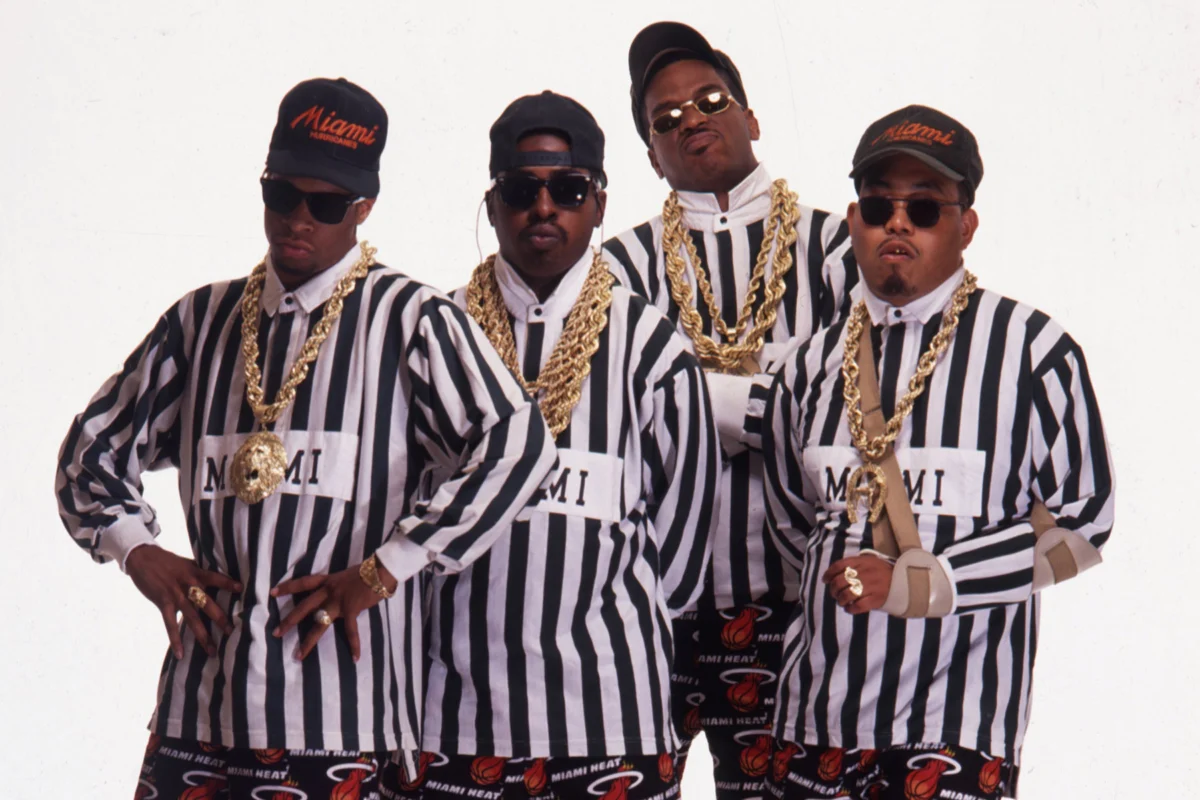
A federal appeals court has overturned a jury’s decision that would have allowed the pioneering hip-hop group 2 Live Crew to regain ownership of five of their seminal albums. The U.S. Court of Appeals for the Eleventh Circuit, in a ruling issued on Tuesday, June 2, determined that members of the iconic group could not effectively utilize copyright law’s "termination right" to reclaim their work. This provision, designed to empower creators to reclaim rights to their works after a specified period, was deemed inapplicable in this specific instance due to a prior bankruptcy filing by one of the group’s members.
The appellate court’s decision favors Lil Joe Records, a label that acquired the masters of 2 Live Crew’s recordings in the 1990s and has maintained control over them since. This reversal directly contradicts a significant legal victory for the group in 2024, when a jury had ruled in their favor, granting them the ability to reclaim control of five of their most influential albums. The core of the appeals court’s reasoning hinges on the bankruptcy proceedings of Brother Marquis (Mark Ross), a key member of 2 Live Crew. The court found that because Ross had filed for bankruptcy years prior to the termination notice being issued, his potential termination rights were part of his bankruptcy estate and thus he lacked the individual authority to exercise them.
The Legal Basis for the Reversal: Bankruptcy and Copyright Termination
The Eleventh Circuit’s ruling specifically addressed the intersection of bankruptcy law and copyright termination rights. The court explicitly stated in its written decision, obtained by Billboard, that “Ross could not exercise his termination interests when he signed the notice because they remained with his bankruptcy estate.” The court elaborated, “A debtor has no right to control property of the estate while it remains property of the estate.” This legal interpretation effectively rendered Ross’s individual action to reclaim his copyright interests invalid.
Without the participation and consent of Brother Marquis, the court concluded that the remaining members of 2 Live Crew lacked the necessary majority to legally invoke the termination right for the band’s music. The decision states, “We reverse the district court’s contrary conclusion,” emphasizing that the consent of a majority of the copyright owners is required for a valid termination. In the case of 2 Live Crew, which originally consisted of four members—Luke Skyywalker (Luther Campbell), Fresh Kid Ice (Chris Wong Won), Brother Marquis (Mark Ross), and DJ Mr. Mixx (David P. Hobbs)—two out of four interests were insufficient for an effective termination. DJ Mr. Mixx was not involved in the termination efforts.
The Impact on 2 Live Crew’s Catalog and Legacy
This ruling means that Lil Joe Records will retain ownership of the sound recording copyrights for five of 2 Live Crew’s most impactful albums. Among these is the group’s highly controversial 1989 album, As Nasty as They Wanna Be. This album, known for its explicit lyrics and subsequent legal battles over obscenity, reached No. 29 on the Billboard 200 chart and achieved platinum certification, solidifying 2 Live Crew’s place in hip-hop history and sparking significant debates about artistic freedom and censorship.
Richard Wolfe, lead counsel for Lil Joe Records, and label owner Joe Weinberger expressed satisfaction with the appellate court’s decision. Wolfe stated, "We absolutely agree with the 11th Circuit. The court properly concluded that when they sent the [termination] notice, they didn’t have the rights.” An attorney representing the 2 Live Crew members declined to comment on the ruling.
A Timeline of the Legal Battle
The complex legal saga began in 2020 when Uncle Luke (Luther Campbell) and the heirs of Brother Marquis (Mark Ross) and Fresh Kid Ice (Christopher Wong Won) formally notified Lil Joe Records of their intention to reclaim ownership of the five albums. This notification triggered a legal response from Lil Joe Records, which filed a preemptive lawsuit aimed at thwarting the termination efforts.

The dispute dates back to the mid-1990s when Lil Joe Records acquired 2 Live Crew’s catalog following the bankruptcy of the group’s previous record label. After years of legal wrangling, a jury delivered a verdict in favor of 2 Live Crew in October 2024. At the time, the group’s legal team hailed the outcome as "a total and overwhelming victory for our clients and artists everywhere." However, Lil Joe Records was resolute in its intent to appeal, asserting that the case presented novel legal questions that the trial court had misinterpreted.
The "Question of First Impression"
The Eleventh Circuit acknowledged the unique nature of the case, describing the dispute as presenting "a question of first impression at the intersection of copyright and bankruptcy." The crux of the legal challenge lay in how Brother Marquis’s potential termination rights were handled during his 2000 bankruptcy filing. Ross did not list his prospective termination right as an asset of his bankruptcy estate, and consequently, it was never addressed during the bankruptcy proceedings.
The appellate court, however, ruled that this right, even if unlisted, was inherently part of his bankruptcy estate. Because it remained property of the estate and was not formally dealt with or discharged, Ross was deemed to have been divested of the personal authority to exercise it. The court’s reasoning suggests that the bankruptcy trustee, or the estate itself, held the power over these rights during the bankruptcy period.
The Future of Copyright Termination in Bankruptcy
The Eleventh Circuit’s decision, while specific to the facts of the 2 Live Crew case, raises significant questions about how copyright termination interests are treated within bankruptcy proceedings. The court was careful to delineate the scope of its ruling, stating, "Although we conclude that Ross’s termination interests were property of the bankruptcy estate at the time he purported to exercise them, our decision is limited." The court explicitly noted that it was not addressing the broader implications of how termination interests should generally be treated in bankruptcy cases, nor was it deciding what steps Ross’s heirs might need to take to exercise those interests in light of his bankruptcy.
The members of 2 Live Crew and the heirs of Fresh Kid Ice retain the option to appeal the Eleventh Circuit’s ruling. Such an appeal could be directed to a larger panel of Eleventh Circuit judges or potentially to the U.S. Supreme Court. However, given the legal complexities and the appellate court’s clear reasoning on the bankruptcy issue, the likelihood of overturning this decision is considered to be slim.
Broader Implications for Artists and Labels
This case underscores the intricate legal landscape surrounding intellectual property rights, particularly for artists who entered into agreements decades ago. The termination right, codified in the Copyright Act of 1976, was intended to provide artists with a crucial second chance to benefit from their work as their careers progressed and their leverage increased. However, as this ruling illustrates, the application of this right can be complicated by other legal frameworks, such as bankruptcy law.
For record labels that have invested in acquiring and promoting music catalogs, this decision offers a degree of protection. It reinforces the legal validity of their acquisitions when faced with termination claims, provided that potential complications like prior bankruptcy filings are properly considered. Conversely, for artists seeking to reclaim ownership of their creative output, this case serves as a cautionary tale about the importance of understanding and meticulously navigating all legal avenues, including the implications of personal financial situations on their intellectual property rights. The ongoing debate over artist rights and the longevity of copyright control continues to evolve, with cases like this shaping future interpretations and legal strategies.