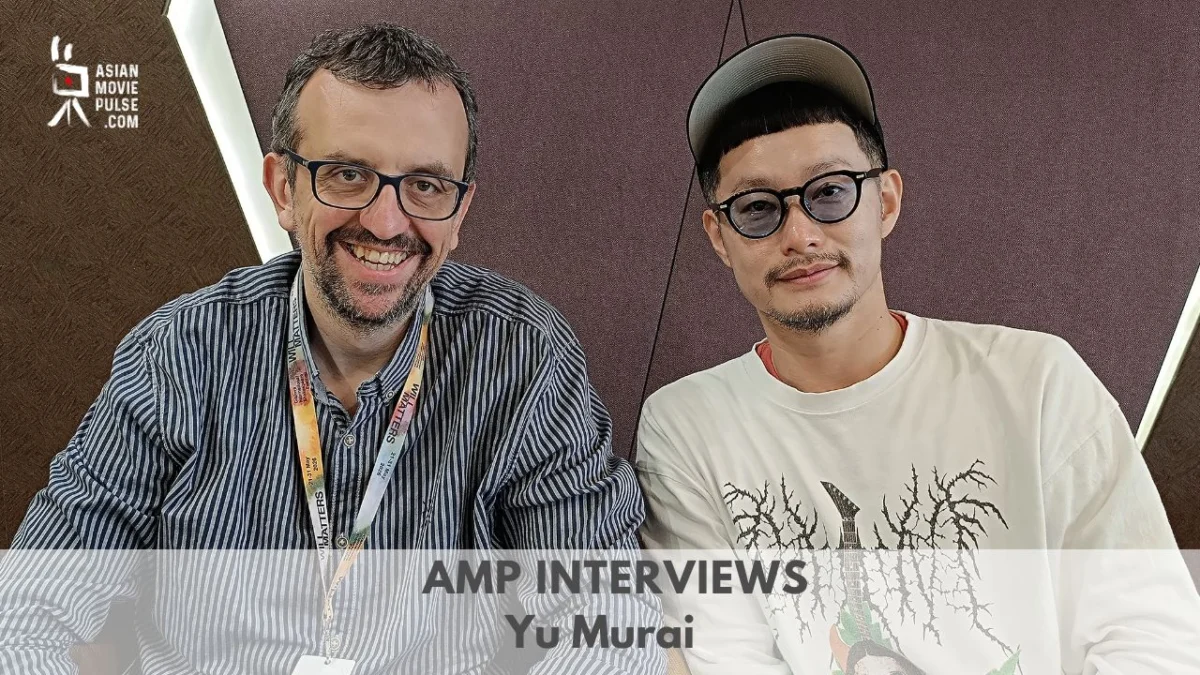
The Craiova International Shakespeare Festival, a prestigious event celebrating the Bard’s enduring legacy through diverse global interpretations, is currently hosting a truly unconventional production: "HAMLET | TOILET." Directed by the acclaimed Japanese artist Yu Murai, this staging of Shakespeare’s most famous tragedy has sparked considerable discussion for its audacious conceptual framework. Murai, known for his innovative approach that often juxtaposes high art with elements of popular culture and the visceral, sat down with media representatives to illuminate the creative genesis and philosophical underpinnings of his unique take on the Danish prince. His insights reveal a profound engagement with Shakespeare, filtered through the lens of contemporary Japanese sensibilities, bodily experience, and the complexities of emotional expression.
A Subversive Genesis: Challenging Reverence and Embracing the Mundane
Murai articulated that the genesis of "HAMLET | TOILET" stems, in part, from his observations of how Shakespeare is frequently perceived and performed in Japan. He described a prevailing tendency to elevate Shakespearean works to an almost sacred status, leading to productions that often prioritize solemnity and gravitas above all else. While acknowledging the earnest intentions behind such approaches, Murai posited that this reverence can sometimes obscure the raw, human emotions that Shakespeare so masterfully captured. "There’s a desire to treat Shakespeare as a divine figure," Murai explained, "but often, this seriousness doesn’t quite capture the actual emotional state of the characters. They are human, with all the messiness that entails."
This perceived disconnect between the venerated text and its emotional resonance fueled Murai’s decision to transplant the narrative of "Hamlet" into a far more intimate and fundamentally bodily space: the toilet. This deliberate choice is not intended as a mockery of seriousness but rather as an exploration of the potent tension that arises when profound, often tragic, themes are confronted within environments that are typically associated with the mundane, the private, and even the vulgar. For Murai, the toilet represents a site of essential human function, a place of solitude where the pressures of the external world can be temporarily escaped, and where internal struggles may be confronted in their most unadorned form.
The Art of Discomfort: Blending Comedy, Tragedy, and Physicality
The director emphasized that his artistic practice is rooted in the deliberate interplay of seemingly disparate elements. He is deeply interested in the friction created when serious subject matter is approached through forms of expression that might initially appear crude, comical, or even disruptive. Murai believes that even Shakespeare’s original plays, despite their literary brilliance, can contain moments that are repetitive, forced, or potentially disengaging for a modern audience. Therefore, he views the careful calibration of rhythm and balance as paramount to maintaining audience captivation.
"HAMLET | TOILET" is built upon this foundational principle of balancing comedy, vulgarity, and tragedy. Murai sought to infuse the production with elements drawn from contemporary Japanese pop culture, not solely as a means to combat boredom, but also to offer international audiences a glimpse into the current landscape of Japanese theatrical and comic sensibility. This approach results in a rich tapestry of references, some of which, like nods to the ubiquitous pachinko culture, are immediately recognizable to Japanese viewers. Others, however, function more universally as physical or visual gags, transcending linguistic barriers and cultural specificities.
Echoes of Japanese Theatrical Tradition and the Weight of Collective Trauma
Beyond contemporary pop culture, Murai’s production also pays homage to significant figures in Japanese theatrical history. A notable reference is made to Tadashi Suzuki, a towering influence on Japanese theatre in the latter half of the 20th century. Murai alluded to the Saga Emperor from Suzuki’s oeuvre, portraying this historical figure as someone seeking absolution for past transgressions. This specific detail underscores how "HAMLET | TOILET," beneath its seemingly flippant surface, delves into deeper Japanese theatrical traditions and concepts of guilt, introspection, and purification.
The profound impact of the Fukushima nuclear disaster and the events of March 11, 2011, have also demonstrably shaped Murai’s interpretation of "Hamlet." He spoke about the invisible nature of pain and agony, particularly from the perspective of those who have not directly experienced such profound trauma. In his vision, the toilet becomes a secluded, private sanctuary where this hidden suffering can be contained. This thematic thread is further woven into the narrative by drawing parallels with the younger generation in Japan, who often carry a palpable, though not always outwardly visible, burden of fear and anxiety.

Murai further connected this concept to the Japanese cultural understanding of "hara," which refers to the stomach or belly. He contrasted this with Western expressions that tend to locate sorrow and deep emotion in the heart. In Japanese language and culture, a multitude of expressions link the stomach to a spectrum of sentiments, including emotion, sincerity, concealed intentions, camaraderie, and even the imminence of death. From this perspective, the choice of the toilet as a setting transcends mere provocation; it becomes a powerful visual metaphor for pain that resides deep within the body.
The Actor’s Crucible: Physicality as a Pathway to Truth
The demanding nature of "HAMLET | TOILET" on its performers is a deliberate and integral component of Murai’s directing methodology. He views physicality not merely as a stylistic choice but as an essential pathway to understanding and embodying the characters. Actors are required to immerse themselves in a trance-like state, to experience the agony and pain of the characters through their own physical exertion during rehearsals. Drawing inspiration from pedagogical approaches akin to those associated with Stanislavski, Murai explained that performers must undergo this physical ordeal to access and convey the characters’ internal states with the utmost directness and veracity. "The performers have to go through the pain themselves," Murai stated, "to approach the characters as directly and truthfully as possible."
The dynamic casting strategy employed by Murai also contributes to the production’s vitality and ongoing evolution. Typically, two performers are drawn from his established theater ensemble, while a third is brought in from an external company or as a freelance artist. This practice compels the seasoned actors to constantly adapt to new collaborators, thereby ensuring that the production remains fresh and innovative with each iteration. This collaborative friction, Murai believes, injects a necessary element of unpredictability and encourages continuous artistic development.
Navigating Global Audiences: The Universality of Theatrical Language
The linguistic intricacies of "HAMLET | TOILET," particularly its numerous puns and vocabulary-driven jokes, present a significant challenge for translation. Murai candidly acknowledged that not all wordplay can be effectively conveyed through subtitles, especially when originating from Japanese. However, he firmly asserted that theater possesses a multifaceted communicative power that extends beyond verbal comprehension. Gesture, facial expression, rhythm, and sheer physical energy all contribute to the audience’s experience. Even when the nuances of specific jokes are lost, Murai contends, the underlying comic intent and emotional energy can still be powerfully felt.
Recognizing the vast diversity of international audiences, Murai is acutely aware that responses to his work can vary considerably. He recounted an experience during a tour in Kerala, India, where he observed a stark divergence in reactions between younger and older spectators. While some audience members readily embraced the production’s humor, others expressed a sense of being disoriented or disconnected. For Murai, these moments of cultural and generational clash are an inherent and valuable part of the experience of presenting Shakespeare on a global stage.
Embracing Criticism as a Catalyst for Growth
Far from being discouraged by less than enthusiastic reactions, Murai views criticism as an invaluable tool for artistic growth. He finds particular interest in spectators who question the production’s validity, even to the point of asserting that it deviates from their perception of "Hamlet." These interrogations, he believes, provoke essential dialogue about the nature of theatrical interpretation and the evolving relationship between classic texts and contemporary performance. Even instances of audience members departing during a performance are treated as instructive lessons, offering insights into what audiences can and cannot process at a given moment.
Murai also commented on the current state of the Japanese theater scene, noting a prevalent tendency to undervalue comedy, puns, and humorous approaches. This, he suggested, is precisely the kind of artistic boundary he is driven to challenge. His commitment to re-examining established theatrical norms appears unwavering, with future projects, including an engagement with Shakespeare’s "King Lear," already in development.
The Toilet as a Metaphor: Isolation, Intimacy, and Embodied Truth
In a poignant closing reflection, when queried about whether he had ever personally read Shakespeare in a restroom, Murai offered an answer that neatly encapsulates the core logic of "HAMLET | TOILET." He stated that when he reads, he prefers solitude and seclusion, eschewing public spaces like parks. This preference for private contemplation mirrors the production’s fundamental premise: taking the grandeur of Shakespeare, removing it from its traditional elevated context, placing it in a space of isolation, and forcing it into a direct, unmediated encounter with the physical and the visceral. "HAMLET | TOILET" thus emerges not merely as a provocative staging, but as a deeply philosophical exploration of how the most profound human experiences, including tragedy and existential doubt, can be unearthed and understood through the most unexpected and intimate of human spaces. The production’s participation in the Craiova International Shakespeare Festival serves as a testament to its ambition to push the boundaries of how we engage with timeless narratives and their enduring relevance in our increasingly complex world.