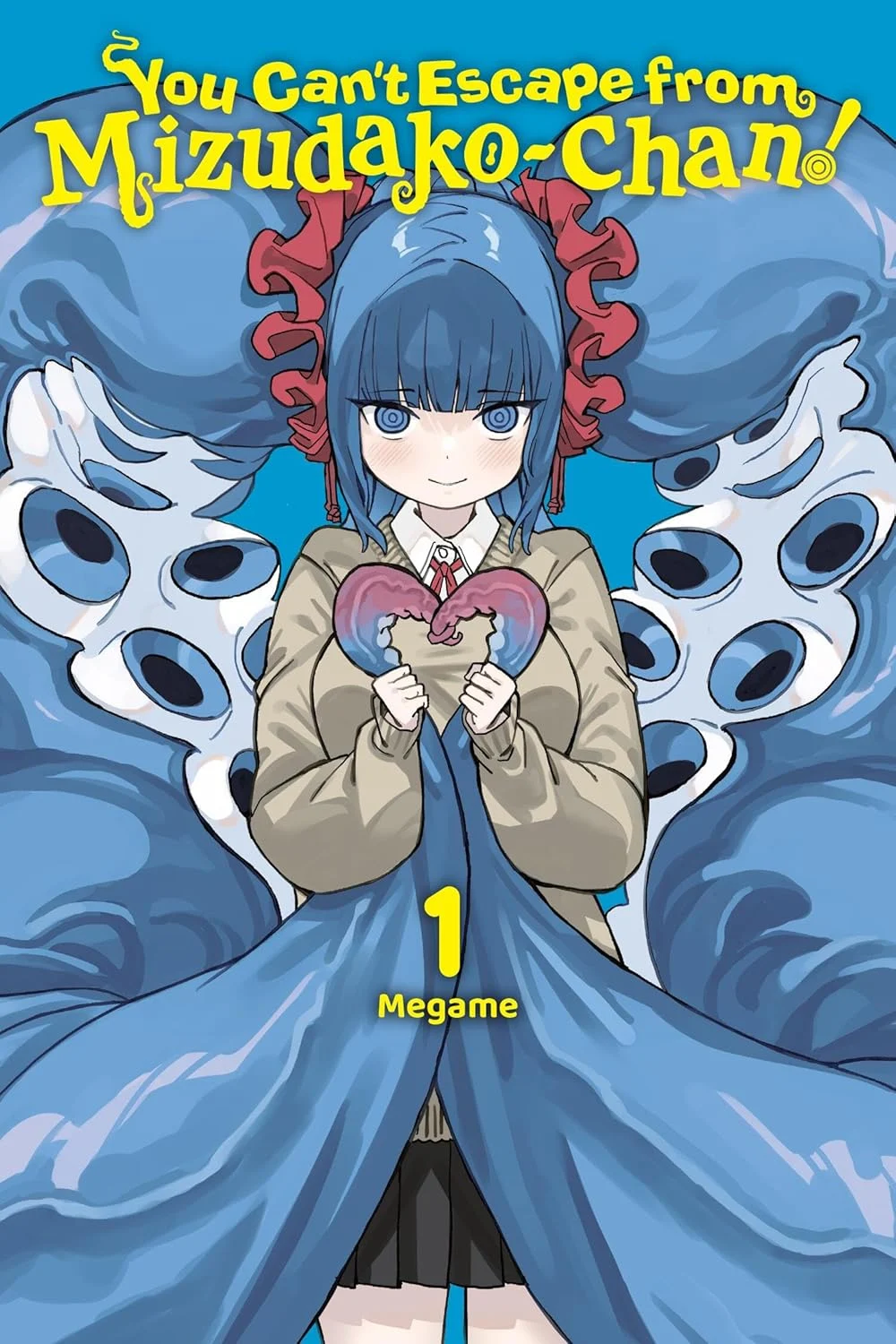
The burgeoning landscape of anime and manga continues to explore the multifaceted concept of demi-humans, a trope that has evolved from serving as a catalyst for unique action sequences to functioning as potent metaphors for complex societal issues. In this vein, Megame’s "You Can’t Escape from Mizudako-Chan" delves into the latter, centering on its titular character, a young girl who is half octopus. This work channels a Lovecraftian sense of the uncanny within a distinctly Japanese school and "moe" aesthetic, resulting in a narrative that is undeniably unsettling and thought-provoking. The series, presented as a manga, invites readers to confront themes of otherness, societal judgment, and the hidden depths within seemingly innocuous characters.
Unveiling Mizudako: A Hybrid Existence
At its core, "You Can’t Escape from Mizudako-Chan" introduces Mizudako, a creature of duality, existing as a demi-human with the physical attributes of both human and octopus. Her most striking feature is the presence of two large tentacles that replace traditional ponytails, a visual element that Megame explores with considerable narrative intensity. The story commences with Mizudako’s arrival in a new classroom, an event that immediately captures the attention of Akigai, a classmate who becomes inexplicably infatuated with her. As the narrative unfolds, it becomes clear that Akigai’s attraction is not purely superficial; he, too, harbors a hidden facet to his personality, a secret that may explain his profound interest in Mizudako.
The dynamic between Mizudako and Akigai quickly establishes a pattern of unspoken affection and subtle interaction. Mizudako, despite her intimidating appearance and the inherent strangeness of her existence, possesses a timid nature. This timidity manifests in her secret acts of kindness towards Akigai, such as performing chores for him or leaving him gifts without his knowledge. These covert gestures, intended as expressions of burgeoning affection, remain largely unnoticed by their intended recipient.
However, Mizudako’s unique nature does not go entirely unobserved by her peers. Other students in the classroom are quick to perceive her actions and her underlying intentions. Prominent among these is Iwane, a classmate who develops an immediate liking for Mizudako, sensing a kindred spirit or perhaps a vulnerability beneath her alien exterior. Conversely, Nakayama, a classmate described as "creepy" and possessing a similarly unsettling appearance, also seems to grasp Mizudako’s affections, adding a layer of disquiet to the unfolding social dynamics. Akigai, meanwhile, remains the oblivious focal point of Mizudako’s secret devotion, the only one seemingly unaware of the elaborate machinations of her affection.
Unforeseen Powers and Deepening Connections
The narrative further expands the thematic and supernatural elements of the story with the revelation of another of Mizudako’s extraordinary abilities. When experiencing emotional distress, she possesses the power to alter the appearance of those around her, transforming them into demi-humans with distinct sea-creature characteristics. This uncontrolled manifestation of her powers, a direct consequence of her emotional state, further isolates her from her peers. However, even this unsettling ability does not deter Akigai; he appears to embrace and even cherish this aspect of her being, further solidifying their unusual bond.
Despite Mizudako’s inherent shyness and the outward barriers her appearance and powers present, her connection with Akigai deepens organically. This burgeoning relationship, however, is not without its complications. The introduction of her family’s cat-octopus serves as a stark reminder that their seemingly developing bond is set against a backdrop far more complex and potentially perilous than initially suggested. This surreal addition to the cast underscores the deep-seated nature of Mizudako’s lineage and the inherent challenges that come with her existence.
Societal Commentary through the Aquatic Lens
"You Can’t Escape from Mizudako-Chan" effectively utilizes Mizudako’s character to present a nuanced commentary on societal judgment, particularly within the often-insular environment of a school. The manga probes how individuals are quick to judge others based on outward appearances, leading to various forms of segregation and ostracization. Mizudako’s aloof demeanor can be directly attributed to this societal pressure, a defense mechanism born from perpetual scrutiny.

Paradoxically, her strength, coupled with her uncontrollable tendency to transform others into aquatic beings when frustrated, serves to reinforce the very reasons why people tend to avoid her. This dynamic creates a self-perpetuating cycle of isolation, effectively subverting the initial social commentary by illustrating how fear and misunderstanding can solidify into tangible barriers. The narrative skillfully demonstrates how the very traits that make Mizudako unique also render her an outsider, prompting a reflection on how society defines "normalcy" and "otherness."
Character Arcs and Lingering Mysteries
Through this prism of Mizudako’s ostracization and her unique abilities, the characters of Akigai and, to a lesser extent, Iwane, are positioned to stand out. Megame employs a similar strategy with Akigai, suggesting that he, too, possesses a hidden agenda, a past trauma, or a personal issue that is likely to be explored in subsequent volumes. This parallel layering of hidden depths between the two central characters creates a compelling dynamic, hinting at a shared understanding or a convergence of their respective burdens.
The interplay of Akigai’s concealed motivations and Mizudako’s extraordinary nature, further amplified by the persistently "hentai" presence of Nakayama, imbues the narrative with a palpable sense of creepiness. This approach effectively transcends mere entertainment, lending the title a darker, more profound essence. It serves as a crucial indicator that "You Can’t Escape from Mizudako-Chan" is not simply a saccharine, child-oriented work, but rather a story with sophisticated undertones that challenges conventional perceptions of cute or innocent narratives.
Artistic Expression: A Duality in Visuals
The artistic presentation of "You Can’t Escape from Mizudako-Chan" mirrors the thematic duality of the narrative. The visual representation of Mizudako’s massive tentacles oscillates between appearing charmingly cute and genuinely terrifying, a visual paradox that underscores her complex nature. These appendages, while alien, remain in stark contrast to Mizudako herself, who is consistently rendered as adorable, a deliberate artistic choice that further emphasizes the disconnect between her inner self and her external presentation.
The overall character design is executed at a high level, with both Mizudako and the cat-octopus standing out as particularly memorable creations. The rest of the cast adheres to more realistic visual conventions, creating a grounding element within the fantastical premise. The backgrounds, while detailed, do not particularly command attention, with the exception of a few larger panels that exhibit a notable level of artistry and impact, suggesting deliberate emphasis on key moments or settings.
Publication and Supplementary Materials
The specific edition of "You Can’t Escape from Mizudako-Chan" does not present itself with extraordinary packaging or premium features. However, the inclusion of numerous supplementary extras at the conclusion of the volume, along with an artist’s commentary or narrative, is a welcome addition. These bonus materials offer readers a deeper glimpse into the creative process and the artist’s intentions, enhancing the overall value and engagement with the work.
Concluding Assessment of the Inaugural Volume
The first volume of "You Can’t Escape from Mizudako-Chan" achieves a significant measure of success in its endeavor to present an intriguing narrative. The story lays a compelling foundation, offering numerous avenues for future development and exploration in subsequent chapters. Coupled with consistently appealing artwork that effectively balances the charming and the unsettling, the manga promises a rich and engaging reading experience that transcends its initial "moe" aesthetic. The series has established itself as a noteworthy entry in the genre, capable of attracting readers seeking narratives that are both visually engaging and thematically substantial. The careful integration of social commentary, character complexity, and surreal elements suggests a deliberate and artful approach to storytelling by Megame.