


A peculiar premise, often the harbinger of niche appeal, has emerged from the verdant fields of the English countryside to captivate audiences with its unexpected depth and charm. "The Sheep Detectives," a cinematic endeavor helmed by director Kyle Balda, known for his work on animated blockbusters such as "Minions" and "Despicable Me 3," and penned by the acclaimed Craig Mazin, whose credits include the critically lauded "Chernobyl" and "The Last of Us," presents a narrative that transcends its whimsical setup. Adapted from Leonie Swann’s beloved 2005 novel, "Three Bags Full," this family film, running at a concise 109 minutes, has defied initial expectations to become a genuine surprise, offering a potent blend of warmth, wit, and a surprisingly profound emotional resonance. The film’s clever self-awareness is immediately established, signaled by the gentle “baa” of a sheep replacing the iconic MGM lion’s roar in its opening sequence, a subtle yet significant declaration of its unique identity.
The Unfolding Mystery in Denbrook
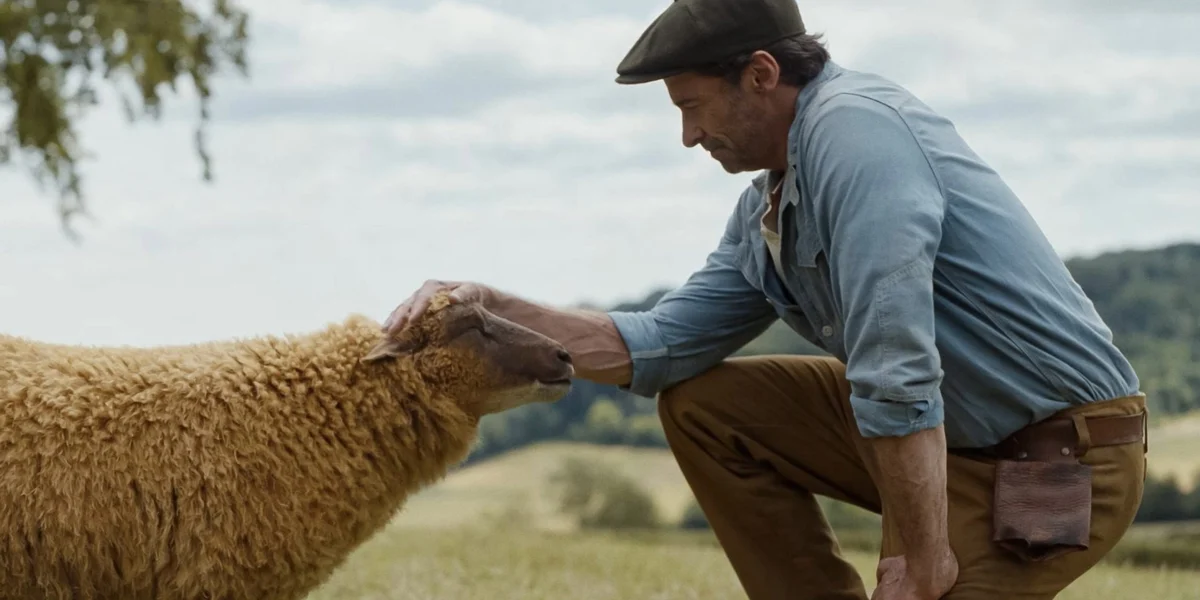
The narrative unfolds in the idyllic village of Denbrook, a seemingly tranquil corner of the English countryside, where the life of George Hardy (portrayed by a characteristically amiable Hugh Jackman) takes a dramatic and tragic turn. George, a shepherd of gentle disposition and an eccentric nature, lives a solitary existence in his trailer, a figure regarded by his neighbors with a mixture of bemusement and mild eccentricity. His evenings are marked by a peculiar yet endearing ritual: he reads aloud from murder mystery novels to his flock of sheep, imbuing their pastoral existence with tales of intrigue and suspense. This unique bond between shepherd and flock, however, is violently severed one morning when George is discovered dead. The circumstances of his demise are immediately suspicious, pointing towards foul play and setting in motion a complex murder investigation.
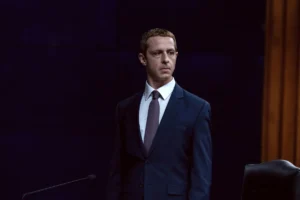
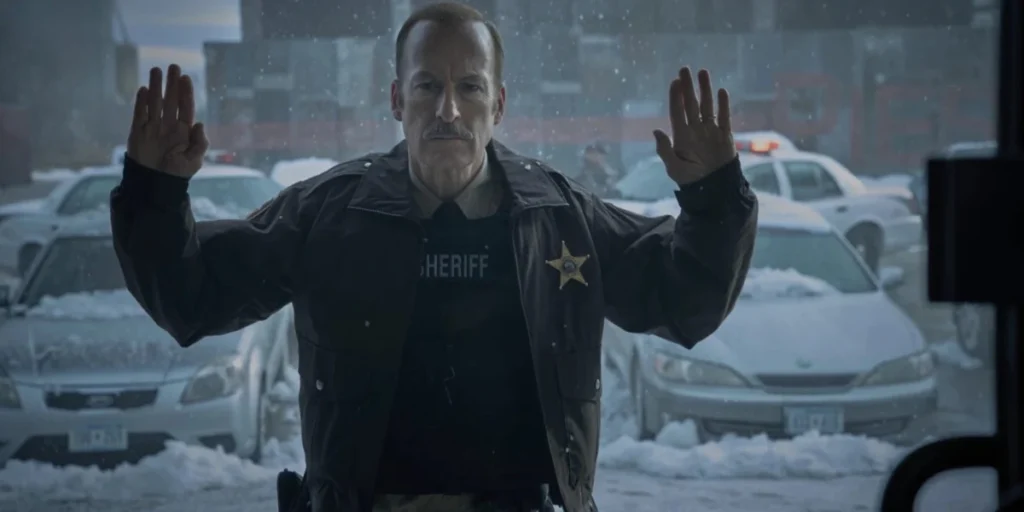
The discovery of a staggering $30 million fortune unearthed in the aftermath of George’s death quickly establishes a compelling motive for murder. The local law enforcement, represented by the well-meaning but somewhat bumbling Constable Tim Derry (played by Nicholas Braun), is tasked with unraveling the mystery. Simultaneously, George’s estranged daughter, Rebecca (Molly Gordon), returns to Denbrook, drawn back by the news of her father’s death. Adding to the unfolding drama, George’s sharp-witted lawyer (Emma Thompson) diligently carries out his final wishes, while other individuals with vested interests begin to surface, all seemingly eager to profit from George’s untimely demise.
However, it is the sheep themselves, led by the remarkably resourceful Lily (voiced with gravitas by Julia Louis-Dreyfus), who emerge as the unlikely protagonists of this unfolding drama. Drawing upon the extensive literary education provided by George, the sheep take it upon themselves to investigate. They meticulously apply the classic detective tropes of "means," "motive," and "opportunity" to the gathered townsfolk at a contentious will reading, determined to identify George’s killer. This inventive premise elevates the film beyond a simple whodunit, embedding it with a deeper commentary on observation, intelligence, and the often-overlooked capabilities of those on the fringes of society.
Thematic Depth Beneath a Comedic Surface
"The Sheep Detectives" masterfully navigates the delicate balance between broad comedy and poignant thematic exploration. Craig Mazin’s screenplay imbues Lily’s reliance on classic mystery novel conventions not merely as a narrative device, but as a profound character insight. Her application of fictional logic to the chaotic reality of grief and greed reveals a sharp intellect and an endearing determination, making her a compelling figure for audiences to champion. The film’s pacing, music, and cinematography contribute to a wonderfully effervescent rhythm, keeping the narrative light on its feet without ever succumbing to outright frivolity.
Beneath this seemingly lighthearted exterior, however, lie weightier themes that resonate deeply. The sheep harbor a unique belief: that upon death, individuals transform into clouds. This existential perspective imbues their reckoning with mortality with a profound sense of crisis, a theme the film handles with a remarkable delicacy and maturity that many dramas would struggle to achieve. It offers a touching portrayal of how children process loss, refraining from any condescending tones, while simultaneously highlighting how adults often grapple with these same profound questions with less grace.
A particularly touching subplot involves the "winter lamb," a character voiced with undeniable adorability by Tommy Birchall. Born out of season, this lamb is ostracized and considered different by the rest of the flock. His struggle for acceptance and approval serves as a gentle yet powerful lesson on social acceptance and the perils of underestimating those who do not conform to established norms. This narrative thread dovetails seamlessly with the film’s central murder mystery. Many of the human suspects are revealed to have dismissed George during his lifetime, only to value him after his death, primarily for his considerable wealth. This prejudice extends to their underestimation of the sheep, who, in turn, consider themselves unintelligent simply because humans perceive them as such. The profound irony lies in the fact that these very sheep, dismissed and underestimated, are the only ones paying close enough attention to solve the case and bring justice to their beloved shepherd.
A Stellar Voice Ensemble and Notable Human Performances
The voice cast assembled for "The Sheep Detectives" is a significant strength, imbuing the animal characters with distinct personalities and emotional depth. Julia Louis-Dreyfus delivers a superb performance as Lily, embodying intelligence, empathy, and an unwavering determination. Bryan Cranston lends a powerful pathos to Sebastian, a brooding black Icelandic sheep with a tragic past as a former carnival animal. His reluctant partnership with Lily and the portly Mopple (perfectly cast with Chris O’Dowd) forms the film’s most emotionally grounded relationship, culminating in a character arc that proves to be one of the film’s most impactful elements.
Further bolstering the ensemble, Patrick Stewart, Regina Hall, Bella Ramsey, and Brett Goldstein, who amusingly pulls double duty as the twin Norfolk Horn sheep Reggie and Ronnie, known for their enthusiastic head-butting, contribute to a talented group of voice actors who ensure each character feels wholly unique and memorable.
However, the human characters represent the film’s primary area of struggle. Several are underdeveloped, such as Tosin Cole as a rival local shepherd and Conleth Hill as the town’s butcher, receiving insufficient screen time to make a significant impact. Hong Chau, portraying a local woman who harbored feelings for George, is also underutilized. Nicholas Galitzine as an out-of-town reporter and Molly Gordon as George’s daughter Rebecca, unfortunately, fall somewhat flat, failing to fully engage the audience. Emma Thompson provides a brief but memorable turn as George’s lawyer, exuding an effortless comic authority that is uniquely hers.
A more significant critique arises with Nicholas Braun’s casting as Constable Tim Derry. Braun appears miscast, struggling to inhabit the role of the clumsy local policeman convincingly. His English accent is consistently audibly uncomfortable, and his scenes with Molly Gordon are notably devoid of chemistry. This lack of connection is particularly disappointing, as the film dedicates a substantial amount of screentime to their storyline, aiming for an investment that ultimately fails to materialize.
Technical Prowess and Lasting Impressions
Despite these minor shortcomings in the human character portrayals, "The Sheep Detectives" triumphs as a film that significantly outperforms its initial marketing. The computer-generated imagery (CGI), which appeared unconvincing in early trailers, is rendered with far greater richness and detail in its completed form. Crucially, the film wisely avoids the photorealistic, uncanny valley approach that rendered the 2019 adaptation of "The Lion King" emotionally inert. The sheep in "The Sheep Detectives" possess expressive faces, distinct personalities that shine through, and compelling performances that breathe life into them. A particular sequence, where the flock tentatively ventures into Denbrook for the first time, their hooves tentatively touching the pavement as they cautiously navigate a road crossing, stands out as one of the film’s most hilarious and charming moments, a testament to the delightful animation and skillful voice performances.
The film concludes with the joyous strains of The Proclaimers’ iconic anthem, "I’m Gonna Be (500 Miles)." This song choice is not merely a soundtrack element but a perfectly calibrated injection of Scottish exuberance, sending the audience out with an undeniably uplifted spirit. As many have already observed, "The Sheep Detectives" masterfully blends the intricate plotting of "Knives Out" with the heartwarming charm of "Babe," achieving this synthesis in the most positive sense. It is a film that is simultaneously heartwarming, genuinely funny, and possesses a level of intelligence that belies its whimsical premise. Ultimately, "The Sheep Detectives" stands as a remarkable family film that respects its audience across all age groups, poised for a healthy and fulfilling cinematic life.
Background and Context
The genesis of "The Sheep Detectives" lies in Leonie Swann’s 2005 novel, "Three Bags Full," a literary work that garnered critical acclaim for its unique narrative voice and charming characters. The decision to adapt this novel for the screen by a team with proven success in both animation and live-action drama (Balda’s animated prowess and Mazin’s sharp writing) signaled an ambitious undertaking. The film’s production involved extensive CGI work, a technical aspect that has often been a point of contention in modern cinema. Early promotional materials, as noted in the review, raised concerns about the visual fidelity of the sheep, a hurdle that the completed film appears to have successfully overcome. The choice of a farm setting in the English countryside provides a rich visual tapestry, a stark contrast to the often urban or fantastical settings of many contemporary family films, offering a grounded yet whimsical backdrop for the unfolding mystery.
Timeline of Events (as inferred from the narrative)
- Past: George Hardy develops a close relationship with his flock, reading them murder mystery novels. His estranged daughter, Rebecca, moves away from Denbrook. A significant fortune is accumulated by George.
- Recent Past: George Hardy is murdered under mysterious circumstances.
- Present Day (Film’s Narrative Arc):
- George Hardy is discovered dead.
- The discovery of his $30 million fortune is made public, establishing a clear motive.
- Constable Tim Derry begins his investigation into the murder.
- Rebecca Hardy returns to Denbrook.
- George’s lawyer begins to process his estate.
- The sheep, led by Lily, begin their own investigation, applying detective novel principles.
- The will reading takes place, bringing all potential suspects together.
- The sheep gather clues and deduce the identity of the killer.
- Justice is served for George Hardy.
Broader Impact and Implications
"The Sheep Detectives" offers a valuable lesson in challenging preconceived notions and valuing diverse perspectives. The film underscores the idea that intelligence and capability are not confined to human intellect and that even the most overlooked members of society can possess the insight and determination to solve complex problems. In an era where animated and family films are increasingly expected to offer more than just superficial entertainment, this film’s ability to weave together humor, suspense, and genuine emotional depth positions it as a noteworthy example of the genre. Its success suggests a continued appetite for stories that blend imaginative concepts with relatable human (and animal) emotions, providing a refreshing alternative to more formulaic cinematic offerings. The film’s handling of themes like mortality and social acceptance, particularly through the lens of its young audience, could foster important conversations within families, encouraging empathy and a deeper understanding of complex issues.