



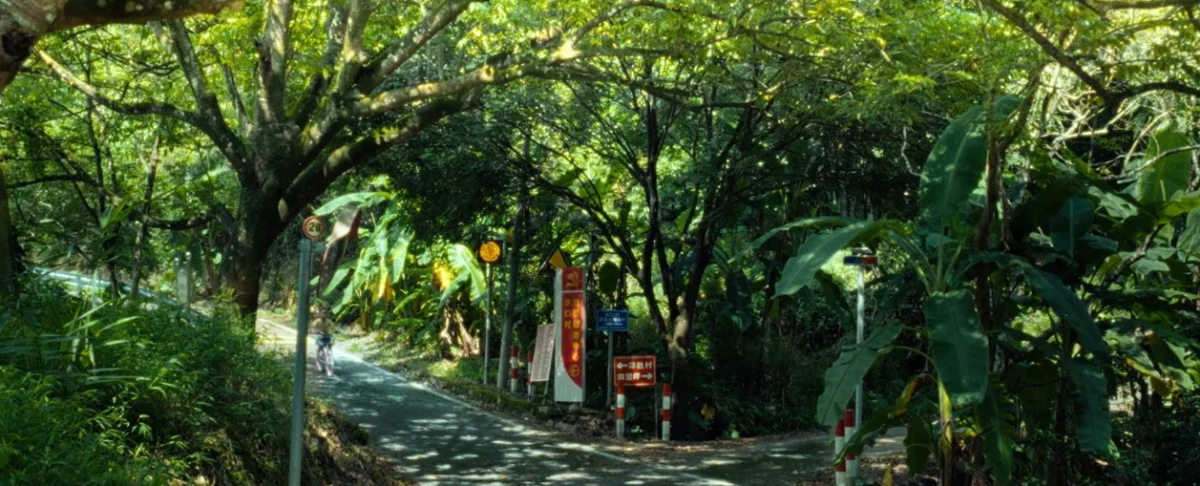
The international film festival circuit has been abuzz with the emergence of Lam Can-zhao, a young Chinese director whose distinctive cinematic voice is captivating audiences and critics alike. Born in Chaozhou, Guangdong, in 1994, Lam has rapidly established himself as a significant talent, with his short films garnering prestigious accolades and extensive festival screenings. His latest feature, "Where the Sun Shines Bright," a multi-national co-production, recently premiered at the 48th Moscow International Film Festival on April 17, 2026, and has since embarked on a global festival journey, including a nomination for Best Film in the International Competition at the 4th Bishkek International Film Festival. This 68-minute drama, written, directed, and edited by Lam, represents an ambitious expansion of themes explored in his earlier acclaimed shorts, "A Bright Sunny Day" and "A Summer’s End Poem."
A Rising Star on the Global Festival Stage
Lam Can-zhao’s trajectory in the international film community has been marked by consistent recognition. His short film, "A Bright Sunny Day," earned a coveted spot in LA CINEF at the 76th Cannes Film Festival, a platform known for showcasing emerging directorial talent. In 2024, his film "A Summer’s End Poem" achieved significant milestones, winning Best Short Film at the 74th Berlinale Generation Kplus section and subsequently qualifying for consideration at the 98th Academy Awards. These achievements underscore Lam’s growing influence, with his works having been presented at over a hundred international film festivals, including prominent events such as the Shanghai International Film Festival, Karlovy Vary International Film Festival, Visions du Réel, and the Raindance Film Festival, among many others. This extensive exposure has solidified his reputation as one of the most compelling young directors from China currently navigating the global cinematic landscape.
"Where the Sun Shines Bright": A Mosaic of Childhood in Transition
"Where the Sun Shines Bright" is a film that eschews traditional narrative structures in favor of a more fragmented, impressionistic approach. The story centers on an 18-year-old boy at the cusp of adulthood, who navigates his own coming-of-age by observing and interacting with four distinct children. Instead of a linear plot, the film unfolds as a series of interconnected vignettes, likened to four short films seamlessly woven together into a cohesive whole. These interwoven narratives delve into the complex emotional lives of children grappling with profound themes: abandonment, parental separation, the bewildering physical changes of puberty, the omnipresent influence of the internet, the weight of silence, the sting of loneliness, and the often-unseen emotional topography of a small southern Chinese village.
The film’s structure allows Lam to explore a diverse range of moods and perspectives. One poignant segment follows Aileen, a young girl clutching a red egg, on her solitary journey towards the city to find her absent mother. Her path is briefly illuminated by the unexpected kindness of an adult figure, providing one of the film’s most heartwarming moments. Another narrative arc focuses on Dan, a 12-year-old boy whose introverted nature, strained relationship with his father, and growing isolation at school create a palpable atmosphere of emotional tension. Elsewhere, Xuan, a 13-year-old with a passion for singing, confronts the unsettling changes in his voice as he enters puberty, a transformation that threatens his dreams and his sense of self. Finally, Tian, a resident of Chaozhou town, finds solace and expression in livestreaming Michael Jackson dance routines online, while simultaneously attempting to navigate her relationship with her new stepmother, Wenyen.
Exploring the Nuances of Contemporary Childhood
Lam Can-zhao’s film offers a profound, yet unsentimental, portrayal of childhood. His interest lies not in romanticizing youth, but in meticulously examining how children process absence, fear, and longing. The film is particularly adept at capturing their attempts to make sense of adult worlds they do not fully comprehend. The resulting work is a rich tapestry that explores themes of hometown, familial bonds, separation, and the journey of self-discovery. Crucially, it also reflects on how contemporary childhood is increasingly shaped by the constant influx of images, the pervasive presence of screens, and the reception of incomplete information. The description of "Where the Sun Shines Bright" as a manifesto for an "ADHD generation" is not entirely inaccurate, given the narrative’s constant shifts in focus, tone, and visual language. This inherent restlessness, however, is also a significant part of its undeniable charm and unique appeal.
Structural Strengths and Potential Limitations
The film’s four-part structure serves as both its greatest asset and its most apparent constraint. On one hand, this segmented approach grants Lam remarkable freedom to traverse a wide spectrum of emotional landscapes. The initial segment, depicting the young girl’s journey, bursts with a vibrant energy that evokes the feeling of a live-action Studio Ghibli creation. Another segment introduces the recurring motif of a tiger, functioning both as a literal threat and a potent metaphor for transformation, presenting one of the film’s most compelling conceptual ideas. The black-and-white chapter focusing on the boy grappling with his changing voice adds a distinct textural layer, while the Michael Jackson-themed sequences offer an unexpectedly humorous and insightful commentary on digital performance, imitation, and the desires of childhood. This section culminates in a fittingly stylized, music-video-like sequence set to "Beat It," providing a memorable conclusion.
However, the film’s composition as essentially four distinct parts never fully recedes from view. While the connections between these segments are intriguing, the visual and thematic seams remain visible. At times, "Where the Sun Shines Bright" feels more akin to an anthology film than a fully integrated feature. Furthermore, the varying quality of these individual shorts undeniably contributes to this perception. Nevertheless, considering the film’s relatively short runtime and Lam’s deliberate preference for fragmented, poetic realism, this loose structure can be viewed not as a flaw, but as a defining characteristic that shapes how the work is meant to be experienced. This is not a film driven by a conventional plot, but rather a curated collection of distinct observations and emotional impressions.
The Enduring Significance of Place and Authenticity
The context of Lam’s filmmaking is paramount to understanding "Where the Sun Shines Bright." His cinematic work has consistently been rooted in the regional environment of southern China, and in this film, Chaozhou transcends its role as a mere backdrop to become the emotional bedrock of the entire production. The deliberate incorporation of local dialect, the casting of non-professional actors, and the authentic portrayal of rural spaces imbue the film with a profound sense of verisimilitude. The introduction of Wenyen, an urban woman portrayed by Jin Sha, serves as a subtle yet effective counterpoint, highlighting the contrast between the insular world of the town and the broader external environment. This juxtaposition enriches the film’s thematic depth, exploring the evolving identities of its young protagonists within a specific cultural and geographical milieu.
Visual Storytelling and Sonic Innovation
The cinematography, expertly handled by Gou Haokun with additional credit to Pan Wenhua, plays a crucial role in supporting the film’s distinctive approach. The visual language of "Where the Sun Shines Bright" fluidly shifts between vibrant, almost fairy-tale-like imagery, stark black-and-white passages, and grounded, naturalistic depictions of village life. This visual dynamism not only mirrors the fractured nature of the narrative but also effectively encapsulates the inherent emotional instability and flux that characterize adolescence.
Lam’s own editing, a testament to his comprehensive control over the film’s rhythm, is instrumental in shaping the viewer’s experience. The abrupt transitions between storylines, moods, and visual textures, while potentially disorienting, serve to maintain a heightened level of viewer engagement. The sound design is equally critical. The strategic use of loud noises and sudden sonic interruptions, including explosive elements, disrupt the audiovisual flow in surprisingly entertaining and effective ways. This technique is particularly impactful in the tiger-related segments, where the sense of threat is often conveyed through suggestion and auditory cues rather than overt visual spectacle, thereby amplifying the psychological tension.
Naturalism and Raw Performance
The acting in "Where the Sun Shines Bright" is largely characterized by a commitment to naturalism. Jin Sha delivers a performance as Wenyen that is marked by a quiet reserve, portraying a woman who earnestly desires to connect with her stepdaughter but struggles to find the appropriate means. Surrounding her, the non-professional actors contribute significantly to the film’s raw, spontaneous quality. While some performances are inevitably uneven, this very rawness aligns perfectly with Lam’s directorial methodology. His approach prioritizes presence, awkwardness, and the subtle truths of everyday behavior over polished dramatic execution. This commitment to authentic portrayal allows the emotional undercurrents of the children’s experiences to resonate deeply with the audience.
A Distinctive Vision with Lasting Resonance
"Where the Sun Shines Bright" is a film of modest scale but immense personality. Its segmented structure, while perhaps preventing it from achieving complete narrative cohesion, is an intrinsic part of its artistic identity. Similarly, the constant shifts in tone and style, while potentially challenging for some viewers, contribute to its unique and memorable impact. Regardless of these structural considerations, the film consistently offers moments that capture the viewer’s attention. Whether it is the evocative journey of a girl with a red egg, the symbolic presence of a tiger, the poignant vulnerability of a boy confronting his changing voice, or a child channeling Michael Jackson for an unseen online audience, Lam Can-zhao crafts indelible images that linger long after the credits roll. The film’s success on the international festival circuit, culminating in its presence at prestigious events like the Moscow and Bishkek film festivals, is a testament to its universal themes and Lam’s singular artistic vision, marking him as a director whose future works will be keenly anticipated. The film’s international co-production involving China, Switzerland, Canada, and Malaysia further highlights the global appeal and collaborative spirit behind Lam’s distinctive storytelling.