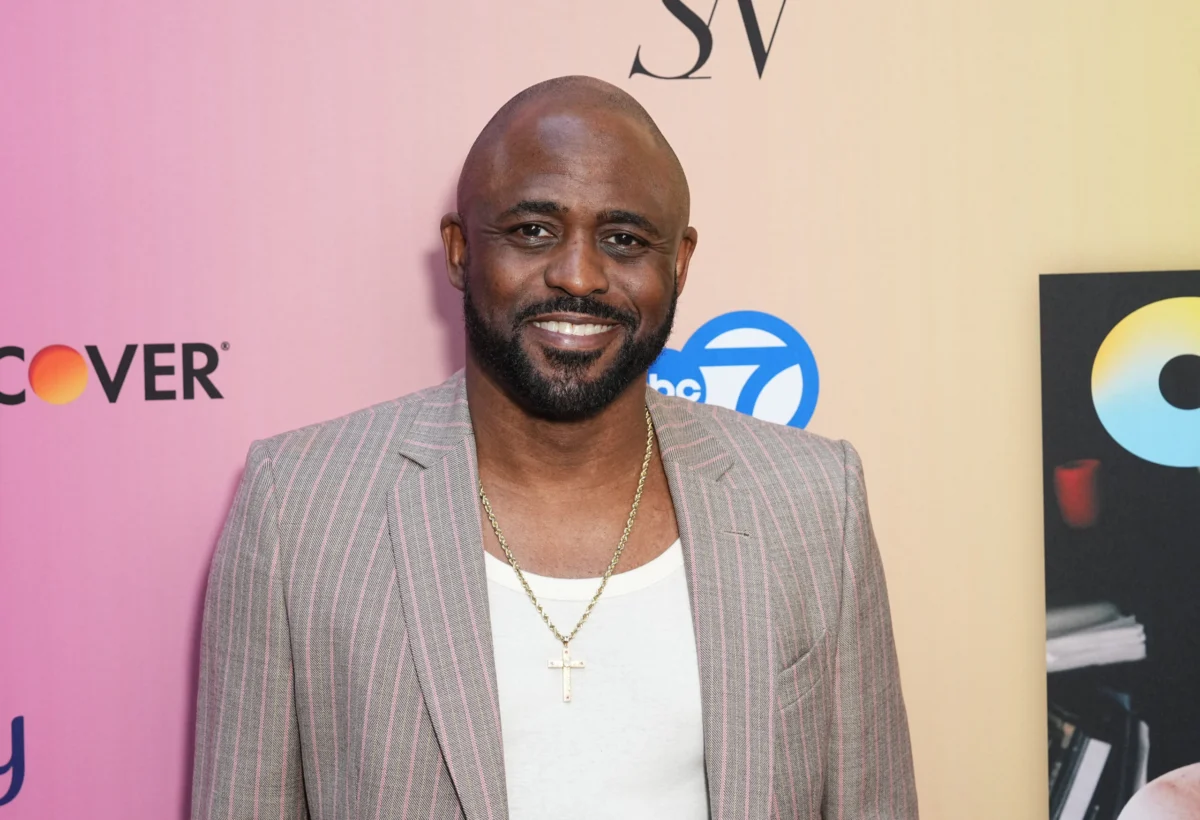
Veteran entertainer Wayne Brady has publicly reignited his long-standing feud with political commentator and host Bill Maher, unequivocally labeling Maher "racist" during a recent appearance on Sarah Jones’s podcast, America, Who Hurt You? The renewed verbal confrontation brings to the forefront a decade-plus history of animosity stemming from Maher’s controversial remarks about former President Barack Obama in 2010, which Brady interpreted as deeply problematic and racially charged.
The Spark: A Decade-Old Comment and Renewed Outrage
The genesis of the public dispute between Brady and Maher dates back to a contentious interview Maher gave in 2010. During this period, Maher, host of HBO’s Real Time with Bill Maher, expressed his comedic expectations for the first Black president. "I thought when we elected the first Black president, as a comedian, I thought that two years in that I’d be making jokes what a ‘gangsta’ he was. You know. And not that he’s President Wayne Brady, you know. I thought we were getting Suge Knight," Maher stated, drawing a direct, and to many, racially loaded, comparison between the then-President Obama and the amiable, multitalented performer Wayne Brady, contrasting him with the notoriously tough music executive Suge Knight.
Maher’s comments quickly sparked widespread criticism, particularly within the Black community and among entertainment figures. The implication that Obama, a Harvard Law graduate and former community organizer, was somehow "less Black" or not "authentic" enough due to his perceived demeanor, and that his "Blackness" should manifest in a specific, stereotypical way (like a "gangsta"), resonated poorly. It touched upon a sensitive nerve regarding racial gatekeeping and the burden placed on Black individuals, especially those in prominent positions, to conform to certain archetypes.
Brady’s Initial Scathing Response (2010)
Wayne Brady, known for his improvisational skills on Whose Line Is It Anyway? and his genial public persona, did not shy away from confronting Maher’s remarks head-on. In a swift and fiery response, Brady challenged Maher directly, questioning the comedian’s understanding of Black identity. He famously retorted, "If you want to know how Black Wayne Brady is, I would gladly slap the shit out of Bill Maher in front of Coco and Ebony and Fox, the three ladies of the night he has hired." This retort, delivered with uncharacteristic aggression from Brady, underscored the depth of his offense and his willingness to break from his usual affable image to defend himself and, implicitly, President Obama against what he perceived as a racist jab. The "ladies of the night" comment was a provocative jab at Maher’s well-known dating habits, aiming to undermine his moral standing.
The exchange became a significant cultural moment, highlighting the tensions surrounding race, comedy, and the limits of satire in the post-racial America narrative that some believed had emerged with Obama’s election. It forced a conversation about who gets to define Blackness and the inherent biases in judging individuals based on racialized stereotypes.
The Catalyst for Renewed Fire: Dave Chappelle and Sarah Jones’s Podcast
The dormant feud was reignited recently, partially spurred by comedian Dave Chappelle. As Brady revealed on Sarah Jones’s podcast, Chappelle "recently saying something" about Maher in his own comedy special late last year served as a catalyst, prompting Brady to revisit his long-held frustrations. While Chappelle’s exact words regarding Maher in his special have not been widely detailed in this context, their impact on Brady was profound enough to bring the issue back into public discourse.
During his conversation with Sarah Jones, host of America, Who Hurt You?, Maher’s name naturally arose, providing Brady the platform to articulate his evolved and unreserved opinion. "He’s racist and I don’t care Bill Maher can say that I have all these Black friends, dah, dah, dah," Brady declared, dismissing Maher’s common defense against accusations of racism—the "some of my best friends are Black" trope. Brady emphasized the insidious nature of Maher’s comments, particularly the 2010 "President Wayne Brady" remark, stating, "Even that, how dare you as a white man try to define this thing?" This pointed question challenged Maher’s authority and privilege in attempting to dictate or categorize Black identity.
A Personal Encounter and a Broader Critique
Brady further elaborated on his negative perception of Maher, recounting a personal encounter that solidified his view. He recalled attending a party at the Playboy Mansion "way back in the day" where he observed Maher with "two sisters on his arm." While initially stating he wouldn’t "yuck your yum," Brady quickly added, "but yuck." He reflected on this observation, concluding, "And I saw that for what it was, and was like, hmm. This is a cat who believes that his proximity and things you can use gives you the right to say what you want to say about another, people whose shoes you never walk in."
This anecdote provides a deeper layer to Brady’s critique. It suggests that his labeling of Maher as "racist" isn’t solely based on a single comment but on a perceived pattern of behavior and a fundamental disconnect from the experiences of others, particularly Black individuals. Brady interprets Maher’s privilege—his status, his platform, and perhaps even his choice of companions—as fueling a sense of entitlement to comment on and define Black identity without genuine understanding or empathy.
Brady clarified that his dislike is not personal hatred but rather a rejection of Maher’s public persona and the impact of his words. "I don’t hate Bill Maher. I don’t know him as a person like that, but what I do know is I know his words. So based on your words, I don’t like you as a human because you’re harmful to other people with the views that you espouse and the things that [you] said and the platform that he has."
The Erosion of Humor: "Not Funny Anymore"
Beyond the specific accusation of racism, Brady also expressed a profound disillusionment with Maher’s comedic output. "He’s not funny anymore to me," Brady stated, explaining that Maher’s humor has become "vitriolic" and "encourages the asinine behaviors and reactions in those whose default setting is to be reductive of people." This sentiment speaks to a broader cultural shift, where comedy that relies on stereotypes or punching down is increasingly scrutinized and rejected by audiences and fellow performers. For Brady, Maher’s humor has crossed a line from edgy satire to harmful rhetoric that validates prejudice.
Bill Maher’s Stance and Past Defenses
Bill Maher has not yet publicly responded to Wayne Brady’s latest comments. However, his history provides a clear indication of his likely defense. Maher has consistently positioned himself as a champion of free speech and provocative comedy, often dismissing accusations of racism or insensitivity as attempts to silence dissenting voices or police humor. He frequently argues that comedy’s role is to challenge norms and expose hypocrisy, even if it offends some.
Maher’s show, Real Time, is known for its unvarnished political commentary and willingness to tackle controversial topics, often inviting guests from across the political spectrum. While he has been a vocal critic of conservative policies, he has also faced significant backlash from the left for comments on religion, Islam, and race. For instance, in 2017, he used a racial slur on air, for which he later apologized after widespread condemnation, including from figures like Chance the Rapper. Despite apologies, Maher often maintains that his intent is not malicious but to spark conversation, however uncomfortable. His standard defense often invokes the idea of nuance and context, arguing that his jokes are often misunderstood or taken out of context by those seeking to demonize him.
Broader Implications for Comedy, Race, and Public Discourse
The renewed feud between Wayne Brady and Bill Maher highlights several critical ongoing debates within the entertainment industry and society at large:
- The Evolving Landscape of Comedy: What was once considered acceptable or merely "edgy" in comedy is now subject to greater scrutiny, especially regarding race, gender, and identity. Comedians like Dave Chappelle and others have themselves faced intense criticism for remarks perceived as transphobic or racially insensitive. Brady’s comments reflect a growing demand for comedians to be more mindful of the impact of their words, particularly when they hold significant platforms.
- Defining "Racism": Brady’s direct label of "racist" against Maher, despite Maher’s likely protests of having "Black friends," underscores a key distinction between overt, intentional hatred and systemic or casual racism. Many argue that racism isn’t always about explicit malice but can manifest in reductive stereotypes, microaggressions, or comments that reinforce harmful societal biases, regardless of the speaker’s intent.
- The Responsibility of Public Figures: Both Brady and Maher are prominent figures with substantial reach. Their public disagreements, especially on sensitive topics like race, shape broader conversations and influence public opinion. Brady’s decision to speak out is a testament to the ongoing pressure on public figures to use their platforms to challenge perceived injustices.
- Authenticity and Representation: The original 2010 comment about "President Wayne Brady" versus "Suge Knight" delves into the problematic expectation that Black public figures must embody a particular, often stereotypical, form of "Blackness" to be considered authentic or impactful. Brady’s pushback against Maher’s attempt to "define this thing" speaks to the universal desire for self-definition and the rejection of external, often prejudiced, categorization.
The Platform: America, Who Hurt You? Podcast
The conversation took place on America, Who Hurt You?, a podcast hosted by Tony Award-winner Sarah Jones. Jones, acclaimed for her work in one-woman shows like Bridge & Tunnel (produced by Meryl Streep) and Sell/Buy/Date, uses her platform to explore complex social and political issues through personal narratives and candid interviews. The podcast, currently in its second season, features a diverse array of guests, including Ben Stiller and Christine Taylor, Monica Lewinsky, Yvette Nicole Brown, Bryan Stevenson, and many others, delving into topics of identity, trauma, and societal impact. Jones’s ability to facilitate deep and often uncomfortable conversations makes her podcast an ideal forum for Brady to express such profound sentiments.
Jones is also slated to present a live event at Oxford University’s Schwarzman Centre from May 22-23, commemorating America’s 250th anniversary. This event, presented with the National Black Theater in association with Foment Productions and directed by Eric Ting, further underscores Jones’s commitment to fostering meaningful dialogue on critical social issues.
As the entertainment world continues to grapple with issues of representation, accountability, and the boundaries of humor, Wayne Brady’s unreserved condemnation of Bill Maher serves as a potent reminder that past comments can have lasting repercussions, and the conversation surrounding race, power, and privilege in public discourse remains as vital and contentious as ever. The industry awaits any potential response from Bill Maher, which could further escalate this long-simmering and now intensely public dispute.