



The Foundation of a Racing Prodigy
Gilles Villeneuve’s journey began in Berthierville, a quiet town on the North Shore of the St. Lawrence River. Long before he was donning the iconic red fireproof suit of the Scuderia Ferrari, Villeneuve’s obsession with mechanics and velocity manifested in various forms of motorsport. The film emphasizes his formative years, illustrating that his natural aptitude for controlling machinery was not limited to four wheels.
Before he graced the Imola Circuit, Villeneuve honed his reflexes in the high-stakes, low-traction environment of snowmobile racing. This discipline, often overlooked by international racing historians, required a level of physical endurance and technical intuition that would later distinguish his driving style in Formula 1. By the time he transitioned to the Formula Atlantic series, his reputation as a driver who pushed equipment to its absolute mechanical limits had already begun to solidify.
Chronology of an Ascent
The narrative arc presented in the film captures a specific period in the late 1970s. Following his successes in North American junior formula racing, Villeneuve’s career reached a critical junction in 1977.
- 1977: Villeneuve makes his Formula 1 debut with McLaren at the British Grand Prix at Silverstone, piloting a third, older M23 chassis. Despite finishing 11th, his performance caught the attention of Enzo Ferrari.
- Late 1977: In a move that shocked the industry, Ferrari recruited Villeneuve to replace the outgoing Niki Lauda, who had just secured his second world championship.
- 1978: His first full season with Ferrari was marked by both brilliance and volatility. The season concluded with a poignant victory at the inaugural Canadian Grand Prix held on the Ile Notre-Dame circuit in Montreal, a track that would later bear his name.
- 1979–1981: Villeneuve established himself as the team’s lead driver, securing iconic victories at Monaco, Jarama, and Watkins Glen.
- 1982: The career of the "Flying Frenchman" was cut short during a qualifying session for the Belgian Grand Prix at Zolder, a tragedy that solidified his status as a martyr of the sport.
Analyzing the Cinematic Portrayal of a Legend
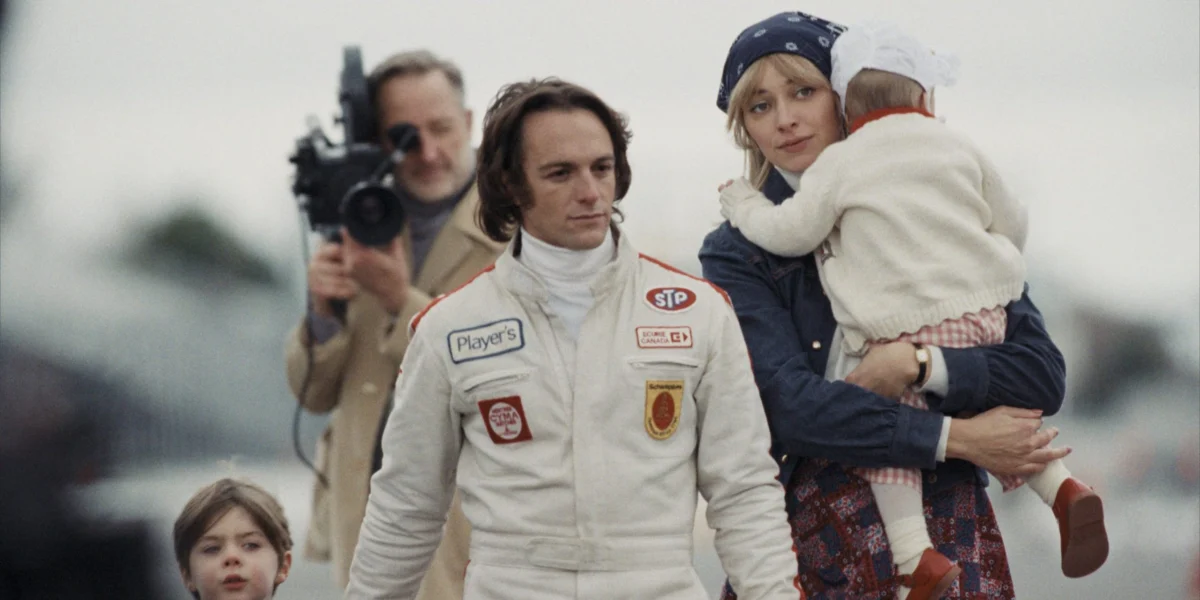
The film employs a blend of archival footage and modern recreations to anchor the audience in the visceral reality of 1970s racing. The production team utilized techniques reminiscent of John Frankenheimer’s 1966 classic Grand Prix, focusing on the sensory experience of the cockpit—the vibration of the chassis, the roar of the flat-12 engine, and the physical toll of high-speed cornering.
However, the film’s depiction of Villeneuve’s personal life and his interactions with his family has prompted discussion regarding the nature of the biopic genre. The portrayal of his parents—who are depicted as remarkably stoic and supportive in the face of his early automotive accidents—serves as a narrative device to emphasize the "inevitability" of his success. While this approach creates a clean, focused narrative, critics have noted that it perhaps undersells the visceral, human tension that usually accompanies such high-risk career paths.
The supporting cast, including Rosalie Bonenfant as his wife and Frank Crudele as the enigmatic Enzo Ferrari, provides the necessary human infrastructure to explain how a driver of Villeneuve’s temperament remained grounded. The dynamic between the driver and the "Commendatore," Enzo Ferrari, is central to the film’s thesis: that Villeneuve was not merely an employee, but an adopted son of the Ferrari lineage.
Data and Impact: The Legacy of Number 27
Statistically, Gilles Villeneuve remains an outlier in the history of Formula 1. He participated in 67 Grand Prix races, securing six victories and 13 podium finishes. While these numbers might not reflect the dominance of modern-era champions, they do not account for the cultural impact he left on the sport.
The "Villeneuve factor" is often cited by historians and racing analysts as the catalyst for the modern surge of interest in motorsport within Canada. His son, Jacques Villeneuve, further cemented the family name by winning the Formula 1 World Championship in 1997, a feat his father never officially attained.
The film highlights the "Tifosi" (the fervent fans of Ferrari) and their undying loyalty to the memory of Gilles. Even decades after his passing, his name is frequently invoked when discussing the "greatest drivers never to win a world title." This title, while bittersweet, underscores the high regard in which he is held by his peers and successors. As noted in the film, the presence of the "Salut, Gilles!" tribute on the start line of the Circuit Gilles Villeneuve serves as a daily reminder of his enduring influence.
Professional Analysis: The Underdog Narrative
From a production standpoint, Villeneuve: The Rise of a Legend occupies an interesting space in the landscape of sports cinema. While it lacks the massive, multi-million dollar marketing campaigns of Hollywood-backed productions like Ford v Ferrari or F1, it succeeds by leaning into an "underdog" aesthetic that mirrors the driver’s own professional trajectory.
The film serves as an informative case study on how local productions can capture the essence of a national hero without relying on the excessive dramatization often found in blockbuster biopics. By focusing on the mechanical and personal hurdles—rather than just the glamour of the podium—the filmmakers provide a more grounded perspective on the sport. The inclusion of contractual disputes and the political maneuvering within the Ferrari organization offers viewers a necessary, if brief, look at the "business" side of professional racing.
Cultural Implications and Final Assessment
The film is ultimately a tribute to the spirit of a man who viewed the cockpit not as a place of work, but as a site of total self-expression. For audiences unfamiliar with the technical history of Formula 1, the film serves as an accessible entry point into the era when the sport was defined by mechanical danger rather than digital precision.
The decision to limit the scope of the narrative—ending primarily with his rise to the Ferrari seat—allows the film to maintain a tight focus. By omitting the later, more harrowing years of his career, the film avoids the pitfalls of being a "death biography," instead opting to celebrate the ambition and the raw, unadulterated talent that propelled a young man from Berthierville to the world stage.
As the industry continues to produce content centered around the high-speed drama of F1, this Canadian production stands as a respectable, well-researched, and visually competent addition to the genre. It effectively bridges the gap between the local Quebecois perspective and the global appeal of the Ferrari mythos, proving that the story of Gilles Villeneuve is as relevant to modern racing fans as it was to the spectators at the Imola circuit over four decades ago.
The film does not attempt to redefine the biopic, nor does it seek to uncover long-buried controversies. Instead, it offers a sincere, well-paced, and technically sound account of an athlete who defined his generation. In doing so, it fulfills its mandate: to ensure that the memory of one of the sport’s most charismatic figures remains firmly in the rearview mirror of contemporary racing culture.