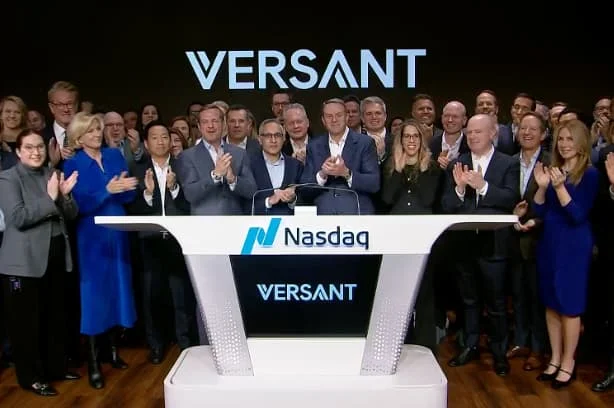
The financial community is shifting its focus toward Tuesday’s opening bell as Versant Media Group prepares to release its first quarterly earnings report as an independent, publicly traded entity. The report marks a pivotal moment for the media industry, offering the first comprehensive look at the internal financial health of a company built almost entirely on the foundation of traditional pay TV networks. Spun off from Comcast Corporation in early 2026, Versant Media Group (VSNT) represents a bold, if controversial, experiment: whether a "pure-play" cable network portfolio can survive and thrive in an era dominated by streaming giants and the steady erosion of the traditional television bundle.
Versant’s portfolio includes some of the most recognizable brands in cable television, including the financial news powerhouse CNBC, the news-heavy MS Now, and general entertainment stalwarts such as USA Network, Syfy, E!, and Oxygen. The company also holds a significant stake in the sports media landscape through the Golf Channel, while maintaining a suite of digital and transactional assets including Fandango, Rotten Tomatoes, GolfNow, and Sports Engine. As these assets move out from under the corporate umbrella of NBCUniversal, investors are eager to see if the company can maintain its margins without the leverage of Comcast’s broader ecosystem.
The Path to Independence: A Chronology of the Spinoff
The road to Versant’s debut on the Nasdaq on January 5, 2026, began in late 2024, when Comcast leadership first signaled a strategic desire to separate its high-growth broadband and theme park businesses from the more volatile cable network sector. The announcement of the spinoff in November 2024 was met with immediate intrigue from industry analysts, who viewed the move as a blueprint for other legacy media conglomerates grappling with "cord-cutting."
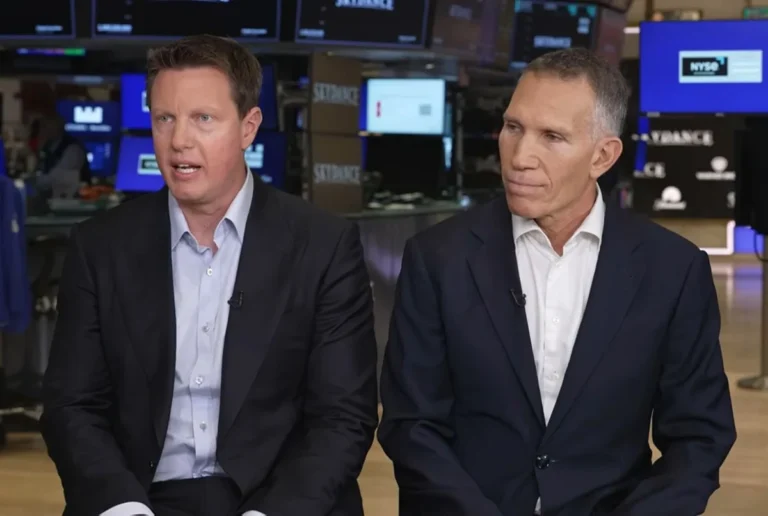
Throughout 2025, Comcast worked to insulate the new entity, negotiating long-term carriage agreements with major distributors to ensure a stable revenue stream for Versant’s first few years of independence. In July 2025, CEO Mark Lazarus made a high-profile appearance at the New York Stock Exchange to signal the company’s readiness for the transition. By December 2025, the company held its inaugural Investor Day, where leadership outlined a "business model transition" designed to pivot the company from a linear-heavy broadcaster to a diversified digital media player.
Since its January 2026 debut, Versant’s stock has faced significant headwinds, declining approximately 25%. Market analysts attribute this slump to a combination of technical factors—specifically, institutional selling as former Comcast shareholders rebalance their portfolios—and fundamental skepticism regarding the long-term viability of the cable business. With a current market capitalization of roughly $4.8 billion, Tuesday’s earnings report will be the first opportunity for the company to prove it can exceed the low expectations currently baked into its valuation.
Analyzing the Financial Landscape: Revenue and Market Pressures
The primary concern for investors remains the trajectory of Versant’s top-line revenue. Historical data released prior to the IPO revealed a steady contraction in the company’s financial performance. In 2022, the assets that now comprise Versant generated $7.8 billion in revenue. This figure slipped to $7.4 billion in 2023 and further declined to $7.1 billion in 2024. This downward trend reflects the broader "secular challenges" of the media industry, where declining subscriber fees and a softening advertising market have squeezed traditional networks.
Versant currently derives more than 80% of its total revenue from pay TV distribution. While this remains a profitable segment, the loss of millions of households from the cable ecosystem annually creates a shrinking "denominator" for the business. To counter this, Versant’s leadership has emphasized the "must-have" nature of its content. According to CEO Mark Lazarus, 62% of the company’s audience is driven by live programming, specifically news and sports. This high concentration of live viewers is a critical defensive moat, as live content remains the primary reason consumers retain their cable subscriptions and advertisers pay a premium for airtime.
Strategic Pivot: The 2026 Business Model Transition
In response to the pressures on linear television, Versant’s executive team, led by Lazarus and COO/CFO Anand Kini, has articulated a clear long-term goal: a 50/50 revenue split between traditional pay TV and digital/transactional businesses. The company views 2026 as the foundational year for this shift.
The digital strategy relies heavily on "utility" platforms. Fandango and Rotten Tomatoes provide a direct-to-consumer transactional engine for the film industry, while GolfNow and Sports Engine serve as essential tools for amateur athletes and hobbyists. These platforms offer high-margin, data-rich revenue streams that are largely decoupled from the traditional advertising cycle.
Furthermore, Versant has already begun aggressive maneuvers in the M&A (mergers and acquisitions) space to bolster its non-linear footprint. The recent acquisition of Free TV Networks, a provider of over-the-air digital broadcast channels, and the purchase of Indy Cinema Group, which provides cloud-based operating systems for movie theaters, demonstrate a commitment to expanding the company’s reach into ad-supported and infrastructure-based revenue.
Distribution Stability and the "Carriage Cushion"
One of the most significant assets Versant inherited from its time at Comcast is a series of favorable distribution agreements. Before the spinoff, NBCUniversal secured multi-year deals with major providers like Charter Communications and Google’s YouTube TV. These agreements, which include Versant’s full suite of networks, are slated to remain in place for at least the next two years.
Anand Kini highlighted this stability during the December Investor Day, noting that more than half of the company’s pay TV subscribers are covered by agreements extending through 2028, with some sports-related partnerships lasting until 2030. This "cushion" provides Versant with a predictable cash flow window to execute its digital pivot.
However, the first real test of Versant’s independent leverage is approaching. Two significant distribution renewals are scheduled for later this year. While the company’s news and sports assets (such as CNBC, WWE, and NASCAR coverage) provide substantial bargaining power, the industry has seen an uptick in high-profile blackouts as distributors push back against rising fees. Analysts will be listening closely during the earnings call for any guidance on how the company plans to approach these negotiations without the combined weight of NBC’s broadcast network or the Peacock streaming service.
Industry Context: The Pure-Play Gamble
Versant’s emergence comes at a time of consolidation and fragmentation in the wider media sector. The company stands in stark contrast to giants like Disney or the newly merged Paramount-Skydance, which have doubled down on expensive direct-to-consumer streaming platforms. By focusing on cash-flow-positive linear networks and niche digital platforms, Versant is betting that it can operate more efficiently as a lean, focused entity than it could as a small piece of a massive conglomerate.
The experience of other "pure-play" stocks offers a cautionary tale. Newsmax, which went public last year, saw an initial surge followed by a sharp decline as the realities of the competitive cable news landscape set in. Similarly, Warner Bros. Discovery recently contemplated a split of its assets before ultimately opting for a full-company sale to Paramount-Skydance, highlighting the difficulty of maintaining a standalone network business.
Conversely, there are signs of stabilization in the broader market. Charter Communications recently reported its first quarterly gain in cable subscribers since 2020, suggesting that the "death of the bundle" may be slowing in certain demographics. If the traditional TV market finds a floor, Versant’s high-margin business could become a favorite for value-oriented investors.
Analyst Perspectives and Future Outlook
Wall Street remains cautiously optimistic but largely in a "wait-and-see" mode. Raymond James analysts have pointed out that Versant’s lack of "Tier One" sports like the NFL or NBA is a weakness, but its "Tier Two" rights—including the WWE, NASCAR, and significant golf coverage—are sufficient to maintain its value to distributors. Goldman Sachs analysts have maintained a "Neutral" rating, citing the tension between secular headwinds in linear TV and the encouraging growth in the platforms business.
As Versant Media Group prepares to pull back the curtain on its financials this Tuesday, the stakes could not be higher. The report will not only determine the short-term trajectory of VSNT stock but will also serve as a barometer for the entire cable industry. If Versant can demonstrate that it is successfully managing its "business model transition" while protecting its core cash flow, it may provide a roadmap for the future of traditional media. If the revenue decline accelerates, however, it may confirm the market’s worst fears about the sunset of the cable era.