

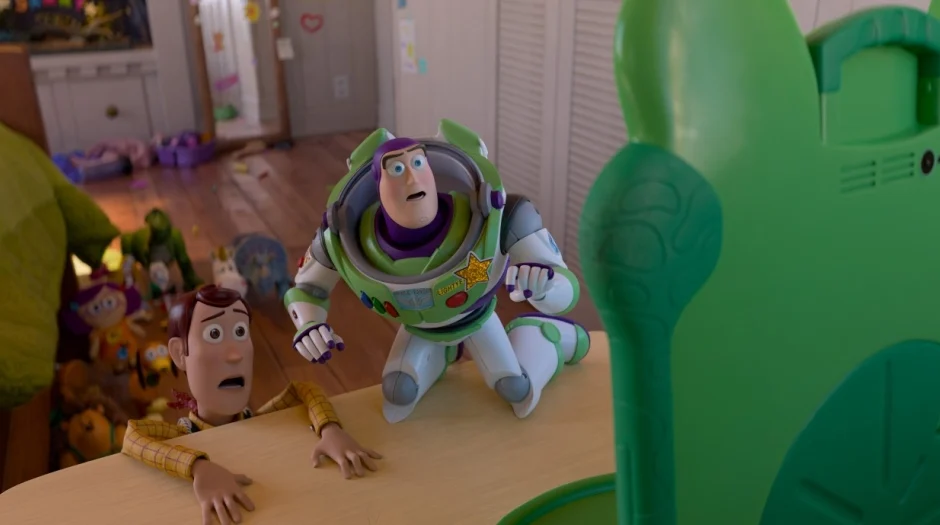
After captivating audiences for generations with tales of toys finding their purpose and belonging, Disney and Pixar’s highly anticipated Toy Story 5 arrives in theaters today, June 19, 2026, exploring a profound shift in childhood itself: the overwhelming presence of digital devices. Directed by Andrew Stanton, co-directed by Kenna Harris, and produced by Lindsey Collins, the latest installment in the beloved franchise grapples with a question that resonates deeply with modern families: what happens when the very nature of playtime is challenged by the allure of screens?
The narrative thrust of Toy Story 5 is driven by the introduction of Lilypad, a sophisticated smart tablet that quickly captures the attention of Bonnie, the young owner of Woody, Buzz, Jessie, and the rest of the toy gang. This technological newcomer poses an existential crisis for the toys, forcing them to confront the unsettling possibility that they might no longer be the centerpiece of a child’s imagination, or worse, that they might become obsolete.

However, as director Andrew Stanton clarified in a recent interview, the film’s central conflict isn’t a simple toy versus technology showdown. "Tech just wins," Stanton stated, acknowledging the pervasive and undeniable influence of digital devices on children’s lives. The filmmakers recognized that the ubiquity of smartphones and tablets, appearing in younger and younger hands, signifies a fundamental change in childhood rather than a fleeting trend. This realization shifted the focus from a direct competition to a more nuanced exploration of how the toys’ world is impacted by the evolving landscape of childhood engagement. The toys themselves may not change, but the environment in which they exist, and the way children interact with them, has undergone a significant transformation.
The journey to creating a fifth Toy Story film was not without its unique set of challenges. Co-director Kenna Harris described the pressure not as intimidating, but as a profound sense of responsibility, given the deep emotional connection audiences have forged with these characters over the years. Producer Lindsey Collins echoed this sentiment, highlighting Pixar’s inherent skepticism towards sequels. "Filmmakers asking the same question many fans ask: Why make another one?" Collins explained, emphasizing that the internal Pixar team often serves as the toughest critics, ensuring any continuation of a beloved franchise is not only warranted but also elevates the established legacy.
The Genesis of a New Conflict: Technology’s Grip
The decision to center Toy Story 5 around the theme of digital saturation stemmed from a deep observation of contemporary childhood. "We started this movie four years ago," Stanton recalled. "Even four years ago, it was clear it wasn’t a fad; it wasn’t going away." This foresight allowed the creative team to develop a narrative that felt both timely and enduring. The increasing presence of devices in children’s lives at ever-younger ages presented a genuine dilemma for the toy community. As Stanton pointed out, "their shelf life is literally shrinking and it’s hard not to take that personally."

Kenna Harris elaborated on the distinct nature of this threat. "Most of the threats they’ve taken on before this film, it’s not like those threats were literally going to wipe playtime off the face of the planet," she noted. Previous challenges, while significant, often allowed for a degree of hope or a clear path to resolution, such as finding a new child owner. In contrast, the impact of Lilypad and similar devices creates a more profound uncertainty, with "unclear if there is a solve."
Stanton further emphasized the critical realization that the narrative wasn’t about a battle where toys could triumph. "Tech just wins," he reiterated. "Like that was the big epiphany for us early on. It was like, ‘Oh, wait a minute. You put a phone in my hand, it’s over. It’s over. There’s no competition from the devices standpoint.’" This understanding allowed the filmmakers to craft a more compelling and emotionally resonant story, exploring the toys’ struggle to adapt to a world where their traditional role is being redefined. The devices, in essence, become the primary drivers of engagement, leaving the toys to either find new ways to connect or risk being left behind.
Navigating Legacy: The Weight of a Beloved Franchise
Toy Story stands as Pixar’s flagship franchise, with Woody and Buzz Lightyear arguably among the most iconic and recognizable characters in animated film history. For Andrew Stanton, a foundational creative voice at Pixar since its inception, returning to direct a Toy Story film carries a unique significance, especially within the broader context of an evolving film industry.

When asked about the pressure of helming such a crucial film, Stanton admitted that the stakes have become normalized for him over years of filmmaking. "It’s like every mountain is impossible to climb, the stakes are incredibly high, and it’s going to hurt if you fall," he said. However, he also found a degree of comfort in his deep familiarity with the Toy Story universe. "There’s a little bit of comfort, not confidence, but comfort in the fact I know this world really well because I’ve lived in it for so many years." The decision to return felt like a natural convergence of his extensive experience and the enduring appeal of these characters.
Kenna Harris, while newer to the studio, recognized the exceptionally high bar set for Toy Story films. "Folks have a high bar for Pixar films, and that bar is even higher for Toy Story films," she stated. She views the audience’s passionate feedback as stemming from a place of "intense love and feeling of how precious these characters are." This responsibility fuels a strong desire to "do a good job for all of those people."
Lindsey Collins highlighted Pixar’s intrinsic skepticism towards sequels. "Sequels are tricky," she noted. "There’s a skepticism at Pixar, which I think is healthy, which we always kind of bring to a sequel." The internal drive to ensure a sequel is "worthy" of its predecessors is a significant internal challenge. "The hardest audience to convince is internal," Collins emphasized, calling it a "good, healthy thing" that pushes the creative team to deliver their best work. Stanton humorously added, "The best response we’re going to get is you didn’t mess it up," acknowledging the internal bar for success. However, he also noted the immense reward when the internal team is won over, signifying that the film has truly resonated.

Technological Prowess and Artistic Vision
The conversation also touched upon the remarkable advancements in animation technology and how they empower filmmakers. When asked if virtually anything visualized can now be created with relative ease, Andrew Stanton drew a parallel to painting. "The paint set’s been figured out. It’s just about how good the artist is as a painter," he explained. He believes that the impressiveness of a CG movie lies in "how the artists that worked on it used that paint," suggesting that while the tools are sophisticated, the artistic vision remains paramount.
Reflecting on his personal experience with Toy Story 5, Stanton described a renewed appreciation for the filmmaking process. "I really tried to savor everything every day," he said. Having directed other films and not being certain he would make another animated feature after Finding Dory, he approached Toy Story 5 with a sense of gratitude for the rare opportunity. "It’s still a very rarified space that we get to make these movies in up at Pixar, and the way we get to work with each other." This perspective allowed him to appreciate the experience with the same wonder he felt as a newcomer on the first Toy Story.
For Kenna Harris, a significant aspect of her experience on Toy Story 5 was the collaborative partnership she developed with Andrew Stanton. "I’ve never gotten to have a real true partner," she shared. She described their co-writing process as a seamless collaboration, where they "literally split the writing in half." This deep synergy, where they could "finish my sentences for me," was an unexpected but highly rewarding aspect of the production. Stanton underscored this sentiment, stating, "Moviemaking is a team sport. It’s not as auteur a thing as people think it is. And so, it has an ideal sweet spot when you’re all in sync together."

Broader Implications and the Future of Play
The introduction of Lilypad and the film’s exploration of technology’s impact on childhood carries significant implications beyond the narrative of Toy Story 5. It reflects a societal shift that is reshaping how children learn, play, and interact with the world. The film’s willingness to confront this reality head-on positions it not just as entertainment, but as a cultural touchstone that prompts reflection on the balance between digital engagement and traditional forms of childhood experience.
The Toy Story franchise has consistently resonated with audiences by tapping into universal themes of friendship, belonging, and purpose. By addressing the evolving nature of playtime, Toy Story 5 continues this tradition, offering a poignant commentary on contemporary family life. The challenges faced by Woody, Buzz, and their companions mirror the anxieties many parents and children experience in navigating the digital landscape.
The film’s success will likely be measured not only by its box office performance but also by its ability to spark conversations about the role of toys and technology in a child’s development. In an era where screens are increasingly integrated into daily life, Toy Story 5 provides a valuable opportunity for families to engage with these themes together, potentially fostering a greater understanding and appreciation for the enduring magic of imaginative play.

The release of Toy Story 5 on June 19, 2026, marks another significant milestone for Disney and Pixar, underscoring their commitment to crafting stories that evolve with the times while remaining true to the heart and soul of their beloved characters. The film’s exploration of a new frontier in childhood promises to deliver the emotional depth and visual splendor that audiences have come to expect from the Toy Story saga, while also offering a thoughtful reflection on the changing landscape of play.