

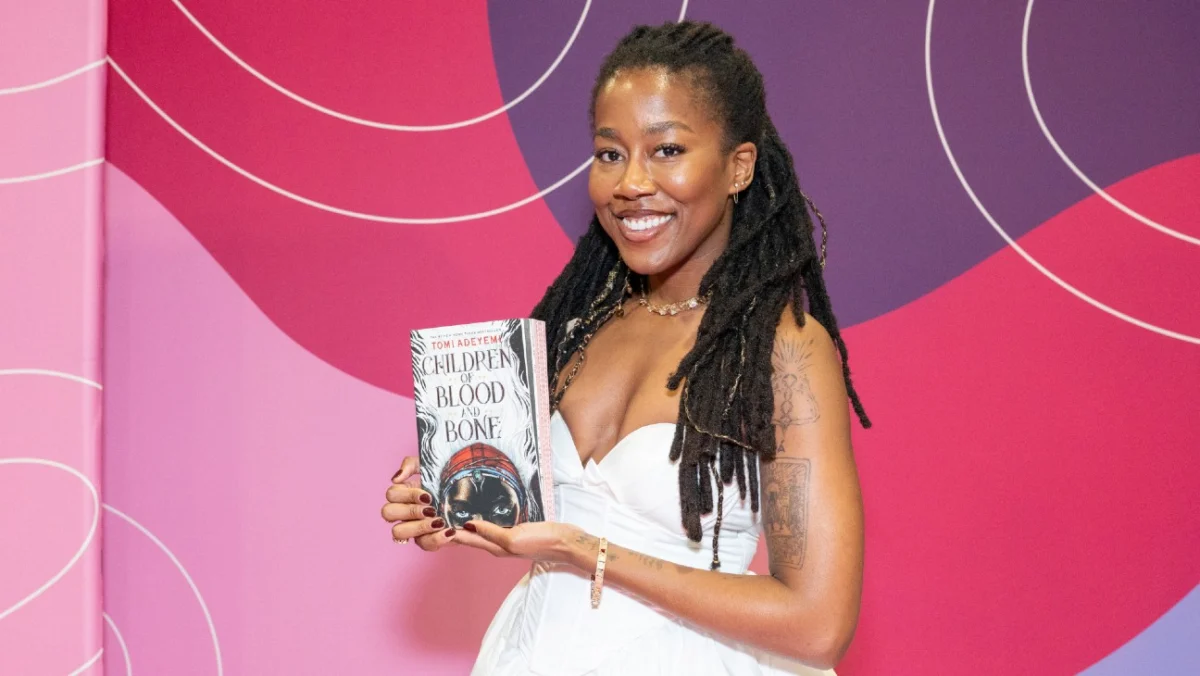
Award-winning young adult author Tomi Adeyemi has publicly announced her profound disassociation from Paramount Pictures’ highly anticipated feature film adaptation of her debut novel, Children of Blood and Bone. In a series of social media posts, Adeyemi expressed significant distress, indicating she will not promote, watch, or acknowledge the film, which is slated for release on January 15, 2027. Her statements have sent ripples through the literary and film communities, raising questions about authorial control, creative differences, and the complex journey of adapting beloved fantasy works for the screen.
Author’s Stance and Specific Allegations
Adeyemi initiated her public disavowal through a TikTok video posted on a recent Saturday. The video featured screenshots of messages conveying her unequivocal stance. One message, directed at unidentified recipients, declared, "There is a reason I will not post anything about the adaptation of my work. That’s all." This initial statement hinted at underlying tensions without revealing specifics.
More strikingly, the video included a screenshot of a direct message from Adeyemi to actress Amandla Stenberg, who portrays Princess Amari in the film. The message read, "Do not ever use my name in an interview or video again. Do not text me. Do not call me." The accompanying imagery suggested that Adeyemi had proceeded to block Stenberg, known for her roles in The Hunger Games and The Hate U Give. The timestamp on this screenshot indicated the message was sent in February 2025. This timing aligns with a now-deleted TikTok video Stenberg reportedly posted around that period, in which she addressed colorism backlash concerning her casting and claimed Adeyemi’s support for her role. Adeyemi’s forceful rebuttal suggests a significant breakdown in communication and trust between the author and at least one key cast member, potentially linked to sensitive issues surrounding representation.
In further posts, Adeyemi clarified her complete detachment from the project. "Since someone asked, I have not seen the film, and I will not watch it," she wrote in another screenshot, adding, "It’s been painful holding this back from you all. And I’m sorry if any of you thought I didn’t care. I will always care about US. More than any glitter." This sentiment, particularly the phrase "care about US," resonated deeply with her fanbase, many of whom identify with the novel’s themes of Black identity, struggle, and empowerment within a fantasy setting. When a fan expressed sadness in the TikTok comments, Adeyemi elaborated, stating, "I do not mind anyone going to watch the film. I wrote this for us. I fought for us. I’m just laying down my sword and officially separating my name because I can’t keep being hurt and attacked behind the scenes." This statement underscores a prolonged period of internal conflict and suggests the existence of undisclosed challenges or disputes during the production process.
The Genesis of a Blockbuster Adaptation
Tomi Adeyemi’s Children of Blood and Bone, published in 2018, quickly ascended to the New York Times bestseller list, captivating readers with its rich West African-inspired fantasy world and compelling narrative. The novel, the first in her Legacy of Orïsha trilogy, tells the story of Zélie Adebola, a young maji who embarks on a quest to restore magic to her people, the divîners, after it was brutally suppressed by a tyrannical monarchy. The book garnered widespread critical acclaim for its immersive world-building, intricate plot, and powerful exploration of themes such as colonialism, systemic oppression, and the resilience of marginalized communities. Its immediate success and cultural impact, particularly among Black readers and within the YA fantasy genre, led to a highly competitive bidding war for film rights.
The adaptation rights were initially secured by Fox 2000 in 2018, reportedly in a seven-figure deal, a testament to the novel’s commercial and artistic potential. Following Disney’s acquisition of 21st Century Fox, the project transitioned to the Disney banner. However, after several years in development hell, the rights eventually reverted. In 2022, Paramount Pictures acquired the adaptation rights, injecting new life into the project. The studio demonstrated its commitment by attaching acclaimed director Gina Prince-Bythewood, fresh off her critical and commercial success with The Woman King, to helm the film. This move was widely celebrated, as Prince-Bythewood’s track record in crafting powerful narratives with strong female leads and her nuanced approach to Black storytelling seemed a perfect fit for Adeyemi’s vision.
Creative Team and Star-Studded Cast
The film boasts an impressive ensemble cast, featuring a mix of established stars and rising talents. Thuso Mbedu, who garnered international recognition for her role in The Underground Railroad, leads the cast as Zélie. Tosin Cole plays her brother, Tzain. Amandla Stenberg takes on the role of Princess Amari, while Damson Idris portrays her brother, Prince Inan. The supporting cast is equally formidable, including Cynthia Erivo, Lashana Lynch, Regina King, Idris Elba, Chiwetel Ejiofor, and Viola Davis. This star power indicated Paramount’s significant investment and belief in the project’s potential.
Notably, Tomi Adeyemi is credited as an executive producer on the film and shares screenplay writing credits with Gina Prince-Bythewood. This level of involvement, particularly in the screenwriting process, is often seen as a positive sign of authorial input and a safeguard against significant deviations from the source material. It is precisely this apparent deep involvement that makes Adeyemi’s public disavowal even more perplexing and impactful, suggesting that despite her official roles, critical disagreements or negative experiences transpired behind the scenes.
The Unfolding Controversy: A Timeline of Discord
The timeline of events leading to Adeyemi’s public disavowal paints a picture of escalating tensions.
- March 2018: Children of Blood and Bone is published to widespread acclaim and becomes a New York Times bestseller. Film rights are acquired by Fox 2000 in a major deal.
- March 2019: Disney acquires 21st Century Fox, and the project moves under the Disney umbrella. Development continues, but without a clear path forward.
- Late 2021/Early 2022: Rights to the adaptation revert.
- February 2022: Paramount Pictures acquires the film rights. Gina Prince-Bythewood is announced as director. Adeyemi is confirmed as executive producer and co-screenwriter.
- Throughout 2023/Early 2024: Production is underway. Casting announcements are met with both excitement and some initial discussions surrounding colorism, particularly concerning the portrayal of certain characters, a recurring sensitivity in fantasy adaptations featuring diverse casts.
- February 2025 (estimated): Amandla Stenberg posts a TikTok video addressing colorism concerns related to her casting as Princess Amari. In the video, she reportedly claims Adeyemi’s support for her role. This video is later deleted.
- February 2025 (estimated): Adeyemi sends a terse message to Stenberg, explicitly demanding the actress cease using her name and all contact, and proceeds to block her. This suggests a direct refutation of Stenberg’s public statements and a severe personal rift.
- Earlier this year (likely Spring/Summer 202X): Director Gina Prince-Bythewood, accompanied by cast members Stenberg, Mbedu, Idris, Ejiofor, and King, debuts the first footage from Children of Blood and Bone at CinemaCon. Prince-Bythewood expresses her honor in bringing the "incredible best-selling fantasy book to life." Adeyemi is notably absent from these promotional events, a detail that now takes on greater significance.
- Recent Saturday: Tomi Adeyemi posts her series of TikTok videos, publicly declaring her disassociation from the film, stating she has not seen it, will not watch it, and is "laying down her sword."
This chronology suggests that while the film project appeared to be progressing smoothly externally, significant internal conflicts, particularly in the wake of the colorism debate and Stenberg’s public remarks, led to an irreparable breakdown in the relationship between the author and the production.
Thematic Core and Cultural Significance of Children of Blood and Bone
At its heart, Children of Blood and Bone is more than just a fantasy novel; it is a powerful allegory for systemic oppression and the fight for justice. Set in the fictional West African-inspired land of Orïsha, the story vividly portrays the brutal suppression of magic and the persecution of the divîners, a people marked by white hair and dark skin, whose spiritual connection to the gods was violently severed by the ruling monarchy. Zélie’s quest to restore magic is simultaneously a fight to reclaim her people’s heritage, dignity, and freedom.
The novel’s themes deeply resonate with contemporary discussions on racial injustice, cultural erasure, and the importance of representation. Adeyemi’s deliberate crafting of a fantasy world rooted in West African mythology offered a refreshing and empowering narrative for many readers, particularly those from marginalized communities who rarely see themselves centered in mainstream fantasy. This profound cultural weight placed an immense responsibility on the adaptation to accurately and respectfully translate these themes to the screen, especially given the ongoing conversations within fandoms about authentic representation and the nuanced portrayal of diverse characters. The colorism debate surrounding casting decisions, therefore, was not merely a superficial issue but touched upon the very core of the novel’s message and its intended audience.
Industry Perspectives on Authorial Disassociation
An author’s public disavowal of their own work’s adaptation is a rare but not unprecedented event in Hollywood. Such incidents highlight the inherent power imbalances and creative tensions often present in the adaptation process. While authors are increasingly involved as executive producers or screenwriters, the ultimate creative control often rests with the studio, director, and producers, who manage substantial budgets and have their own visions for commercial viability.
The film industry is replete with stories of authors who have expressed dissatisfaction with adaptations, ranging from subtle critiques to outright condemnations. Stephen King famously disliked Stanley Kubrick’s adaptation of The Shining. P.L. Travers initially expressed strong reservations about Disney’s Mary Poppins. However, a complete and public severing of ties, particularly when the author is also credited as a co-screenwriter and executive producer, signals a deeper, perhaps irreconcilable, conflict. It raises questions about the extent of Adeyemi’s executive producer role – whether it was truly a position of creative authority or more of an honorary title. It also underscores the contractual complexities and legal boundaries that often prevent authors from speaking out during production, making Adeyemi’s recent statements all the more significant. Her willingness to risk potential legal repercussions suggests the "hurt and attack behind the scenes" she endured were severe enough to warrant breaking professional silence.
Potential Repercussions and Future Outlook
Tomi Adeyemi’s public disavowal carries significant implications for all parties involved. For Paramount Pictures and the film itself, the author’s rejection could cast a shadow over its release. While Hollywood adaptations of popular books often succeed regardless of authorial approval, an outright disavowal from an author deeply cherished by a passionate fanbase could dampen enthusiasm, particularly among the core demographic that championed the book. Marketing campaigns will have to navigate this controversy carefully, potentially downplaying the author’s involvement despite her screenwriting credit. The film’s January 2027 release date provides a substantial period for public perception to evolve, but the initial impact is undeniable.
For Adeyemi, this move solidifies her commitment to her artistic integrity and her community, potentially strengthening her bond with fans who value her principles over commercial "glitter." However, it could also complicate future film and television deals for her subsequent novels or other projects, as studios might perceive her as a challenging collaborator. Yet, given the immense success of Children of Blood and Bone and the continued popularity of her Legacy of Orïsha series, her strong artistic vision might also be seen as an asset, attracting partners willing to grant greater creative control.
The incident also reignites critical conversations within the industry about authenticity, representation, and the ethical responsibilities of adapting culturally significant works. The underlying colorism debate, exacerbated by Stenberg’s deleted post and Adeyemi’s reaction, highlights the sensitive nature of casting in diverse fantasy narratives. As Hollywood increasingly seeks to adapt stories from diverse voices, this case serves as a stark reminder that superficial representation is insufficient; genuine collaboration and respect for the author’s vision, particularly when that vision is deeply intertwined with cultural identity, are paramount.
As the release date approaches, all eyes will be on Children of Blood and Bone, not only for its cinematic merits but also for how its journey from beloved novel to controversial film adaptation reflects the ongoing challenges and complexities of storytelling in a global, interconnected media landscape. The true impact of Adeyemi’s "laying down her sword" will ultimately be measured in the film’s reception and the subsequent dialogues it sparks within the industry and among fans.