Director Yinan Wang, a native of Beijing now based in Milwaukee, is making waves with his latest short film, Thick & Sweet, which delves into the intricate themes of identity, displacement, and belonging experienced by Chinese immigrants in the United States. The film, recently selected for screening at the prestigious Chinese Film Festival Hamburg 2026, uses the universal language of food to illuminate a defining aspect of the Chinese American experience. This selection marks a significant moment for Wang, whose work has consistently explored the nuanced realities of diaspora.
The profound significance of food within Chinese culture is encapsulated by the age-old proverb, "Food is the first necessity of the people" (民以食为天). This adage underscores the centrality of culinary traditions in the daily lives of Chinese people, a sentiment that resonates deeply across generations. For the Chinese diaspora, food transcends mere sustenance, becoming a potent symbol of heritage, a tangible link to ancestral roots, and a vital component of cultural preservation. This connection is a recurring motif in cinematic narratives, from Peter Chan’s seminal film Comrades: Almost a Love Story, which portrays the lives of Chinese immigrants in New York, to Sean Baker’s Take Out, offering a gritty portrayal of a Chinese takeout restaurant owner. These films, among many others, highlight how Chinese food and restaurants serve as integral backdrops to the immigrant narrative in America.
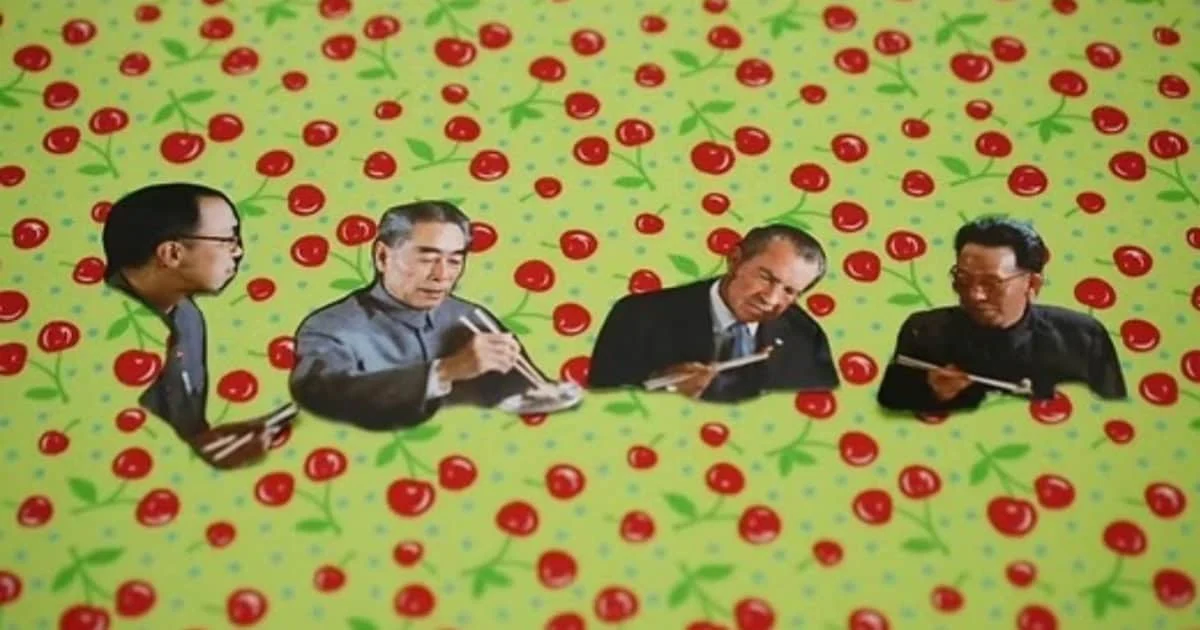
While the immigrant experience through the lens of food is a well-trodden path in cinema, Yinan Wang’s Thick & Sweet distinguishes itself by offering a fresh and artistically innovative interpretation. Instead of presenting a straightforward documentary about Yen Ching, a now-defunct Chinese restaurant in Milwaukee that served as the film’s focal point, Wang employs a distinctive collage technique. He masterfully interweaves archival footage from old films, television series, and vibrant pop art imagery, creating a playful yet incisive exploration of cultural fusion and identity. By juxtaposing American pop culture with traditional Chinese culinary practices, Wang constructs an "emotional ethnography" that is both accessible and critically astute, offering a lightweight yet sharp examination of the immigrant journey.
A Collage of Memory and Irony
The film’s distinctive collage-based approach, while seemingly an accessible method for injecting creative flair into what can be described as a "video essay," demands a high degree of curatorial skill and editing precision. Wang’s execution of this technique in Thick & Sweet is testament to his meticulous craftsmanship. True to its evocative title, the film centers on General Tso’s chicken, a quintessential American Chinese dish, as a potent symbol of Chinese immigrant identity in the United States. This choice is laden with irony, a sentiment amplified by Wang’s deliberate pairing of a culinary segment showcasing the preparation of General Tso’s chicken with archival footage of Richard Nixon’s historic 1972 visit to China. In this juxtaposition, Nixon’s voice can be heard expressing his preference for Americanized Chinese food over the more authentic, and to his palate, unfamiliar, dishes he encountered in China. This historical anecdote poignantly illustrates the long-standing tension between authentic Chinese cuisine and its adapted American iterations.
Further complicating the narrative of perception and prejudice, Wang includes a clip from "The Detectress," a 1919 silent film. This short, rife with racial stereotypes, depicts a woman discovering a puppy in her Chinese restaurant meal. The disturbing resonance of this century-old depiction of prejudice is palpable; even over a hundred years later, harmful and unfounded accusations of Chinese people consuming cats and dogs persist, highlighting the enduring nature of xenophobia and misinformation. The inclusion of such disparate elements—culinary creations, presidential diplomacy, and antiquated racist tropes—creates a rich tapestry of interwoven narratives.
Deconstructing Assimilation and Discrimination
Wang’s meticulous selection of archival footage is both deliberate and pointed, effectively capturing the multifaceted nature of the Chinese immigrant experience. On one hand, the film visually represents the compromises and sacrifices Chinese immigrants often made to their culinary traditions in the pursuit of assimilation into American society. This includes the adaptation of recipes to suit American palates, the very process that led to the creation of dishes like General Tso’s chicken. On the other hand, the film unflinchingly confronts the historical legacy of misunderstanding, prejudice, and discrimination that Chinese food culture has encountered in the American landscape.
Despite the weighty themes, Wang maintains a remarkably light and often ironic tone throughout the film, using humor as a vehicle to unpack the complex struggles faced by Chinese immigrants. However, this playful facade occasionally gives way to moments of profound discomfort. A close-up shot of lips slicked with sweet and sour sauce, for instance, leaves a lingering sense of unease. This visceral imagery evokes the subtle nausea of pervasive discrimination and the profound weight of hardship that has been carried across generations. The film’s ability to elicit both laughter and introspection is a testament to Wang’s directorial prowess.
The artistic choices in Thick & Sweet extend beyond the thematic to the technical execution of its "video essay" format. The seemingly effortless blending of diverse visual and auditory materials is the result of rigorous editing. Wang’s approach is characterized by its creativity and expansive scope. He masterfully pairs disparate images with voice-overs from familiar television programs, generating unexpected comedic effect. Furthermore, he juxtaposes contrasting visual sequences that address the same thematic concerns but with entirely different tones, thereby offering fresh perspectives and prompting deeper reflection. Each piece of visual material is employed with precision and purpose. The film skillfully integrates nearly twenty distinct video segments into a runtime of less than fifteen minutes, with each segment contributing meaningfully to the overall narrative and seamlessly transitioning into the next. This cohesive yet dynamic editing style results in a cinematic experience that simultaneously entertains and provokes thought.
A Legacy of Hardship and Memory
The film culminates in a poignant sequence depicting the demolition of the Yen Ching restaurant in reverse. This visual metaphor, accompanied by the relentless ticking of clocks and the owner’s voice counting the years he spent in the United States—"Seven, eight, nine, ten, eleven, twelve"—evokes a profound sense of time, labor, and enduring hope. This imagery powerfully encapsulates the arduous journey of hard work, the protracted wait for legal status, and the persistent pursuit of the American dream. In stark contrast to the often stereotypical and generalized portrayals of Chinese Americans in mainstream popular culture, the Yen Ching restaurant, as captured by Wang, represents something far rarer and more precious: an authentic and deeply personal account of a shared, yet frequently overlooked, collective memory.
The inclusion of Thick & Sweet in the Chinese Film Festival Hamburg 2026 underscores its significance as a contemporary work of art that contributes to a broader dialogue about diaspora, identity, and cultural representation. The festival, typically held annually or biennially, aims to showcase the diversity and evolution of Chinese cinema, providing a platform for both established and emerging filmmakers to present their work to an international audience. The 2026 edition, with Wang’s film as a notable selection, is anticipated to highlight themes of cultural adaptation, historical memory, and the evolving global identity of Chinese communities.
Broader Implications and Cultural Significance
The critical acclaim and selection of Thick & Sweet for such a prominent festival suggest a growing interest in nuanced and artistically driven narratives that explore the immigrant experience. Wang’s innovative approach, particularly his use of collage and irony, challenges viewers to engage with complex issues of cultural assimilation, xenophobia, and the construction of identity in a globalized world. The film’s success can be seen as a testament to the power of personal storytelling to illuminate universal human experiences.
The implications of Wang’s work extend beyond the realm of film criticism. By centering the narrative on food and the cultural artifacts surrounding it, Thick & Sweet contributes to a deeper understanding of the Chinese American experience, moving beyond simplistic stereotypes. The film implicitly advocates for greater cultural literacy and empathy, encouraging audiences to recognize the multifaceted realities of immigrant lives. Furthermore, its artistic merit and critical engagement with themes of identity and belonging position it as a significant cultural artifact, offering valuable insights into the ongoing evolution of Chinese diaspora narratives in the 21st century. The film’s success at festivals like the Chinese Film Festival Hamburg 2026 also signals a growing international appreciation for diverse cinematic voices and their ability to foster cross-cultural understanding.