


The 2024 Udine Far East Film Festival (FEFF) is set to captivate audiences with the premiere of The Shadow’s Edge, a highly anticipated crime thriller that marks a significant departure into darker, more intricate territory for director Larry Yang. Following his critically acclaimed 2023 offering, Ride On, Yang reunites with legendary action star Jackie Chan, delivering a film that, while distinct in its tone, echoes the affectionate and nostalgic homage to Hong Kong action cinema and Chan’s illustrious career that characterized their previous collaboration. This latest venture sees Chan sharing the screen with another titan of Asian cinema, Tony Leung Ka-fai, who delivers a commanding and chilling performance as the film’s enigmatic antagonist, the titular Shadow. The film’s screening at the esteemed Udine festival, a cornerstone event for showcasing East Asian cinema to a global audience, underscores its potential impact and artistic merit.
A New Era of High-Tech Crime Emerges in Macau
The Shadow’s Edge plunges viewers into the glitzy, yet morally ambiguous, landscape of Macau, a former Portuguese colony now synonymous with its sprawling casino complexes and burgeoning digital economy. The narrative centers on a sophisticated new syndicate of thieves, comprised of masters of disguise and highly skilled operatives, led by the former intelligence officer Fu Lang-seng, chillingly embodied by Tony Leung Ka-fai. Known universally by his moniker, "Shadow," Fu orchestrates a daring and meticulously planned heist that sets the film’s relentless pace.
The film opens with a breathtaking sequence that immediately establishes the stakes and the crew’s formidable capabilities. In a display of technological prowess and audacious execution, the syndicate successfully infiltrates a high-security location to steal a critical notebook containing a crypto key. Their subsequent raid on Macau Tower proves equally successful, allowing them to access and abscond with an astonishing HK$1.5 billion in digital assets. However, this meticulously planned operation takes a critical turn when, against Shadow’s explicit orders, the syndicate members decide to seize the entire sum. This impulsive act triggers a high-speed police chase, culminating in their escape but not before a fleeting glimpse of Fu’s face is captured by surveillance cameras, inadvertently providing the authorities with a crucial, albeit brief, lead. This initial act of defiance not only propels the plot forward but also introduces the inherent tension and internal friction within Shadow’s meticulously constructed criminal enterprise.
The Old Guard Versus the New Threat: A Surveillance Showdown
The audacious heist and the brief exposure of Shadow’s identity leave the Macau police department in a state of frustrated urgency. Faced with a highly sophisticated and elusive adversary, they turn to a seasoned, albeit retired, surveillance expert: Wong Tak-chong, portrayed by the iconic Jackie Chan. Wong, a proponent of traditional, ground-level investigative techniques over the burgeoning reliance on advanced technology, is tasked with identifying Shadow and dismantling his network.
Wong’s approach is characteristically hands-on. He assembles and personally trains a new generation of recruits, a young and eager task force dedicated to meticulously scouting Macau’s labyrinthine streets and hidden alleys. Among these promising cadets is He Qiuguo, the daughter of Wong’s late partner. Wong has maintained a quiet, paternalistic watch over He Qiuguo for years, a subtle undercurrent of loyalty and unspoken obligation that adds a personal dimension to his involvement in the case.
Meanwhile, the pressures of leading such a high-stakes operation begin to weigh on Fu Lang-seng. His control over his crew starts to fray as internal suspicions arise. Notably, the twin brothers Hei Wong and Hei Mong, both portrayed by Ci Sha, become the subject of intense scrutiny, with whispers of betrayal casting a shadow over their loyalty to Shadow. This internal conflict within the criminal organization adds another layer of complexity to the unfolding narrative, hinting at potential vulnerabilities that Wong and his team might exploit.
The Allure of Surveillance: Echoes of Cinematic Predecessors
The Shadow’s Edge taps into a compelling cinematic trope: the inherent drama of surveillance. Films that explore this theme possess a unique ability to resonate with audiences by tapping into deeply ingrained anxieties and fascinations surrounding privacy, observation, and the constant interplay between secrecy and exposure. This dynamic inherently fuels gripping storytelling, as evidenced by seminal works such as the Hong Kong classic Infernal Affairs and Eye in the Sky. The latter, a 2006 film that masterfully depicted undercover operatives and moles engaged in a constant game of cat-and-mouse, famously influenced the genre with its distinctive surveillance aesthetic, heightening the pervasive sense of paranoia.
Significantly, The Shadow’s Edge is directly inspired by the 2006 film Eye in the Sky. This connection is not merely thematic; it is also deeply rooted in casting. Tony Leung Ka-fai reprises his role as the villain, a character in Eye in the Sky known as Hollow Man. The filmmakers have subtly woven this continuity into the narrative, posing the tantalizing question of whether the Shadow in The Shadow’s Edge is indeed the same individual who met a dramatic end in Eye in the Sky. Could he have survived and, much like a phoenix, risen from the ashes of his previous downfall? While the film keeps this potential link tantalizingly ambiguous, it undeniably leverages Leung’s formidable talent for portraying complex and menacing villains, a reputation he uphاث solidified throughout his career. His presence in The Shadow’s Edge promises a compelling antagonist, and early critical reception suggests he does not disappoint.
Macau as a Character: A Fusion of Old and New
Despite the film’s impressive, high-octane opening sequence showcasing a whirlwind of high-tech thievery, the most compelling moments in The Shadow’s Edge often lie in its more grounded, low-tech confrontations. The narrative truly shines when Jackie Chan and Tony Leung engage in a classic cat-and-mouse game, a testament to their veteran acting prowess and the film’s strategic embrace of traditional espionage.
The choice of Macau as the film’s primary setting is not incidental; it is integral to achieving this nuanced effect. The city’s distinctive dichotomy—its charming, historic old town juxtaposed against its gleaming, ultra-modern casinos and skyscrapers—mirrors the inherent contradictions present within both the plot and the characters themselves. This visual contrast provides a fertile ground for the story to unfold convincingly. It seamlessly accommodates both the extravagant cryptocurrency heist, a symbol of the new world, and the old-school surveillance and tailing techniques that play out in the Portuguese-style downtown areas, a deliberate and effective nod to the aesthetic of classic Hong Kong cinema. The city itself becomes a character, embodying the clash between tradition and modernity, a theme that permeates the film’s core.
Generational Dynamics and Dual Action Spectacles
The thematic juxtaposition of the old world and the new is further amplified through the characters and their intricate dynamics. Jackie Chan portrays a seasoned, retired officer who, despite his emeritus status, possesses an invaluable reservoir of knowledge and experience to impart to his younger recruits. Conversely, Tony Leung’s character, Shadow, navigates the complexities of the digital underworld, even admitting to a limited understanding of cryptocurrency, yet consistently demonstrates an uncanny ability to remain one step ahead of his pursuers and his own crew. Both characters, in their distinct ways, serve as paternal figures to their respective protégés, guiding them through their respective journeys.
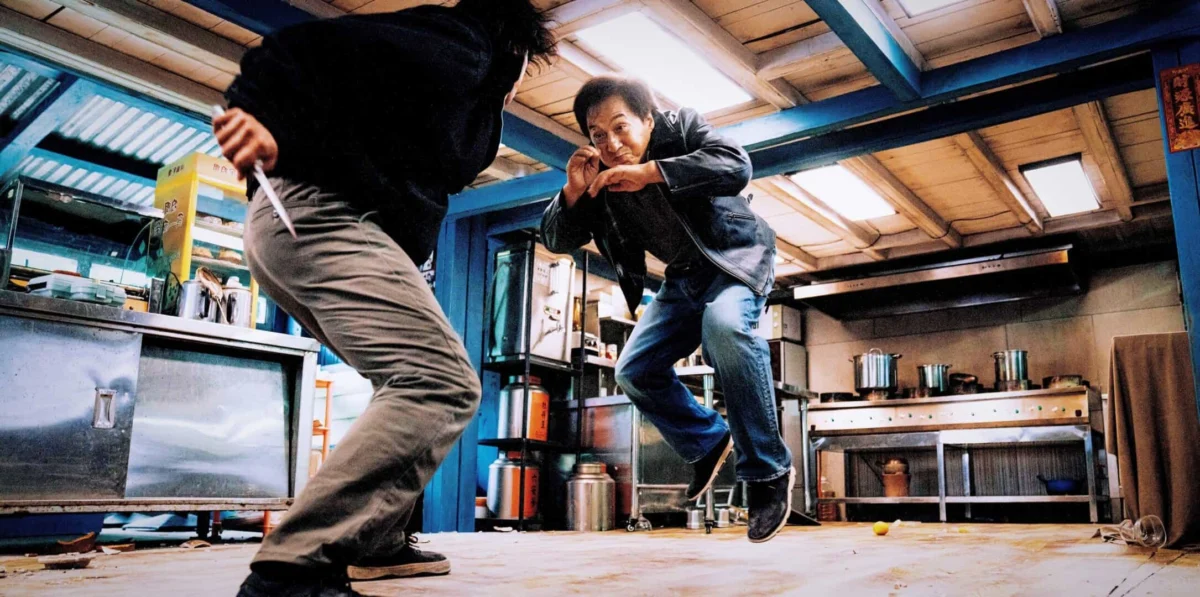
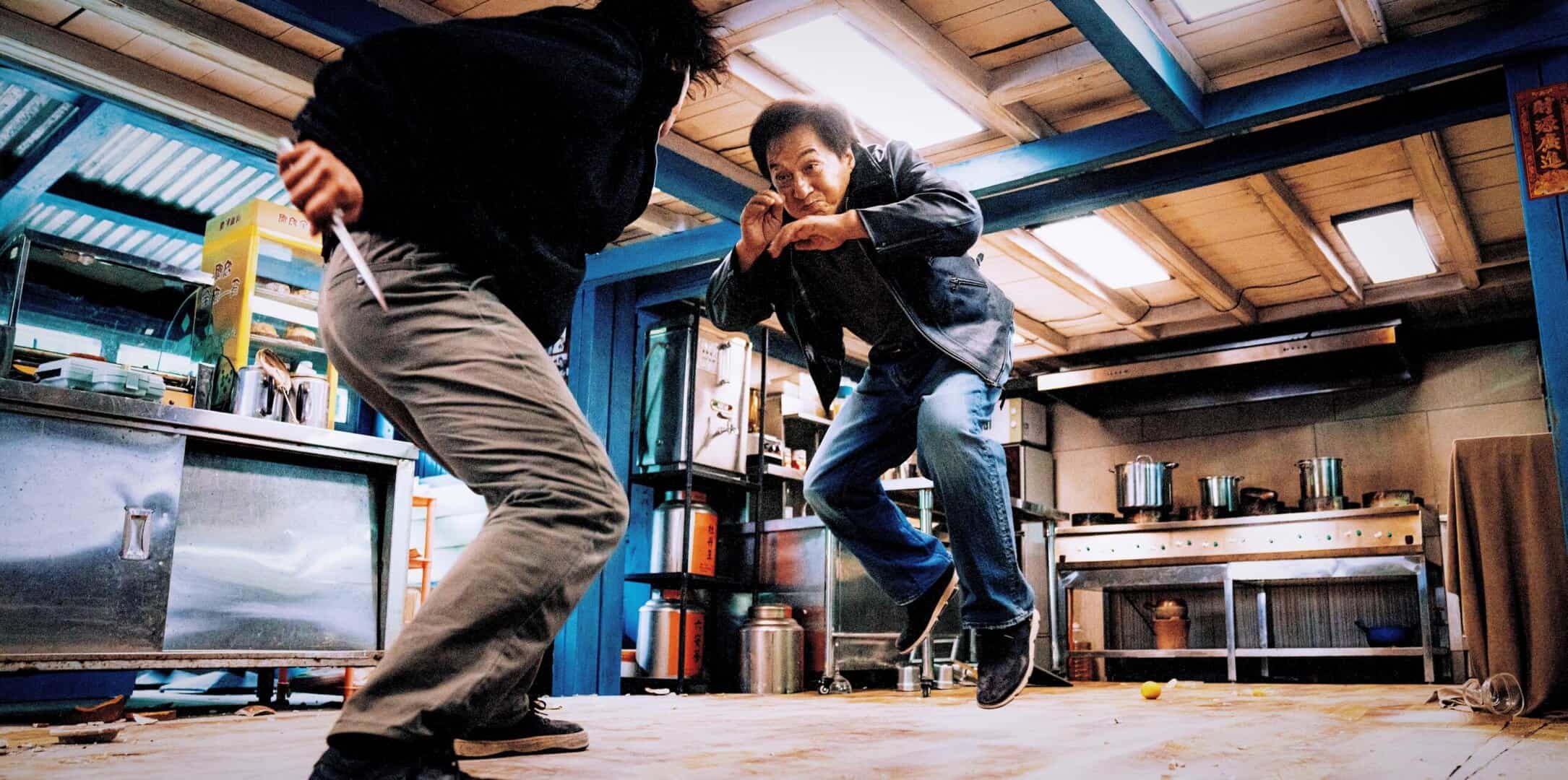
Beyond its thematic depth, The Shadow’s Edge delivers a substantial dose of action, presented in two distinctly contrasting forms. On one hand, the film features flamboyant, tech-driven sequences characterized by their over-the-top spectacle and state-of-the-art visual effects, reflecting the cutting edge of modern filmmaking. On the other hand, it offers audiences the pure, unadulterated pleasure of good old-fashioned scuffles. In these moments, Jackie Chan unleashes his signature brand of kinetic action, characterized by the delightful, often comedic, destruction of windows, doors, and commercial establishments. A standout sequence, such as the fight scene set within a hotel laundry, evokes the visceral intensity and kinetic energy of the Shaw Brothers era, a cherished period in martial arts cinema history.
A Return to Form and Lingering Considerations
At 71 years old, Jackie Chan demonstrates a remarkable return to form, proving that his legendary fight choreography and on-screen charisma remain undimmed. His fight scenes continue to be a source of immense entertainment, and the film’s successful blend of his signature comedic touch with the gritty, suspenseful plot proves to be surprisingly effective.
However, the film is not without its minor imperfections. The narrative occasionally leans towards excessive complexity, incorporating a few twists that, while intended to heighten suspense, may feel somewhat convoluted to some viewers. Furthermore, with a runtime of 2 hours and 20 minutes, a length increasingly common for contemporary blockbusters, The Shadow’s Edge can, at times, feel a bit protracted. These elements collectively contribute to an experience that might, at certain junctures, feel slightly heavy. Nevertheless, the film’s inherent energy and the enduring charm of its lead actors generally propel it through these moments with considerable momentum.
In summation, The Shadow’s Edge successfully delivers a solid, crowd-pleasing spectacle that adeptly balances thrilling action, engaging humor, and palpable suspense. As is customary with Jackie Chan’s productions, audiences are encouraged to stay through the closing credits to enjoy the trademark outtakes, which offer a delightful glimpse behind the scenes, and to catch a small, rewarding post-credit bonus scene. The film’s premiere at the Udine Far East Film Festival marks its official introduction to the international cinematic landscape, poised to captivate audiences with its blend of classic Hong Kong action sensibilities and modern crime thriller intrigue.