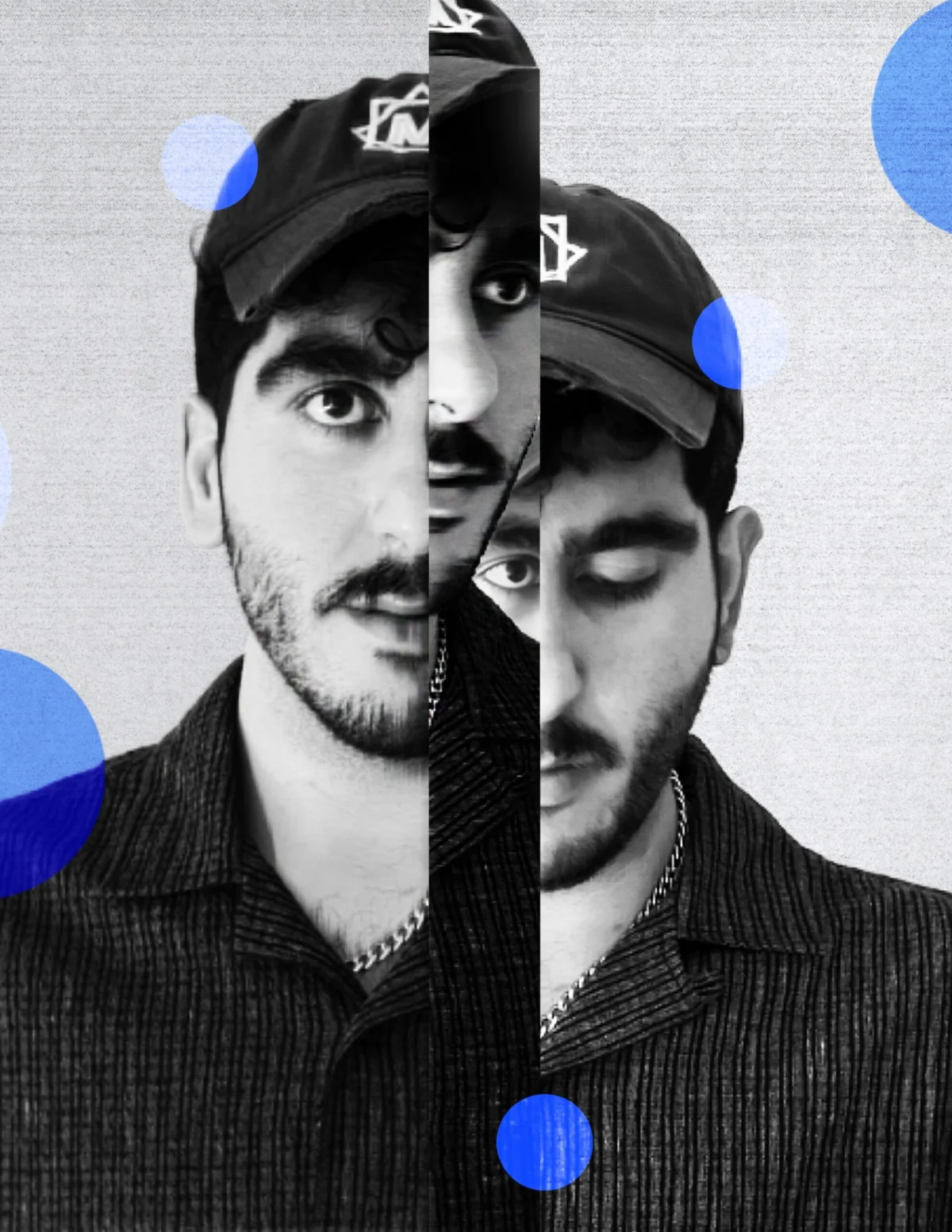
At 1:00 am during the holy month of Ramadan, while most of New York City settles into a quiet lull, a Yemeni coffee shop in the heart of the metropolis remains a vibrant hub of activity. Inside, Palestinian-American journalist Ameer Al-Khatahtbeh sits among a crowd of patrons, the atmosphere thick with the aroma of spiced lattes and the energetic hum of post-prayer conversation. This setting, characterized by high caffeine levels and communal warmth, serves as a makeshift newsroom for the 27-year-old media entrepreneur. When his phone vibrates with a notification of a breaking military strike by Israel on Tehran, the social atmosphere momentarily fades. Al-Khatahtbeh immediately transitions into his role as a digital news gatekeeper, drafting a concise post for his millions of followers before excusing himself to monitor the unfolding geopolitical crisis from his home.
This sequence of events is a microcosm of Al-Khatahtbeh’s life over the past seven years. As the founder and de facto editor-in-chief of @Muslim, he oversees a digital empire that boasts more than 12 million followers across various social media platforms, including a staggering 6.7 million on Instagram alone. His journey from a Rutgers University student to a major media influencer highlights a significant shift in how news is consumed, verified, and distributed within the global Muslim community and beyond.
The Genesis of @Muslim: A Response to Geopolitical Turbulence
The origins of @Muslim are deeply rooted in the political climate of the United States during the late 2010s. In 2017, during Donald Trump’s first term as president, the administration introduced Executive Order 13769, colloquially known as the "Muslim Ban." This policy significantly restricted travel from several Muslim-majority countries, including Yemen and Iran. At the time, Al-Khatahtbeh was a student at Rutgers University, pursuing a degree with aspirations in entertainment journalism. However, the lived experiences of his Yemeni and Iranian roommates, who were directly impacted by the travel restrictions, shifted his focus toward hard news and advocacy.
Al-Khatahtbeh observed a critical communication gap. While legacy media outlets covered the legal and political ramifications of the ban, there was a lack of a centralized, culturally sensitive platform that could inform Muslim students about how these policies affected their safety and status on campus. He noted that universities, while often well-intentioned, were sometimes ill-equipped to provide the nuanced protection and information that vulnerable students required. Recognizing that traditional media was failing to reach this specific demographic, Al-Khatahtbeh identified an opportunity to create a dedicated space for "Muslim media"—a platform that prioritized the concerns and perspectives of the global Ummah.
Chronology of Growth: From Campus Initiative to Global Powerhouse
The trajectory of @Muslim reflects the broader evolution of social media as a primary news source for younger generations. The platform was officially launched on February 15, 2019. Leveraging his background in social media management, Al-Khatahtbeh applied professional journalistic standards—reminiscent of the visual storytelling pioneered by outlets like Vice News—to topics specifically relevant to the Muslim community.
By his junior year of college, the account had gained 50,000 followers. However, the true turning point occurred in 2020, coinciding with the global COVID-19 pandemic. As the world entered lockdown, traditional communal gatherings for Ramadan and Eid al-Fitr were suspended. Mosques were closed, and the social fabric of the community moved almost entirely online. Al-Khatahtbeh recognized this shift and increased his publishing frequency, transforming @Muslim into a digital mosque and community center. By the time he graduated in 2020, the platform had grown to 250,000 followers.
The subsequent four years saw exponential growth. By 2024, the platform’s reach extended to over 12 million people. This growth was fueled by a "digestible" content strategy designed to be accessible to a wide demographic—from fifth-grade students to "boomer" generations. This formula of high shareability combined with sharp, news-oriented focus allowed @Muslim to compete with traditional news giants in terms of engagement and reach.
Data and Demographics: The Power of Niche Media
The success of @Muslim is supported by broader trends in news consumption. According to data from the Pew Research Center, a growing percentage of adults under the age of 30 regularly get their news from social media platforms like Instagram and TikTok. For the global Muslim population, which is estimated at approximately 1.9 billion people and is characterized by a significant youth bulge, the demand for digital-first news is particularly high.
Al-Khatahtbeh’s platform fills a void left by mainstream Western media, which has historically been criticized for its "Orientalist" or biased framing of Muslim issues. By providing a platform where Muslims are the subjects and the storytellers, @Muslim has established a level of trust that legacy institutions often struggle to achieve. The platform’s ability to secure high-profile interviews with figures such as actors Riz Ahmed and Mo Amer, activist Motaz Azaiza, and politician Zohran Mamdani underscores its legitimacy as a major player in the modern media landscape.
The Editorial Strategy: Balancing Memes and Hard News
One of the defining characteristics of @Muslim is its ability to pivot between lighthearted cultural commentary and serious geopolitical reporting. Al-Khatahtbeh acknowledges that this balance was achieved through extensive trial and error. The platform utilizes "Muslim memes" and trending TikTok topics to maintain high engagement levels, which in turn provides a springboard for more serious discussions.
A notable example of this strategy was the platform’s coverage of cultural double standards. When pop star Billie Eilish discussed her preference for modest clothing, she was widely celebrated in mainstream media. @Muslim used this moment to launch a "sharp conversation" regarding the contrasting treatment of Muslim women who wear the hijab, who are frequently portrayed as oppressed for making similar sartorial choices. This ability to link pop culture to systemic social issues has resonated deeply with Gen Z followers, who value authenticity and social justice.
The Burden of Connectivity: A 13-Hour Workday
The role of a digital news leader in a 24/7 news cycle comes with a significant personal toll. Al-Khatahtbeh admits to an average of 13 hours of screen time per day, a statistic he views with a mix of professional pride and personal embarrassment. In an era where information travels at the speed of a "push notification," the pressure to be the first to report is immense.
"I have to stay in the know," Al-Khatahtbeh states, noting that he receives news simultaneously with his audience but bears the added responsibility of framing it for millions. This constant connectivity is essential for a platform that serves as a primary news source for a global community that is often at the center of international conflict and political debate. Whether it is a strike in Tehran or a legislative change in Europe, the @Muslim audience expects immediate, culturally contextualized reporting.
Broader Impact and Industry Implications
The rise of @Muslim signifies a broader transformation in the journalism industry. It represents the "democratization" of news, where individual creators can amass larger audiences than established newsrooms by focusing on niche, underserved communities. This shift has several implications:
- Representation: Platforms like @Muslim ensure that the narrative surrounding the Muslim community is not controlled solely by external actors. This "reclaiming of the narrative" is a crucial step in combating Islamophobia and misinformation.
- Crisis Communication: During times of international crisis, such as the ongoing conflicts in the Middle East, digital platforms provide real-time updates and ground-level perspectives that may be filtered or delayed in traditional broadcasts.
- Market Potential: The growth of @Muslim highlights the economic and social power of the "halal economy" and the Muslim consumer, a demographic that is increasingly influential in tech, media, and entertainment.
Future Outlook: The Evolution of Muslim Media
As Ameer Al-Khatahtbeh continues to navigate the complexities of digital journalism, the future of @Muslim appears focused on expansion and institutionalization. While it began as a social media account, it has evolved into a comprehensive media brand that challenges the traditional definitions of a news outlet.
The success of @Muslim serves as a blueprint for other marginalized or niche communities looking to build their own media ecosystems. By prioritizing shareability, cultural nuance, and a "digital-first" mindset, Al-Khatahtbeh has not only created a successful business but has also provided a global community with a voice in an increasingly fragmented information age. As he returns home from the coffee shop to watch the news unfold, he does so not just as a spectator, but as a primary architect of the modern Muslim narrative.