

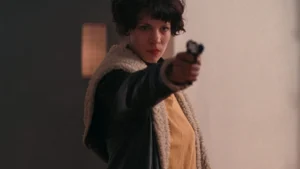

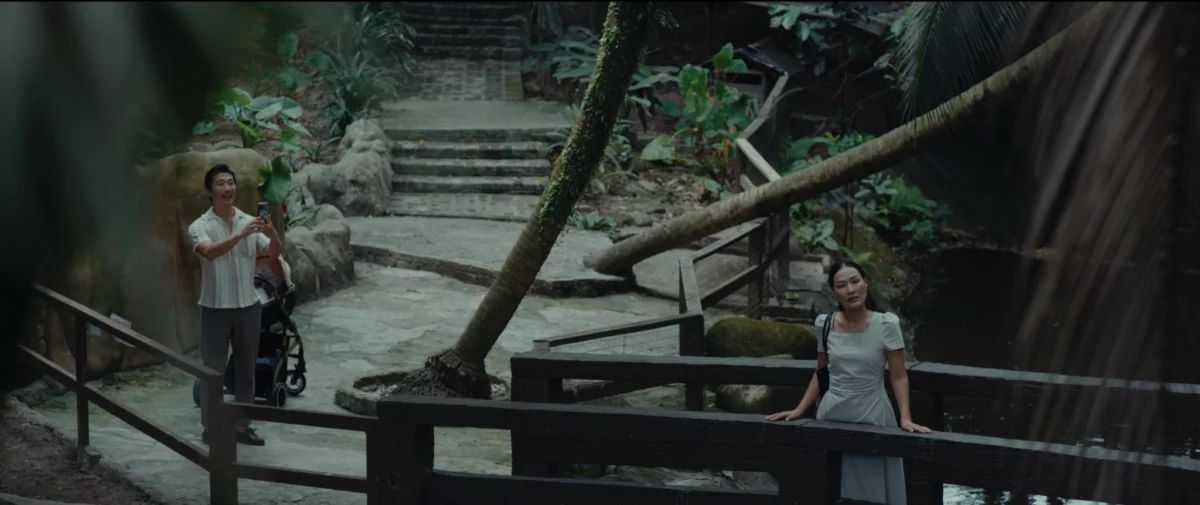
The Penthouse, an English-language psychological drama and thriller from acclaimed Sakha filmmaker Stepan Burnashev, has emerged as a significant international production, shot entirely in the vibrant metropolis of Kuala Lumpur. This 102-minute cinematic endeavor, co-produced by Burnashev and Syarizan Md Isa under the banner of Saidam Baryl, features a compelling lead cast including Soji Arai, recognized for his impactful roles in the critically acclaimed television series "Pachinko" and "Tokyo Vice," and Irina Mikhailova, who previously collaborated with Burnashev on his noteworthy film "Our Winter." The film delves into themes of psychological distress, cultural adaptation, and the insidious nature of domestic tension, all set against the backdrop of a seemingly idyllic, yet ultimately unsettling, urban environment.
A New Beginning in a Luxurious Cage
The narrative centers on Saina and David, a couple seeking to forge a fresh start for themselves and their infant child by relocating to a lavish penthouse apartment in the heart of Kuala Lumpur. Their move is intended to be an escape from the burdens and complexities of their past lives, a sanctuary where they can build a future unhindered by former troubles. However, the opulence of their new home soon becomes a source of profound unease for Saina. She begins to experience unsettling phenomena: unexplained noises that echo through the spacious rooms and fleeting shadows that dart at the periphery of her vision. These experiences are not isolated incidents but rather a pervasive and growing sense of dread that permeates their luxurious dwelling.
Saina’s growing conviction that their apartment harbors something malevolent leads her to confide in her husband, David. A successful businessman, David dismisses her fears, attributing them to the understandable anxieties of new motherhood, compounded by postpartum depression, exhaustion, and the inherent stress of adjusting to a new life and environment. His rationalization, while perhaps well-intentioned, serves to further isolate Saina, leaving her feeling unheard and increasingly alone in her perceived reality. This initial disconnect between Saina’s subjective experience and David’s objective, dismissive response sets the stage for the escalating psychological conflict that defines the film.
Echoes of Heritage and Escalating Disturbances
As the disturbances within the penthouse intensify, Saina, drawing upon her Yakut heritage, resorts to traditional practices in an attempt to restore peace and harmony to her home. She performs a cleansing ritual, leaving offerings of food for the spirits, a practice deeply rooted in her ancestral beliefs. This act, intended to appease unseen forces, paradoxically leads to a more direct and terrifying encounter. She becomes convinced that she is being haunted by the ghost of a young girl, a spectral presence that solidifies her belief in an invisible entity’s dominion over their opulent sanctuary.
David’s reaction to Saina’s escalating distress is not one of empathy or concern but rather of escalating control. He adamantly refuses her pleas to relocate, viewing her growing obsession with the paranormal as a threat to their carefully constructed facade. He begins to systematically isolate her from her support network of friends and family, framing her behavior as a public embarrassment that could damage their social standing and his professional reputation. This manipulative tactic further erodes Saina’s sense of security and autonomy. The situation takes a more complex turn when a psychotherapist, brought in by David, diagnoses Saina with a mental disorder. This clinical assessment casts doubt on Saina’s own perceptions, forcing her to question her sanity while simultaneously fueling a burgeoning suspicion that her husband may be more deeply involved in the seemingly supernatural events than he lets on. This dualistic struggle – her battle against an external, possibly supernatural, threat and her internal fight to discern reality from delusion – forms the crux of the film’s psychological tension.
A Director’s Artistic Evolution and Cultural Synthesis
Stepan Burnashev’s decision to shift his directorial gaze from his native Yakutia to the dynamic landscape of Malaysia marks a significant point in his artistic trajectory. "The Penthouse" represents a deliberate attempt to adapt his filmmaking style to a Southeast Asian aesthetic, exploring new thematic and visual territories. This ambitious undertaking involves integrating elements that resonate with the region’s rich cultural tapestry, including the pervasive presence of folklore and spiritual beliefs, which are skillfully woven into the fabric of the narrative. The film’s exploration of the supernatural is not merely a plot device but is intrinsically linked to the characters’ psychological states and cultural backgrounds.
The horror elements are effectively embedded within the narrative, amplified by the central question that underpins the entire story: are the apparitions Saina encounters genuine supernatural entities, or are they manifestations of her fractured psyche? This ambiguity creates a palpable sense of dread and keeps the audience engaged in a constant state of uncertainty. Burnashev masterfully blends genres, weaving together horror, psychological drama, family drama, and a subtle undercurrent of crime that surfaces towards the film’s conclusion. While this ambitious amalgamation contributes to the film’s unique identity, the review suggests that not all of these disparate elements achieve equal resonance or impact, indicating areas where the narrative might have benefited from tighter integration or further development.
The Nuances of Adaptation and Contemporary Relationships
The film adeptly explores the profound challenges individuals face when adapting to foreign countries and cultures. Saina’s inability to seamlessly integrate into her new environment and her repeated attempts to reconnect with her roots highlight the deep-seated psychological impact of cultural displacement. David’s unsupportive stance exacerbates these difficulties, underscoring the crucial role of a partner’s empathy and understanding in navigating such transitions. His pragmatic, career-driven focus stands in stark contrast to Saina’s emotional and spiritual needs, creating a significant rift in their relationship.
Furthermore, "The Penthouse" delves into the complexities of modern relationships, particularly in an era dominated by technology and the relentless pace of life. The film implicitly critiques how these factors can alter the dynamics of intimacy and connection, making it increasingly challenging for couples to truly understand and support one another. The pressures of raising a child within this contemporary context are also examined, adding another layer of strain to Saina and David’s already precarious union. The film suggests that the idealized image of a perfect family life, often projected through social media and societal expectations, can be a fragile construct easily shattered by underlying marital discord and individual struggles.
Performances Under Scrutiny: Strengths and Limitations
Irina Mikhailova delivers a commendable performance as Saina, effectively conveying her character’s descent into despair, her paralyzing fear, and her eventual emergence of resolve. She embodies the emotional turmoil of a woman grappling with perceived supernatural threats and the erosion of her mental stability. However, the review notes that her delivery in English, the film’s primary language, occasionally lacks the natural fluency and conviction of a native speaker, which can create moments of slight detachment for the audience. Burnashev’s decision to cast Mikhailova as the film’s narrator is also questioned, with the suggestion that this narrative choice may not be the most effective means of engaging the viewer. Despite these reservations, Mikhailova’s on-screen chemistry with Soji Arai is described as convincing, adding a crucial layer of believability to their fraught relationship.
Soji Arai, a seasoned actor with a growing international profile, proves equally effective in his portrayal of David. His character undergoes a significant transformation throughout the film, and Arai navigates these shifts with nuance and skill, effectively portraying David’s initial pragmatism, his growing frustration, and the subtle hints of something more complex beneath his composed exterior. His performance adds depth to the film’s exploration of patriarchal control and the potential for manipulation within domestic partnerships.
Visual Storytelling and Pacing: A Double-Edged Sword
The cinematography, helmed by Danila Goryunkov, plays a pivotal role in shaping the film’s atmosphere and thematic resonance. Goryunkov masterfully captures the opulent interiors of the penthouse, often rendering the luxurious space as a claustrophobic prison, emphasizing Saina’s entrapment. In contrast, the exterior shots of Kuala Lumpur are presented with a grounded realism, grounding the fantastical elements within a recognizable urban environment. While there are instances where the lighting is deemed excessively bright, the overall visual aesthetic is praised for its contribution to the film’s cohesive atmosphere. The editing, characterized by a mid-tempo pace, complements the film’s overall mood and narrative style, allowing the psychological tension to build gradually.
Narrative Inconsistencies and a Concluding Quandary
Despite the film’s rich thematic context and an intriguing initial premise, the narrative begins to unravel as the story progresses. The review points to the emergence of unrealistic plot developments and noticeable plot holes, which detract from the film’s credibility and impact. The introduction of a detective character towards the film’s climax is noted as being somewhat underdeveloped, suffering from less-than-stellar writing. This observation suggests that the film struggles to effectively integrate its crime thriller elements into the overarching psychological drama.
The film’s concluding act, which relies heavily on flashbacks to reveal the truth behind the unfolding events, is also identified as needing further refinement. While flashbacks can be a powerful narrative tool, their execution here is described as somewhat clunky, resulting in a conclusion that feels less impactful than it could have been. The editing during this critical final section is also critiqued for its lack of tightness, potentially hindering the emotional resonance of the revelations. This suggests that the film’s ambitious thematic scope may have outpaced its narrative execution in its final moments.
A Promising New Direction Despite Imperfections
While "The Penthouse" may not reach the same artistic heights as Burnashev’s previous acclaimed Sakha productions, it represents a decidedly hopeful step forward. The film serves as a testament to Burnashev’s enduring directorial prowess and marks a significant new beginning for both him and his leading actress, Irina Mikhailova. Their collaboration in this international venture demonstrates a willingness to explore new creative avenues and push artistic boundaries. Burnashev’s ability to craft compelling narratives and evoke strong performances remains evident, though the review suggests he requires more time to fully assimilate his distinctive directorial voice with the nuances of a Southeast Asian aesthetic. The film’s ambitious themes, strong performances, and evocative visuals, despite its narrative shortcomings, position it as a noteworthy entry in the psychological thriller genre and a promising indicator of future collaborations between the filmmakers. The film’s success in engaging with themes of cultural adaptation, mental health, and the complexities of modern relationships, even with its flaws, underscores its potential to resonate with a global audience and spark important conversations.