

The landscape of television awards administration is undergoing a period of profound restructuring, culminating in a high-stakes showdown at the Primetime Emmy Awards. As the Television Academy continues to refine its eligibility guidelines, the convergence of shifting rules, political pressures, and monumental changes in the late-night television ecosystem has set the stage for one of the most competitive and culturally significant races in Emmy history. The September 14 ceremony will not only crown the finest achievements in television production but will also serve as a barometer for an industry navigating unprecedented intersections of media ownership, regulatory scrutiny, and political discourse.
Evolving Academy Regulations and Rule Disruptions
The Television Academy manages an intricate awards apparatus, distributing approximately 100 craft and guest-acting awards during the Creative Arts Emmy ceremonies, followed by the marquee Primetime Emmy Awards broadcast. In recent years, the governing body has systematically overhauled its rulebook to address anomalies in how performers and programs are categorized.
Among the most impactful procedural adjustments for the current awards cycle is a regulation explicitly barring performers from securing guest-actor nominations for roles for which they have previously competed in lead or supporting categories. This adjustment immediately roiled the nomination process, notably resulting in the disqualification of Jon Hamm from consideration in the guest actor category for his performance in Apple’s The Morning Show. Because Hamm had previously earned a supporting actor nomination for the same character during the 2024 cycle, the streamer’s submission violated the updated terms—though Hamm retained eligibility in two separate categories.
While individual acting rules generate significant industry discussion, the restructuring of the variety series categories has created the most dramatic competitive shift. The history of the variety category has long been defined by structural instability. Established in 1951, the category was briefly bifurcated in the early 1970s to separate talk-driven formats like Johnny Carson’s The Tonight Show from sketch- and music-driven revues like The Carol Burnett Show.
For decades following the mid-1970s, however, the Academy maintained a single, unified category. This structure regularly produced starkly mismatched competition, pitting high-profile late-night network talk shows against alternative comedy programming, musical specials, and sketch series. By the mid-2000s, late-night talk show hosts including Stephen Colbert, Jimmy Fallon, Jimmy Kimmel, Conan O’Brien, and Jon Stewart heavily dominated the field, with Stewart’s The Daily Show eventually establishing a historic benchmark of ten consecutive victories.
To level the playing field, the Academy split the category in 2015 into distinct fields: Outstanding Variety Talk Series and Outstanding Variety Sketch Series. While sketch-centric programs like Inside Amy Schumer and Key & Peele claimed early victories, NBC’s Saturday Night Live soon established a six-year winning streak. Concurrently, HBO’s Last Week Tonight with John Oliver secured seven consecutive victories in the variety talk series category before being shifted to the scripted variety series tier in 2023, where it accumulated three additional statuettes.
For the current awards cycle, the Television Academy reversed course by merging the variety categories once again. This consolidation forces the historically dominant Last Week Tonight with John Oliver back into direct competition with network late-night staples and Saturday Night Live, generating an unpredictable clash of formats.
Chronology of Late-Night Industry Upheaval
The merging of the variety categories coincides with a turbulent period for late-night television, marked by high-profile cancellations, corporate restructuring, and direct confrontations between broadcasters, political figures, and regulatory bodies.
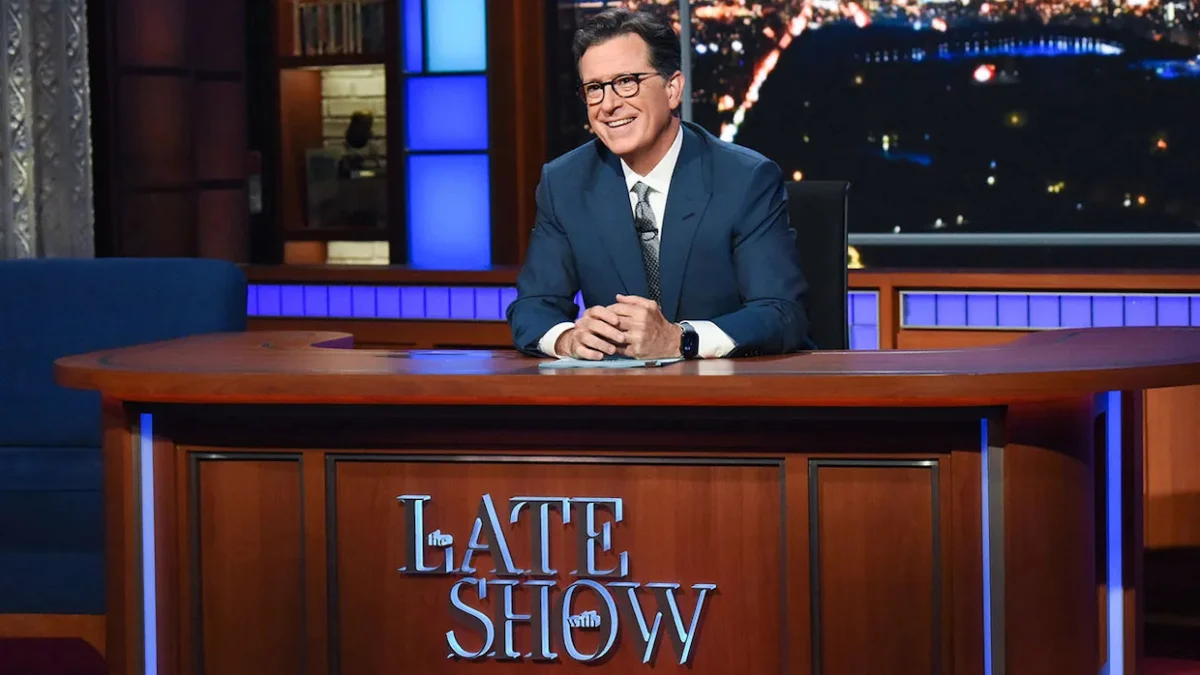
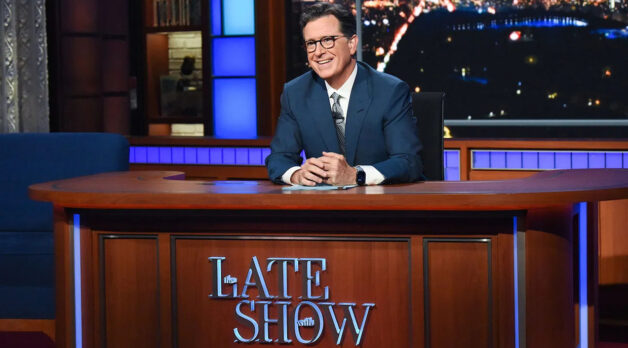
The disruption began to crystallize following corporate acquisitions within major media conglomerates. On May 21, CBS concluded the 11-season run of The Late Show with Stephen Colbert. The cancellation marked the end of a 33-year institutional presence for the franchise on the network, which originated with David Letterman’s tenure in 1993.
The decision followed the acquisition of CBS parent company Paramount by Skydance Media, led by David Ellison. While corporate leadership attributed the cancellation to financial realities—stating that the program was operating at an annual deficit of approximately $40 million—industry analysts and media critics questioned the timing and financial rationale. Observers noted that the cancellation coincided with years of sharp satirical critique directed at the Trump administration by Colbert, as well as perceived alignment between the Ellison leadership and the administration. Despite the abrupt termination, Colbert’s final season achieved significant cultural resonance, culminating in the program’s first-ever talk series Emmy win in September 2025 and an emotional farewell tour featuring prominent industry guests reflecting on the host’s departure.
The instability within the format deepened shortly thereafter when Jimmy Kimmel Live! was temporarily pulled from the airwaves on September 17. The suspension followed intense pressure from the Trump administration and Federal Communications Commission (FCC) Chairman Brendan Carr, triggered by remarks Kimmel delivered during an opening monologue regarding the assassination of political commentator Charlie Kirk.
Major broadcast groups, including Nexstar Media Group and Sinclair Broadcast Group, threatened to preempt the program across their ABC affiliate stations, placing the future of the long-running show in jeopardy. However, the suspension provoked immediate public backlash, widespread criticism from media advocacy groups, and consumer boycott threats. The intense public pressure forced a rapid corporate reversal, and Kimmel returned to the airwaves on September 23. The comeback episode delivered a series-record audience of 6.26 million linear viewers, while the return monologue generated over 26 million streams across digital and social media platforms.
Category Contenders and Competitive Analysis
The convergence of these events has transformed the consolidated variety category into a referendum on the cultural and political role of late-night television. Industry analysts suggest that voting members of the Television Academy may weigh these extraordinary circumstances when casting their ballots.
The Late Show with Stephen Colbert enters the race with considerable momentum. Voters may view the nomination window as a final opportunity to honor a foundational broadcasting institution and its host, while simultaneously registering an implicit critique of the corporate and political pressures that led to the program’s demise. The possibility of an acceptance speech from Colbert and his production team remains a focal point of anticipation for industry observers.
Jimmy Kimmel Live!, which has maintained a consistent presence in the broader variety category for over a decade without securing a win in the primary series field, stands as a prominent contender for the second position. The program’s resilience through regulatory and corporate disputes has heightened its profile among voters sympathetic to free-speech concerns within the broadcasting industry.
However, neither network program is guaranteed victory against established powerhouses. Last Week Tonight with John Oliver presents a formidable obstacle. Despite shifting category rules in prior years, Oliver’s HBO program has demonstrated enduring appeal among Academy voters due to its investigative reporting, structured comedic execution, and analytical depth.
Meanwhile, NBC’s Saturday Night Live continues to occupy a secure position within the upper tier of the category. Having celebrated its landmark 50th anniversary, the sketch comedy institution navigated structural changes during its 51st season, including the departure of fan-favorite cast member Bowen Yang. Despite these transitions, the program has maintained production momentum, leaning further into absurdist humor alongside its traditional political satire. The international expansion of the brand, highlighted by the debut season of SNL UK broadcast live from London, reinforces the enduring institutional influence of executive producer Lorne Michaels.
Rounding out the anticipated nominees is Comedy Central’s The Daily Data, which has sustained its satirical footprint under the hybrid model featuring Jon Stewart’s Monday night anchoring alongside a rotating roster of correspondents and guest hosts. Following the precedent set by prior iterations under Trevor Noah and the multi-host format, the program remains a predictable fixture in the fifth nomination slot.
Broader Implications for Television and Politics
The outcome of the 2026 Primetime Emmy Awards for Outstanding Variety Series carries implications that extend far beyond the entertainment industry. The race represents a distinct intersection of creative recognition, corporate media consolidation, and First Amendment discourse.
For liberal-leaning segments of the Academy membership, the ballot provides a structured mechanism to issue a collective statement regarding the autonomy of artistic expression and political satire. Conversely, the high-profile nature of the nominees ensures that the awards ceremony will remain a focal point of public attention, regardless of which program ultimately receives the statuette.
As the television industry prepares for the September 14 ceremony, the competition highlights the enduring tension between broadcast networks, political institutions, and the creative community. Whether voters choose to reward the institutional legacy of Colbert, the resilience of Kimmel, the analytical rigor of Oliver, or the sketch stability of Saturday Night Live, the resulting accolades will permanently mark a volatile and transformative era in American television history.