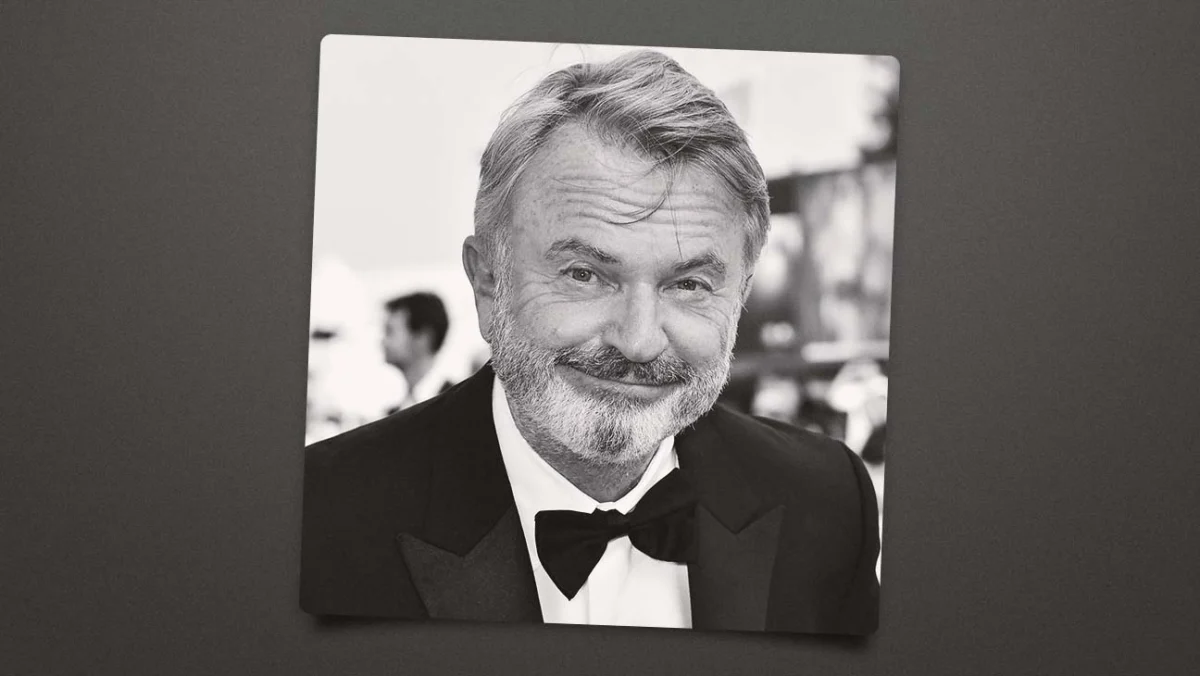
The world of cinema is mourning the loss of Sam Neill, the celebrated New Zealand-born actor whose distinguished career spanned over five decades, encompassing a remarkable range of roles from blockbuster hero to nuanced dramatic figure. Neill, known for his amiable demeanor, adventurous spirit, and profound versatility, passed away on Monday, July 13th, in Sydney, Australia, at the age of 78. His death, while sudden and unexpected, occurred with the dignity that characterized his life, surrounded by his whānau (family).
The news was officially conveyed through a poignant post on Neill’s verified Instagram account, which quickly resonated across global media outlets and with his legion of fans. The statement from his family read, "It is with immense sadness that the whānau of Sam Neill share the news of his passing on Monday 13th July, in Sydney Australia. Sam was surrounded by family and passed with the dignity that has characterised his whole life. The loss was sudden and unexpected but blessed by the fact that Sam remained cancer free." The family expressed profound gratitude to the staff at St Vincent’s Private Hospital for their exceptional care and requested privacy during this immeasurable time of grief, promising more details would be shared later.
A Recent Health Battle and Philosophical Outlook
Neill had openly shared his battle with angioimmunoblastic T-cell lymphoma, a rare and aggressive form of blood cancer, revealing his diagnosis in March 2023, though it had been discovered a year prior. This revelation came alongside the announcement of his memoir, Did I Ever Tell You This?, which he began writing as a way to occupy his mind during chemotherapy treatments. Despite the severity of his condition, Neill approached his health with characteristic candor and a philosophical perspective. In an interview with the TV news magazine Australian Story in October 2023, he articulated a profound acceptance of mortality, stating, "I’m not in any way frightened of dying. That doesn’t worry me. It’s never worried me from the beginning." However, he also expressed a poignant desire for more time: "But I would be annoyed, because there are things I still want to do." The family’s statement that he passed "cancer free" suggests a different, unforeseen cause for his sudden death, adding another layer of poignancy to his final months where he continued to live life fully and share his experiences.

From New Zealand Shores to Global Stardom: An Illustrious Career
Nigel John Dermot Neill was born on September 14, 1947, in Omagh, County Tyrone, Northern Ireland, while his New Zealander father, Dermot, was stationed there with the British Army. His English mother, Priscilla, brought a different cultural lineage to his upbringing. The family moved to New Zealand in 1955, where Neill spent his formative years. He attended boarding schools, developing an early interest in acting while studying at the University of Canterbury and later earning a degree in English literature from Victoria University. It was during this period he adopted the name "Sam," inspired by his love for Westerns and their characters. Before his acting career took off, Neill honed his craft behind the camera, spending six years as a director of shorts and documentaries with the New Zealand National Film Unit, a period he humorously described as an informal agreement to make "one film for the post office or the railways… and one for yourself."
His acting breakthrough came with Roger Donaldson’s 1977 thriller Sleeping Dogs, a seminal work often cited as the first color film made in New Zealand and a catalyst for the country’s distinctive "cinema of unease" movement. This early success propelled him into international recognition, notably in Gillian Armstrong’s Australian period drama My Brilliant Career (1979) opposite Judy Davis, which screened in competition at Cannes. This film, he noted, cemented his desire to make a living as an actor and ignited his enduring affection for Australia. His early international profile was further elevated when he was cast as the adult Damien in The Final Conflict (1981), the third installment of The Omen series, a role reportedly recommended by the legendary James Mason.
Defining Roles: Dinosaurs, Drama, and Dark Thrills
The 1990s proved to be a pivotal decade for Neill, solidifying his status as a leading man capable of immense range. After starring alongside Nicole Kidman and Billy Zane in Phillip Noyce’s gripping psychological thriller Dead Calm (1989), a film that demonstrated his ability to portray intense vulnerability and desperation, Neill achieved global superstardom in 1993 with two vastly different, yet equally iconic, performances.
His portrayal of the cynical paleontologist Dr. Alan Grant in Steven Spielberg’s groundbreaking Jurassic Park became one of his most recognizable roles. The film was a cultural phenomenon, redefining visual effects and becoming the highest-grossing film of its time, ultimately earning over $1 billion worldwide. Neill masterfully conveyed Grant’s initial reluctance and eventual protective instincts towards the children amidst the terrifying resurrected dinosaurs, anchoring the film with a blend of academic gravitas and reluctant heroism. He would later reprise this beloved role in Jurassic Park III (2001) and, decades later, in the critically and commercially successful Jurassic World Dominion (2022), much to the delight of a new generation of fans and those who grew up with the original.

In the very same year, Neill delivered a starkly contrasting, yet equally powerful, performance as the cold, cruel frontiersman Alisdair Stewart in Jane Campion’s Palme d’Or and Oscar-winning drama The Piano. His portrayal of a man whose emotional repression leads to acts of shocking cruelty was lauded by critics and demonstrated his fearless embrace of complex, often unsympathetic, characters. Neill himself reflected on the challenging nature of the shoot, noting in his memoir that it was a "lonely" job due to the necessary distance maintained by his co-star Holly Hunter.
His versatility continued to shine through in numerous other significant films, including his role as a Russian officer in John McTiernan’s The Hunt for Red October (1990), a doomed spaceship captain in Paul W.S. Anderson’s cult sci-fi horror Event Horizon (1997), and the father of Scarlett Johansson’s character in Robert Redford’s The Horse Whisperer (1998). He also reunited with Jurassic Park screenwriter David Koepp for The Trigger Effect (1996) and explored the darker side of human nature in John Carpenter’s horror film In the Mouth of Madness (1994), where he played an insurance investigator plunged into a terrifying reality.
A Prolific Presence on the Small Screen
Neill’s talents were not confined to the silver screen; he also built an impressive and varied television career. Early in his TV journey, he earned a Golden Globe nomination for his role as the dashing Russian adventurer-turned-British secret agent Sidney Reilly in the 1983 ITV miniseries Reilly: Ace of Spies. He captivated audiences as King Arthur’s magician Merlin in acclaimed Hallmark miniseries in 1998 and 2006, embodying the mythical figure with gravitas and warmth.
Later in his career, he found renewed popularity with a new generation of viewers through his powerful portrayal of Cardinal Thomas Wolsey in Showtime’s The Tudors (2007) and, perhaps most notably, as the formidable and corrupt Inspector Chester Campbell in the BBC’s critically acclaimed crime drama Peaky Blinders (2013-2014). His nuanced depiction of Campbell, a man driven by a twisted sense of justice and deeply entangled in the criminal underworld of post-WWI Birmingham, earned him widespread praise and cemented his enduring appeal. More recently, Neill continued to demonstrate his commitment to television with a role in Peacock’s 2024 series Apples Never Fall, showcasing his continued activity and relevance in the industry.

Beyond the Footlights: The Winemaker and Public Persona
Away from the demands of acting, Sam Neill cultivated a profoundly different, yet equally passionate, life as a vigneron. In 1983, he purchased acreage in the picturesque Central Otago region of New Zealand, establishing his now-renowned Two Paddocks vineyard. This venture was far more than a hobby; it was a deep connection to his homeland and a testament to his dedication. "This was always the land of my dreams; this was where we came for holidays when I was a kid," he once shared. His commitment to winemaking was serious, as he told the London Times in 2014: "I don’t expect people to take me seriously, but I’m determined that they respect my wine." His Two Paddocks wines have garnered international awards, a vindication he affectionately referred to as the "up yours" factor. This dual life led him to describe himself as "half-farmer, half-thespian," a reflection of his grounded nature and diverse passions.
During the global pandemic, Neill became a comforting and entertaining presence on social media, posting videos of himself singing, playing the ukulele, and interacting with his farm animals. These charming glimpses into his daily life further endeared him to millions, revealing a genuine, warm, and often humorous personality that resonated far beyond his on-screen roles. He famously shunned the trappings of celebrity, telling the Sydney Morning Telegraph in 2022, "I do hope I’m not a celebrity because… I think it’s two different jobs. You can be an actor – hopefully a very good actor – but it’s another job to be a celebrity, and that’s one you can sign up for or not. And I never signed up for that. I’ve avoided that like the plague."
A Legacy of Ambiguity and Connection
Sam Neill’s acting philosophy was rooted in a desire to explore the complexities of human nature. "I’d like to think I’m able to suggest ambiguities and complexities in the people I play, because I think all of us have hidden aspects or contradictory qualities," he once articulated. This dedication to nuance allowed him to portray heroes and villains, protagonists and antagonists, with equal aplomb, leaving audiences with characters that were memorable for their depth and humanity.
He is survived by his children, Andrew, Tim, and Elena, and six grandchildren. After a long relationship with New Zealand actress Lisa Harrow, he was married to Japanese makeup artist Noriko Watanabe from 1989 until their divorce in 2017. More recently, he dated political journalist Laura Tingle.

Sam Neill leaves an indelible mark on the landscape of international cinema and television. His unique blend of gravitas, charm, and understated power made him a beloved figure across generations. From pioneering New Zealand cinema to starring in Hollywood blockbusters and critically acclaimed dramas, his career was a testament to his enduring talent and versatility. As tributes pour in from colleagues, fans, and the wider industry, his legacy as an actor who seamlessly bridged art house and tentpole productions, and as a humble, genuine individual, will undoubtedly endure. He was more than an actor; he was a storyteller, a farmer, and a beloved public figure whose presence will be deeply missed.