


The 79th edition of the Cannes Film Festival, concluded in May 2026, was initially met with a muted critical reception, characterized by some industry observers as a "ho-hum" year lacking in immediate masterpieces; however, a deeper analysis of the program reveals a sophisticated "quiet revolution" defined by accumulative storytelling and a shift toward reflective, bodily cinema. While the lack of high-octane "shock" films led to early dismissals by certain pundits, the 2026 selection distinguished itself through works that favored incremental emotional development and intellectual depth over visceral provocation. This shift was evident in the top honors and the sidebar selections alike, reflecting a global cinema landscape that is increasingly preoccupied with the long-term impacts of social decline, historical memory, and the fragility of human connection in an era of geopolitical instability.
The Palme d’Or and the Debate Over Social Realism
The festival’s highest honor, the Palme d’Or, was awarded to Romanian filmmaker Cristian Mungiu for his multilingual drama Fjord. The film, a sprawling case study focused on the Norwegian child protective services, marks Mungiu’s second top prize following his 2007 win for 4 Months, 3 Weeks and 2 Days. Fjord serves as a stark critique of the Scandinavian social welfare model, which the director portrays as an overreaching "nanny state" that poses a fundamental threat to familial autonomy.
While the jury, reportedly led by a panel of international luminaries, found Mungiu’s conviction compelling, the win was not without controversy. Critics argued that the film’s "stacked deck" approach to its subject matter bordered on the reactionary, contrasting it unfavorably with the more nuanced explorations of care found elsewhere in the competition. Despite these critiques, the win solidifies Mungiu’s status as a titan of European cinema, even as it signals a potential shift in his thematic focus from the survivalist bonds of the communist era to the bureaucratic complexities of modern Western democracies.
The Rise of the Gradualist Narrative: Hamaguchi and Grisebach
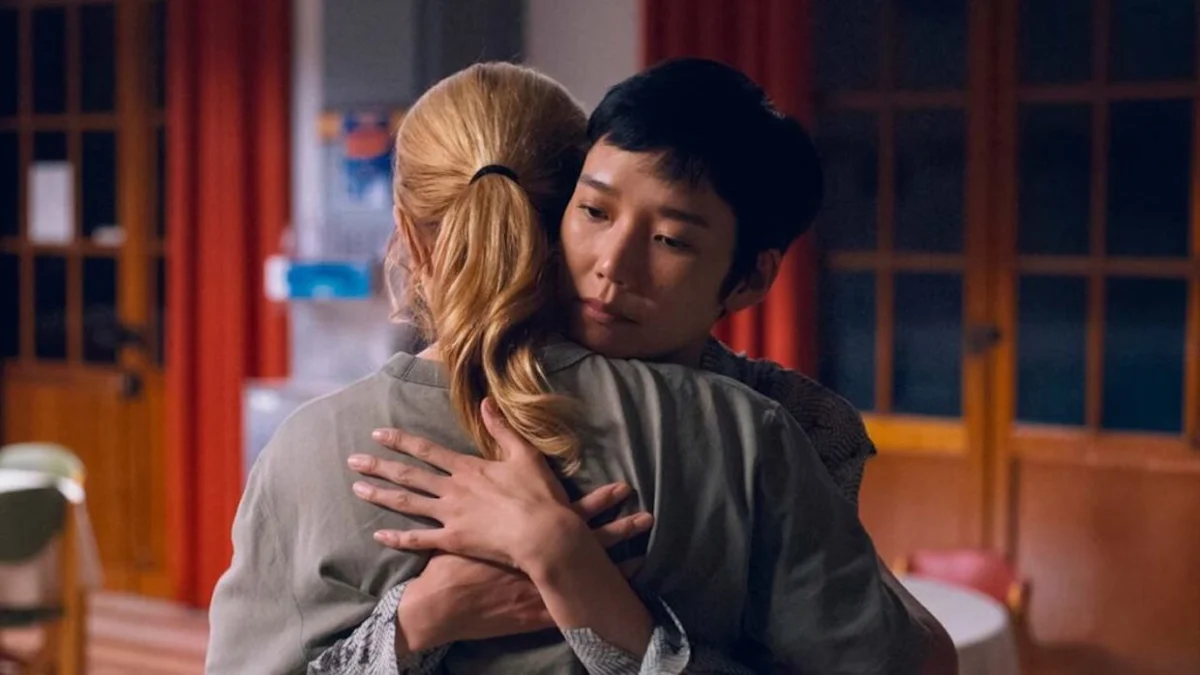
Standing in thematic opposition to Mungiu’s polemic was Ryusuke Hamaguchi’s All of a Sudden. Though it bypassed the top prize, the film was widely regarded as the emotional centerpiece of the competition. Following the success of Drive My Car and Evil Does Not Exist, Hamaguchi’s latest work is an "adventure of reflection," centering on an extended dialogue between a Japanese playwright, Mari (Tao Okamoto), and a French eldercare manager, Marie-Lou (Virginie Efira).
The film’s screenplay was partially inspired by the real-life correspondence between Japanese anthropologist Maho Isono and philosopher Makiko Miyano. This factual grounding provided a layer of authenticity to the "fortifying friendship" depicted on screen. The joint Best Actress award for Efira and Okamoto was seen as a validation of Hamaguchi’s ability to find cinematic tension in the act of conversation. Industry analysts noted that All of a Sudden represents a "gradualist" approach to filmmaking—one where the impact on the viewer is cumulative and physical rather than immediate.
This same gradualist energy was present in Valeska Grisebach’s The Dreamed Adventure. Set in the Eastern European borderlands, the film follows Veska, a middle-aged archaeologist portrayed by nonprofessional actor Yana Radeva. Grisebach, known for her rigorous research and use of non-actors, spent years living in the region to capture the nuances of its post-Soviet landscape. The film’s three-hour runtime and its rejection of traditional "western" tropes in favor of village intrigue and table talk did not deter US distributors, who secured the rights shortly after its premiere. Grisebach’s work was praised for its bluff treatment of gender power dynamics, asking pointed questions about strength and vulnerability in a world still haunted by the "macho" ghosts of the 1990s.
Historical Reflections and the Shadow of Conflict
The 2026 festival also served as a platform for significant historical inquiry, particularly regarding the mid-20th century. Pawel Pawlikowski’s Fatherland presented a meticulously constructed road movie featuring Hanns Zischler as Thomas Mann and Sandra Hüller as his daughter, Erika. The film tracks Mann’s 1949 speaking tour through a divided Germany, using the writer’s 19th-century philosophical foundations—Kant and Goethe—to highlight the inadequacy of traditional thought in the face of postwar ruins and resurgent authoritarianism.
Similarly, Emmanuel Marre’s A Man of His Time utilized 16mm cinematography to create a "you-are-there" atmosphere in its depiction of a municipal bureaucrat in Vichy France. Based on the letters of Marre’s own great-grandfather, the film provides a chilling look at the "paper-pushing shuffle" toward genocide. Both films were noted for their contemporary relevance, acting as mirrors to modern political anxieties regarding the fragility of democratic institutions.

The festival’s political dimension was most overtly expressed during the closing ceremony by Russian director Andrei Zvyagintsev. Upon winning the Grand Prix for Minotaur—a contemporary adaptation of Claude Chabrol’s The Unfaithful Wife set within the Russian "corruption industrial complex"—Zvyagintsev made a direct appeal for the end of the war in Ukraine. Filmed in Latvia due to the director’s exile, Minotaur reflects the ongoing displacement of Russian artists who remain critical of the Kremlin.
Breakthroughs in Sidebar Sections: Critics’ Week and Un Certain Regard
While the main competition drew the most headlines, the sidebar sections provided some of the festival’s most innovative discoveries. Marine Atlan’s La Gradiva, which won a top prize in the Critics’ Week section, was hailed as one of the best-reviewed debuts in recent years. Filmed in Naples and Pompeii, the movie explores adolescent angst and autonomy with a "whisker-sensitive" touch. Its acquisition by 1-2 Special for US distribution, following a glowing reception, suggests a strong life for the film on the international circuit.
In the Un Certain Regard section, the top prize was awarded to Sandra Wollner’s Everytime. Shot by Gregory Oke, the cinematographer of the acclaimed Aftersun, the film is a sensory-heavy study of grief and recovery. It stood out for its innovative sound design and "heady intimacy," further cementing Wollner’s reputation as a filmmaker who pushes the boundaries of traditional narrative structure.
The Camera d’Or, awarded to the best first feature across all sections, went to Clarissa, directed by Arie and Chuko Esiri. This Nigerian production offered a sumptuously mounted reimagining of Virginia Woolf’s Mrs. Dalloway, updated with a sharp colonialist critique referencing the works of Chinua Achebe. The win highlights the increasing prominence of West African cinema on the global stage.
Industry Trends: The NEON Dominance and the State of the Market
The 2026 market at Cannes was dominated by the independent powerhouse NEON, which arrived at the festival with a formidable slate of titles. Their acquisitions ranged from the South Korean monster movie Hope to James Gray’s Paper Tiger. The latter, a classical family tragedy set in Queens, was praised for its technical precision, though it was largely overlooked by the festival’s main prize jury.
The presence of high-profile directors like Jane Schoenbrun, whose Teenage Sex and Death at Camp Miasma opened the Un Certain Regard section, underscored a trend toward "meta-horror" and parasocial explorations of desire. Featuring Hannah Einbinder and Gillian Armstrong, Schoenbrun’s film represented a more "digestible" but still provocative evolution of their previous work, signaling that experimental voices are finding more secure footing within the festival’s hierarchy.
Implications and the Legacy of Cannes 2026
As the curtains closed at the Lumière Theater, the consensus among industry professionals began to shift. The initial perception of a "weak" year was replaced by an appreciation for the festival’s commitment to films that demand patience and intellectual engagement. The 2026 edition demonstrated that cinema is moving away from the "wham-bam" impact of the early 2020s and toward a more "bodily" and "incremental" emotional effect.
The festival also underscored the precarious state of global filmmaking, from the exile of directors like Zvyagintsev to the continued imprisonment and re-sentencing of figures like Jafar Panahi in Iran. These geopolitical realities were woven into the fabric of the films themselves, making Cannes 2026 a vital, if quiet, testament to the endurance of the medium. The "dramatic muscle memory" instilled by this year’s selection suggests that while the films of 2026 may not have sparked immediate frenzy, they are likely to resonate and be revisited long after the 79th edition has passed into history. The success of gradualist narratives and the emergence of strong debut voices from diverse regions ensure that the legacy of this year will be one of depth rather than surface-level spectacle.