

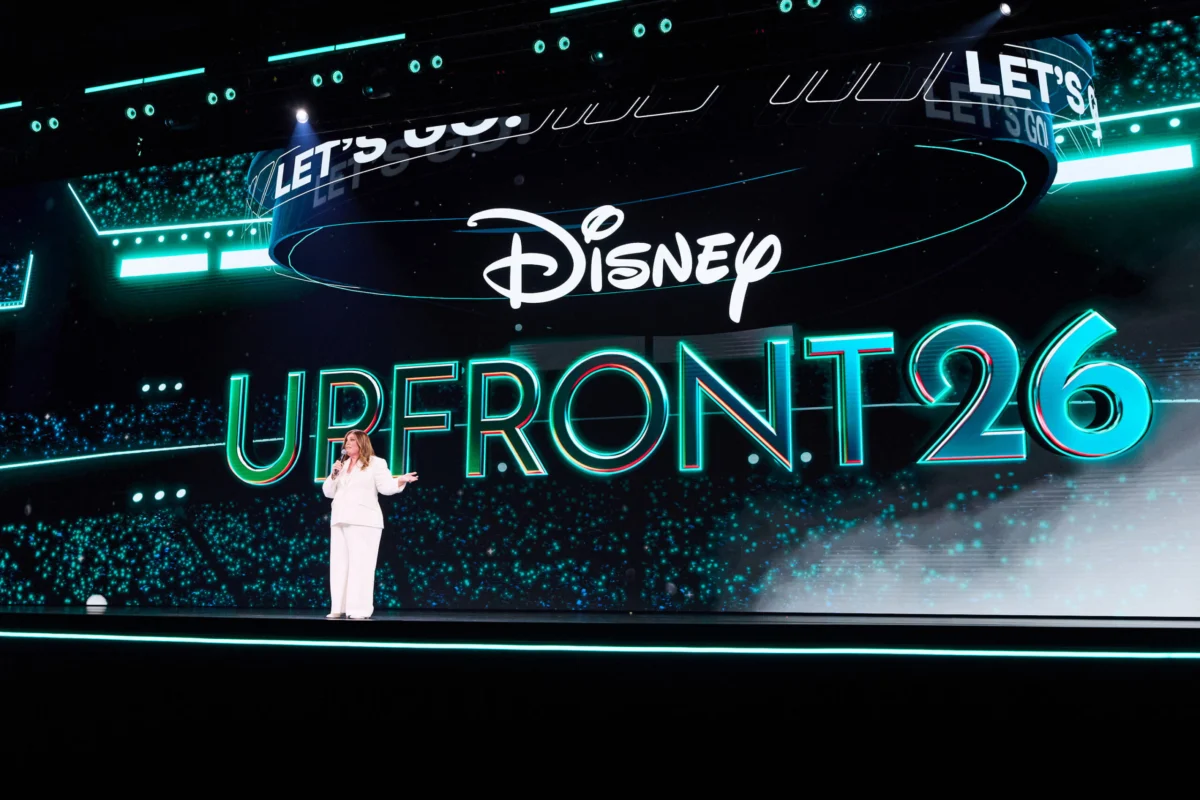
As the lights dimmed at the North Javits Center in New York City for the 2026 Disney Upfront, the atmosphere was less that of a corporate pitch and more akin to a high-stakes Hollywood premiere. Rita Ferro, Disney’s President of Global Advertising, stood in the wings, her mind briefly occupied not with spreadsheets or CPMs, but with a specific encounter from an earlier event. She had recently met Paul Anthony Kelly, the actor who portrayed John F. Kennedy Jr. in the FX limited series "Love Story." After a brief moment as a fan, Ferro had asked Kelly to introduce her on stage. When he finally stepped into the spotlight, his endorsement of Ferro was not just a courtesy but a testament to her standing within the company. Kelly described the "Disney difference" as a trifecta of trust, innovation, and unrivaled fandom, attributing much of the company’s operational success to Ferro’s leadership. This moment served as a microcosm of Ferro’s 29-year journey at The Walt Disney Company: a blend of high-level corporate maneuvering and a deep, personal connection to the storytelling that drives the world’s largest media conglomerate.
The Architect of Modern Media Ad Sales
Rita Ferro’s rise to the pinnacle of Disney’s advertising business coincides with a transformative era for the media industry. As traditional television, streaming services, and social media platforms compete for a finite pool of viewer attention and advertiser dollars, the role of an advertising executive has evolved from simple inventory management to complex ecosystem orchestration. Ferro now leads all advertising sales for Disney’s expansive portfolio, which includes entertainment networks, news outlets, and sports properties across linear, digital, and streaming platforms.
Her path to this position was far from a straight line. Born and raised in Miami to Cuban immigrants who fled just before the revolution, Ferro’s professional identity was forged through a combination of cultural fluency and early exposure to nascent industries. After graduating from Florida International University, she moved to New York with dreams of becoming a creative director. However, a single class in copywriting convinced her that her talents lay elsewhere. She pivoted to the business side of production, eventually landing a role at MTV Latin America in 1993. At the time, the cable industry in the region was in its infancy. Ferro has often remarked that working in an environment without a blueprint—where the industry was being built from the ground up—allowed her to thrive in "unpolished" settings, a trait that would later serve her well during Disney’s various digital transformations.
The "One Disney" Strategy Under Josh D’Amaro
The 2026 Upfront took place against a backdrop of significant leadership changes within Disney. Following the second tenure of Bob Iger, which focused on stabilizing the company and integrating the Fox acquisition, newly installed CEO Josh D’Amaro has ushered in the "One Disney" era. This strategy seeks to break down the silos between the company’s various divisions—studios, parks, streaming, and linear networks—to create a more connected and personalized consumer experience.
In interviews following the presentation, Ferro emphasized that her mandate is the commercial realization of this "One Disney" vision. By aligning brand partnerships with movie studio releases and tying park activations into corporate alliances, Ferro is moving beyond the traditional media sales role. She is instead acting as a bridge between the consumer’s emotional connection to a franchise—whether it be Marvel, Star Wars, or a specific FX drama—and the advertiser’s desire for deep engagement. This synergy is intended to increase the lifetime value of the consumer, a metric that CFO Hugh Johnston recently highlighted as critical for driving compounding returns for shareholders.
The Streaming Pivot and the Return to Advertising
The media landscape has undergone a radical shift in how it measures success. Only a few years ago, Wall Street prioritized raw subscriber growth in the "streaming wars." However, as subscriber numbers for major services began to plateau, the focus shifted toward profitability and Average Revenue Per User (ARPU). This shift has placed advertising back at the center of the business model.
Disney’s streaming strategy has evolved rapidly. While Hulu was a pioneer in ad-supported streaming, the flagship Disney+ service did not introduce an ad-supported tier until late 2022. By the second quarter of 2026, the results of this pivot were clear. In its most recent quarterly report, Disney’s entertainment segment noted that streaming revenue—driven by double-digit growth in advertising on Disney+—was successfully offsetting declines in linear affiliate fees. This transition is largely credited to Ferro’s ability to structure the Disney portfolio as a "one-stop shop" for advertisers, allowing them to follow audiences as they migrate from traditional broadcast to digital environments.
The Dominance of Live Sports and the ESPN Factor
If streaming is the future of entertainment, live sports remains the bedrock of the present. At Disney, this means leveraging the immense power of ESPN. The costs of maintaining sports rights have skyrocketed; the NFL is currently in the middle of an 11-year, $111 billion deal, while the NBA recently entered an 11-year, $77 billion agreement. To justify these expenditures, monetization must be aggressive and multifaceted.
Jimmy Pitaro, Chairman of ESPN and one of the three executives to whom Ferro reports, has noted that Ferro’s "in the field" leadership style is essential for the sports business. Unlike many executives who retreat into management as they rise in seniority, Ferro remains active in client negotiations and frequently attends major sporting events to maintain relationships with key sponsors. This year marks a historic milestone for the company: ESPN will air the Super Bowl for the first time ever, with the game returning to ABC after a 20-year hiatus. With 30-second spots for the Super Bowl reportedly fetching upwards of $10 million, the pressure on Ferro’s team to deliver is unprecedented. The launch of the ESPN direct-to-consumer app in August 2025 has further expanded her toolkit, allowing for targeted ad placements within live sports environments that were previously unreachable.
Technological Innovation: Building a Proprietary Stack
One of the most significant differentiators for Disney under Ferro’s leadership has been the company’s investment in proprietary ad technology. Recognizing that relying on third-party platforms would cede control over data and targeting, Ferro pushed for the development of Disney’s own "Audience Graph." This in-house data tool allows for precise measurement and targeting across Disney’s entire ecosystem.
Since 2021, Disney has held its own Tech and Data showcase at CES in Las Vegas, an event that has become the unofficial kickoff for the annual advertising cycle. By investing in "Clean Room" technology—which allows advertisers to match their own first-party data with Disney’s viewership data in a privacy-compliant way—Ferro has positioned Disney to compete directly with tech giants like Google and Meta. Industry analysts, including EDO CEO Kevin Krim, have noted that Disney was an early mover in this space, showing a clarity of thought that many of its legacy media peers lacked. This technological backbone is what allows Disney to scale its ad business globally while meeting the increasingly sophisticated demands of modern marketers.
The Global Frontier: Expanding the Footprint
As the U.S. market matures, the next phase of growth for Disney’s advertising business lies internationally. CEO Josh D’Amaro has made it clear that scaling Disney+ outside of the United States is a top priority, with a focus on local content investments in key regions. For Ferro, this means exporting the ad-supported models perfected in the U.S. to markets with vastly different regulatory environments and consumer behaviors.
Ferro’s background in international cable has given her a unique perspective on this expansion. She has noted that while the U.S. business has a regular "cadence," international markets offer a vibrancy and variety that requires a more nuanced approach. Her upcoming participation in VivaTech in Paris—often referred to as the CES of Europe—underscores the global nature of her role. By meeting with international partners and technology firms, Ferro aims to refine Disney’s global ad stack to accommodate the specific needs of the EMEA and APAC regions.
Conclusion: A Non-Traditional Path to Industry Leadership
Rita Ferro’s career trajectory serves as a case study in how diverse experience can prepare a leader for a rapidly changing industry. Her background in international markets, her tenure at the now-defunct Disney Interactive, and her deep ties to ESPN have converged to make her the ideal architect for Disney’s modern advertising engine. In an era where "fandom" is the primary currency, Ferro has successfully leveraged Disney’s intellectual property to create a robust, tech-driven marketplace for brands.
As Disney continues to navigate the complexities of the streaming era and the rising costs of sports rights, the "Disney difference" that Paul Anthony Kelly spoke of on stage will be tested. However, with a unified strategy under Josh D’Amaro and a sophisticated technological infrastructure in place, Ferro has positioned the company to not just survive the industry’s turmoil, but to define its future. Her focus on "One Disney" ensures that whether a consumer is watching a game on ESPN+, a movie on Disney+, or visiting a theme park, the advertising experience remains seamless, targeted, and, most importantly, effective for the brands that fuel the Disney machine.