

The release of Kane Parsons’ feature film Backrooms (2026) marks a significant milestone in the intersection of internet subculture and mainstream cinema. Based on the viral "creepypasta" and YouTube series that captivated millions, the film serves as a psychological exploration of space, time, and the transition from analog to digital existence. Directed by Parsons, who rose to fame as a teenager for his sophisticated CGI renderings of "found footage" horror, the film represents the first major attempt to translate the "liminal space" aesthetic into a high-budget narrative format. Starring Academy Award nominee Chiwetel Ejiofor and Cannes-winner Renate Reinsve, Backrooms (2026) navigates the complex landscape of 20th-century nostalgia and 21st-century technodystopian anxiety.
The Genesis of a Modern Myth: From 4chan to Hollywood
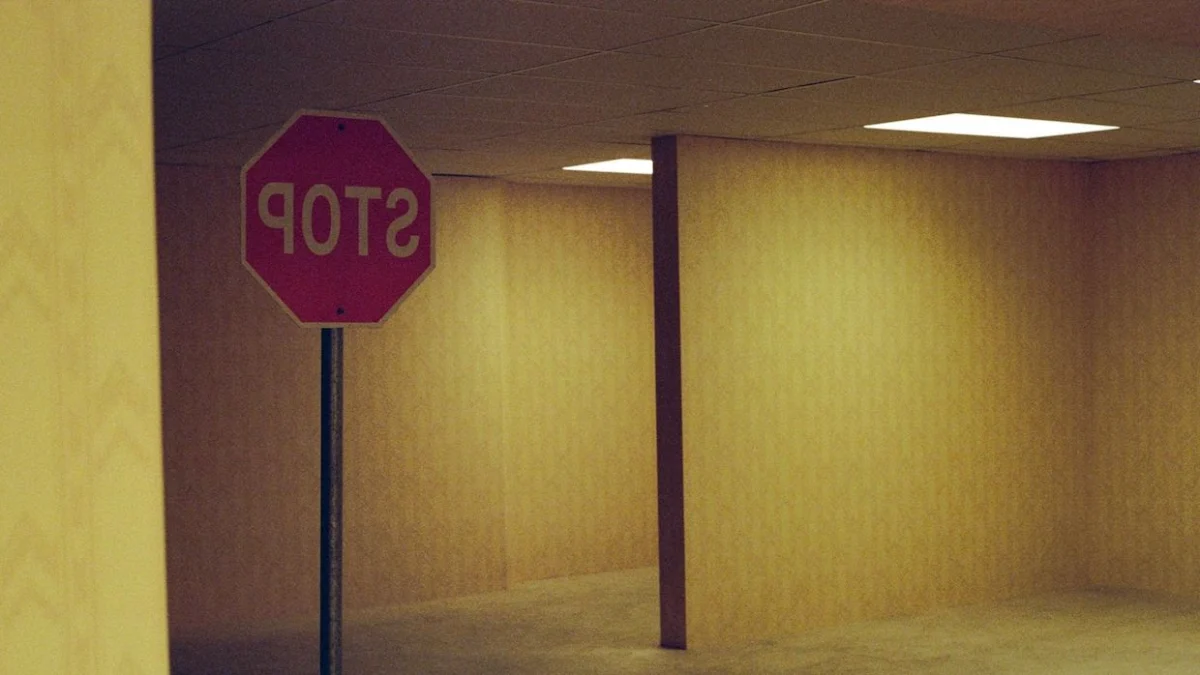
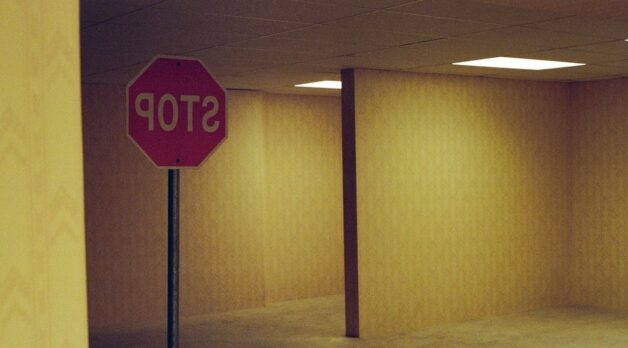
The origin of the Backrooms phenomenon is as enigmatic as the lore itself. The concept began with a single photograph uploaded to the "unsettling images" thread on the 4chan imageboard in May 2019. The image depicted a vast, empty office space with yellowed wallpaper, fluorescent lighting, and damp, stained carpeting. This photo was later identified as having been taken in 2003 at a former furniture store—Lebakkens Rent-to-Own—in Oshkosh, Wisconsin, while the building was undergoing renovations.
What started as an anonymous image quickly evolved into a collaborative storytelling project. Internet users began to describe the "Backrooms" as a non-Euclidean dimension that one "noclips" into—a term borrowed from video game terminology where a player passes through a solid object. In early 2022, then-17-year-old Kane Parsons, under the pseudonym Kane Pixels, uploaded a short film titled "The Backrooms (Found Footage)." The video, which utilized advanced Blender animation to mimic the look of 1990s VHS recordings, became a viral sensation, eventually garnering over 100 million views. This success caught the attention of A24, Atomic Monster, and 21 Laps Entertainment, leading to the greenlighting of the 2026 feature film.
Narrative Architecture: Setting the Scene in 1990 Santa Clara
Unlike the abstract, non-linear progression of the YouTube series, the feature film anchors its narrative in a specific time and place: Santa Clara, California, in June 1990. This setting is critical to the film’s thematic core, representing a "point of no return" in technological history. The year 1990 sits on the precipice of the digital revolution, where analog media—VHS tapes, floppy disks, and corded telephones—still dominated daily life, yet the seeds of the internet age were already being sown.
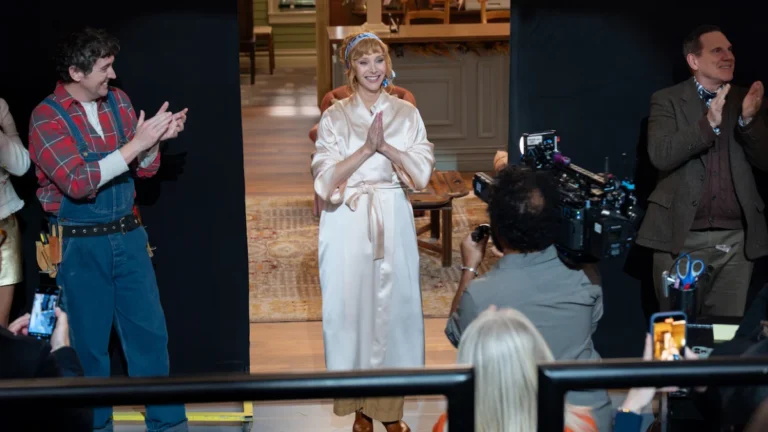
The story follows Clarke (Chiwetel Ejiofor), the owner of "Ottoman Empire," a struggling furniture store facing liquidation. His character embodies the physical weight of 20th-century commerce, dealing in tangible goods that are increasingly perceived as flimsy and disposable. Opposite him is Mary (Renate Reinsve), a therapist dealing with the trauma of displacement. Mary’s personal history is tied to a demolished childhood home, replaced by prefabricated condominiums—a metaphor for the erasure of physical memory in favor of efficient, soulless architecture.
The film utilizes these characters to bridge the gap between human emotion and the cold, generative nature of the Backrooms. As Clarke becomes obsessed with a series of interdimensional spaces that seem to mirror his own psychological state, the film transitions from a standard drama into a surrealist horror. The "Backrooms" themselves are presented not just as a physical maze, but as a digital hallucination born from the collective unconscious of a society undergoing a radical technological shift.
A Chronology of the Backrooms Phenomenon
The trajectory from an anonymous post to a major motion picture follows a distinct timeline of digital cultural evolution:
- 2003: The original photograph is taken at a furniture store in Oshkosh, Wisconsin, during a renovation process.
- May 2019: The photo is posted to 4chan, where an anonymous user provides the first description of the Backrooms: "If you’re not careful and you noclip out of reality in the wrong areas, you’ll end up in the Backrooms."
- 2019–2021: The concept migrates to Reddit and Discord, where "levels," "entities," and "factions" are added to the lore by thousands of contributors.
- January 2022: Kane Parsons uploads "The Backrooms (Found Footage)" to YouTube, redefining the aesthetic as a "found footage" analog horror series.
- February 2023: A24 announces that it will produce a feature film adaptation directed by Parsons and written by Will Soodik.
- 2026: The feature film Backrooms is released, starring Chiwetel Ejiofor and Renate Reinsve.
Supporting Data: The Rise of Liminality and Nostalgiacore
The success of Backrooms is supported by a massive surge in digital trends related to "liminal spaces." Liminal spaces are defined as transitional areas—hallways, waiting rooms, or abandoned malls—that feel eerie because they are devoid of their intended human purpose.
Data from social media platforms highlights the scale of this interest:
- TikTok: The hashtag #liminalspaces has accumulated over 3.5 billion views, while #backrooms has surpassed 10 billion views.
- Reddit: The r/LiminalSpace subreddit boasts over 1.3 million members, while r/TheBackrooms has over 300,000 active contributors.
- YouTube: Analog horror, the genre to which Backrooms belongs, has seen a 400% increase in search volume over the last five years, driven largely by Gen Z creators and audiences.
Psychological studies suggested that the popularity of these themes spiked during the COVID-19 pandemic. The global experience of seeing normally bustling public spaces—airports, schools, and offices—suddenly empty resonated with the "liminal" aesthetic. This collective trauma transformed the Backrooms from a niche internet story into a universal metaphor for isolation and the loss of a predictable reality.
Production and Creative Vision
The production of Backrooms (2026) is a collaboration between some of the most prominent names in modern horror and science fiction. James Wan’s Atomic Monster and Shawn Levy’s 21 Laps Entertainment provided the backing for Parsons’ vision. The screenplay, written by Will Soodik, known for his work on Westworld and Ash vs Evil Dead, attempts to balance the ambiguity of the source material with the structural requirements of a feature-length film.
One of the film’s most striking features is its commitment to "analog horror" textures. While high-definition cameras were used, the footage was processed to mimic the grain, color bleed, and tracking errors of 1990s video equipment. This stylistic choice serves a narrative purpose: it reinforces the idea that the Backrooms are a "glitch" in the fabric of the analog world.
Industry insiders have noted that Parsons’ transition from YouTube to a feature director is a "test case" for the future of Hollywood talent scouting. Producers James Wan and Shawn Levy have both stated that Parsons’ ability to build atmosphere and tension with limited resources was the primary driver for their involvement. "Kane represents a new generation of filmmakers who aren’t just telling stories; they are building entire digital ecosystems," Levy remarked during the film’s press junket.
Broader Impact and Theoretical Implications
Backrooms (2026) arrives at a time when society is increasingly grappling with the implications of generative AI and the "dead internet theory"—the idea that the majority of internet content is now created by bots rather than humans. The film’s portrayal of the Backrooms as a "predictive model" of reality mirrors the way AI generates images based on training data. As characters in the film describe the rooms as "describing a dog to someone who has never seen a dog and asking them to draw it," the film provides a sharp critique of the loss of authenticity in a mediated world.
Furthermore, the film explores the concept of "hauntology"—a term coined by philosopher Jacques Derrida and popularized by critic Mark Fisher. Hauntology refers to the "persistence of a past that was never present" or the failure of the future to arrive. By setting the film in 1990, Parsons highlights a yearning for a physical, tangible past that feels more "real" than the hyper-connected, yet socially isolated, present.
The "nostalgiacore" elements of the film—the off-white carpets, the flickering fluorescent lights, and the heavy furniture—serve as both a comfort and a threat. For Gen Z, these images represent a world they never truly inhabited, making the nostalgia "borrowed" and therefore inherently uncanny. For Millennials, it represents a childhood environment that has been "curdled" by the passage of time and the obsolescence of the technology that defined it.
Conclusion: A New Era of Horror
As Backrooms (2026) enters the cinematic canon, it solidifies the status of internet-born folklore as a legitimate source for high-concept storytelling. The film succeeds in elevating a simple creepypasta into a nuanced meditation on human memory and technological displacement. By refusing to provide easy answers or a clear origin for the titular maze, Parsons and his team have preserved the mystery that made the original YouTube series a global phenomenon.
The film suggests that the "Backrooms" are not just a place where one gets lost, but a reflection of the modern condition: wandering through an endless series of familiar yet empty spaces, searching for a connection in a world that has become increasingly digital, hollow, and recursive. Whether as a ghost story for the digital age or a psychological study of urban decay, Backrooms (2026) stands as a definitive work of hypermodern cinema.