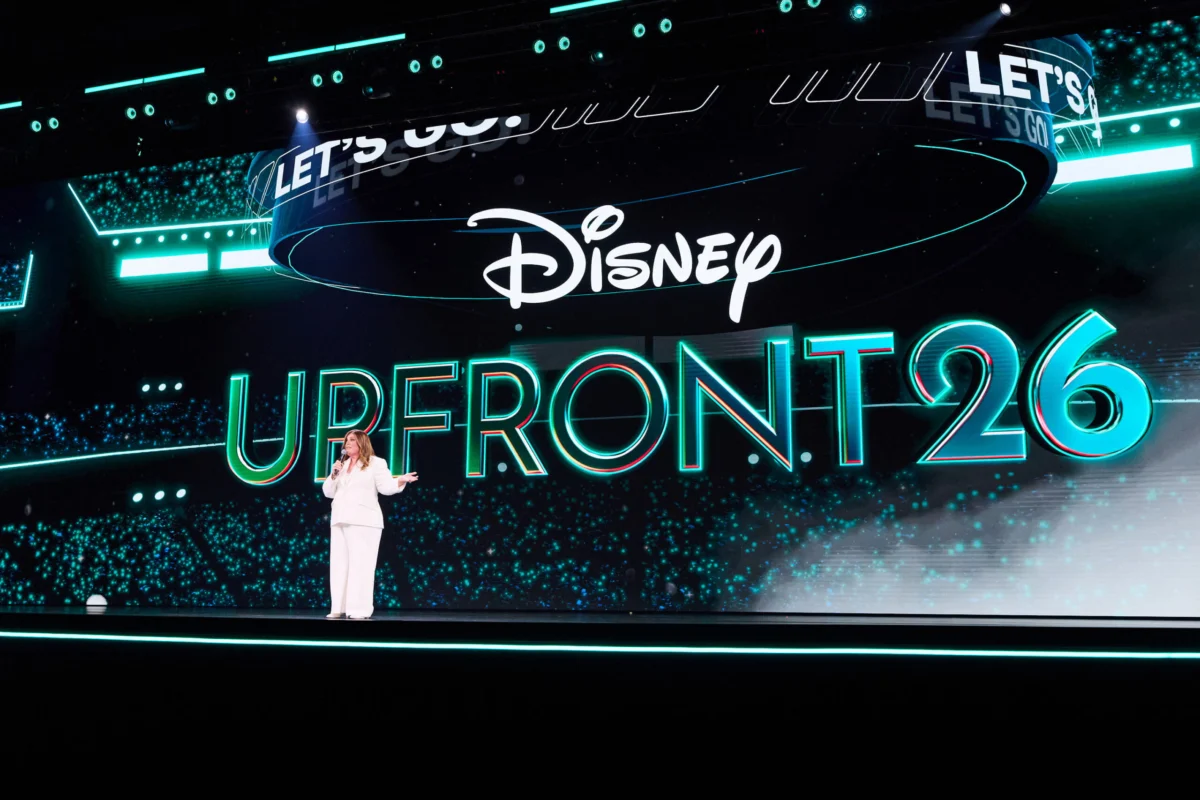
As Rita Ferro, Disney’s President of Global Advertising, prepared to take the stage at the company’s 2026 upfront presentation, the atmosphere at the North Javits Center in New York City signaled a pivotal moment for the legacy media giant. Introducing her was actor Paul Anthony Kelly, fresh from his portrayal of John F. Kennedy Jr. in the FX series "Love Story." Kelly’s presence was more than mere celebrity endorsement; it served as a living embodiment of what Ferro describes as the "Disney Difference"—a trifecta of trust, innovation, and unrivaled fandom. This strategy, orchestrated by Ferro over a nearly three-decade career, has positioned Disney at the vanguard of a media industry that is aggressively rediscovering the necessity of advertising as traditional revenue models face unprecedented disruption.
Ferro’s rise to the pinnacle of Disney’s advertising business coincides with a transformative era for the company under newly installed CEO Josh D’Amaro. As the industry moves away from the "streaming wars" focused solely on subscriber counts and toward a model of sustainable profitability, Ferro’s role has expanded to encompass the monetization of Disney’s entire portfolio, including entertainment, news, and sports across linear TV, digital, and streaming platforms.
A Legacy Built on Unconventional Foundations
Rita Ferro’s trajectory within The Walt Disney Company is a 29-year odyssey that began far from the executive boardrooms of Manhattan. Born and raised in Miami to Cuban immigrant parents who arrived in the United States just before the Cuban Revolution, Ferro’s professional identity was forged in the "wild west" era of cable television. After realizing her talents lay more in the business of production than in creative copywriting, she joined MTV Latin America in 1993, prior to its official launch.
At that time, the cable industry in Latin America was in its infancy. Building an industry without a blueprint allowed Ferro to develop a high tolerance for ambiguity and an appetite for innovation. Her fluency in Spanish and deep understanding of regional market dynamics eventually led her to Disney, where she initially worked within ESPN International. Over the subsequent decades, she navigated various leadership roles across Disney Media Network’s Kids and Family and the now-defunct Disney Interactive, which focused on digital products and social media.
In 2018, Ferro was named President of Advertising Sales for the U.S., and by 2023, her mandate went global. Her colleagues, including ESPN Chairman Jimmy Pitaro and Disney Entertainment Television Chairman Debra OConnell, note that Ferro’s diverse background across sports, digital, and international markets was serendipitous. It provided her with the exact toolkit required to manage a media landscape where those three sectors have now converged.
The "One Disney" Strategy and the Power of Fandom
Under the leadership of CEO Josh D’Amaro, Disney has adopted a "One Disney" philosophy. This strategy aims to break down silos between the company’s disparate divisions—the movie studios, the theme parks, the streaming services, and the linear networks—to create a unified consumer experience. Ferro is the primary architect of how this unity is sold to the world’s biggest brands.
"When you think of ‘One Disney,’ and all of the opportunities to tie in brand partnerships with our movie studio partners, the corporate alliance pieces that can tie into park activations, it’s a far more interesting and dynamic opportunity than just a traditional media sales role," Ferro noted in recent discussions.
This approach leverages "fandom" as a quantifiable asset. For advertisers, the value of Disney lies in the emotional connection consumers have with brands like Marvel, Star Wars, and ESPN. By integrating advertising into these "fandoms" through creative partnerships—such as a brand sponsoring a specific activation at a Disney Park that ties into a new Disney+ series—Ferro is moving beyond the 30-second commercial spot.
Navigating the Financial Shift: Streaming and the Ad-Supported Tier
The financial health of Disney’s entertainment segment has increasingly relied on Ferro’s ability to scale advertising within the streaming space. While Disney+ launched in 2019 as a commercial-free subscription service, the company introduced an ad-supported tier in late 2022. This move was a response to a broader industry trend where Wall Street began prioritizing Average Revenue Per User (ARPU) and profitability over raw subscriber growth.
According to Disney’s quarterly reports from early 2026, the company’s entertainment segment saw streaming revenue successfully offset declines in linear affiliate fees and traditional television advertising. Notably, Disney+ reported double-digit advertising revenue growth compared to the previous year. This growth is bolstered by the full integration of Hulu, which Disney took full control of in 2025. Hulu, a pioneer in the ad-supported streaming model, provided the technological and operational foundation for Disney’s current advertising prowess.
CFO Hugh Johnston has emphasized that the goal is to monetize stories and brands in a way that increases the lifetime value of consumers. "It’s about how we create, distribute, engage, and monetize… in a way that drives compounding returns for our bottom line," Johnston stated. For Ferro, this means ensuring that the advertising experience on Disney+ and Hulu is as high-quality as the content itself, preventing "ad fatigue" while maximizing brand impact.
The Dominance of Live Sports and the ESPN Factor
Perhaps the most significant engine of Disney’s advertising growth is live sports. In an era of fragmented viewership, live sports remains the only category capable of delivering massive, simultaneous audiences. This reality has led to a dramatic escalation in media rights costs. The NFL is currently in the middle of an 11-year, $111 billion deal, while the NBA recently commenced its own 11-year, $77 billion media rights agreement.
Disney’s investment in these rights necessitates a robust monetization strategy. Under Ferro’s leadership, ESPN has aggressively expanded its advertising and sponsorship opportunities. A landmark moment in this strategy is the 2026 Super Bowl, which will air on ESPN for the first time ever and return to ABC after a 20-year hiatus. With 30-second commercial spots reportedly priced at $10 million, the event represents a massive revenue opportunity and a test of Disney’s cross-platform reach.
The launch of the ESPN direct-to-consumer (DTC) streaming app in August 2025 further complicated and enriched Ferro’s task. The app allows Disney to offer advertisers targeted, data-driven opportunities that were previously impossible on linear television. Jimmy Pitaro, Chairman of ESPN, praised Ferro’s ability to monetize these expensive rights. "Sports rights are expensive and so they have to be monetized, not just through affiliate fees but through ad sales and sponsorships. And she’s always delivering for us," Pitaro said.
Technological Innovation: Competing with Big Tech
A critical component of Ferro’s strategy has been the internal development of a sophisticated "ad tech stack." Recognizing that Disney needed to control its own destiny rather than relying on third-party platforms, Ferro pushed for the creation of Disney’s Audience Graph. This in-house data platform provides first-party insights into viewership habits across all Disney properties, allowing for precision targeting that rivals digital giants like Google and Meta.
Kevin Krim, CEO of the ad data firm EDO, observed that Disney was "early in investing in that stuff and aggressive in a way I think others sort of hesitated." This technological foresight allows Disney to offer "clean room" technology—a secure environment where advertisers can match their own data with Disney’s data without compromising consumer privacy.
Josh Mattison, Disney’s Executive Vice President of Digital Revenue, credited Ferro with taking a leadership position in the industry regarding measurement and transparency. By unveiling a standardized "ad-supported monthly active user" methodology in 2025, Disney helped establish new benchmarks for how streaming success is measured by the advertising community.
The Next Frontier: International Expansion and Global Consistency
As the U.S. media market reaches a state of maturity, Disney’s next phase of growth is increasingly focused on international markets. CEO Josh D’Amaro has identified international scaling as a top priority, particularly for Disney+. Ferro’s career, which began in international markets, has now come full circle.
Her upcoming agenda includes a major presence at VivaTech in Paris, often referred to as the "CES of Europe." There, Ferro intends to meet with global partners to discuss how the nuances of local markets can be integrated into Disney’s global advertising framework. The challenge lies in maintaining the "Disney Difference" while adapting to the varied regulatory and cultural landscapes of Europe, Asia, and Latin America.
"The U.S. business is not only mature, but there is a cadence that’s very regular," Ferro explained. "In comparison, international markets come with more variety and more to learn. There’s a vibrancy and an opportunity where you feel you can really make an impact."
Conclusion: The Future of the Disney Portfolio
The 2026 Upfront served as a testament to Rita Ferro’s influence on the modern media landscape. By bridging the gap between traditional television’s broad reach and digital advertising’s surgical precision, she has insulated Disney against some of the harshest headwinds facing the industry.
As Disney continues to navigate the decline of linear cable, the high costs of sports rights, and the complexities of global streaming, Ferro’s "One Disney" approach remains the company’s most potent weapon. Her ability to translate "fandom" into "revenue" ensures that even as the ways people watch content change, the value of the Disney brand to advertisers remains constant. In the high-stakes world of global media, Rita Ferro has proven that the best way to predict the future is to build the technology and the teams to control it.