


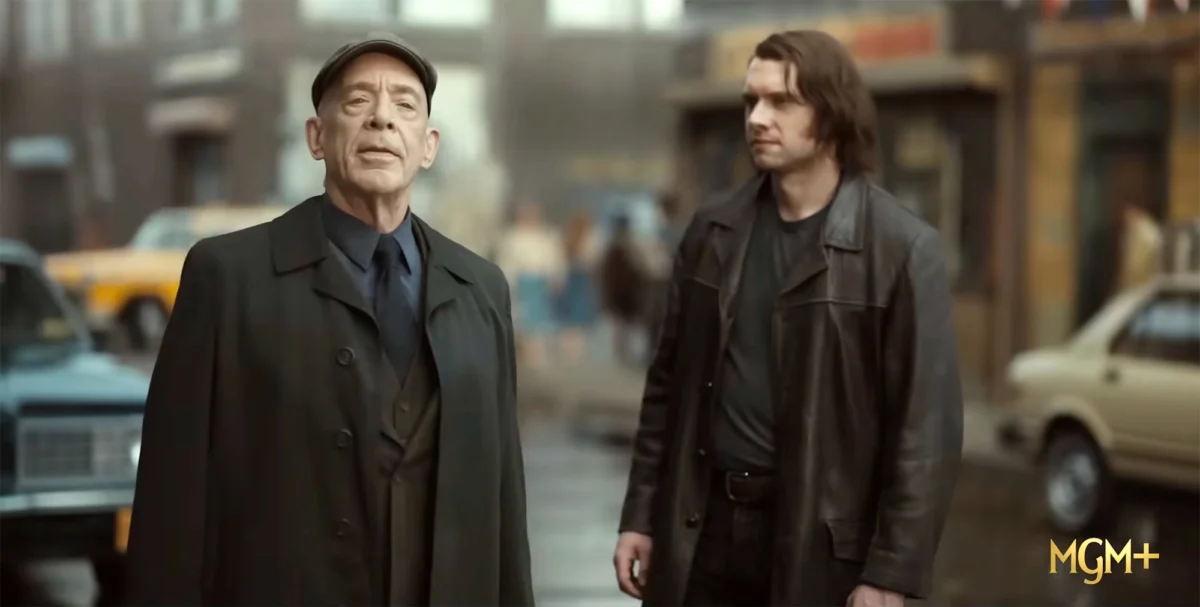
MGM+ has released the full official trailer for its anticipated new series, The Westies, a gritty crime drama set to premiere on July 12th, 2026. The series delves into the violent and intricate world of the Irish mafia in 1980s New York City, specifically focusing on the infamous Westies gang that dominated Hell’s Kitchen. Oscar-winning actor J.K. Simmons leads the ensemble cast as Eamon Sweeney, a pivotal figure within the organization. This new offering from MGM+ aims to provide an unflinching look at a lesser-explored facet of NYC’s organized crime history, characterized by intense brutality, complex power dynamics, and a perilous struggle for territory and profit against the backdrop of significant urban development.
The narrative of The Westies is meticulously crafted to transport viewers to a specific period of New York City’s history, where the construction of the Jacob K. Javits Convention Center on the West Side became a flashpoint for organized crime. This massive infrastructure project, envisioned to revitalize the city’s convention business, inadvertently created a lucrative opportunity for criminal enterprises to exploit, particularly through labor racketeering and protection schemes. The Westies, though vastly outnumbered by the formidable Five Families of the Italian Mafia, leveraged their unparalleled reputation for ruthlessness and savage violence to carve out a share of these illicit profits. The series promises to explore the delicate and often volatile truce between these disparate criminal factions, highlighting how the Westies’ sheer brutality commanded respect and fear, allowing them to operate in the shadow of more established syndicates.
Historical Context: The Rise and Reign of The Westies
To fully appreciate the scope and ambition of The Westies series, it is crucial to understand the historical context of the gang it portrays. The Westies were not merely a street gang; they evolved into one of the most feared criminal organizations in New York City’s history, operating primarily out of Hell’s Kitchen, a neighborhood historically known for its working-class Irish immigrant population and its gritty, often lawless, character. In the 1970s and early 1980s, before its gentrification, Hell’s Kitchen was a rough-and-tumble district, a fertile ground for organized crime to flourish amidst economic hardship and social neglect.
The gang’s origins can be traced back to the mid-20th century, but it was under leaders like Mickey Spillane and later James Coonan that the Westies cemented their fearsome reputation. Unlike the Italian Mafia, which operated under a strict hierarchical structure, a code of conduct (Omertà), and a semblance of "honor," the Westies were characterized by their chaotic, impulsive, and extreme violence. They were notorious for their use of dismemberment to dispose of bodies, a gruesome tactic that instilled terror and made it incredibly difficult for law enforcement to gather evidence. This "no rules" approach, coupled with their willingness to engage in indiscriminate violence, gave them a unique, albeit terrifying, advantage in the criminal underworld. They specialized in loan-sharking, drug dealing, extortion, and contract killing, often forming uneasy alliances with the Italian Mafia, who, despite their numerical superiority, often outsourced particularly brutal tasks to the Westies to avoid direct culpability and maintain a cleaner public image. The series is poised to explore this unique dynamic, where the Irish gang’s unpredictability became both their greatest strength and, ultimately, their undoing.

The Jacob Javits Center: A Catalyst for Conflict
The decision to build the Jacob K. Javits Convention Center in the early 1980s on Manhattan’s West Side was a monumental undertaking, symbolizing New York City’s ambition to modernize and rejuvenate its economy. This massive construction project, which broke ground in 1980 and was completed in 1986, represented an enormous flow of capital and contracts, making it an irresistible target for organized crime. Labor unions, particularly in construction, were historically susceptible to mob influence, and the Javits Center proved no exception. The Westies, with their entrenched control over parts of the West Side waterfront and the surrounding neighborhoods, saw this as a golden opportunity to expand their rackets.
The potential profits from controlling union jobs, materials, and protection schemes at the Javits Center site were immense, creating a direct point of contention with the more established and expansive Italian Mafia families, who traditionally controlled larger swathes of the city’s construction industry. The series is expected to dramatize how the Westies, despite their smaller numbers, asserted their claim through intimidation and violence, forcing the Italian Mafia to acknowledge their presence and share the spoils. This uneasy alliance, born out of mutual greed and a grudging respect for the Westies’ ferocity, forms a central pillar of the series’ plot, setting the stage for a volatile period where fortunes could be made or lost, and lives ended, over a share of the burgeoning pie.
A Deep Dive into the Ensemble Cast and Creative Minds
The success of a historical crime drama often hinges on the strength of its cast and the vision of its creative team, and The Westies appears to be well-equipped on both fronts. Leading the charge is Academy Award winner J.K. Simmons, known for his formidable performances in Whiplash, Oz, and Counterpart. Simmons takes on the role of Eamon Sweeney, a figure within the Westies’ leadership. His casting signals a commitment to portraying the gravitas and menace inherent in such a character, and Simmons’s ability to convey both quiet authority and explosive rage makes him an ideal choice for a mob boss balancing internal strife with external threats. His presence is likely to anchor the series, providing a compelling portrayal of old-school criminal leadership struggling with changing times and the impetuousness of a younger generation.
Joining Simmons are a host of talented actors, including Titus Welliver, recognized globally for his role as the titular detective in Bosch. Welliver’s experience in long-form crime narratives and his ability to embody a world-weary, morally complex character will undoubtedly enrich the series. Jessica Frances Dukes, known for her work in Ozark, brings her intensity and depth to the cast, while Tom Brittney, Stanley Morgan, Sarah Bolger (Into the Badlands, Mayans M.C.), Allen Leech (Downton Abbey), Hamish Allan-Headly, Vincent Walsh, and Hilary McCormack round out an impressive ensemble. The diverse backgrounds of these actors suggest a rich tapestry of characters, each navigating the treacherous landscape of 1980s Hell’s Kitchen.

Behind the camera, The Westies benefits from the seasoned expertise of co-creators and co-writers Chris Brancato and Michael Panes. Brancato is a name synonymous with critically acclaimed crime dramas, having co-created and executive produced the groundbreaking series Narcos, which explored the rise and fall of Pablo Escobar, as well as Godfather of Harlem and Hotel Cocaine, both of which are also MGM+ productions. His repeated collaborations with MGM+ underscore the network’s confidence in his ability to craft engaging, historically informed crime narratives. Brancato’s signature style often involves intricate plotting, morally ambiguous characters, and a keen eye for historical detail, all of which are expected to be on full display in The Westies. Michael Panes, who has collaborated with Brancato on previous projects like Godfather of Harlem and Hotel Cocaine, further strengthens the writing team, ensuring a consistent vision and depth of storytelling.
The series also boasts Alan Taylor as a director for some episodes. Taylor’s extensive credits include iconic series such as The Sopranos, Game of Thrones, and Mad Men, demonstrating his prowess in directing character-driven dramas with high production values and complex narrative arcs. His involvement suggests a cinematic approach to the series, promising a visually striking and atmospherically rich portrayal of 1980s New York. The production is helmed by Nick Iannelli and Michael Maccarone, with Brancato and Panes also serving as executive producers, ensuring their creative vision is maintained throughout the series’ development and execution.
Internal Strife and External Pressures: The Powder Keg Narrative
A central thematic element highlighted in the trailer and synopsis is the internal conflict plaguing The Westies. The series delves into the dangerous friction between the "brash younger generation" and the "old-school leadership." This generational divide is a classic trope in crime narratives, often symbolizing the clash between traditional criminal codes and new, often more reckless, approaches to power and profit. For the Westies, whose very identity was rooted in unbridled violence, this internal schism could prove catastrophic. The younger members, perhaps more ambitious and less bound by the established, albeit fragile, truces with the Italian Mafia, threaten to ignite a "powder keg" of violence that could unravel their precarious position.
Simultaneously, the Westies find themselves inadvertently swept into a much larger federal investigation: the FBI’s deepening probe into the Italian Mafia. While the Westies might have been a smaller, regional gang, their frequent interactions and shared rackets with the Five Families mean their activities are intrinsically linked to the broader organized crime landscape. As federal agents intensify their efforts to dismantle the Italian syndicates, any disruption or heightened activity within the Westies could draw unwanted attention, making them collateral damage in a far-reaching crackdown. This dual pressure – internal rebellion and external law enforcement scrutiny – creates a high-stakes environment where every decision carries dire consequences, promising a narrative filled with tension and dramatic turns.
MGM+’s Strategy in a Crowded Streaming Landscape

The launch of The Westies on July 12th, 2026, is a significant move for MGM+ as it continues to bolster its slate of original programming in an increasingly competitive streaming market. By investing in compelling, high-quality crime dramas like The Westies, Godfather of Harlem, and Hotel Cocaine, MGM+ is carving out a niche for itself, appealing to audiences drawn to sophisticated, character-driven narratives with strong historical foundations. This strategy allows the platform to differentiate itself from competitors that might focus on broader genre appeal or a higher volume of content.
The consistent collaboration with proven talent like Chris Brancato is a testament to MGM+’s commitment to quality. Such partnerships not only ensure a certain standard of storytelling but also create a recognizable brand identity for the platform’s original content. The Westies specifically taps into the enduring fascination with organized crime, a genre that has consistently captivated audiences across film and television for decades. By focusing on a historically significant, yet perhaps less widely known, criminal entity like the Westies, MGM+ offers a fresh perspective on the well-trodden ground of New York City mob stories, aiming to attract both long-time fans of the genre and new viewers seeking authentic, immersive historical dramas. The promotional materials, including the two official trailers and striking posters, indicate a strong marketing push, emphasizing the series’ dark tone, period authenticity, and the compelling performances of its cast.
Anticipation and Broader Implications
The release of The Westies comes at a time when audiences continue to demonstrate a robust appetite for period-specific crime sagas that offer both entertainment and a glimpse into historical realities. The series has the potential to become a significant cultural touchstone, reigniting interest in the history of Hell’s Kitchen and the complex interplay of power, crime, and urban development in 1980s New York. Beyond its entertainment value, such dramas often spark discussions about the nature of justice, the allure of illicit power, and the societal factors that contribute to the rise and fall of criminal empires.
For MGM+, The Westies represents an opportunity to solidify its reputation as a home for prestige dramas. If successful, it could further elevate the platform’s profile, attracting new subscribers and strengthening its position in the competitive streaming wars. The series’ exploration of a unique criminal entity, coupled with the talent involved both in front of and behind the camera, suggests that The Westies is poised to offer a compelling and brutal journey into the heart of one of New York City’s most infamous criminal eras. Viewers eagerly await July 12th, 2026, to witness this unfolding saga of ambition, violence, and survival in the shadows of the city that never sleeps.