


The release of a Christopher Nolan film has long been treated as a major cultural and industrial event, but his 2026 epic, The Odyssey, represents a distinct structural evolution for the celebrated filmmaker. Central to this achievement is the third consecutive collaboration between Nolan and Academy Award-winning editor Jennifer Lame, a partnership that has fundamentally reshaped how contemporary blockbusters handle narrative time, emotional geography, and scale. Adapting Homer’s foundational epic poem into a contemporary cinematic framework, Nolan and Lame have bypassed the traditional, opulent theatricality associated with historical and mythological cinema in favor of an impressionistic, deeply psychological approach. By treating chronology as a fluid, malleable construct informed by synaptic logic and memory, the creative team has delivered a motion picture that operates on both an intimate human scale and a terrifying, sweeping canvas. This analysis examines the mechanics of their ongoing collaboration, the historical trajectory of Nolan’s editing style, and the broader implications of their methodology for the future of studio filmmaking.
The Evolution of a Creative Partnership: From Indie Drama to Sci-Fi Spectacle
The working relationship between Christopher Nolan and Jennifer Lame began ahead of the release of Tenet (2020), a high-concept sci-fi action thriller that demanded an unprecedented level of spatial and temporal dexterity in the editing room. Prior to joining forces with Nolan, Lame had built a formidable reputation within the American independent film sector. Her extensive credits included critically acclaimed collaborations with writer-director Noah Baumbach, such as Frances Ha (2012), Mistress America (2015), and Marriage Story (2019), as well as Kenneth Lonergan’s deeply sorrowful drama Manchester by the Sea (2016) and Ari Aster’s psychological horror feature Hereditary (2018).
Transitioning from character-driven, dialogue-heavy independent cinema to a multi-million-dollar action production featuring reverse-filmed car chases and complex physical choreography presented a steep learning curve. Lame has frequently noted that the assignment felt intimidating at the outset. To overcome the logistical challenges of cutting action sequences filmed backward, she adopted a unique psychological framework, visualizing the vehicular chases and destruction as interactions between characters. By treating automobiles as though they possessed distinct personalities and engaged in dialogue with one another, she applied the pacing and rhythm of dramatic dialogue scenes to high-velocity action.
The resulting cut of Tenet established a new benchmark for cinematic propulsion. Action sequences were structured with a metered, rhythmic intensity, driving the narrative forward toward moments of heavy physical impact rather than relying on conventional visual fluidity. Similarly, the film’s dialogue scenes were trimmed to an absolute minimum, eliminating breathing room between lines and frequently sacrificing strict spatial continuity for sheer narrative velocity. This approach bore a strong resemblance to competitive sparring matches, intensifying the conversational stakes.
Chronology and Emotional Logic: The Genesis of Nolan’s Editing Style
Nolan’s fascination with non-linear storytelling and temporal manipulation is nearly as old as his directorial career. Beginning with his self-edited, micro-budget feature debut Following (1998), the director established a distinct grammar of fragmentation. Over the subsequent two decades, Nolan collaborated closely with veteran editors such as Dody Dorn on Memento (2000) and Lee Smith across a series of blockbuster projects including The Dark Knight trilogy, Inception (2010), Interstellar (2014), and Dunkirk (2017).

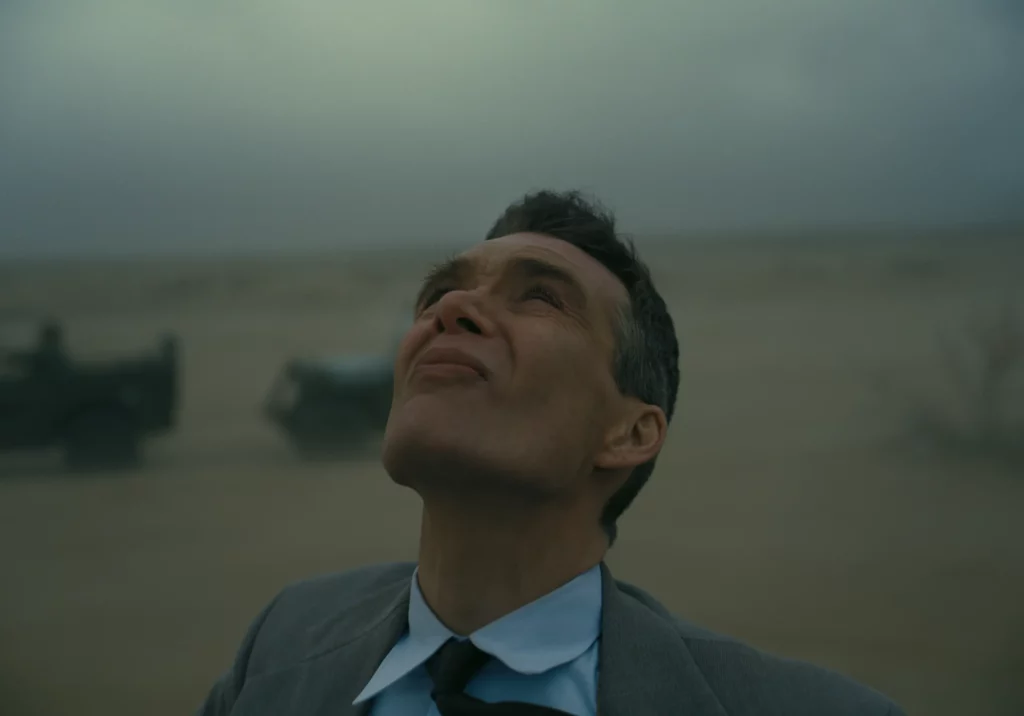
However, the integration of Lame’s sensibilities into Nolan’s production pipeline starting with Tenet marked a significant turning point, culminating in her Oscar-winning work on Oppenheimer (2023) and continuing through The Odyssey (2026). Oppenheimer presented an intricate structural challenge: a biographical drama chronicling the life of J. Robert Oppenheimer and the development of the atomic bomb, delivered through a mixed-up timeline seen entirely through the subjective, prismatic perspectives of two central figures across several decades.
Lame frequently credits her prior work on Manchester by the Sea—specifically its utilization of a complex flashback structure—as the crucial proving ground for the temporal fluidity required in Oppenheimer. In various interviews surrounding the release of Oppenheimer, Lame emphasized that narrative experimentation must be anchored by emotional necessity. She noted that every transition between timelines had to carry profound psychological weight to prevent the audience from becoming detached from the characters.
This philosophy highlights the underlying engine of Nolan’s filmography: despite the labyrinthine, puzzle-box architecture of his plots, his films fundamentally operate on a visceral, gut level. The emotional resonance of a specific cut—juxtaposing a line of dialogue, a lingering close-up, or an expansive landscape—supersedes even the most intricately constructed screenplay mechanics. While early works like Memento utilized rigid, nesting structures—such as alternating between color scenes told in reverse and black-and-white scenes told chronologically—later films transitioned toward more intuitive, abstracted editing patterns, as seen in the psychological transitions of Batman Begins (2005) and The Prestige (2006).
Character-Centric Passes and the Impressionistic Canvas
In executing Oppenheimer, Lame and Nolan developed a highly specialized editorial method to manage a sprawling ensemble cast and a dense narrative timeline. Rather than cutting scenes strictly in script order, the editing room utilized character-centric passes. Lame has described organizing the footage by individual figures, conducting dedicated passes for supporting historical actors such as Giovanni Rossi Lomanitz, Chevalier Jackson, or Kenneth Bainbridge to ensure their faces and presence registered powerfully with the audience, even when they appeared on screen for mere seconds.
This rigorous attention to micro-performances allowed rapid flashes of archival-style memory, quantum-mechanical visualizations, and the surreal architecture of the Trinity test sequence to land with maximum psychological impact. By the time Nolan and Lame turned their attention to Homer’s ancient epic, this impressionistic methodology had evolved into a fully realized artistic vision. The Odyssey is presented not as a straightforward historical adventure, but as a narrative unstuck in time, where events across multiple decades occur with the simultaneous, associative logic of human memory.
A Structural Analysis of The Odyssey (2026)
Homer’s original text is itself famously non-linear, utilizing in media res storytelling, embedded flashbacks, shifting focalizations, and extensive digressions. For a filmmaker like Nolan, the source material offered fertile ground for structural experimentation. Rather than preserving the traditional, linear trajectory of ancient epic adaptations—such as 1953’s The Robe or Ridley Scott’s Kingdom of Heaven (2005), which typically luxuriate in opulent widescreen scale and theatrical pacing—The Odyssey adopts an immediate, frantic, and psychologically fractured rhythm.

The film opens with a multi-layered sequence featuring Travis Scott functioning as a classical bard, reciting the events of the Trojan Horse across three distinct, overlapping timelines. The audience is immediately introduced to Odysseus, portrayed by Matt Damon, alongside Sinon, played by Elliot Page. The iconic wooden horse juts awkwardly out of a barren sandy beach, while Penelope, portrayed by Anne Hathaway, stands behind a metal screen, vocally demanding that the bard cease recounting the exhausted mythology of a war that has already fractured her life.
From this complex prologue, the narrative proceeds across two concurrent timelines, yet maintains a relentless momentum that actively disregards conventional scene-setting techniques. Individual shots rarely linger for more than a few seconds, whisking the viewer rapidly from moment to moment as Odysseus attempts to piece together the fragments of his memory during a multi-year, substance-induced haze on the island of Ogygia with Calypso. Most of his legendary journey is communicated through fragmented flashbacks, returning to his consciousness in sudden, volatile bursts.
Comparative Analysis: Classical Antiquity vs. Nolan’s Psychological Epic
| Cinematic Feature | Traditional Historical Epics (e.g., Kingdom of Heaven, 2005) | The Odyssey (2026) |
|---|---|---|
| Temporal Structure | Primarily linear, chronological progression with occasional expository flashbacks. | Non-linear, memory-driven associative editing across simultaneous timelines. |
| Visual Scale | Opulent, expansive widescreen long takes emphasizing environmental grandeur. | Immediate, compressed, and psychological; sweeping vistas are truncated for emotional impact. |
| Pacing and Rhythm | Measured, theatrical, and deliberate; designed to immerse the viewer in historical ambiance. | High-velocity, rhythmic cutting modeled on synaptic logic and cognitive recall. |
| Character Focus | Broad socio-political stakes, grand battles, and geopolitical machinations. | Intimate psychological fragmentation, domestic trauma, and internal consciousness. |
The Implications of Impressionistic Editing on Modern Blockbusters
The release and critical reception of The Odyssey underscore a broader shift in how major studios approach high-budget event cinema. For decades, the dominant commercial imperative mandated narrative clarity above all else, ensuring that general audiences could easily track geographical locations, character motivations, and plot points without confusion. Nolan’s commercial success, achieved precisely by challenging conventional audience comprehension through complex temporal structures, has proven that viewers are increasingly receptive to impressionistic storytelling models traditionally reserved for European art-house cinema.
Furthermore, the collaboration between Nolan and Lame highlights the vital role of the editing room as a co-authorial space where the true shape of a cinematic narrative is forged. By treating the film edit not merely as a tool for mechanical assembly, but as the primary instrument of philosophical and emotional expression—akin to the montage theories of Soviet pioneer Sergei Eisenstein—Nolan and Lame have elevated the blockbuster form.
The lasting impact of The Odyssey lies in its refusal to treat mythology as a dusty, museum-piece artifact. By filtering the classical hero’s journey through the fractured, tortured psychology of a protagonist grappling with trauma, displacement, and faulty memory, the filmmakers have transformed an ancient text into a modern exploration of the collective unconscious. As studios look toward the future of theatrical exhibition in an increasingly crowded media landscape, the methodological rigor and artistic daring demonstrated by Nolan and Lame offer a compelling blueprint for how scale and intimacy can successfully coexist on the modern screen.