


The 2026 MTV Video Music Awards transformed the Peacock Theater in Los Angeles into the epicenter of global pop culture this past Sunday, marking a triumphant return to the city for the first time since 2017. The ceremony, which aired live on CBS and MTV while simultaneously streaming on Paramount+, served as both a celebration of contemporary musical innovation and a poignant reflection on the legacies that continue to shape the industry. From the show-stopping opening collaboration between pop titans to a sentimental tribute for a country legend and the crowning of a new record-holder in the Video of the Year category, the evening was defined by a seamless blend of nostalgia and forward-looking artistry.
A Star-Studded Opening: Madonna’s Return to the VMA Stage
The evening commenced with an electrifying sequence that echoed the cultural gravity of the 2003 VMAs. Madonna, a perennial force in pop music, opened the show with a medley of “Bring Your Love” and “Danceteria Afterhours.” The production was meticulous, beginning with the icon perched atop a grand piano while Sabrina Carpenter provided the accompaniment. The transition from the piano to a moving platform—accompanied by a choir dressed in monochromatic white nun habits—underscored the theatrics that have defined Madonna’s four-decade career.
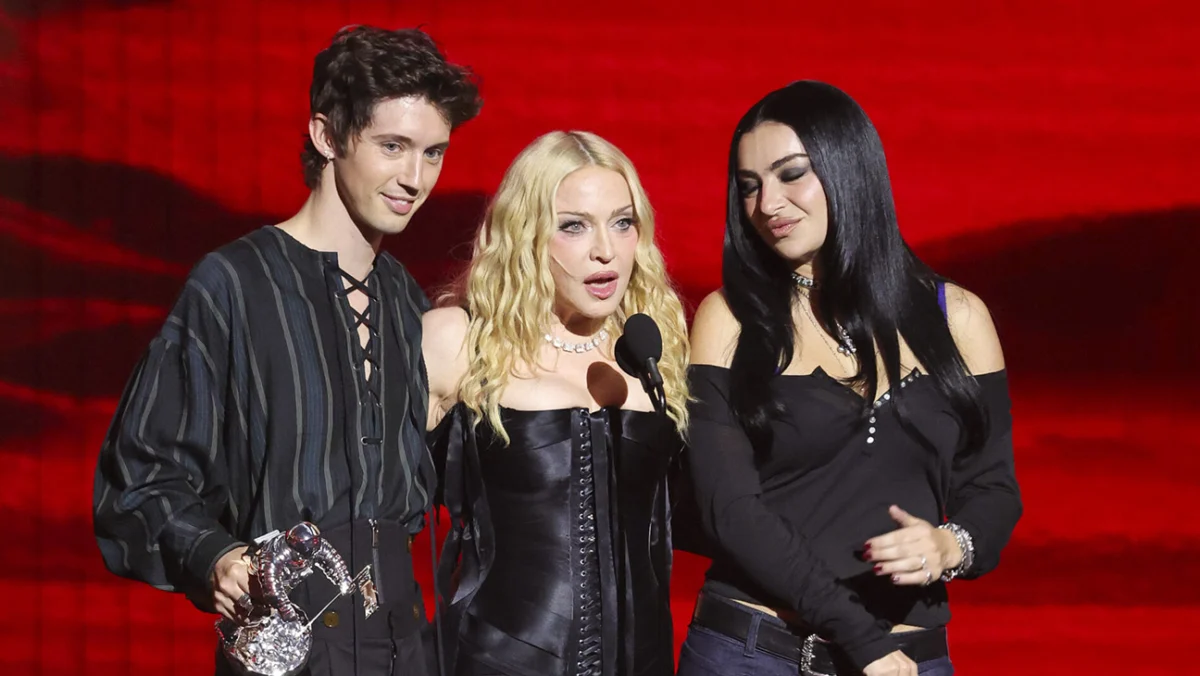
The performance reached its zenith when Charli XCX joined the stage for a rendition of “Danceteria Afterhours,” set within a stylized recreation of the legendary New York City nightclub’s restrooms. The choreography and set design were clearly intended to evoke the spectacle of Madonna’s infamous 2003 performance. For the audience and industry observers, this was more than a performance; it was a symbolic passing of the torch. Madonna’s presence at the VMAs, her first since that iconic 2003 moment, signaled an acknowledgment of the current vanguard of pop—Carpenter and Charli XCX—while reinforcing her own enduring influence on the medium of the music video.
Taylor Swift: Defining the Modern Era of Music Videos
If there was a central narrative to the 2026 proceedings, it was the continued dominance of Taylor Swift. Swift not only extended her record for the most Video of the Year wins in VMA history by taking home the top prize for "The Fate of Ophelia," but she also debuted the music video for her latest single, "Patient Zero."
During her acceptance speech, Swift offered a rare, granular look at her creative process. By citing cinematographer Rodrigo Prieto and editor Chancler Haynes, she highlighted the technical evolution of her work, specifically her focus on long-take aesthetics and "hiding cuts" to create the illusion of a single, continuous shot. This technical transparency reflects a broader industry trend where artists are increasingly involved in the granular post-production and direction of their visual media. Her collaboration with Dakota Johnson and Colin Farrell for the "Patient Zero" video further emphasizes her move toward cinematic storytelling, a departure from traditional performance-based music videos that suggests a shift toward the "short film" format that has become a hallmark of her recent output.
Honoring Legacies: Nirvana and Dolly Parton
While the night celebrated the future, it was equally committed to honoring the past. The presentation of the Video Vanguard Award to Nirvana was a highlight of the ceremony, with Public Enemy’s Chuck D providing a stirring introduction. His remarks on the band’s refusal to bend to mainstream pressures served as a reminder of the 1990s grunge movement’s lasting impact on the visual language of rock music.
Dave Grohl, Krist Novoselic, and Pat Smear accepted the award, using the moment to pivot the focus back to the late Kurt Cobain. Novoselic’s explicit credit to Cobain’s vision for the band’s music videos contextualized the award not just as a career achievement for the survivors, but as a preservation of a specific, raw aesthetic that helped define an entire generation.
Simultaneously, the ceremony offered a tribute to the late Dolly Parton, who passed away on August 25 at the age of 80. Kacey Musgraves performed a moving rendition of "I Will Always Love You." Though Musgraves was not physically present, the digital integration of the tribute at the Peacock Theater underscored the industry’s desire to memorialize Parton’s cross-genre influence. This tribute followed Musgraves’ own recent concert-based homages, solidifying a collective industry effort to ensure Parton’s catalog remains central to contemporary performance.
A Global Stage: Lisa and the International Pop Explosion
The 2026 VMAs were notably international in scope, with K-pop star Lisa delivering the first televised performance of her new single, "SaWaDiKa." Introduced by Tyla, the performance was a testament to the global nature of modern pop music. Lisa, a member of Blackpink, arrived at the stage already a winner, having secured the Best Pop award for "Dream" featuring Kentaro Sakaguchi.
The high-energy nature of the performance, coupled with the song’s upcoming inclusion on her EP Press Play, points to the shifting demographics of the VMA audience. With international artists now frequently occupying the same performance tiers as domestic icons, the VMAs have moved toward a more globalized, borderless definition of "pop."
Host Snoop Dogg and the L.A. Connection
Hosting duties fell to Snoop Dogg, who leaned into his identity as a Los Angeles icon to frame the event. His monologue served as a thematic bookend to the night, poking fun at Madonna and celebrating the show’s return to Los Angeles. Snoop’s role as host provided a stabilizing, comedic presence that balanced the more earnest tributes and high-concept performances. His "party" atmosphere—a recurring motif in his career—was successfully integrated into the VMA brand, providing a sense of cohesion to an otherwise eclectic lineup of performances.
Musical Highlights: Raye, George Michael, and the Finale
Raye’s debut performance of "Where Is My Husband!" served as a reminder of the power of social media virality in today’s music landscape. Dressed in a signature red ensemble, her performance translated the digital popularity of the track into a compelling live spectacle.
The evening also featured a multi-faceted tribute to George Michael. The segment was carefully curated to span the breadth of Michael’s career, rather than focusing solely on the 1987 Faith album. By bringing together Sombr, Raye, Teddy Swims, and a surprise appearance by Adam Lambert, the producers created a bridge between generations. Lambert’s performance of "Freedom ’90" acted as a high-energy climax to the tribute, reinforcing the song’s status as an anthem for artistic autonomy.
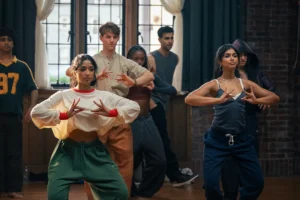
The ceremony concluded with a performance by Gener8ion and Yung Lean. Their rendition of "Storm," which recreated the intricate choreography of their viral video, provided a sophisticated, visually arresting end to the night. The audience response—a standing ovation—indicated a continued appreciation for performance art that prioritizes technical choreography and thematic depth.
Implications and Industry Outlook
The 2026 VMAs successfully navigated the difficult task of balancing legacy artists with the rapid-fire nature of modern viral music. The decision to host the event in Los Angeles provided a sense of place that had been missing in previous, more decentralized years.
From a data-driven perspective, the reliance on high-production, cinematic music videos—as exemplified by Taylor Swift—continues to be the primary engine for VMA engagement. Furthermore, the inclusion of international stars like Lisa and the cross-generational collaborations in the George Michael tribute indicate that the industry is leaning into a "big tent" strategy to maintain viewership in an era of fragmented media consumption.
As the industry looks toward the remainder of the year, the impact of these performances is likely to be measured in streaming spikes and social media interaction. The 2026 VMAs demonstrated that despite the rise of digital-only consumption, the spectacle of a live, televised award show remains a vital mechanism for cultural validation. Whether through the honoring of a rock legend like Kurt Cobain or the debut of a new global pop single, the ceremony affirmed that the music video—and the celebration thereof—remains a fundamental pillar of the entertainment industry. The show concluded with the recognition that while technology and trends change, the fundamental requirement for an artist to capture the public imagination through visual storytelling remains as potent as ever.