

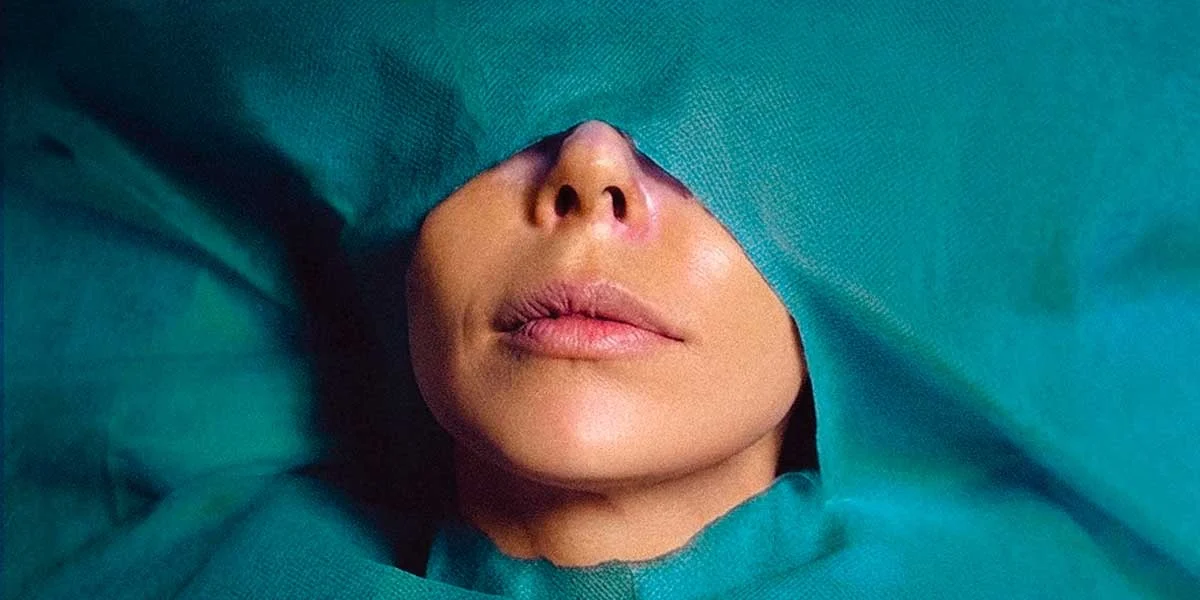
Iran has long maintained a reputation as the "nose job capital of the world," a distinction that serves as the focal point for Afsaneh Salari’s 84-minute documentary, Tehran Under the Skin. The film offers an intimate, non-judgmental exploration of self-perception and body image within a society where public expression is heavily regulated. By embedding herself within the private spheres of cosmetic surgery clinics, Salari captures a phenomenon that transcends simple vanity, framing it instead as a complex socio-political reaction to state-imposed limitations on personal identity.
The Sociopolitical Landscape of Iranian Aesthetics
To understand the surge in cosmetic procedures in Iran, one must first consider the legal and social framework governing the lives of its citizens. Since the 1979 Revolution, the Islamic Republic has enforced strict dress codes for women, mandating the hijab and modest attire in public spaces. These mandates act as a constant, state-sanctioned reminder of the limits placed on individual autonomy.
Sociologists often point to the concept of "compensatory consumption" in authoritarian states. When individuals are barred from expressing political dissent or personal lifestyle choices in the public square, they frequently turn to the only canvas over which they retain some degree of control: their own bodies. In Tehran, the nose has become a focal point of this struggle. Because the face remains the most visible part of a woman’s body under the mandatory hijab, it has become the primary site for cosmetic intervention. This is not merely an aesthetic choice; it is a profound act of agency. By reshaping their features, Iranian women—and increasingly, men—are reclaiming ownership of their physical selves from a state that seeks to standardize them.
Chronology of a Medical Boom
The rise of the Iranian plastic surgery industry did not happen in a vacuum. The timeline of this trend correlates with the maturation of Iran’s medical education system and the increasing urbanization of its population.
- 1990s: Post-war reconstruction saw an increase in medical infrastructure. As the Iranian middle class expanded, elective surgery began to lose its social stigma, moving from a luxury reserved for the elite to a common aspiration for the urban youth.
- 2000s: The proliferation of digital media and satellite television introduced global beauty standards to the Iranian public, creating a disconnect between traditional values and modern aesthetic desires.
- 2010s: Iran reached the top tier of global rankings for rhinoplasty, with some estimates suggesting that the country performs upwards of 200,000 cosmetic surgeries annually, a rate significantly higher per capita than in the United States or Brazil.
- 2020–2026: Despite severe economic sanctions, hyperinflation, and a volatile political climate, the industry has shown remarkable resilience. The cost of procedures, while expensive, has become a priority for many families, who often sacrifice savings to facilitate these operations for their children.
Data-Driven Insights into the Industry
The sheer volume of cosmetic procedures in Iran is supported by data from the International Society of Aesthetic Plastic Surgery (ISAPS). Iran consistently ranks among the top ten countries globally for rhinoplasty. Market analysts suggest that the industry’s stability is bolstered by a high concentration of highly skilled, board-certified surgeons who were trained during the rapid expansion of Iran’s medical universities.
Economically, the industry serves as a rare bright spot. While other sectors of the Iranian economy struggle under the weight of international isolation, medical tourism and domestic demand for cosmetic services provide a stable income for specialized practitioners. However, this growth is fraught with ethical tensions. Critics within the country, including some religious hardliners, have occasionally characterized the boom as "Western moral decay," while human rights observers argue that the obsession with surgery is a symptom of a society that has been stripped of other avenues for self-actualization.
Perspectives from the Field
Afsaneh Salari’s approach to documenting these clinics avoids the trap of Western orientalism. As a Tehran-born, Paris-based filmmaker, she bridges the gap between the internal struggle of the patients and the external gaze of the international community. Her presence in the operating theatre is not that of a critic, but of a witness.
The patients featured in the film range from those seeking minor refinements to those undergoing transformative, multiple-stage procedures. Interviews reveal a common thread: the belief that a physical change will lead to a change in social standing or personal confidence. "When everything else is dictated by the state," one interviewee notes in the film, "the mirror is the only place where I am the one who decides."
Medical practitioners, meanwhile, describe a high-pressure environment. They are not merely doctors; they are often counselors, therapists, and confidants. Many surgeons report that their clients come to them not just for a procedure, but for an escape. The clinic becomes a sanctuary—a space where the rules of the outside world are suspended, and the patient is allowed to voice their insecurities and desires without fear of moral judgment.
Implications and Sociological Analysis
The implications of this trend are far-reaching. The "plasticization" of the Iranian public is not merely a superficial trend; it is an indicator of profound social malaise. When a society prioritizes the reshaping of the face over the reform of its institutions, it suggests a collective resignation toward the possibility of broad, structural change.
However, there is also a counter-argument: that these surgeries are a form of silent rebellion. By modifying their appearance, individuals are expressing a preference for a specific aesthetic identity that is often in opposition to the state’s ideal of the "modest" citizen. In this sense, the cosmetic surgery center serves as a microcosm of the wider Iranian experience—a place of hidden, private defiance.
Furthermore, the documentary highlights the role of the diaspora. Many Iranians living abroad return to their home country for surgeries, citing the combination of lower costs and the high caliber of local surgeons. This creates a feedback loop, as the aesthetic ideals of the diaspora—often influenced by Western trends—are imported back into the Iranian cultural lexicon, continuously shifting the goalposts of what is considered "beautiful" or "desirable."
Conclusion: A Mirror to Modernity
Tehran Under the Skin succeeds because it refuses to provide easy answers. It does not label the patients as victims of consumerism, nor does it lionize them as revolutionaries. Instead, it presents a nuanced, empathetic, and at times uncomfortable look at a subculture that is emblematic of the paradoxes of the 21st century.
As the global discourse on beauty continues to evolve, with movements toward "natural" aesthetics competing against the rise of filters and surgical enhancement, Iran’s story remains uniquely its own. It is a story of a population that is resilient, resourceful, and deeply engaged in a struggle for autonomy—even if that struggle is limited to the bridge of a nose or the contour of a jawline. Salari’s film is a vital contribution to the study of modern Iran, providing a rare, unfiltered window into the lives of those living at the intersection of religious orthodoxy and modern ambition. Through her lens, the clinic becomes a stage where the complexities of the human condition are played out, far away from the headlines, but right at the heart of the individual.