



Cloud Imperium Games (CIG) has officially surpassed the $1 billion mark in total crowdfunding for its ambitious sci-fi simulation, Star Citizen, marking an unprecedented moment in the history of video game development and independent financing. This milestone, confirmed via the developer’s live funding tracker, represents the culmination of 12 years of continuous public investment from a global community of over 6.5 million registered accounts. The achievement arrives amidst the launch of a new high-tier virtual asset, the Anvil Odin battlecruiser, which carries a "pledge" price of $5,000, further highlighting the unique and often polarizing economic model that sustains the project’s development.
The $1 billion figure is the result of more than a decade of incremental contributions, beginning with a modest Kickstarter campaign in 2012. Since then, the project has evolved from a spiritual successor to the Wing Commander series into a massive, multi-studio endeavor aimed at creating a seamless, first-person universe. Despite the significant financial backing, the game remains in an "Alpha" state, with no definitive release date for its commercial "1.0" version or its standalone single-player companion, Squadron 42.
The Anvil Odin and the Economics of Luxury Pledges
Coinciding with the billion-dollar milestone is the introduction of the Anvil Odin, a capital-class "battlecruiser" offered as a limited-time concept pledge. Priced at approximately £3,700 ($5,000), the ship is currently unavailable for use within the game’s live Alpha environment. Instead, it is sold as a "concept," meaning the vehicle is still in the design and production pipeline. Backers who purchase the Odin are provided with a "loaner" ship—the Aegis Idris-P—to use in the interim until the Odin is technically flight-ready.
The acquisition process for the Odin was notably distinct from standard digital storefront transactions. Prospective buyers were required to apply for the "Odin Founders Club" by submitting an essay detailing their history within the Star Citizen community, their organizational affiliations, and their vision for commanding such a vessel. According to CIG, the application process was intended to ensure that these massive ships are helmed by dedicated community members who understand the operational complexities of capital-class gameplay.
The Odin represents the finalization of the remaining "vehicle stretch goals" established during the early years of the project’s crowdfunding. In a statement to the community, CIG noted that the introduction of the battlecruiser closes a chapter of development promises that dates back more than a decade. The reception among the player base has been characteristically mixed, ranging from enthusiastic support for the project’s longevity to criticism regarding the high cost of entry for digital assets that do not yet exist in a playable form.
A Chronology of Unprecedented Growth
The trajectory of Star Citizen’s funding is a case study in long-tail consumer engagement. The project’s timeline illustrates a steady acceleration in revenue, even as the technical challenges of the game’s engine—now referred to as "Star Engine"—extended the development timeline.
- 2012: The project launches on Kickstarter with an initial goal of $2 million. It concludes the year with approximately $7 million in total funding.
- 2014: Funding surpasses $65 million, and the project expands its scope to include procedural planet technology, moving beyond the original vision of instanced space combat.
- 2018: CIG receives its first major private investment outside of crowdfunding, bringing in $46 million from outside investors to fund marketing for the eventual release of Squadron 42.
- 2020-2021: The COVID-19 pandemic sees a massive surge in player engagement and spending, with annual funding totals breaking previous records.
- 2022-2024: The project crosses the $500 million and $750 million thresholds in rapid succession, culminating in the $1 billion milestone reached this week.
The financial data indicates that Star Citizen’s revenue model is not solely dependent on new players, but rather on the continued "upgrading" of existing backers. The "CCU" (Cross-Chassis Upgrade) system allows players to trade in older ships for credit toward more expensive models, creating a secondary economy within the community.
Technical Ambition and the Path to 1.0
The primary driver of Star Citizen’s high development cost is the technical infrastructure required to support its "no loading screens" philosophy. Unlike traditional MMOs that use "sharding" or instanced zones to manage player density, CIG is developing "Server Meshing." This technology is designed to allow multiple servers to communicate in real-time, effectively stitching together a single, cohesive universe capable of hosting thousands of players simultaneously in the same physical space.
In a recent interview with Variety, Chris Roberts, the founder of Cloud Imperium Games and the visionary behind the project, defended the time and capital invested into the game. Roberts argued that the scale of Star Citizen is something that traditional publishers, governed by quarterly earnings and private equity demands, would never permit.
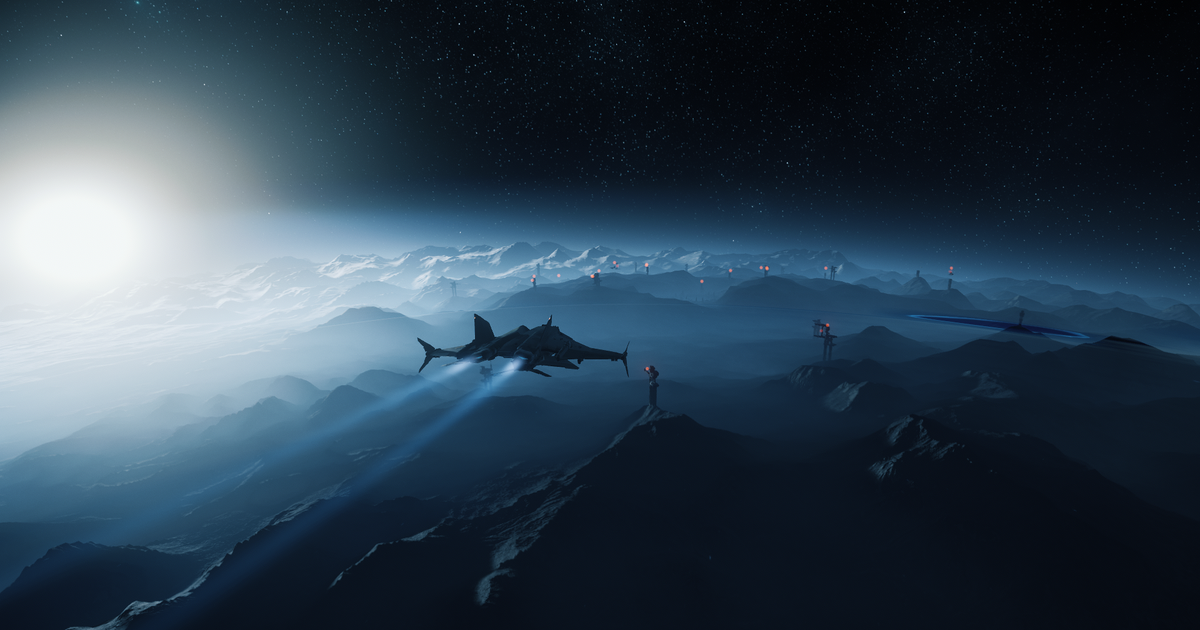
"The dream is so big that it’s something that you don’t get in any other game," Roberts stated. He compared the long-term vision of Star Citizen to World of Warcraft, suggesting that the game will continue to expand and evolve for decades after its official "1.0" launch. Roberts emphasized that the $1 billion in funding is a direct reflection of the audience’s desire for a "virtual world" that prioritizes immersion and scale over rapid commercial release.
Community Dynamics and Ethical Debates
The Star Citizen community remains one of the most engaged and vocal in the gaming industry. On platforms like Reddit, backers often debate the ethics of the project’s monetization. One recent purchaser of the $5,000 Odin battlecruiser defended the transaction in an "Ask Me Anything" thread, stating that his "happiness with a game is based off of how many hours I’ve played it." He noted that despite bugs and performance issues, the depth of the experience justified the investment for him personally.
However, the relationship between CIG and its backers has faced significant strain. In early 2023, the developer faced a backlash following the introduction of "flight blades"—items that provided automated turret functionality—as premium-only purchases. Critics labeled the move "pay-to-win," as the items gave a tangible gameplay advantage that could not be earned through in-game efforts at the time.
CIG eventually issued an apology, admitting they "missed a step" in their communication. The company subsequently pledged that all future gameplay-impacting items would be obtainable via in-game currency (aUEC) from the day of their introduction. This tension highlights the delicate balance CIG must maintain between incentivizing high-value pledges and maintaining a fair environment for players who only purchase the base "starter pack" for $45.
Comparative Industry Analysis
To put the $1 billion milestone into perspective, Star Citizen’s funding now exceeds the estimated development and marketing budgets of the world’s most expensive entertainment products. For comparison, Rockstar Games’ Grand Theft Auto V is estimated to have cost approximately $265 million to develop and market, while recent AAA titles like Marvel’s Spider-Man 2 reportedly cost around $300 million.
Star Citizen’s budget is unique because it funds not just a single game, but the creation of a proprietary technology stack and the operation of five international studios in Los Angeles, Austin, Frankfurt, Manchester, and Montreal. With over 1,100 employees, CIG’s monthly "burn rate" is substantial, requiring the continuous influx of capital that the ship sales provide.
Industry analysts point out that while the $1 billion figure is staggering, it is spread over 12 years. On an annualized basis, CIG’s revenue is comparable to a successful mid-tier live-service game. However, the lack of a finished product remains the central point of contention for observers outside the core backer community.
Future Outlook and the "Free Fly" Event
As Star Citizen enters its thirteenth year of development, the focus within CIG has shifted toward the transition to the "1.0" version. The recent "Alpha 4.0" update, which introduces the second star system, Pyro, is seen as a critical test for the game’s Server Meshing technology. Furthermore, the company has announced that Squadron 42 is now "feature complete" and in the polishing phase, though no release window has been confirmed.
For those skeptical of the project’s progress or the high cost of its digital assets, CIG frequently hosts "Free Fly" events. The current trial period, which runs until May 27, allows anyone to download the game and test a variety of ships at no cost. This initiative is designed to lower the barrier to entry and demonstrate the current state of the Alpha to a wider audience.
The crossing of the $1 billion threshold ensures that Star Citizen will remain a focal point of discussion regarding the future of game financing and the limits of community-driven development. Whether the project can successfully transition from a record-breaking crowdfunding phenomenon to a stable, commercially released product remains the most significant question facing Cloud Imperium Games. For now, the "dream" continues to be funded by millions of players who believe that the ultimate space simulation is worth both the wait and the price.