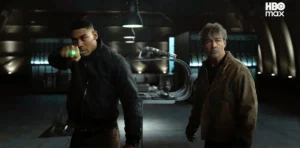
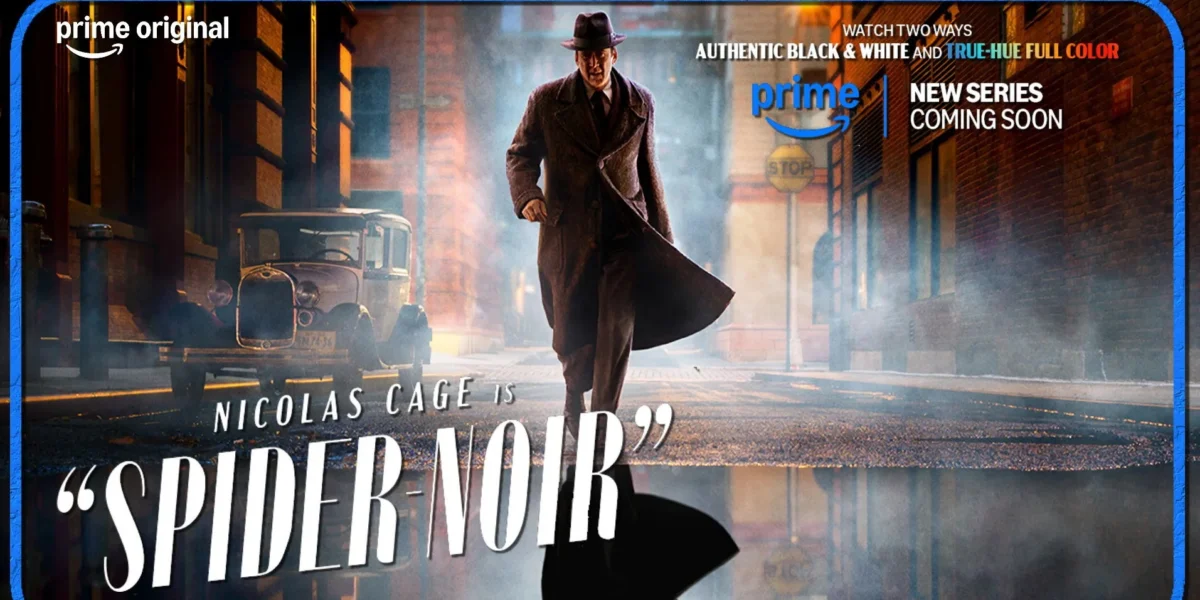
The flickering neon signs of 1930s New York cast long shadows across rain-slicked streets, a world brought vividly to life in the new Marvel series, "Spider-Noir." This ambitious production sees Nicolas Cage, a performer whose very name evokes a unique brand of cinematic intensity, step fully into the trench coat and fedora of a character first introduced to audiences in the animated "Spider-Verse" films. The transition from voice work to live-action for the brooding, down-on-his-luck private investigator Ben Reilly, also known as Spider-Man Noir, marks a significant moment, offering a fresh perspective on the multiverse concept and providing Cage with a role that appears tailor-made for his celebrated theatricality.
The series, spearheaded by showrunners Oren Uziel and Steve Lightfoot, aims to explore a darker, more grounded iteration of the Marvel universe, eschewing the cosmic grandeur for the gritty realities of Prohibition-era crime and personal despair. "Spider-Noir" is not merely a superhero story with a retro aesthetic; it is a meticulously crafted homage to the classic film noir genre, infused with the inherent complexities of the Spider-Man mythos. The narrative centers on Ben Reilly, once the city’s masked protector, now a disillusioned private eye haunted by past losses. His days are spent nursing cheap whiskey in a dimly lit office, a stark contrast to the heroic feats of his former life.
This descent into obscurity is set against the backdrop of a city under the iron fist of crime boss Silvermane, portrayed by veteran actor Brendan Gleeson. Since Spider-Man Noir’s disappearance five years prior, Silvermane has systematically exploited the resulting power vacuum, extending his criminal empire through bootlegging operations and corrupting the city’s law enforcement and political structures. The arrival of Li Jun Li as Cat Hardy, a reimagined Black Cat operating as a sultry lounge singer and femme fatale, injects a much-needed jolt into Ben’s stagnant existence. She hires him for a seemingly straightforward missing-person case, a classic noir trope that, in true fashion, quickly unravels into a conspiracy far more intricate and dangerous than initially perceived. This initial investigation plunges Ben back into a world of super-powered enforcers, rampant corruption, and the ever-present specter of his past heroism, forcing him to confront a new mantra that starkly contrasts with the traditional superhero creed: "With no power comes no responsibility."
Nicolas Cage’s commitment to the role of Ben Reilly is undeniably the driving force behind "Spider-Noir." Having previously captivated audiences with his vocal performance in "Spider-Man: Into the Spider-Verse," Cage now fully inhabits the character, drawing heavily from the iconic performances of Hollywood’s Golden Age. His portrayal is a masterclass in nuanced character work, blending the world-weary cynicism of Humphrey Bogart with the sharp, often volatile energy of James Cagney. Cage adopts a distinct, non-rhotic New York accent, meticulously recreating the vocal cadences of performers from the era. Yet, this authentic homage serves as a Trojan horse for his signature brand of electrifying theatricality. The result is a Ben Reilly who is both a compelling figure of melancholic reflection and a surprisingly manic force of nature. This duality, inspired in part by Bugs Bunny’s anarchic charm as cited by Cage himself, allows for moments of exaggerated physicality and peculiar line delivery that land with remarkable precision, creating a performance that is as engaging as it is utterly unpredictable.
The success of "Spider-Noir" is further amplified by its robust supporting cast. Lamorne Morris, as Robbie Robertson, injects a much-needed dose of classic noir dialogue into the series. His portrayal of Ben’s loyal ally, a tenacious reporter striving for journalistic integrity in a corrupt city, is both charismatic and grounded. Similarly, Karen Rodriguez, as Janet Ruiz, emerges as the emotional anchor of the series. Her take on the secretary archetype is a refreshing departure, positioning her as a sharp, resourceful operative who consistently operates several steps ahead of her colleagues, functioning as the series’ equivalent of Effie Perine to Ben Reilly’s Sam Spade. Li Jun Li, bringing her formidable acting prowess from projects like "Sinners," embodies the enigmatic allure of Cat Hardy. She perfectly captures the sultry, shadowy mystique essential to a compelling femme fatale, though the series occasionally falters in its attempts to maintain her enigmatic aura through overly explicit character motivations.
The series’ deep immersion in the conventions of film noir, while largely a strength, does present certain narrative challenges, particularly in the latter half of the season. The unwavering adherence to genre tropes can, at times, lead to a predictable trajectory, a sense of inevitability that can somewhat dampen the dramatic impact. The inherent fatalism of noir occasionally clashes with the established superhero elements, creating an interesting, albeit sometimes jarring, juxtaposition. Nevertheless, the period recreation is nothing short of exceptional. The costume design and production design teams have meticulously reconstructed the visual tapestry of 1930s New York, immersing viewers in the era with remarkable detail. Darran Tiernan and Peter Deming’s cinematography plays an equally crucial role in establishing the atmospheric tone, particularly when experienced in the series’ intended black-and-white format.
"Spider-Noir" offers viewers a unique choice in presentation: the traditional, richly textured black-and-white aesthetic synonymous with classic noir, and a "True-Hue Full Color" alternative. While the review was primarily conducted in black and white, the colorized version is surprisingly effective, avoiding the desaturated digital look that plagues many modern productions. However, it cannot match the depth and artistic intention of the monochromatic presentation, which clearly informed the series’ lighting, composition, and overall design. The "True-Hue" version does allow for greater appreciation of the vibrant costume work, but it also tends to highlight the visual effects, occasionally pushing the aesthetic closer to that of a high-end fan film.
Despite these minor stumbles, "Spider-Noir" stands as an impressively successful debut season. It unequivocally confirms the sheer enjoyment derived from watching Nicolas Cage unleash his full performance capabilities as a broken-down private investigator navigating the treacherous underbelly of a crime-ridden metropolis. While the series may occasionally buckle under the weight of its genre reverence and uneven plotting, the moments when Cage is fully immersed, his trench coat billowing and his voice a gravelly instrument of hard-boiled monologue, are utterly captivating. The desire for this strange, stylish, and deeply entertaining experiment to continue for years to come is palpable.

Thematic Resonance and Genre Pastiche
"Spider-Noir" masterfully blends the superheroics of Marvel with the quintessential elements of film noir. The series delves into themes of disillusionment, corruption, and the moral ambiguity that defined the noir genre. Ben Reilly’s personal journey from celebrated hero to a jaded detective mirrors the archetypal noir protagonist, wrestling with personal demons and a world that seems perpetually intent on crushing the human spirit. The series uses the multiverse concept not as a gimmick, but as a fertile ground to explore these darker thematic undercurrents, presenting a version of Spider-Man stripped of his youthful optimism and forced to confront the harsh realities of a world where heroism is often a forgotten luxury.
Production Design and Cinematography: Crafting the Atmosphere
The visual language of "Spider-Noir" is paramount to its success. The meticulous recreation of 1930s New York City, from the smoky speakeasies to the grimy alleyways, is a testament to the production design team’s dedication. The costumes, designed to reflect the fashion of the era while also hinting at the characters’ inner lives, are particularly noteworthy. Darran Tiernan and Peter Deming’s cinematography is crucial in establishing the series’ signature mood. The deliberate use of shadow and light in the black-and-white presentation creates a palpable sense of atmosphere, enhancing the noir aesthetic and drawing the audience deeper into Ben Reilly’s world. This visual storytelling not only pays homage to classic cinema but also serves to underscore the emotional weight of the narrative.
Casting Choices and Character Dynamics
Beyond Nicolas Cage’s tour-de-force performance, the casting of "Spider-Noir" is a significant strength. Brendan Gleeson as Silvermane provides a formidable antagonist, embodying the ruthless ambition and power that defines the era’s criminal underworld. Li Jun Li’s interpretation of Cat Hardy is a nuanced portrayal of a classic femme fatale, skillfully balancing seduction with a hidden agenda. The dynamic between these characters and the supporting cast, including Lamorne Morris and Karen Rodriguez, creates a rich tapestry of relationships, driving the plot forward and adding layers of complexity to the unfolding mystery. The chemistry between the actors, particularly the interactions between Cage and his co-stars, feels authentic and grounded, even within the stylized world of the series.
The Implications of the Multiverse Era
"Spider-Noir" emerges as a compelling example of how the current multiverse trend in superhero storytelling can yield truly unique and artistically driven projects. Unlike some multiverse narratives that rely on fan service or convoluted plot devices, this series leverages the concept to explore character in a distinct setting and tone. It demonstrates that the multiverse can be a tool for creative reinvention, allowing for the reimagining of beloved characters in ways that offer fresh perspectives and challenge established narratives. The success of "Spider-Noir" could encourage further exploration of niche characters and darker, more genre-specific interpretations within the wider Marvel canon, potentially broadening the appeal of superhero content to audiences who might not typically engage with the genre.
Potential for Awards Recognition
The meticulous craftsmanship evident in "Spider-Noir" positions it as a strong contender for awards in technical categories. The outstanding cinematography by Darran Tiernan and Peter Deming, especially in its black-and-white presentation, offers a visually arresting experience that is ripe for recognition. Furthermore, the period costumes, which so effectively transport viewers to the 1930s while enhancing characterization, are highly likely to be considered for awards in their category. The series’ overall production design and art direction also contribute significantly to its immersive quality, making it a standout achievement in visual storytelling.
The Good: "Spider-Noir" is an enjoyable and effective display of noir pastiche, with a solid ensemble led by a Nicolas Cage performance that encapsulates everything we love about him as a performer. The costuming, production design, and cinematography by Darran Tiernan and Peter Deming all help immerse audiences.
The Bad: Oren Uziel and Steve Lightfoot’s writing and dedication to film noir are marred by the often simplistic storytelling and spotty special effects.
The Emmy Prospects: Outstanding Cinematography for a Series (One Hour) & Primetime Emmy Award for Outstanding Period Costumes.
The Final Score: 7/10