Acclaimed director Stefano Bertelli, renowned for his visually striking music videos for global artists such as Eminem, Motörhead, and Robbie Williams, is pushing the boundaries of animated filmmaking with his latest feature, Spacetime Chronicles. This deeply personal and surreal exploration of the human psyche, crafted entirely through intricate paper stop-motion animation, marks a significant evolution in Bertelli’s artistic journey, transforming a passion project into his most ambitious cinematic statement to date. The film, produced by his company Seenfilm, is currently garnering attention on the international film festival circuit, with upcoming screenings at the Buenos Aires International Festival of Independent Cinema (BAFICI) on April 26, following its recent presentation at the Athens International Film and Video Festival on April 18. Further festival dates are scheduled for the Asolo Art Film Festival in June, alongside an Italian premiere in Milan, with a broader release anticipated by the end of 2026.
Bertelli’s foray into feature filmmaking began serendipitously in 2014 with Acid Space, an experimental horror animation conceived as an alternative to live-action production challenges. While he modestly describes Acid Space as an "amateur feature made with friends," the project served as a crucial turning point, igniting his passion for stop-motion animation and setting him on a path toward his current masterpiece. Spacetime Chronicles, however, represents a more profound artistic declaration. "This feature represents my first true film, even though it’s technically my second," Bertelli stated in a recent interview. "It’s the first one I wrote, and it comes after reaching a more mature technical stage in my skills as a creative." This sentiment underscores the film’s deeply personal nature, stemming from a narrative conceived and authored by Bertelli himself, reflecting a significant leap in his directorial maturity and technical command.

A Surreal Journey Through the Inner Landscape
Spacetime Chronicles plunges viewers into the dreamlike inner world of Fred, a man adrift in a liminal space between reality, dreams, and a state of existential limbo. The narrative eschews traditional linear storytelling, instead opting for a mosaic of symbolic episodes that mirror the protagonist’s internal struggles. From the unsettling detachment of a departing airplane to the claustrophobic confines of school corridors, Fred navigates visionary landscapes and engages in cryptic dialogues with a feline embodiment of his unconscious, a cat that subtly channels the wisdom of Sigmund Freud.
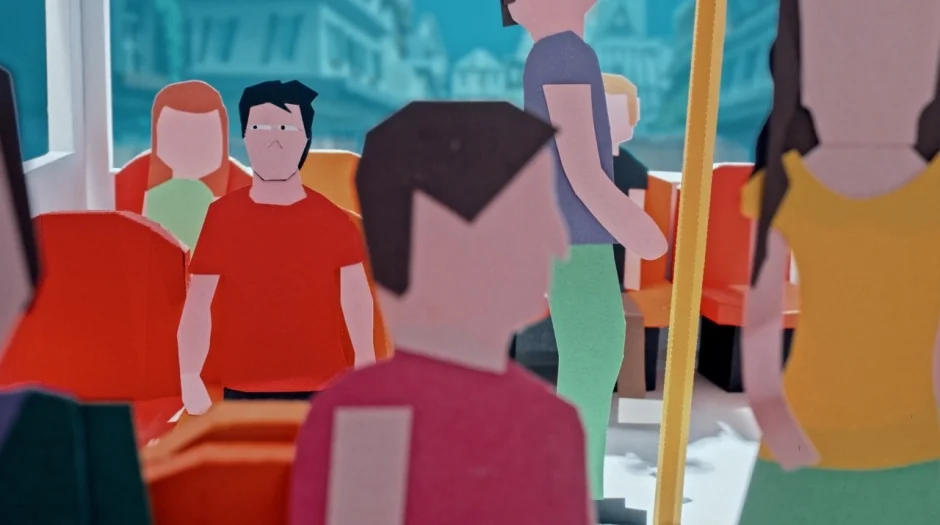
The film’s visual language is as disorienting as Fred’s mental state. Recurring motifs of bullies, daunting exams, missed connections, and the enigmatic presence of a girl on a tram contribute to a palpable sense of existential doubt and a fragile sense of identity. At its core, Spacetime Chronicles offers a quiet, introspective realization: life is not about reaching a predetermined destination, but rather about embracing the journey itself, with all its inherent uncertainties, repetitive patterns, and fleeting moments of profound beauty. Bertelli’s directorial vision, deeply rooted in psychological and dreamlike storytelling, prioritizes the exploration of a character’s internal evolution over conventional plot progression.
Bertelli elaborated on the film’s opening, stating, "I had intended to make a film without imposing a rigid structure. The first scenes show a man emerging from nothing, from emptiness, and encountering a black hole. That empty space represents the protagonist’s mind, a state of disorientation that can happen in real life when trying to escape a personal stalemate. A condition that is also symbolized in the film by an airplane in free fall." This deliberate embrace of ambiguity and symbolic representation is a hallmark of the film’s artistic approach, inviting viewers to engage with the narrative on a more intuitive and emotional level.

An Unconventional Production Process
The production of Spacetime Chronicles mirrored its unconventional narrative, defying traditional filmmaking structures at every stage. The core production team was remarkably lean, consisting solely of Bertelli and Riccardo Orlandi. The script itself was not fully finalized before animation commenced, a testament to Bertelli’s fluid creative process. The narrative continued to evolve throughout production, with significant script adjustments made even in the final stages before the film’s submission to festivals like Anima Brussels and BAFICI.
"I remember that even once the film was finished, I felt something was missing," Bertelli admitted. "I added the flight simulator scene at the very end of production, which appears near the beginning of the film. That scene connects well with the rest of the story and helps deepen the understanding of the character." This iterative approach to filmmaking, where the story and its visual realization are developed in tandem, allowed for a more organic and responsive creative output, ensuring that the final film remained true to Bertelli’s evolving vision.
The Intricacies of Paper Stop-Motion Craftsmanship
The most significant technical challenge and, simultaneously, the defining artistic element of Spacetime Chronicles lies in its unique animation technique: low poly paper craftsmanship. Bertelli and his team meticulously constructed 3D paper models, composed of numerous flat surfaces joined by folds and creases. These geometrically precise models, while visually stunning, presented immense difficulties in animation, particularly in maintaining their sharp edges and structural integrity as they were manipulated frame by frame.

"We spent years experimenting with this style, even before the film, mainly through commissioned music videos and commercials," Bertelli explained. The extensive experimentation, often in collaboration with Riccardo Orlandi, who managed the intricate set design and robotics mechanics, was crucial in refining the process. For the stop-motion animation itself, the team employed a sophisticated combination of stepper motors for precise movements and traditional manual rigs for nuanced control.
The challenges were amplified during slow-motion sequences, where the principles of physics had to be carefully managed. In some instances, controlled explosive charges, triggered by sensors or simple buttons, were used to generate realistic physical reactions within the paper models. The dramatic airplane scene, for example, required the construction of custom armatures built around the paper model. These armatures allowed for the rotation of the entire structure, ensuring that internal elements moved naturally, creating a disorienting, washing machine-like effect that visually conveyed Fred’s chaotic state.
Despite the inherent fragility of the medium and the complex engineering involved, Bertelli remained unwavering in his commitment to paper as his primary artistic tool. "Because it gives me unlimited possibilities to represent anything I imagine," he stated. "Paper is fragile but also very flexible. It allows combining multiple techniques such as 2D, 3D, cut outs, rotoscope, and slow motion. Everything in the film was used with clear, narrative intention. It reflects human fragility, which is central to the film’s theme." This philosophical connection between the medium and the message is a powerful testament to Bertelli’s artistic integrity.

A Labor of Love and a Testament to Human Creativity
The animation of the protagonist, Fred, proved to be a particularly engaging and rewarding endeavor for Bertelli. From capturing the nuances of his running gait to the subtle expressiveness of his close-ups, head movements, and crawling motions, each frame was a testament to the painstaking dedication involved. Bertelli cherishes every paper cut-out used in the animation process, a tangible reminder of the intimate connection he developed with his character.
"I became very attached to him," Bertelli confessed. "I want to show that there are no real limits or excuses when it comes to creating. Difficulties are part of the process, and mistakes, every imperfection, are what make a story feel human. Especially in a time of major technological transformation, I think this perspective is even more important." This perspective resonates deeply in an era increasingly dominated by digital animation, offering a powerful counterpoint that celebrates the tangible, the imperfect, and the profoundly human aspects of artistic creation.
The development of Spacetime Chronicles represents a significant milestone in the independent animation landscape. Bertelli’s commitment to a unique, handcrafted aesthetic, coupled with a deeply introspective narrative, positions the film as a potential benchmark for experimental animated features. The film’s success on the festival circuit, with its upcoming screenings and anticipated wider release, suggests a growing audience appetite for auteur-driven animation that prioritizes artistic vision and technical innovation over conventional commercial appeal. The film’s thematic exploration of human fragility and the value of the journey over the destination also offers a timely and resonant message in today’s fast-paced, outcome-oriented world. As Spacetime Chronicles continues its festival run, it not only showcases Bertelli’s extraordinary talent but also heralds a new era of possibility for stop-motion animation as a medium capable of conveying profound emotional and psychological depth.